

'Home Town' Tricks: It's So Easy to Pleat With a Fork
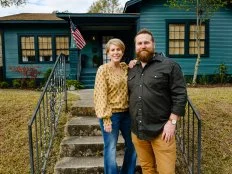
On Season 9 of Home Town, co-host Erin Napier and sewist Clayton Boler turn a kitchen staple into a clever pleating tool. Here's how you can put forks to work in your own space.

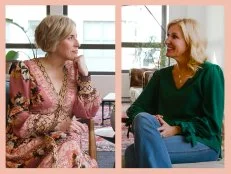
Erin Napier and sewist Clayton Boler teamed up to design a special DIY lampshade.

It's no secret Erin Napier has perfected the art of blending vintage Southern design style with fresh, modern twists that always keep Grand Millennials on their toes. Nine seasons of Home Town in, she's still showing us clever ways to pack a punch in a home without breaking our budgets (or our minds). Case in point: A recent episode from Season 9 walked viewers through a simple pleating hack that requires nothing more than a kitchen fork. (Pleats, in case you need a refresher, are achieved by doubling fabric back onto itself to create texture and dimension.)
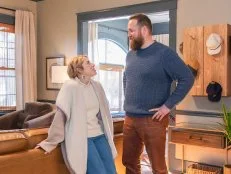
Erin had one wish during this particular Season 9 renovation. In the dining room, she envisioned a tray ceiling featuring a “statement-making” light fixture. And in her classic vintage-maximalist style, the light fixture needed to be upholstered with recycled fabric. To tackle this tricky project, Erin turned to sewist Clayton Boler, who brought a time-saving tip to her attention.
The Pleat Hack How-To
The technique is deceptively simple and a welcome alternative for anyone who has ever wrestled with a ruffler foot, a specialized sewing machine attachment designed to create consistent pleats or gathers in fabric. It sounds like a great tool in theory, but it can be notoriously finicky to use.
Clayton keeps his fork method simple:
- Slide the first tine of the fork into your fabric, rotate the fork for a complete twist, then shimmy the fork up to create your first pleat.
- Pin the pleat in place before pulling the fork out.
- Then, slide the fork right back in and repeat. Each pleat should be perfectly spaced by the width of the fork itself.
- Once you've worked your way across the fabric, run everything through the sewing machine on a straight stitch to secure it.
"It's like a perfect measurement," Erin sums up — because it literally is!
And the possibilities don't stop at light fixtures. One Instagram commenter was quick to point out, "That could probably work for sewing a skirt too if you wanted to put some pleats at the top."
Still need convincing that a fork might just be the most versatile tool in your home? Erin revealed she also uses them to French braid hair. (We'd like a tutorial, please.)
Erin's Bonus Tip
And, per Erin's advice, there's no need to stick to store-bought fabrics. A vintage tablecloth, like the one Erin found for this lampshade, is a delightful (and more affordable) alternative that adds one-of-a-kind character that brand-new fabric rarely can. Clayton has even transformed placemats into pillows, proving the best option might already be in your linen closet.
The finished product speaks for itself. The upholstered light fixture offers a timeless and authentically Southern quality — as if it's been in the home from the very beginning. So, next time you open your utensil drawer, just remember Erin's wise words: "You can eat with it, and you can pleat with it.”
.jpg.rend.hgtvcom.231.174.85.suffix/1603982513416.webp)










.jpg.rend.hgtvcom.231.174.85.suffix/1689111264539.webp)




_Courtesy-HGTV-(1).jpg.rend.hgtvcom.231.174.85.suffix/1679064655219.webp)