

How to Clean Rust, Wherever It Appears
Rust forms when water and metal meet for too long, and its corrosion effects are tough on materials. Learn how to effectively clean it and prevent it from returning.

Rust shows up fast and wears things down even faster. Luckily, whether it’s a spot on your tools, clothes or driveway, removing it isn’t usually complicated. Many simple household items work well on metal and stains. With the right method and a little effort, you can clean rust and help keep it from coming back.
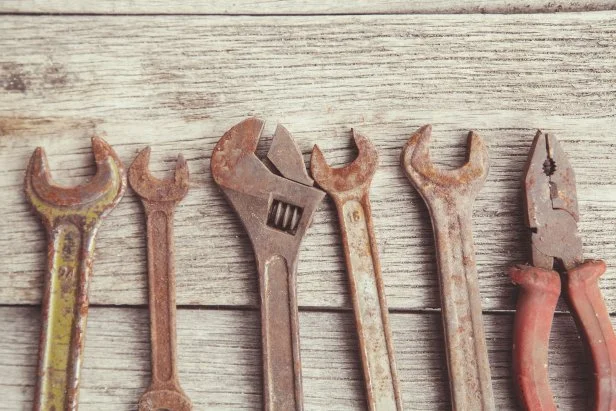
Shutterstock/Michael Dechev
How to Clean Rust Using the Best Cleaners
Many everyday items can help remove rust. Some popular methods use materials and products you likely already have at home:
- WD-40®: As far as commercial products are concerned, this lubricant is among the best. It claims to have over 2,000 uses! “It’s ideal for loosening rust, thanks to its low viscosity and surface tension,” shared Erin Bala, vice president of U.S. marketing and Americas innovation at WD-40 Company. “These properties allow it to seep into tiny cracks and crevices, fully coating the rust particles. Once applied, the slick coating reduces friction, helping the rust slide apart more easily, making it easier to wipe or brush the rust off when you scrub it."
- Lemon Juice and Salt: The citric acid in lemons helps break down rust. Limes also work. Regular table salt or kosher salt is used in conjunction to form a scrubbing paste. Note: If you use too little salt, it’ll just dissolve. You need a lot of salt to agitate the rust.
- Baking Soda: A paste formed using baking soda and water can break through rust. You’ll need to use a piece of fine steel wool.
- Vinegar: This versatile cleaner comes in handy for so many cleaning projects. It’s a slower method than other techniques because the rust really needs to soak in the vinegar. For larger items, you’ll need to soak a rag in vinegar and wrap it around the rusted area overnight.

Getty/ozgurkeser
Lemon and salt are a powerful combo when it comes to treating rusty surfaces.
How to Clean Rust Off Tools
Maintaining tools is important for their longevity. Rust can seize up moving parts and make tools difficult to use. It can also form on surfaces when tools are left out in the rain or even just in a humid space.
Choosing a cleaner and technique comes down to the type of product you’re trying to clean. Be flexible to the occasion:
- To clean the rust off the head of a hammer, soak it in vinegar overnight.
- To remove rust from a saw or chainsaw blade, spray it with WD-40 to not only treat the rust, but to also help lubricate the blade.
- If rust forms on your screwdrivers, you can apply lemon juice and salt to a flexible scrubber and target the buildup directly.
- For tough build-up, Bala notes that WD-40 Specialist Rust Remover Soak penetrates deeply into rust and corrosion, freeing nuts, bolts, threads, chains and locks.

Emily Fazio
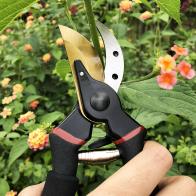
Left outside, our best pruning shears became rusty.
How to Clean Rust Off Garden Tools
Garden tools stored in garages, sheds or out in the elements are highly susceptible to rust.
To clean rust off garden tools like shovels and rakes, most of the tips listed above work well. That said, keeping garden tools like pruning snips and hedge shears rust-free is more of a struggle.
Rust doesn’t even have to be visible to affect the joints of garden tools. And when the joints get rusty, it quickly renders these tools hard to use.
“One of the most important steps when it comes to restoring tools that have fallen prey to rust is lubrication,” reminds Bala. To dissolve rust, you must first lubricate rusted or stuck joints.
WD-40 and other rust removers are really good at tackling rust that you can feel but can’t see. To treat it, spray the surface of the garden tool and into the joints and mechanisms. Keep moving the tool. For example, squeeze pruners to help distribute the lubricant, and open and close shears until the movement is smooth and not restricted.
For visible rust, you can also soak the tool in a rust remover. After it has soaked, rinse it with water, and sand the surface with steel wool.
Lubricate your garden tools every few months to be proactive against rust, or as soon as you feel that the tool mechanisms have resistance.

Emily Fazio
Steel wool keeps rust from building up on our most-used tools.
How to Remove Rust Stains from Concrete
Rust stains on concrete can occur from rusty tools or furniture left in place. To treat rusty concrete stains, we’ve used white vinegar. This simple solution works well because it’s an acetic acid.
- Pour white vinegar directly onto the stain. You don’t need to dilute it.
- Let it sit for 20-30 minutes
- Scrub at the stain and vinegar with a stiff brush.
- Rinse the area with water.
- Repeat if necessary.
If it doesn’t come off in two treatments, commercial rust removers specifically designed for concrete are available. Some of these contain oxalic acid, trisodium phosphate or hydrochloric acid. The added strength is good for stubborn stains, but you need to follow product instructions carefully and wear appropriate safety gear, including long sleeves, eye protection and rubber gloves when using stronger chemicals.

Getty/towfiqu ahamed
More often than not, rust transfers to clothing and fabrics while you're trying to clean metal tools and surfaces.
How to Get Rust Out of Clothes
Rust stains on clothing are disappointing (and of course it usually happens when you’re trying to clean rust off something else), but vinegar, lemon juice and salt as well as baking soda all work for fabrics. The trick is to hand-wash the garment.
It’s a good idea to test any treatment in an inconspicuous area first, like on the inside cuff of a pant leg or the inside hem of a shirt. For tougher stains, commercial rust removers formulated for fabric are available, but try these gentler methods first:
- If you’re using baking soda: Mix baking soda with water to create a paste. Apply it to the stain and gently scrub with an old toothbrush. Baking soda's mild abrasive properties can help lift the rust. Rinse the garment until the paste is gone, and then launder as usual.
- If you’re using lemon juice and salt: Squeeze lemon juice onto the rust stain, then sprinkle a generous amount of salt over it. The citric acid in lemon and the abrasive action of salt help break down the rust. Let it sit for 15-30 minutes. Rinse in cold water.
- If you’re using white vinegar: Soak the garment in a solution of equal parts white vinegar and water for a few hours or overnight. Vinegar's acidity helps dissolve rust particles. Afterward, wash with cold water and a mild detergent.








.jpg.rend.hgtvcom.231.174.85.suffix/1738869872256.webp)