


How to Unclog a Toilet
Maintain your bathroom plumbing and clear a clogged toilet using one of these proven methods.
One of the most common dilemmas for a homeowner is unclogging a toilet. But, don't panic. Clearing clogs may not be a walk in the park, but learning how a toilet works will allow you to be better prepared for other repairs, like if you need to stop a running toilet or fix weak flushes.
Repair toilet clogs with a plunger.
Unclogging a toilet usually is a simple task taken care of with some basic tools. Usually, all you’ll need is a plunger or auger, rubber o-rings, drain cleaner and a bit of technique.
Follow the steps below to learn how to unclog your toilet and keep it from clogging again.
Tools You May Need:
- plunger
- toilet auger (plumbing snake)
- drain cleaner
- toilet wax ring (o-ring)
- wrench
- shop vacuum
What to Do When Your Toilet Is Clogged
Regardless of what tools you use to clear the drain, start by doing the following:
- Stop water from entering the bowl. Take the lid off the tank and push the flapper down to prevent water from running into the toilet bowl. Stopping water flow can prevent an overflow.
- Turn off the water supply located behind the toilet. This knob should be at the bottom of the toilet near the wall.

Illustration by Claudia Rhea
How to Unclog a Toilet With a Plunger
After the water is turned off, try using a conventional plunger to unclog the toilet.
- Put the plunger directly into the bowl of the toilet. Be sure the water covers the cup of the plunger; if it doesn't, you may need to manually control the flapper until enough water enters the bowl.
- Center the plunger over the drain hole at the bottom of the bowl. Plungers with a bell-shaped body and an extension flange offer the best fit for the shape of the toilet.
- Grip the plunger’s handle and slowly but firmly push the plunger down to clear any air bubbles. You will be met with some resistance as you force the rubber to bend. Some plungers may be more flexible than others.
- Force the plunger several times. After several plunges, lift the plunger to see if the water in the bowl clears down the drain. If it doesn’t, repeat plunging back and forth to clear the clog.
- Clean the plunger. Don’t forget to clean the plunger with soap and water when you’re done. Allow it to air dry.

Illustration by Claudia Rhea
Clear a clogged toilet with a plunger.
What if I don’t have a plunger?
Believe it or not, methods like hot water, baking soda and vinegar (and even a plastic water bottle) can help clear toilet clogs. Try these tested methods to clear a toilet drain in a pinch.
How to Unclog a Toilet With Drain Cleaner
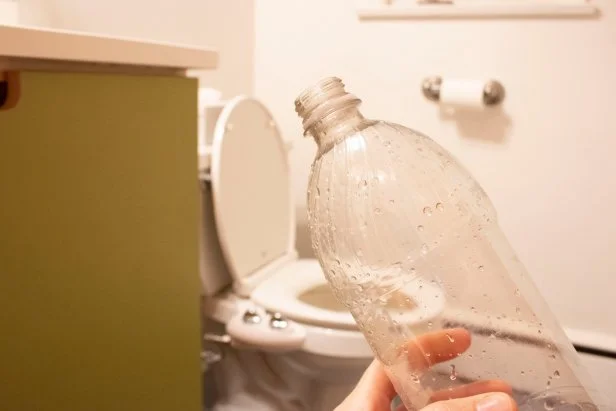
Use a water bottle to clear a clogged toilet
If the plunger didn’t work, try an enzymatic drain cleaner that’s safe for both septic and sewer systems.
- Measure a volume of cleaner based on the manufacturer’s instructions
- Pour the cleaner directly into the toilet basin and allow it to sit for 30 minutes
- Flush the toilet. Remember to turn the water back on if you shut off the supply.
- Pour in hot water and flush again. Some cleaners recommend force-cleaning the drain pipe with hot water to dilute the cleaner and force it through.
How to Unclog a Toilet With an Auger (or Plumbing Snake)
If using a drain cleaner and a plunger didn’t work, try a toilet auger (also known as a plumbing snake). You can get one at most hardware stores for $20 to $50.
- Take the end of the auger and place it into the toilet bowl. The trick to using an auger is to get the cable right through the throat of the toilet.
- Put a little pressure on the cable and start turning the auger. This will extend the cable down into the drainpipe. While pushing down, you should feel the auger drop into the drain.
- Once the auger approaches the clog, give it a little extra pressure. The end of the auger will punch a hole in the clog, creating an opening for water to flow to the sewer or septic tank. You may notice the water level in the toilet drop at this point.
- Retract the auger from the plumbing. Remember to wash the auger thoroughly after use.
- If water levels have returned to normal, turn the water back on and flush to see if you cleared the clog. If not, a plunger may also be used in conjunction with an auger in order to create suction that can blast out any material that may still be clinging to the hole that was punched out by the auger.
Note: The toilet and the bathtub normally share a drainage pipe, so if the clog is too impacted for the auger to punch a hole, the whole clog could be shoved so deep that the bathtub becomes clogged as well. Once you unclog the toilet, be sure to check your bathtub drainage.
If you are unable to remedy the clog yourself, you may choose at this point to hire a professional. A plumber will likely use an industrial auger that has over 100 feet of steel cable. The long-reaching auger can extend all the way to the septic tank or main sewage line to clear out the clog.
If Toilet Is Still Clogged, Remove It

Illustration by Claudia Rhea
Twisting a toilet auger into your drainpipe makes it easier to puncture and eliminate deep clogs.
If you can't unclog the toilet with a plunger or an auger, you'll need to remove the toilet to get better access to the drain. This is certainly something you can learn to do yourself as a homeowner, but if you have reservations it may be best to call a professional plumber.
- Turn off and disconnect the water supply. Use a shop vacuum to remove the standing water from the toilet. Unscrew the two bolts at the toilet's base, lift the toilet and slide it forward. Tip: Lift the toilet from the rear so any water still remaining will flow towards the front of the bowl instead of onto the floor.
- Most toilets use a wax seal or o-ring between the bottom of the toilet and the floor. If you remove your toilet, plan to get a new seal before you replace it.
- Use the auger again to access the drain pipe. Going directly into the pipe enhances maneuverability and offers you more control than you have when you thread it into the toilet bowl.
- Extend and retract the auger until you feel that the clog has been removed
- Clear the pipe. Run water from the toilet's supply line down the drain for about two minutes to ensure the clog is completely gone
- Lastly, clear the auger after use
Reattach the Toilet
If the drain is clear, you can safely reconnect the toilet.
- Fit the new wax seal on the drain pipe and lower the toilet onto the ring. The weight of the toilet will compress the wax or other material to create a water-tight seal. If wax, you may also want to sit on the closed toilet to add more pressure to the seal until the toilet is flush with the floor.
- Screw the bolts back on and reattach the water supply line. Be sure to flush the toilet a few times after replacing it to make sure the water is draining properly. Check around the edges of the toilet base for unexpected moisture. Never caulk around the base of a toilet as it will seal moisture from the pipe and make it harder to detect leaks early.

Illustration by Claudia Rhea
How to Prevent Toilet Clogs
To prevent a clogged toilet and avoid potentially costly repair expenses, follow these simple tips:

- Only flush toilet paper and human waste. That's all. So, no paper towels, diapers, cleaning and facial wipes or feminine hygiene products.
- Put a waste bin in the bathroom. Close to the toilet to encourage everyone to dispose of other items properly.
- Inform your children and guests. Make sure your children and guests know that only toilet paper and human waste are to be flushed.
- Install a bidet. Attaching a bidet to your family toilet can actually help you cut down on toilet paper usage! Children especially can be prone to using too much toilet paper leading to unexpected clogs but a bidet can help minimize blockages.