6 Best Loppers of 2026, Tested and Reviewed
Give your trees, bushes and shrubs the attention they need with these high-performing garden loppers.


Amy Marturana Winderl
Tested by Amy Marturana Winderl
While some trees, bushes and shrubs are low-maintenance enough to require little to no care, most people have at least one needier variety in their landscaping and yards. And often, a little bit of hard pruning can go a long way: Cutting back old branches makes way for healthier growth, which can be key for production (for something like a fruit tree) or just aesthetics.
That's where tree and garden loppers come in. Hand pruners have their time and place, but when it comes to cutting through thicker branches that require some good leverage and clean, sharp cuts, loppers really are the way to go.
To help you find the right pair, we tested 20 loppers. Below, you'll find our picks for the best loppers for your gardening and landscaping needs.
Our Top Tree Lopper Picks


Amy Marturana Winderl
How We Tested
After doing extensive research on the loppers available on the market, which ones are bestsellers and which ones get great reviews, we ordered 20 different pairs to try. Luckily, loppers come fully assembled (except for battery-operated ones, which mostly just need a charge before use). When they arrived, we opened each box, looked over the product for any flaws, read any included manuals, and got to work with our testing agenda specifically meant for finding the best loppers.
Performance Test: We used the loppers to cut through a variety of branches, vines, plants and bushes, cutting at least 10 to 20 times per lopper. We noted how the tool performed — whether it cut cleanly or bent or crushed the branch — and observed that the cut capacity listed on the product description was accurate.
Functionality Test: As we did our pruning, we paid attention to how the tool functioned overall, noting how easy it was to control and if we needed to reposition or apply extra pressure to make the cut.
Design Test: The tool had a wide variety of handle lengths and grip materials. While testing, we paid attention to how the pruners felt in our hands and if they were comfortable or not. We also noted how heavy the tool felt and how fatigued our arms and hands felt after using it.
Durability Test: To judge how durable the loppers were, we dropped each pair from waist height onto the driveway, to simulate everyday clumsiness, and noted how they held up. We also checked each pair after we used it and noted any signs of damage, like chipping or bending.
Pruning Tips From Our Gardening Experts
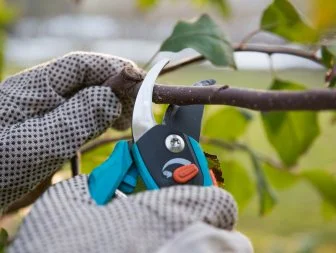
How to Prune a Tree
Pruning trees doesn't have to be a daunting process. Learn how to quickly and easily prune the trees in your yard.

Must-Have Pruning Tools
Whether you're deadheading flowers or tackling overgrown shrubs, there's a pruning tool made for the job.
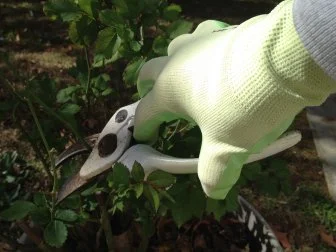
How to Prune Shrubs
If your yard is looking a little overgrown, your shrubs and bushes may need a trim. Here's what to cut and what to leave.

- Clean cuts
- Dual-position grips
- Durable build
- No lock
Made of high-carbon steel and with a two-inch cut capacity, this pair of heavy-duty bypass loppers by Milwaukee checks off all the must-have features for a quality landscaping tool. Its long handles and dual-position, ergonomic grip make it easy to get the exact amount of leverage you need (by simply choking up or down on the handles) to effectively cut through thicker branches.
During testing, we found this lopper consistently cut cleanly and could tackle sizeable pieces of wood with relative ease. The long handles made it easier to reach branches farther away, and it was possible to maneuver for awkward angles and overhead cuts. It's on the heavy side, so our wrists and forearms got a bit fatigued using it. But it's a reliable pair of loppers that gets the job done efficiently and is made of quality materials that will last over time — even if it does give your arms a workout.
- Type Bypass
- Blade Material High carbon steel
- Cut Capacity 2 inches
- Length 33 inches
- Weight 3.95 pounds

Amy Marturana Winderl

Amy Marturana Winderl

Amy Marturana Winderl

- Cuts cleanly
- Extendable arms
- Inexpensive
- Smaller cut capacity
- Heavy
A clean, frictionless cut, extendable handles and a replaceable blade, all for under $50? These anvil-style loppers by WORKPRO are a solid option for anyone who needs to cut through smaller branches regularly and needs a reliable tool that's comfortable to use, even for beginners.
The loppers cut pretty effortlessly through both live and dead branches, and we appreciated being able to adjust the handles depending on what sort of grip and angle the job called for. While some loppers with telescoping handles feel a little flimsy fully extended, these still felt sturdy and didn't bend under pressure. We were able to cut both live and dead wood without an issue. The cut capacity is smaller than some of the other options, and the tool is heavy, so it's not the best choice for aggressive, heavy-duty pruning and is better suited for smaller jobs. For an affordable price, if you're more of a light gardener and landscaper, you really can't beat it.
- Type Anvil
- Blade Material Carbon steel
- Cut Capacity 1.6 inches
- Length 25 to 37 inches
- Weight 5.39 pounds

Amy Marturana Winderl

Amy Marturana Winderl

Amy Marturana Winderl

Amy Marturana Winderl

- Ratcheting mechanism
- Telescope handles
- Locking catch
- Grips are not as ergonomic as others
The ratcheting mechanism on the Spear & Jackson Telescopic Ratchet Anvil Loppers makes it easy to cut through branches without needing to rely on your own brute strength. The telescoping handles — simply twist the bottom of each handle to release it and twist again to lock — and nonslip grips make it even easier to get the leverage you need. There's also an added locking feature to prevent accidents.
After testing so many loppers without a ratchet feature, we really appreciated this one. Pulling lopper handles from fully open to fully closed requires a lot of muscle; the ratchet breaks the cut down into four smaller steps, which was a welcome relief for our arms and backs. The blade felt very sharp and made clean, easy cuts, and feels study and durable, with no noticeable wear or other issues after testing. The lock is simple to flick on and off, and a nice-to-have safety feature that's missing from every other pair of loppers we tried.
- Type Anvil
- Blade Material Carbon steel
- Cut Capacity 2 inches
- Length 28 to 40.5 inches
- Weight 4.17 pounds

Amy Marturana Winderl

Amy Marturana Winderl

Amy Marturana Winderl

Amy Marturana Winderl

- No-effort-required cuts
- Good battery life
- Dual-trigger safety feature
- Heavy
- Handle is not very ergonomic
A battery-powered lopper significantly reduces how much labor you have to put in. With up to 101 cuts per charge, this option from RYOBI ups the efficiency, allowing you to make cuts with just the pull of a trigger. It's especially convenient if you have other yard tools in the RYOBI ONE+ 18V system, which share the same batteries. The dual trigger is a nice safety feature, ensuring you don't accidentally activate the blades when you don't mean to.
This tool made the actual cutting part of the job effortless. The blade is smaller than some of the others and has a cut capacity of just 1.25 inches, but it works really well and is great for smaller trees and shrubs. While the battery pack makes the actual cutting part a no-strength-required ordeal, the tool itself is pretty heavy. But we found it was worth it and could handle lugging it around the yard since we didn't have to put any muscle into the actual cutting part. The battery is strong when fully charged, and we didn't even get close to running it low enough to need a recharge.
- Type Bypass
- Blade Material Carbon steel
- Cut Capacity 1.25 inches
- Length 30 inches
- Weight 5.6 pounds (without the battery)

Amy Marturana Winderl

Amy Marturana Winderl

Amy Marturana Winderl

- Easily slices through wood
- Adjustable handle length
- Lightweight
- Smaller cut capacity
If adjustable handle length is a priority, you're going to want to opt for a lopper with telescopic handles. The TABOR TOOLS Extendable Bypass Loppers extend to 40 inches and can be locked in at six different positions. Weighing in at under four pounds, it's lighter than many of the other loppers we tested, though the cut capacity is on the lower end.
The easy-adjust handles on these loppers make them versatile for cutting many different branches from all angles, allowing you to get the distance and leverage you need. The buttons that unlock the handles are very easy to press, which we appreciate, especially when adjusting with work gloves still on. When it comes to the actual cutting, we found the tool was sharp and easily sliced through wood.
- Type Bypass
- Blade Material Carbon steel
- Cut Capacity 1.5 inches
- Length 27 to 40 inches
- Weight 3.8 pounds

Amy Marturana Winderl

Amy Marturana Winderl

Amy Marturana Winderl

Amy Marturana Winderl

- Durable
- Large cut capacity
- Comfortable handles
- Heavy
With the largest cut capacity of all the loppers on our list, the Corona Tools X Series Pro Bypass Loppers are meant for heavy-duty pruning work. They're made mostly of metal — no plastic components to worry about breaking or degrading in the sun over time. And the handles are covered with a long length of contoured rubber that provides a comfortable grip and makes it easy to choke up higher if you need to change your leverage point.
These loppers provided a nice, clean cut with minimal effort on both green and hardwood. They're on the heavier side, so we found our arms getting tired after using them for a little while. But they are a powerhouse and a great option for heavy-duty pruning, and they feel like they will last for a very long time. The blades are also sharpenable and fully replaceable, so you can make the loppers as good as new when the time comes.
- Type Bypass
- Blade Material Carbon steel
- Cut Capacity 2.25 inches
- Length 32 inches
- Weight 4.6 pounds

Amy Marturana Winderl

Amy Marturana Winderl

Amy Marturana Winderl

Amy Marturana Winderl
What to Consider When Buying Loppers
Blade Type: Loppers generally have two options for blade types: bypass and anvil. Bypass features two blades that pass each other to slice through a branch — like scissors — and are best for making clean cuts that are beneficial for live growth. Anvil-style loppers have one sharp blade and one flat side — akin to a knife on a cutting board. This allows for more of a crushing effect, which can potentially damage greenery but is more effective for cutting back dead or hard wood.
Mechanism Type: Many of these tools use a manual or single-pivot mechanism, which means they have one simple pivot point connecting the two sides together. But other loppers have a ratcheting mechanism, which allows you to break the cut down into a few smaller cuts, reducing how much brute force you need to use to slice through an object. A compound-action lopper (aka dual-link or geared leverage) uses an additional pivot point or gear to connect the two sides of the loppers, which results in better leverage and less required muscle strength. Finally, battery-powered loppers also exist, and they use a motor to close and open the blades.
Cutting Capacity: Every lopper has a cutting capacity, which describes the maximum diameter of a branch that it can cut. While a larger capacity may be necessary for certain tasks, you may only need a smaller cutting capacity for the trees and shrubs on your property. Often, loppers with smaller cut capacities can be less expensive.
Length & Weight: The handle length of your loppers makes a big difference in how much leverage you can get. In general, the longer the handles, the more weight you can put into the tool from powerful muscles like your shoulders and back. The shorter the handles, the more you have to rely on your hands and arm strength to make the cut. However, shorter handles can make it easier to control the loppers and typically translate to the tool being lighter overall.
Blade Material: Most loppers are made of carbon steel, which is a strong metal alloy. The higher the carbon, the harder and more durable the metal is. Some loppers also feature a nonstick coating on the blades (not unlike a nonstick pan), which can help reduce friction and sap buildup.
Grip & Comfort: It’s important that your loppers are comfortable to hold and that you can get a solid grip on them. Many models feature grips made of plastic, rubber and foam. The more grippy material covering the handles, the better you'll be able to hold them to get the leverage you need to make cuts and reduce hand fatigue.

Amy Marturana Winderl
Frequently Asked Questions
What do you use loppers for?
Loppers are used for pruning small tree branches, and can also be used for trimming back bushes, shrubs, vines, and other greenery and wood up to three inches in diameter. They can be bypass-style (two blades that cut like scissors) or anvil-style (one blade and one flat side that functions like a knife on a cutting board).
What's the difference between pruners and loppers?
Pruners, or hand shears, are small, handheld tools that cut through stems and small branches. Loppers, which are much larger, are meant to cut larger branches and pieces of wood, usually used to cut back dead parts of trees to help promote new growth and encourage a better shape.
How do you sharpen loppers?
Most loppers can and should be sharpened when the blade starts to feel dull. To sharpen loppers, use a carbide sharpening tool or a sharpening stone. A millstone can also be used to rehab very dull blades. Always read the instructions for your individual loppers to make sure the blade can be sharpened (some materials may not be) and follow any instructions for what exactly to use to avoid any damage.
How do you clean loppers?
To clean loppers, first wash with soap and warm water and scrub with a nonabrasive sponge or brush. To remove sap and other stubborn residue, you can try using white vinegar or isopropyl alcohol. If there's rust buildup on your loppers, you can remove it with steel wool. Always make sure to let your loppers dry completely after cleaning to prevent more rust from forming.

Amy Marturana Winderl
Other Loppers We Tested
We tested the Fiskars 32-Inch Heavy-Duty Bypass Steel Loppers, which use geared leverage and felt comfortable in our hands. But the coating on the blade was starting to chip off after just a few cuts, so we didn't expect they'd be durable for the long haul.
These VEVOR 32-Inch Anvil Loppers seemed like a steal for the price, and we liked how they cut. The issue was that bark kept getting stuck in the blade, and we had to manually pick it out each time — not something we want to be doing for both efficiency and safety reasons.
During testing, we realized just how important a comfortable handle is. We tested a good number of loppers that we really liked for their cutting performance, but ultimately didn't recommend because we didn't like the grip or handle, like the Corona Tools 30-Inch ComfortGEL Bypass Loppers (the grips were too small and felt sticky, with dirt immediately attaching) and the Original LÖWE 31.5-Inch Professional Anvil Loppers (the plastic handles had no grip or shock absorption).
More Pruning Tools We've Tested and Loved
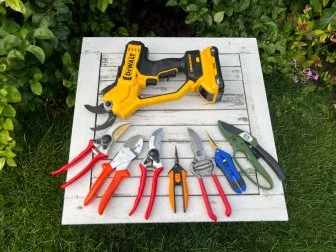
The Best Pruning Shears, Tested and Reviewed
Make every garden clean-up a breeze with the right pair of pruners.

The Best Electric Pruners, Tested and Reviewed
Make your pruning chores easier with these top electric pruners.

The Best Hedge Trimmers, Tested and Reviewed
A sharp hedge trimmer makes short work of annual shrub maintenance.
Why You Should Trust Our Tester
Amy Marturana Winderl has been testing products and writing reviews for editorial publications for over a decade. She's tested everything from makeup and skincare products to fitness apparel, sneakers, gym equipment, hiking and camping equipment, and gardening tools and accessories. She has also tested products and written copy for SELF's beauty and fitness awards and Outside's gear guide. For HGTV, Amy has tested a variety of home and garden products, including garden hoses, hose reels, gardening carts and wagons, pop-up canopy tents and bath mats.
Why You Should Trust HGTV Shopping Experts
HGTV Shopping Experts believe the best method for testing products is based on how our fans are going to use them in the real world. In each of our Tested and Reviewed stories, products are not tested in sterile laboratory settings that don't mimic real life. Instead, we test products in real homes that reflect our readers' real lives, which can also include pets, kids, partners and more. We follow rigorous testing rubrics designed by our expert editors and take copious notes during the testing process. When choosing our top picks, we evaluate all of our testing data and take into consideration many factors, including ease of use, price, product availability and practicality. Our goal is to choose the best products for our readers.


.jpg.rend.hgtvcom.231.174.85.suffix/1738869872256.webp)


.jpg.rend.hgtvcom.231.174.85.suffix/1738869389274.webp)