How to Create Supportive Surroundings
From lifestyle changes and self-care to community and professional support, the tool kit for tackling anxiety is getting bigger and more effective all the time. The very spaces in which you live your life can help you to meet its challenges — and we’ve consulted experts of all kinds to show you just how to put them to work. When it comes to starting the day with a calm and collected mind, there’s no place — and no ally — quite like home.
Self-Care Tips to Alleviate Anxiety
More photos after this Ad
Photo: Bob Croslin
2 / 31
Warm Up (and Chill Out) Beside a Fire
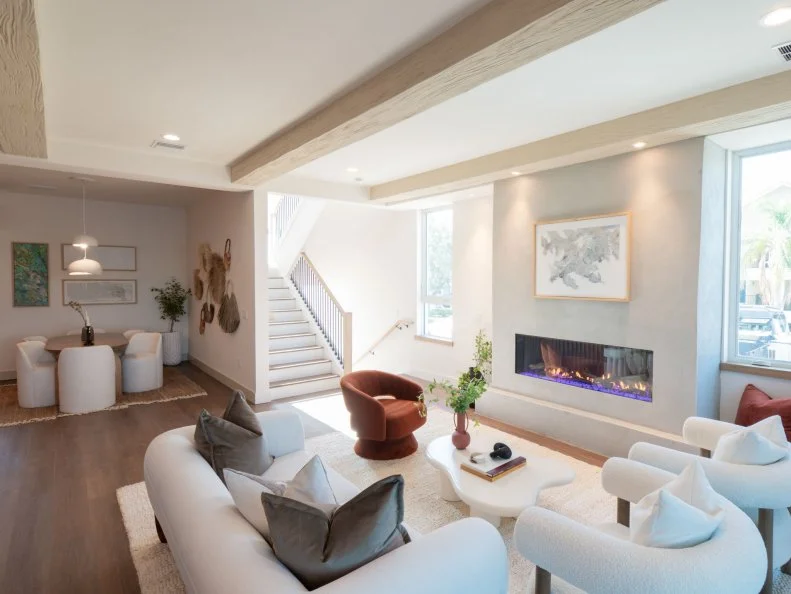
The sleek gas fireplace Fix My Flip’s Page Turner and Mitch Glew installed in this luxurious Florida living room is much more than an attractive architectural add. As researchers have demonstrated, looking at hearths and campfires can induce relaxation so effectively that they can actually decrease our arterial blood pressure. That benefit is just as accessible, believe it or not, if you’re watching a fireplace video. Experts found that focusing on the flames’ appearance and sound “induce[s] relaxation as part of a multisensory, absorptive and social experience.”
See More of Page and Mitch's Serene, Tulum-Inspired Project
More photos after this Ad
Create Functional Storage That Also Delights
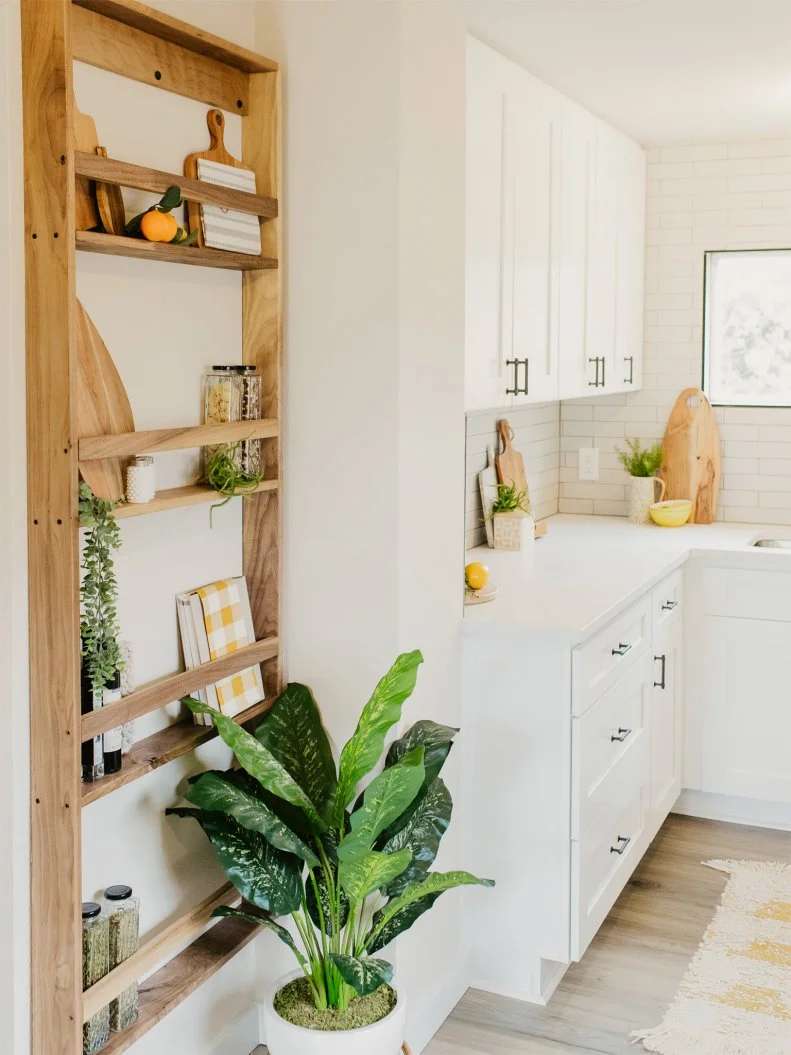
Research has suggested that negative feelings about clutter and disorganization can be especially hard on women, which experts speculate may be a biological effect of societal expectations. All of us can reframe how we feel about our spaces with a page from the Unsellable Houses gals' playbook: joy-sparking twins Leslie Davis and Lyndsay Lamb DIYed this once cookie cutter spice rack to create one-of-a-kind kitchen storage that turns disparate items that would otherwise clutter up countertops into a creative catch-all that’s also easy on the eyes.
See More of the Sisters' Creative DIYs
More photos after this Ad
Photo: Adam Murphy
4 / 31
Opt for Matte Rather Than High-Gloss Finishes
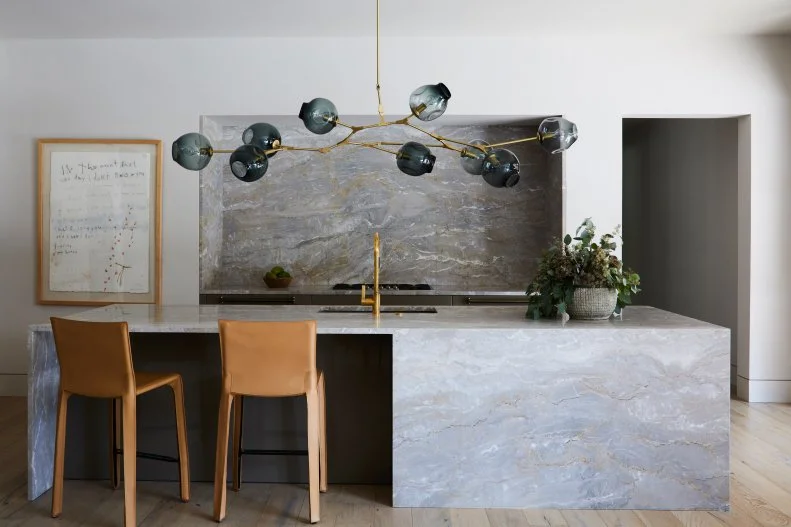
With a background in psychotherapy, Tulsa designer Jill Croka focuses on residential designs that employ the insights she gained in that training. In this serene kitchen, for example, she foregrounded the naturally soothing patterns in the spectacular stone backsplash and island by choosing finishes that don’t glare and reflect light. “Organic lines, as you see in wood and stone, when they have a matte finish, lower one’s blood pressure,” she told HGTV. “They are cues our body reads from the natural world. I prefer all stone to be honed or leathered to aid in the contribution of resting our senses.”
Learn More About How Design Can Help Us Heal
More photos after this Ad
Soothe With Symmetry
Neuroscientists know that well-balanced scenes and spaces are more than just aesthetically pleasing. Research has demonstrated that our brains respond positively to symmetrical stimuli, and psychologists posit that symmetrical design and decor alleviate anxiety for that very reason. Take a page from Mika and Brian Kleinschmidt (100 Day Dream Home)’s book. Anchor your space with a few key pairings — as in this living room, where matching lower cabinets, floating shelves and armchairs flank the fireplace — then layer in accessories that will add visual interest without undermining that fundamental serenity.
More of Mika and Brian's Best Design Ideas
More photos after this Ad
Relax in a Rocking Chair
Decades of research have demonstrated that rocking isn’t just for babies or elderly people (although it’s proven to be helpful for them as well). Because it stimulates the parasympathetic nervous system and causes our bodies to release endorphins that can help us regulate moods, tackle stress and even get to sleep more easily, making use of a rocking chair is an effective anxiety-buster for the rest of us, too. This tufted blue rocker and ottoman started out in Home Town design maven Erin Napier’s nursery when she welcomed her first daughter in 2018, but we have a feeling it’ll have pride of place in the house for a long time.
See HGTV Stars' Cozy, New-Parent Spaces
More photos after this Ad
Deploy Gallery Walls in Relaxation Spaces
According to a 2021 research review, art can be both ornamental and therapeutic. Subjects in 13 studies reported reduced stress after viewing art, and four studies found links between viewing art and lowering blood pressure. The researchers noted that more study is needed to determine how various media and subjects affect us — so we’d argue that the best way to cover your bases is to splash out with a cheerfully eclectic array like this one.
More Gallery Wall Ideas to Transform Your Space
More photos after this Ad
Perch a Bird Feeder Where You Can See (and Hear) It
Backyard birding exploded in popularity at the start of the pandemic, and scientists expect that hobby to keep on soaring. That’s because seeing or hearing birds can improve our mental wellbeing for up to eight hours, according to a recent study. We’re not saying you need to build a full-fledged (no pun intended) duck house like the one Farmhouse Fixer’s Jon Knight created for his family home — but if you’re lucky enough to have windows like the ones in his kitchen, seen here, be sure to treat yourself to the natural sights and songs beyond them.
Tour Jon’s Relocated Family Farmhouse (and Duck House)
More photos after this Ad
Photo: Organic Aromas
9 / 31
Tap Into Aromatherapy
To introduce an atmosphere that’s relaxing in its own right, use a sleek essential-oil diffuser to carry the scent of lavender throughout your rooms. Used for medicinal and therapeutic purposes (and even to tame lions and tigers) since the first century AD, lavender has also starred in decades of contemporary scientific studies as an effective means of reducing stress. We like this teardrop shaped hardwood and glass nebulizing diffuser, which can infuse up to 800 square feet with the scent of your choice.
BUY IT: Organic Aromas, $98
See HGTV Editors' Favorite Aromatherapy Products
More photos after this Ad
Turn Down Contrast and Aim for Rich Hues
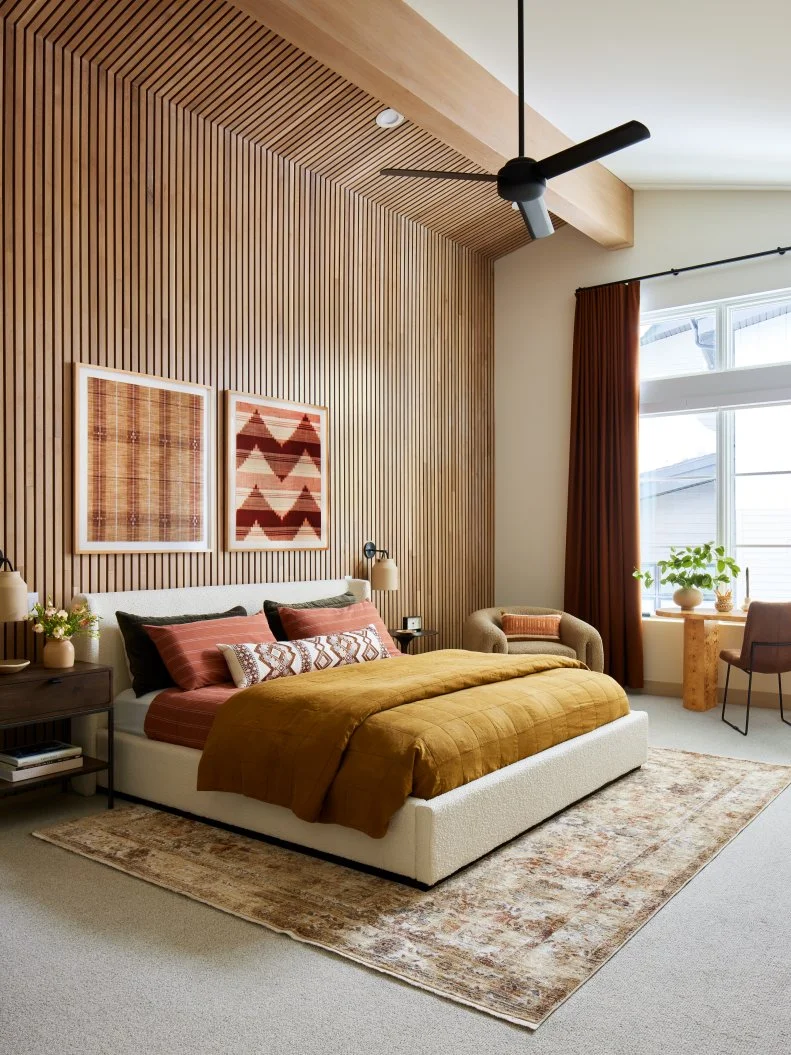
Think of the bold, black-and-white patterned mobiles developmental psychologists love to recommend to new parents. Perfect for keeping babies' eyes moving and stimulating rapidly growing brains, right? Now imagine an adult retreat as the opposite of that educational play tool, as in Jasmine Roth (Help! I Wrecked My House)’s ultra-cozy bedroom. This room is layered, but it’s dimensional rather than busy — and the rusts, goldenrods and umbers she chose for the walls and bed are enveloping rather than energizing. Look for mid-tone patterns and colors like these when your brain needs a break.
See More of Jasmine's Cozy Winter Getaway
More photos after this Ad
Photo: Brittany Bah Photography
11 / 31
Refresh Your Rooms With Blooms
From stressed-out college students to patients recovering from surgery, researchers have found that subjects of all kinds benefit from sharing space with fresh flowers. In the case of the surgical patients, study authors went so far as to suggest that the plants could function as “complementary medicine.”
Lower rates of anxiety and depression and increase positive feelings and higher satisfaction with one’s surroundings? Sounds good to us — and to designers like Amber Guyton of Atlanta’s Blessed Little Bungalow, who created this living room for her clients. “Fresh flowers can make any space feel better, even if just a simple arrangement,” Amber says. “It brings another aspect of life and pop of color into the room, often with low cost and effort. I encourage my clients and friends to add purchasing fresh flowers to their grocery run or weekly routine to enhance their homes.”
How to Choose Long-Lasting Cut Flowers
More photos after this Ad
Photo: Brittany Bah Photography
12 / 31
Incorporate Green Into Your Design
A study that measured stress, anxiety and pain experienced by dental patients found that those exposed to the color green registered lower levels of those negative reactions. Scientists also note that because our eyes don’t need to adjust to detect wavelengths corresponding to the color green (as opposed to, say, the color red, which require a great deal of adjustment), it’s quite literally easier for us to see.
Amber Guyton finds it useful from a design perspective, as on this chic paneled wall: “Although my clients love neutral colors and the black and brass elements [I] added throughout [their home], I wanted to add an accent wall with a pop of color to connect the dining space and living room,” she explains. “We used Sherwin-Williams' Basil, which is a fun green that isn't too bright or light, bringing just enough personality to the space without limiting decor changes in the new home in the future.”
These Are Our Favorite Colors That Go With Green
More photos after this Ad
Use Blues to Encourage Calmness and Contemplation
An Italian study involving interior colors of college residence halls found that the students who lived in blue spaces had an easier time orienting themselves, studying and maintaining calm moods than students surrounded by other hues. Channel some of that continental cool by deploying a shade, like this one, in rooms intended for rest and relaxation. Speaking of rest and relaxation…
Design Pros' Favorite Ways to Decorate With Blue
More photos after this Ad
Photo: Schoolhouse
14 / 31
Choose a Silent, Analog Alarm Clock
… If you’ve banished your smartphone from your bedroom (as countless studies have suggested you should), well done! Now it’s time to tone down the tech that remains. If you need an alarm clock, choose one that won’t disrupt the darkness with a glowing digital readout or keep you awake with ticking.
BUY IT: Schoolhouse, $99
See the Best-Reviewed Alarm Clocks
More photos after this Ad
Photo: Bob Croslin
15 / 31
Install Bedroom Shades That Rise With the Sun
Sleep specialists know that we need properly dark spaces to get meaningful rest — hence the importance of blackout curtains. They also report that morning light is key to jump-starting our circadian rhythms and an effective tool for tackling anxiety and depression. Maximize the benefits of restful darkness and rejuvenating sun by emulating Renovation Island's Sarah and Bryan Baeumler, who outfitted the organic-yet-high-tech main bedroom in this Florida home with smart curtain openers that admit the sun at a pre-programmed time each morning.
Tour Sarah and Bryan's High-Tech Paradise
More photos after this Ad
Photo: Adam King, Forestscapes Photography
16 / 31
Broaden Your Horizons With Landscape Photography
If you can’t calm your mind by gazing out a picture window of your own, fret not. Research has demonstrated that nature scenes reproduced on screens and canvases can settle our mental landscapes as well. Hang a handsome vista, like this one, (in Kelowna, British Columbia, photographed by Adam King) anywhere your eyes could use a vacation, and know that just five minutes of considering it can affect your mood and self-esteem.
BUY IT: Forestscapes, $27-$51
The Best Places to Buy Affordable Art Online
More photos after this Ad
Photo: Rebel Walls
17 / 31
Or, Go All in With a Mural
For an even more immersive version of this effect, tap into the Japanese concept of therapeutic “forest bathing” with wallpaper that surrounds your space with restorative greenery. An Amazonian scene like this one? About $5.99 per square foot from Rebel Walls. Escape from the mental jungle of day-to-day stressors? Priceless.
Nature-Themed Wallpapers That Bring Your Hike Home
More photos after this Ad
Arrange Seating to Face the Windows
If you do have a view? Drink it in! As environmental psychologists explain, we evolved from primitive humans who felt most comfortable when their backs were protected and they had visual access to anything that might approach them. The vestiges of those instincts are still with us, which is why rooms often feel most relaxing when arranged so that the primary user faces entrances and views — as in this cozy sitting space No Demo Reno’s Jenn Todryk oriented around the largest window. If your sectional or sofa makes more sense in the middle of the room, use a console table or plants to give it a bit of backup.
See More of Jenn's Best Design Ideas
More photos after this Ad
Aim for Warm, Ambient Living Room Light
To create a cozy, social space that’s conducive to conversation (and associated with lower levels of cortisol and other stress markers), choose fixtures that brighten your room without spotlighting specific areas. Consider how the pendant and table lamp, in this chic sitting area, both up light the room, meaning the glows they cast will be reflected and diffused. When selecting light bulbs, look for color temperatures between 2700 and 3500 degrees Kelvin (the low end of the spectrum, which includes red, yellow, orange and some white light).
Living Room Lighting Design Ideas
More photos after this Ad
Pare Down Decor, and Rotate Liberally
Striking a balance between layering spaces with meaning and stopping short of visual messages that become overwhelming (since clutter, as researchers tell us, trips up our thoughts and feelings as readily as it clogs up our spaces) is all about pacing. Get a similar look by changing up your own displays with the seasons. Let a few pieces take center stage, then tuck them into storage and bring in new ones every few months.
Learn About Decluttering for Self Care
More photos after this Ad
Photo: ATX Interior Design
21 / 31
Mix Creamy, Calming White With Warm Neutrals
Neutral tones don’t activate us in the same way that vivid, energizing ones do. Look for warm, grounding hues that suggest nature without shouting, as in this serene Austin, Texas, living room that Laura Williams of ATX Interior Design created for her own family. “While I love the fun of designing a bold space, I find that walking into a neutral space that has warm accents, you want to stay forever,” she says.
More Neutral Living Room Ideas From HGTV Stars
More photos after this Ad
Photo: ATX Interior Design
22 / 31
Boost Relaxation With Rounded Shapes
There’s science behind your affinity for that funky blob sofa your partner isn’t sure about. Rounded (as opposed to rectilinear) furnishings “elicit higher amounts of pleasant, unstimulating emotions (such as feeling relaxed, peaceful and calm),” according to researchers. While that doesn’t mean you need to fill your home with beanbag chairs (unless that’s your thing), it does make a case for handsome choices like this armchair, which balances the right angles in Laura’s living room.
See More Playful Pieces and Spaces
More photos after this Ad
Photo: ATX Interior Design
23 / 31
Tend to Your Emotions With Plants
Laura’s mantel has a good mix of greenery, objects and images — and if we might dwell (no pun intended) on Laura’s greenery for a moment, it’s worth noting that plants reduce our anxiety as effectively as flower arrangements do. “I love to incorporate plants into all of my designs,” she says. “Not only are they beautiful, but greenery in your home has so many benefits beyond their look. While plants do improve the air quality in your home, they also give homeowners a sense of connection to nature that otherwise they wouldn't feel. Bringing nature indoors naturally reduces stress and provides a sense of tranquility.”
Read More on Easy-Care Houseplants
More photos after this Ad
Install Dimmer Switches and Bulbs
We humans are hard-wired to take behavioral cues from the position of the sun — and in spaces where natural light isn’t readily available to tell our brains when to perk up and calm down, artificial light provides those nudges. Take control of those cues and avoid inundating your senses by making liberal use of dimmers.
How to Install a Dimmer Switch
More photos after this Ad
Prioritize Indoor-Outdoor Living
Depending on your location and season, leaving the door open all day (as Leanne Ford loved to do in the bedroom of her own dreamy Los Angeles cottage — which she ended up selling to singer Lana Del Rey, speaking of icons of relaxation) might not be an option. That said, throwing back shades, opening windows, rearranging furniture and even choosing wall colors to prioritize interactions with the world beyond our rooms whenever possible are proven ways to escape the confines of our own minds.
See the Rest of Leanne's Cottage
More photos after this Ad
Photo: Blynda DaCosta Photography
26 / 31
Wind Down (and Brighten Up) With Textures
Haptics, or the feedback we receive through our sense of touch, can be just as influential to our mood as what we perceive with our eyes and ears. A study published on Consciousness and Cognition found that soft and smooth surfaces (as opposed to rough or spiky ones) are most associated with happiness — especially furry and silky surfaces. Might it be time to bring home a plush throw?
Budget-Friendly Ideas for a Cozy Bedroom
More photos after this Ad
Photo: Dawnhoffmann.com
27 / 31
Think Strategically About Ceilings
Environmental psychologists explain that we think more creatively and expansively in rooms with 10’ ceilings than those which top out at 9’ or lower — and that really low ceilings (5’, or about the height of the average canopy bed) are associated with intimacy. As Mika Kleinschmidt, Kim Wolfe and Kim Myles created this luxury suite for 100 Day Hotel Challenge, they considered all of those moods, leaning into the low ceiling’s intimacy here in the sleeping area, where they emphasized its closeness with a canopy. In the easy-breezy sitting and dining area, by contrast, they kept the ceiling and walls monochromatic and unadorned to make its dimensions feel as spacious as possible.
Tour All of Team Mika’s Luxe, Retro Spaces
More photos after this Ad
Photo: Joseph Bradshaw
28 / 31
Use Subtle Rather Than Saturated Hues
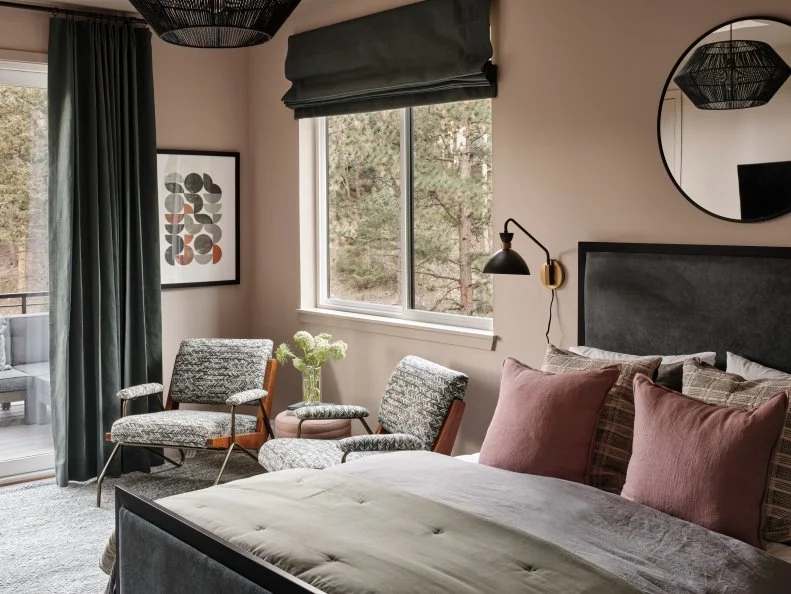
Saturated and bright colors are linked with emotional arousal, which is excellent for workouts, brainstorming sessions and cocktail parties, and less desirable at bedtime or after a trying day. To create a space that feels like a warm, supportive hug, as opposed to a tackle, deploy the sort of barely-there tones you’d see in the sky at dawn or sunset.
See Interiors With Barely-There Shades of Pink
More photos after this Ad
Photo: Michael P.H. Clifford
29 / 31
Make the Most of Wood Grain
Environmental psychologists have found that wood in manmade settings — such as flooring, wall paneling and large pieces of furniture — can have stress-reducing effects similar to those we enjoy from living plants. For maximum benefits, they advise aiming for a sweet spot of around 45% wood-grained surfaces in any given space.
Wood-Paneled Walls That Are Anything But Dated
More photos after this Ad
Photo: Zeke Ruelas, Stylist: Carl John Sandgren.
From:
Dee Murphy
30 / 31
Deploy Soundproofing Techniques
Unless your home doubles as a recording studio or podcasting space, you probably don’t need acoustic panels or tiles in your space. On the other hand, decreasing sound pollution from room-to-room (by replacing hollow-core doors with solid ones), floor-to-floor (by layering in pads and area rugs) and interior and exterior spaces, (by installing noise-reducing curtains on windows and ensuring windows seal tightly) can improve everything from the quality of your sleep to your moods and mental health.
How to Soundproof a Room, Including Doors and Windows
More photos after this Ad
Let Your Space Breathe
The simplest way to cultivate a home that complements your mental health is to give yourself less to dwell on (and in). Might it be time for a make-under that subtracts a seat, clears a wall or empties a few shelves — or a simple rearrangement that improves the flow through your rooms? Experts contend that simply shifting your stuff into new configurations can spark creativity and feelings of satisfaction — and that hypothesis is worth testing.
How to Create a Floor Plan and Furniture Layout