






Lawn Mower Maintenance
A lawn care expert offers advice on how to get your mower in tip-top shape for spring and maintenance to keep it running through the season.

Yesterday's law mowers were a bit more complicated than today's.

Are you taking your mower for granted? Expect it to start on the first pull of the season? Better think about giving it a try before you really need it some pretty spring weekend, or find yourself in a long line for repairs to be done professionally.
In addition to helping ensure your mower will start every time, a good tune-up – most of which you can do yourself – helps the engine run more smoothly and gives it a longer life due to less wear and tear. It also helps with fuel efficiency and even reduces the serious amount of air pollution mowers emit.
Because of very recent, strict EPA requirements, improvements have made today’s gas engines quieter with less air pollution – a huge advancement in environmental circles.

15 Year-Round Lawn Care Tips 15 Photos
Brush up on your lawn care routine with these quick and easy tips.
But to be efficient and longer-lasting, they still require regular, at least annual, maintenance, especially in the spring after sitting up over the winter. If yours fails to crank on the first few pulls, good luck finding a nearby small-engine repair shop that will give you fast service this time of year. My local engine repair shop usually puts commercial and regular customers in the front of the line for spring tuning or repairs – it may take a week or more before you get your equipment back in working order.
And the time to find this out isn’t when the grass is too tall to find a soccer ball. Here are a few tips for getting your machine running before you really need it.
Fill With Fresh Gas and Oil
First, understand that today’s blended gasoline can go bad and get watery and gummy within just a few weeks, and even more likely over the winter. The big culprit is modern-day ethanol additives, which, when left in a gas can or mower engine, will start to turn partly into water and then separate out. Unless you empty the tank in the fall and run the mower dry, you can expect it to clog your mower’s carburetor, and even cause rubber gas lines and gaskets to degrade and fail. This is one of the most common frustrations to lawn mower repairmen, who tell me it isn’t easy to fix yourself so they get stuck with dozens a week every spring.
Avoid this first by emptying the gas tank in the fall and running the mower dry. Try to use fresh (less than a month or so old) regular ethanol-free gas, or use any of the commercial additives which prevent the ethanol from causing problems.
Changing Lawn Mower Engine Oil
Because engine oil typically starts to break down after a couple of dozen hours of running time, change it before the long season starts.
- To drain the oil without causing a gas leak, remove the gas cap and put a small sheet of flexible plastic over the opening, then screw the cap back on.
- Turn the mower over on its side – with the gas tank and air filter up, to keep it from leaking and fouling – and drain the old oil. (This goes much faster when the oil is slightly warm.)
- Dispose of used oil responsibly, perhaps by taking it to the mower repair shop where they can recycle it for you.
- Add fresh engine oil as recommended for your mower’s engine.
Check the Spark Plug
A fouled spark plug simply won’t work well. Pull the spark plug wire loose and unscrew the plug, checking for crud or rust on the firing end. Rather than try to scrape it clean, which can mess up the precise gap on the end, just take it to an engine shop and get a new one just like the old one – they are cheap, and it can make a big difference. Screw the plug back in, hand tighten and reattach the wire.
If the muffler/spark retardant is rusted out, simply unscrew and replace it.
Inspect Air Filter
Last but not least, check your mower’s air filter. These small engines use a lot more air through the engine than fuel – often 10 times as much – and can quickly get fouled with grit and debris, which causes serious strain and damage. One of the easiest yet most important things to check is the air filter. Replace a pleated paper type filter with a new one; clean a foam filter that’s in good shape by squeezing soapy water through it. Let it dry, then squeeze a little motor oil through to help trap more stuff for a cleaner engine.
Lawn Mower Maintenance Summary
- Make sure your gas is clean and fresh – no ethanol if possible, or use a fuel enhancer.
- Loosen spark plug wire, unscrew spark plug, and clean or replace if needed.
- Clean or replace air filter.
If these things don’t get the mower cranked easily with just a few pulls on the starter rope, have it checked out professionally. But make sure you check it all out earlier or risk last-minute frustration.
Is Your Mower Blade Sharp?
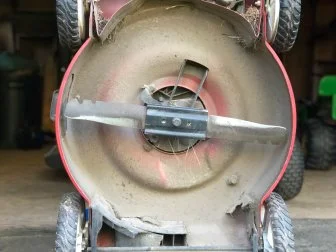
While you have the mower on its side and the spark plug disconnected, hose or scrape out those clumps of grass clippings, which can keep the blade from working well and keep the mower from cooling itself. It can also help spread clippings more evenly while you are mowing.
And if you want to make your neighbors wonder why your lawn looks so much better than theirs after cutting, have your mower blade sharpened. A dull mower blade makes a ragged cut, which leaves a distinct brown sheen to the lawn; a sharp blade makes a clean, crisp cut and according to researchers can actually increase your mower's fuel consumption by more than 20 percent. Use a piece of wood to hold the blade steady while you unscrew it, and mark the blade somehow to remind you which way to put it back on.
How to Sharpen Lawn Mower Blades: 3 Easy (and Safe!) Ways
A well-maintained lawn mower will keep your lawn looking fresh, and it starts with a sharpened blade. We show you how to do this easily and safely.
To save time, keep a spare blade on hand, so one is being sharpened while the other is being used. For that matter, consider replacing the regular blade with a “mulching” blade kit, which leaves a much finer layer of clippings that break down quickly and recycle nutrients to your lawn.

More Lawn Care Advice

12 Spring Lawn Care Tips to Ensure a Beautiful Yard All Year Long 21 Photos
Get our spring to-do list for maintaining a lush, healthy lawn year-round.


