


How to Fertilize Your Lawn in Fall
Should you add lawn fertilizing to your fall to-do list? It depends. Learn what you need to know about fall lawn feeding.

Fall brings a host of favorite activities — football, whipping up steamy pots of chili and finding the perfect pumpkin. It's also the time to start prepping your house and yard for cooler weather to come. In the midst of that flurry of chores, your lawn needs some attention, too. Treating your turf right this fall can help ensure a lush carpet of green next year. Keep reading to learn when to fertilize your lawn in the fall.
Scripps Networks, LLC
The best fertilizer for your grass in the fall is the one that's sold in your area. It's usually what's right for your region's soil and grass types.
Fall Grass Facts
As fall sweater weather arrives, that cooler air slows plant growth. Grass is no different. Below the ground, roots stay active as soil temperatures remain warmer than air. Above ground, those green grass blades are doing their photosynthesis thing, turning sunshine into plant food that's shifted from leaves to roots, where it's stashed away for future use (like in spring).
By feeding turf in fall, you help fuel this process, nourishing roots to spread and grow deeper and wider. Healthy grass roots mean a quicker green-up in spring and a thicker lawn that can crowd out weeds.
Know Your Turf
Whether or not you should fertilize your grass in fall depends on what type of turf you have. Cool-season grasses (fescue, Kentucky bluegrass) experience peak growth in fall and spring. Feeding these lawns in fall is particularly important because grass roots readily absorb fertilizer during this time of active growth. Typically cool-season lawns occur in roughly the northern two-thirds of the country.
In the warmest parts of the country, lawns are usually comprised of warm-season grasses (Bermuda, centipede, St. Augustine or zoysia). Don't fertilize these lawns after Sept. 1. Warm-season grasses enter their active growth period as temperatures swing up in spring. The right time to fertilize these turf types is from late spring to Labor Day.

James Boulette
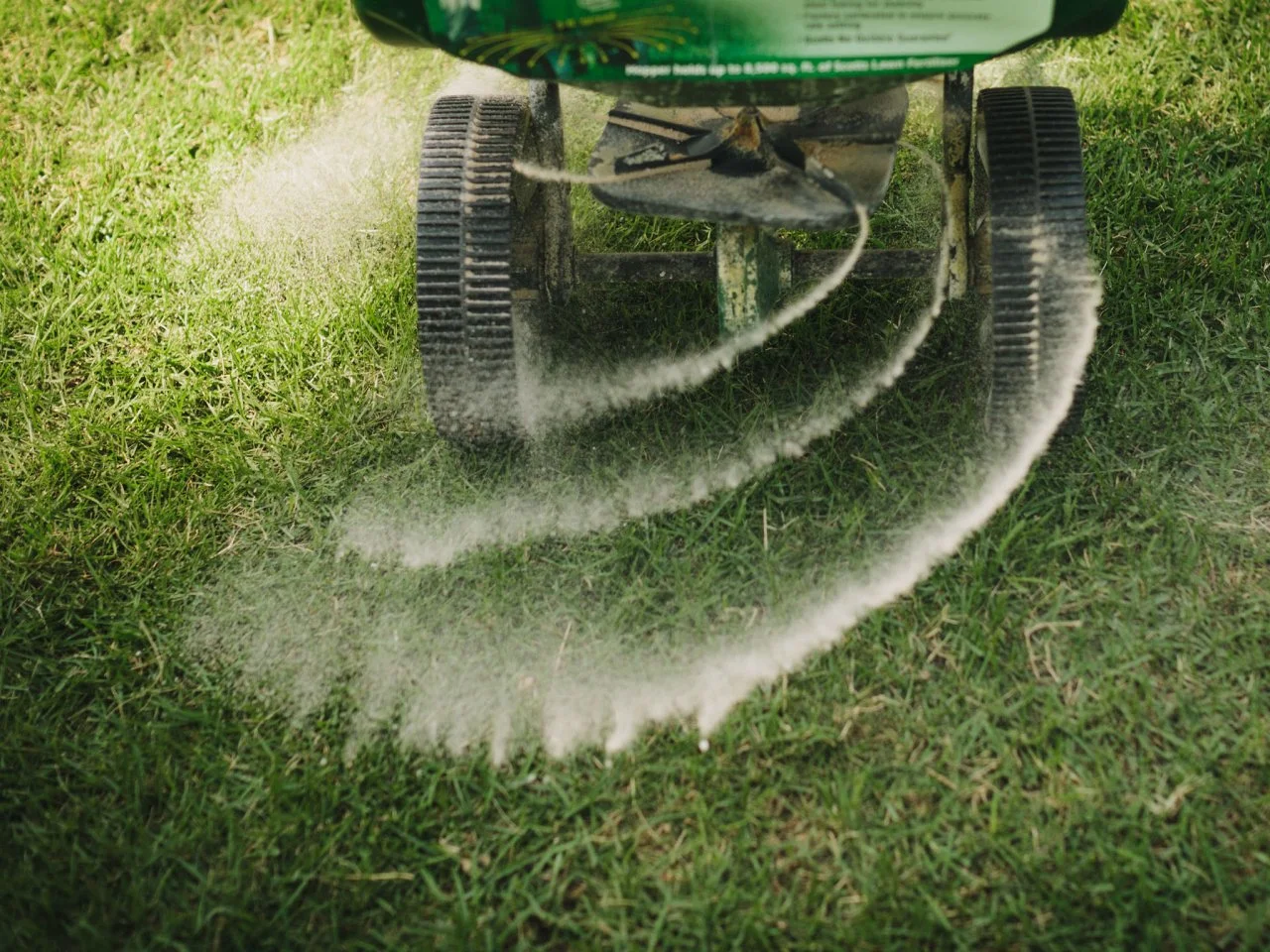
Walk slowly when spreading fertilizer for the most even application.
When to Fertilize Your Lawn in Fall
Some lawn professionals say that if you only fertilize your cool-season lawn once a year, you should do it in autumn. When to do it depends on where you live. For the majority of cool-season lawn owners, apply fertilizer anywhere from September through early November. The further north you garden, the sooner you'll feed your lawn.
Fine-tune the timing for your locale by talking with your local extension service or garden center. If fall brings an early frost and grass starts to discolor before you've put out fertilizer, don't apply it.
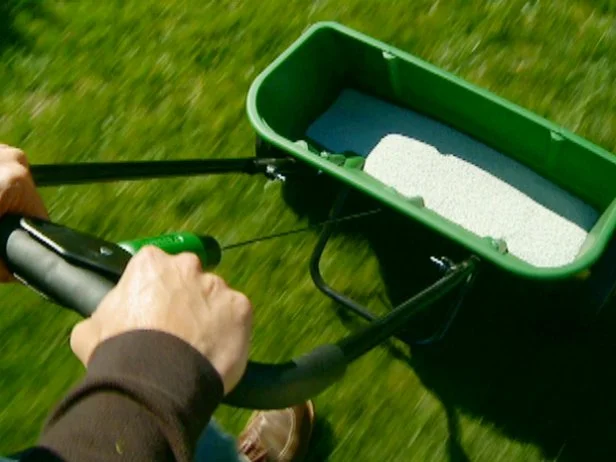
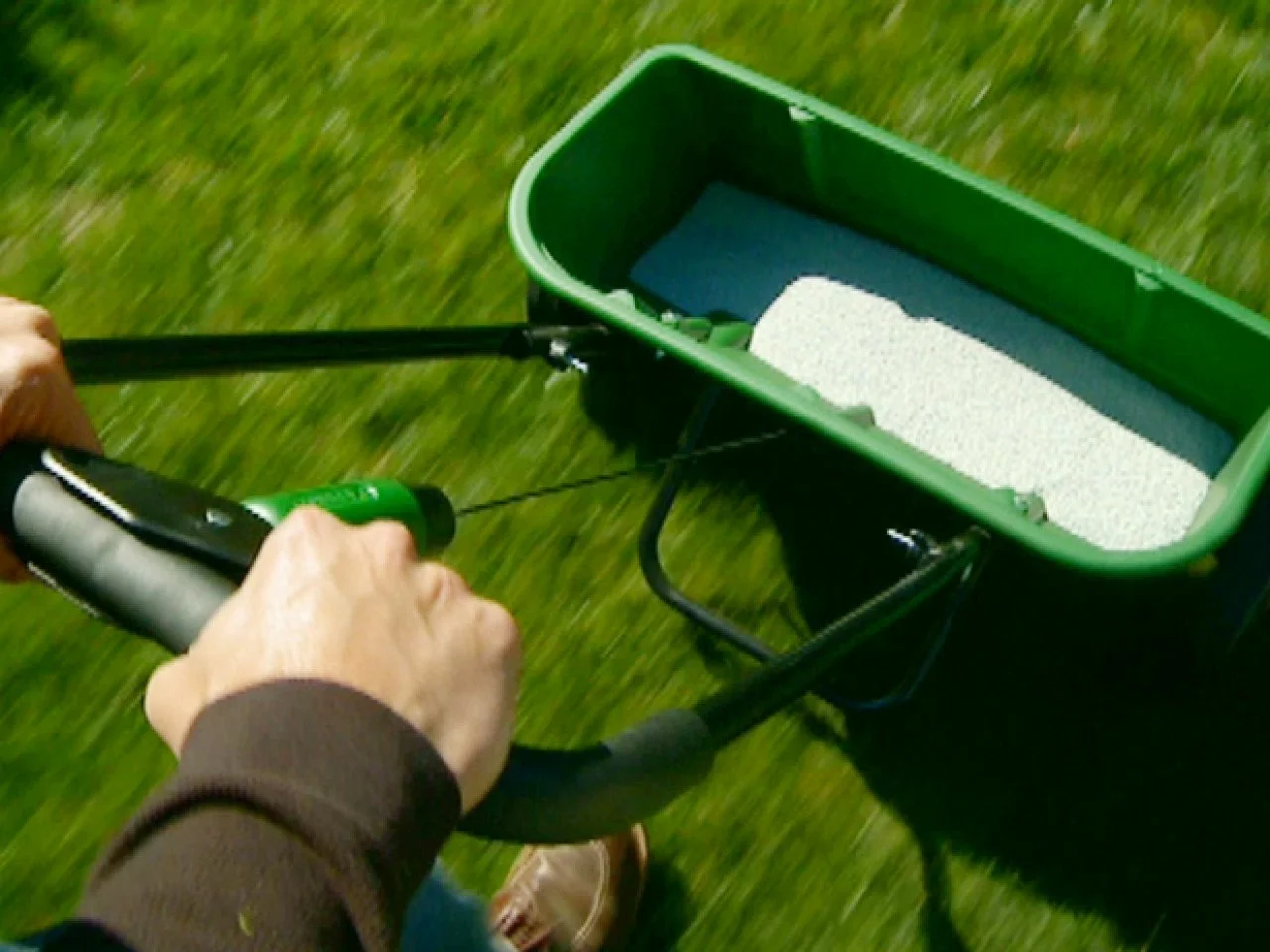
Use a drop spreader, like the one shown here, for smaller lawns or areas where application needs to be more targeted.
Choosing the Right Kind of Fertilizer
The type of lawn fertilizer that's sold in your area is usually what's right for your region's soil and turf types. In colder regions, it might be labeled as a winterizer fertilizer. Typically the bag will have slow-release nitrogen, which means the nutrients release slowly over time to grass roots. The numbers on the fertilizer bag should have a larger first number (nitrogen, N), followed by zeros or smaller numbers for phosphorus (P) and potassium (K). It might read like this: 32-0-10 or 10-0-20.
In areas with acidic soil, many homeowners apply dolomitic lime in the fall, too. If soil is too acidic, grass roots can't absorb nutrients. A soil test is the surest way to know if your lawn needs lime. Other signs lawn soil could be too acidic include moss and poor grass growth.
Shop Fall Lawn Fertilizers


The Best Organic Fertilizers for Long-Term Lawn Health
Looking for a more natural way to feed your grass? These organic lawn fertilizers support healthy soil and a greener, stronger lawn.
Fall Lawn Fertilizer Application Tips
- Read the bag. Even if you have used the same product before, check out the bag for specific timing and application tips. Materials change to keep up with things like formulation technologies or laws, so it's important to review the label before applying.
- Wait for rain. It's best to apply fertilizer to moist soil, so wait for a soaking rain and apply fertilizer the next day. Try to time it so there's no rain for 24 to 48 hours after fertilizing, or you risk having your lawn food wash away before it absorbs into soil.
- Choose a spreader. Rotary (or broadcast) spreaders work well if you're feeding a larger lawn area. For smaller lawns or areas where you need a more targeted application, choose a drop spreader (above). A handheld spreader is a good choice for tiny lawns.
- Clear the lawn. Remove any leaves or other debris that would keep fertilizer from dropping between grass blades.
- Walk slowly. No matter what kind of spreader you use, walk evenly and slowly for the most even application.
- Sweep excess. If fertilizer lands on hard surfaces (driveway, walks, patio), sweep or blow it onto the lawn. Some lawn products can stain hardscape.