

Lawn Care Tips for Beginners According to 3 Lawn Experts
11 essential law grass care tips--including common pitfalls that make for a brown, patchy lawn.
Scripps Networks, LLC
You know a healthy lawn when you see it: a smooth, lush green carpet, perfect for cartwheels and croquet. So why doesn't your lawn look like that? To get that perfect lawn you may have to change your mindset, says landscape designer Gary Alan, founder of The Designers Landscape firm in Jacksonville, Florida. "You know how in golf they say 'Be the ball'? Well, you've got to be the grass. You've got to think about what it needs," Alan says. The basics, he says, are pretty simple: sun, water and fertilizer. Once you get those down, everyone's happy — you and your lawn. Here's how to get started.
1. The Most Important Step to Take Before Planting New Grass
Planting a new lawn is like any good adventure: preparation and planning are key. No matter which planting method you plan to use, you need to prepare the area thoroughly to banish weeds and make sure soil won't immediately crust over or compact into lumpy ruts. John Griggs, a master gardener in West Virginia, says the most important step — and one that many gardeners skip — is testing the pH of your soil. Do-it-yourself test kits are available from nurseries and catalogs, or you can take advantage of the testing offered by your state's designated agricultural university. "It might seem like a hassle, but testing your soil will save you from pouring money into the ground," John says. A soil test kit can identify missing nutrients you should add before proceeding.
2. Determine Which Grass Is Right for Your Area
Some lawns have finer textures (think golf courses), while others feel like Astroturf under your feet. There are hundreds of types of grass available, and new varieties are developed every year.
As with all plant choices, climate plays a big role in determining which type of grass will work best for you — soil type, rainfall and other factors also come into it. As a general rule, cool-season grasses go dormant during the warm weather, and warm-season grasses go dormant during the coolest months of the year; in areas where it's possible to have a green lawn all year round, you want a mixture of both these types. "I've lived in seven different states and I've had seven different lawns," says Griggs, who believes a local nursery is one of the best sources of information on which type of grass will work best in your area. Here's a list of the most popular choices:
Popular warm-season grasses:
- Zoysia grass
- Bermuda grass
- St. Augustine grass
- Bahia grass
- Centipede grass
Popular cool-season grasses:
- Bentgrass
- Bluegrass
- Fine fescues
- Tall fescues
- Ryegrass
Grasses for special needs:
- Shade: St. Augustine grass, fine fescue, tall fescue, ryegrass, bentgrass
- High traffic: Zoysia grass, improved Bermuda grass, Bahia grass, regular Bermuda grass, perennial ryegrass

Shutterstock; Vaclav Sonnek
3. Prep the Planting Area by Weeding, Enriching the Soil and Grading
Weed: Start by stripping the area of all weeds, including roots, even if that means taking off the top six inches. Then rototill to a depth of at least six inches to loosen compaction and improve drainage.
Enrich the soil: It's extremely important to add loam and compost to enrich the soil; many experts suggest mixing equal parts of loam, sand and your original topsoil.
Pack and grade the area: You're best off in the long run if you incorporate a slight slope to facilitate drainage and prevent pooling. Finally, use a roller to pack down the soil, then grade the area with a metal rake. Be as thorough as you can — remember, once you've put your seed or sod down, you can't go back and regrade.
4. For New Grass, Sod Is Easiest But Seed Is Affordable
No question but rolling out a carpet of sod is the quickest way to a beautiful lawn. But sod can get expensive, especially if your lawn is going to cover a large area. The alternative is seeding the area yourself, either by hand or with lawncare professionals who might use a method called hydroseeding, which has recently become quite popular. Long used by farmers to sow large fields, hydroseeding solves one of the main problems of hand seeding: even dispersal of seeds. The grass seed — a mix of varieties blended for your climate and the type of use your lawn will get — is mixed into a pulp made from virgin wood fibers, fertilizer and binding agents.

5. Most People Mow Their Lawns Way too Short
When it comes to sharing lawn secrets, the first one on many garden experts' lips is mowing height. "Most people mow their lawns way too short, which stresses out the grass," says Paul James, host of HGTV's Gardening by the Yard. The secret, he says, is do less, not more: "I'm a great believer in benign neglect." He recommends raising the mower to the highest possible notch so you're mowing only the top third of the grass when you cut. Taller grass promotes better root development, James says, as well as shading the ground so it doesn't dry out as fast. An added benefit: the taller grass blocks the sun that weed seeds require to germinate. And don't believe for a moment that leaving grass taller is going to mean mowing more often, says Alan. "There's a big misunderstanding that a lot of people have that if they cut it shorter, they won't have to mow it as often," says Alan. "But that's absolutely false; it renews itself so fast that it doesn't save you any time."

Shutterstock/Kateryna Yakovlieva
6. Give Established Lawns a Deep Water Once Weekly
"Water only once a week, but water deep" is the rule according to James. A weekly soaking helps roots extend deeper into the soil, while frequent shallow waterings tend to lead to thatch, that unsightly web of dry brown runners just above the soil. Watering deeply can also prevent chinch bugs, a pest that tends to attach dried, stressed out lawns across the midsection of the country. To figure out how much water your lawn needs, take your soil type into account: sandy soils dry out faster, while clay soils hold moisture longer and don't require watering as often.
7. Water Newly Seeded Lawns for Just a Few Minutes
For a newly seeded lawn, water every day for five to 10 minutes only. Your goal is to dampen the seeds without causing runoff that might wash them away or mar the surface with gullies. After the seeds sprout and the new grass is a half inch tall, water once a day for 15 to 20 minutes.
8. Beware of Common N-P-K Fertilizers
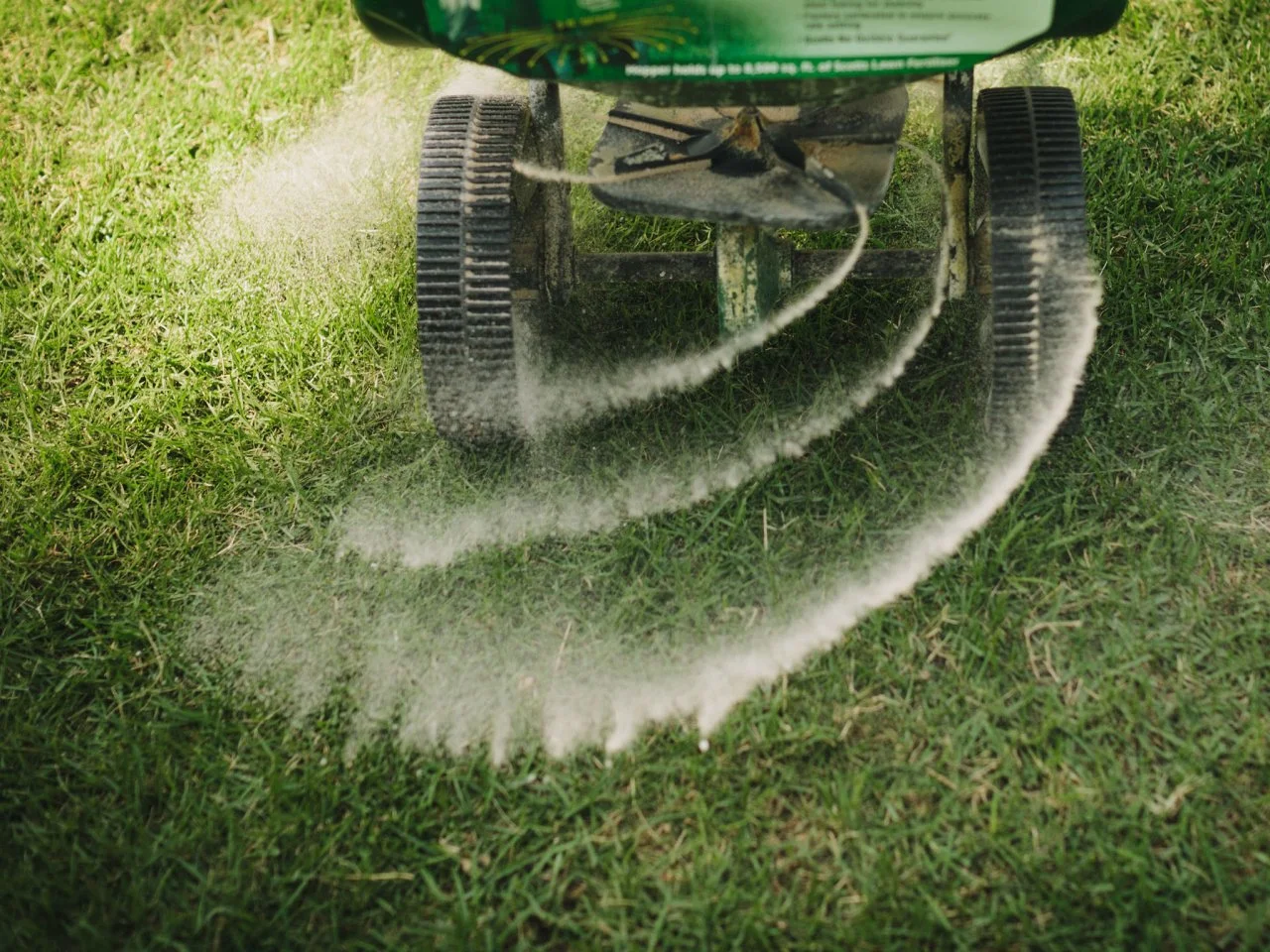
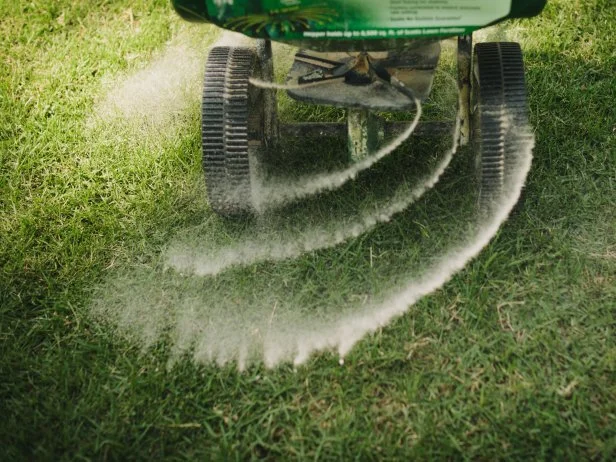
Even the healthiest lawn gets hungry and need a solid meal. Twice a year, spring and fall, is the bare minimum most experts recommend for lawn fertilization, though some add a feeding in the middle of the summer. But beware the common N-P-K (nitrogen-phosphate-potassium) fertilizers popular with most gardeners, says Alan; they don't provide everything your hungry grass needs. Instead, he recommends a complete fertilizer that includes micronutrients such as sulfur, copper and iron. "Just like you take a multivitamin, your grass needs one too," says Alan.
9. Apply Dolomitic Lime Every Few Years
In addition to regular fertilizing, Alan recommends an application of dolomitic lime every few years. This is because watering and fertilizing cause soil to become acidic over time and lime restores the pH while putting important minerals like calcium and magnesium back into the soil. In some Western areas, soils are naturally alkaline and may not have this problem, so it's best to test your soil's pH first.

Julie Martens Forney
10. Learn the True Secret to Banishing Weeds
No doubt about it, crabgrass is the bane of every lawn gardener's existence. But that doesn't mean herbicides are essential to a healthy lawn; in fact, many experts avoid them. The true secret to banishing weeds, they say, is to grow such healthy grass that it chokes out the invaders naturally. Mowing regularly helps too, because it tops off weeds like dandelions and crabgrass before they have a chance to scatter their seeds. When you do find yourself compelled to do battle against a path of weeds, Paul recommends using one of the new "natural" herbicides that derive their potency from corn gluten, salts from fatty acids or other nonchemical sources. Or make your own weed killer.
11. Watch for Lawn In Need of Aeration
When grass gets too compacted (which can occur in high-traffic areas), nutrients can't penetrate to the root system where they're most needed. That's where aeration — poking holes in your lawn to improve oxygen circulation — comes in. Here are some telltale signs your lawn needs aeration: if rainwater run off your lawn without soaking in or your lawn turns brown after a few days of hot weather.
Most people aerate with a simple tool that looks like two hollow tubes attached to the end of a long handle. Of course, you can also just waltz around your lawn in spiked sports shoes — that works fairly well too. Read up on how to aerate your lawn.