






The Best Spring Lawn Fertilizers for Every Type of Yard
Spring is the best time to feed your lawn, but the right fertilizer depends on your grass. Here's what to know before you buy.

Walk into any garden center in March, and you'll see shelves full of products labeled "spring fertilizer." But here's the thing: There's no magic formula that makes a fertilizer officially a spring product. What actually matters is understanding what your lawn needs as it wakes up from winter, and that's a little different for everyone. A shady fescue lawn in the Midwest has different needs than a Bermuda grass lawn baking in the Texas sun. Plus, a lawn full of established grass needs something different than one you're trying to seed from scratch.
Spring is when grass shifts out of dormancy and starts pushing new growth, which means it's hungry. Nitrogen is the nutrient it wants most, and that's why most spring fertilizers lead with a high first number in the N-P-K ratio. Those three numbers stand for nitrogen, phosphorus and potassium, which are the three key nutrients grass needs to thrive. A spring formula might look like 29-0-3 or 32-0-4, meaning it's heavy on nitrogen and lighter on the rest.
Once you know how to read those numbers and understand what your specific lawn needs, you'll be in great shape. And if you're not sure where to start, your local garden center is a great resource.
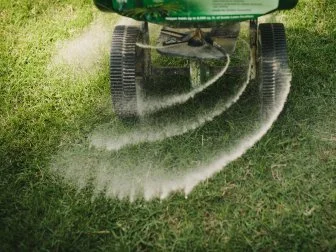
13 Tips for Fertilizing Your Lawn
Keep your grass healthy and beautiful. Find tips from the experts on everything from when to fertilize and how to choose the right spreader.

If you have pets or kids who practically live in the backyard, this one is worth a close look. Safer Brand Lawn Restore is made from naturally derived ingredients like feather meal and blood meal, and your lawn is safe for kids and pets to play on right after application. No waiting around. The 9-0-2 formula skips phosphorus entirely and focuses on nitrogen to encourage lush, green growth and stronger roots. One heads up, though. If you're planning to overseed in spring, apply this one after your seeds have germinated. It contains corn gluten, which can interfere with seed sprouting.
- N-P-K Ratio 9-0-2
- Best For Families and pet owners who want a natural, non-burning spring fertilizer

If you've ever walked the lawn care aisle at a garden center, you've seen Scotts Turf Builder. It's basically a household name at this point, and there's a reason it keeps showing up year after year. This is a solid all-purpose spring fertilizer that works on any grass type and helps build stronger, deeper roots so your lawn can better absorb water and nutrients over time. You can apply it to a wet or dry lawn, which makes it pretty forgiving for beginners. One bag covers up to 5,000 square feet (or 15,000 square feet for the larger size), so it's a good value overall. Just be sure to use a spreader and follow the application instructions carefully.
- N-P-K Ratio 32-0-4
- Best For An easy, reliable spring feeding for any grass type

Milorganite has been around since 1926, which tells you something. It's one of those products that lawn people just keep coming back to year after year. What makes it different is how it's made. It's produced from heat-dried microbes through Milwaukee's water reclamation process. That slow-release formula feeds your lawn for up to 10 weeks and contains iron for that deep, lasting green color. One of the biggest things fans love about it is that it simply won't burn your lawn, even if you're a little heavy-handed with the spreader. It works on lawns, flowers, shrubs, trees and even vegetable gardens, so one bag goes a long way.

Jonathan Green is a name that comes up again and again in lawn care circles, and for good reason. This Veri-Green formula has a seriously high nitrogen content at 29-0-3, which makes it a great pick for spring when your lawn is hungry and ready to grow. It also has iron mixed in, so you'll start seeing that deep, rich green color within a week or two. One bag covers up to 15,000 square feet and feeds for up to three months, so it's a solid choice if you want to apply once and not think about it again for a while. Just apply to a dry lawn and hold off if temps are already climbing above 85 degrees F.
- N-P-K Ratio 29-0-3
- Best For Fast spring green-up with long-lasting results on any grass type

Espoma has been in the organic fertilizer game since 1929, and this Spring Lawn Booster is basically their version of a targeted early-season formula. This one is designed specifically for spring application, when your lawn is waking up and needs a steady nitrogen boost to get growing again. It's great for organic gardening, safe for kids and pets, and won't burn your lawn even if you go a little heavy with the spreader. It also has added calcium, which helps strengthen grass at the root level. Like most organic fertilizers, it has a pretty strong smell right after application, but it fades after a day or two.
- N-P-K Ratio 8-0-0
- Best For Early spring organic feeding for cool and warm season grasses

If you've been curious about liquid fertilizer but weren't sure where to start, this one from Simple Lawn Solutions is a great introduction. It's one of the few products on this list that comes in liquid form, which means it gets to work faster than granules and is easy to apply with a hose-end sprayer. The 16-4-8 formula has a nice balance of all three macronutrients, plus seaweed and fish emulsion for extra soil benefits.
- N-P-K Ratio 16-4-8
- Best For Lawn lovers who want a fast-acting liquid option for spring green-up

This one is a favorite among lawn enthusiasts who want to go a step beyond the standard big-box options. What makes The Andersons PGF Balanced stand out is the particle size. The granules are much finer than a typical 10-10-10 fertilizer, which means better, more even coverage across your whole lawn. The formula is a great early spring option when you want to give your lawn a little of everything as it wakes up. It also includes micronutrients and two percent iron for deeper greening. Because the particles are so fine, spreader settings matter a lot here. Take a minute to double-check your settings before you start, so you don't burn through the bag too fast.
- N-P-K Ratio 10-10-10
- Best For A balanced, professional-grade spring feeding for lawns and gardens

If the idea of applying fertilizer just once and being done for the season sounds appealing, this is your product. Pennington's Full Season formula uses a slow-release nitrogen for up to four months, so one spring application can carry your lawn well into summer. It also has five percent iron for that deep, rich green color and contains beneficial microorganisms to help revitalize the soil over time. It works on a wide range of grass types and is a solid choice for anyone who wants reliable results without a complicated lawn care schedule.
- N-P-K Ratio 32-0-5
- Best For Low-maintenance lawns that need one solid spring application to last the season
Shop Lawn Fertilizer Spreaders


Frequently Asked Questions
When should I apply spring lawn fertilizer?
Timing depends on where you live and what kind of grass you have. For cool-season grasses like fescue, bluegrass and ryegrass, early spring is ideal. This is typically when soil temperatures reach around 55 degrees. For warm-season grasses like Bermuda and zoysia, wait a little longer until the grass is actively growing and nighttime temperatures are consistently warm. Applying too early when the grass is still dormant is one of the most common mistakes people make.
What fertilizer should I apply in the spring?
A nitrogen-heavy formula is usually your best bet in spring since that's what drives green, leafy growth. Look for a higher first number in the N-P-K ratio, something like 29-0-3 or 32-0-4. If you're seeding or overseeding, you'll want a starter fertilizer with more phosphorus to support germination and root development.
What is the first thing you put on your lawn in the spring?
If your lawn has a lot of thatch or compaction built up over winter, it can be worth aerating or dethatching before you fertilize. That way, nutrients can actually reach the roots. After that, fertilizer is a great first step to kick off the growing season.
What are common lawn fertilizer mistakes?
Applying too early is a big fertilizing mistake because fertilizing before the grass is actively growing can waste product and even stress your lawn. Applying too much is another, especially with synthetic formulas that can burn grass if you overapply them. Finally, don't skip a soil test if you don't know the details of your lawn. You don't want to add nutrients your grass doesn't need.
Do I need to water after applying fertilizer?
It depends on the product. Granular fertilizers generally need to be watered in to activate, while some slow-release formulas can wait for natural rainfall. Always check the label, but when in doubt, a light watering after application is never a bad idea.
Is it okay to fertilize and seed at the same time?
It depends on the fertilizer. A starter fertilizer is actually designed to be applied right alongside new seed. But some fertilizers, like those containing corn gluten, can prevent seeds from germinating, so it's important to read the label before you do both at once.
How often should I fertilize in spring?
Most lawns do well with one solid spring application, especially if you're using a slow-release formula that feeds for eight to 12 weeks. Some homeowners do a second lighter application mid-season, but more isn't always better. When in doubt, follow the product instructions.
Why You Should Trust Our Expert
Stacy Tornio is a master gardener and certified master naturalist with extensive experience in both gardening and product testing. Based in Milwaukee, Wisconsin, Stacy has tested numerous gardening products, including gardening seats, pruning shears and weeding tools, for HGTV. With a hands-on approach, Stacy brings practical insights from real-world gardening to each review, ensuring that each product is thoroughly evaluated for quality and usability.
More Lawn Care Tips and Tricks

12 Year-Round Lawn Care Tips 15 Photos
No matter what time of the year you’re growing grass, brush up on your lawn care routine with these quick and easy tips.

How to Aerate Your Lawn Properly
Lawn aeration encourages deep roots, resulting in a healthy lawn. Learn how to give your grass a breath of fresh air with these tips.

The Best Organic Lawn Fertilizers
Looking for a more natural way to feed your grass? These organic lawn fertilizers support healthy soil and a greener, stronger lawn.


