






How to Winterize a Lawn Mower to Enhance Its Performance and Longevity
Now that the growing season is over, it’s time to store your lawn mower. Get the steps for winterizing a lawn mower and other gas-powered lawn equipment with this handy rundown.

Photo by Debbie Wolfe
The end of the growing season is a great time to tackle routine lawn mower maintenance, such as sharpening the blade.

It's important to winterize your lawn mower and power equipment before it sits idle for the winter months. A good winterization will ensure your tools run strong and start quickly when spring time rolls around. Whether it's your lawn mower, leaf blower, weed eater or pressure washer, a thorough winterization will increase the longevity, performance and efficiency of your tools.
Empty Tank or Stabilize Fuel
If you're using a fuel with a preservative added to it, you can skip this step, but we highly recommend draining or consuming all of the fuel from your lawn equipment prior to long-term storage no matter what. Gasoline can spoil rapidly and deteriorate the rubber and plastic parts inside your mower's fuel delivery system. Bad gas is also an invitation for moisture and corrosion to develop inside small engines as well.
If you're planning on draining your fuel back into the gas can, use a siphon that's designed specifically for gasoline to get it back into the cannister. Do not try to tip your mower on its side or attempt to pull a fuel line off the tank. If you're not able to drain it by hand, just run your equipment until it runs out of fuel.
Clean Underside and Top Deck of Lawn Mower
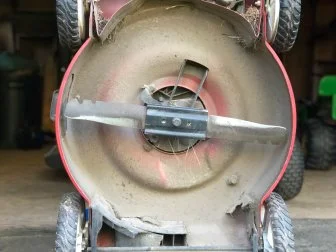
The best time to service your mower is during its winterization. Once you've drained all of the fuel, this is a great time to clean the underside of the mowing deck and sharpen the blade. Start by disconnecting the spark plug wire and the battery if your mower is equipped with one. Tape off the ends of any electrical connections to prevent them from making contact; this will prevent any accidental starting. Tip the mower over (see user manuals for larger riding models) and hose down the underside. Use a plastic putty knife to scrape any chunks of matted grass or dried mud from the deck.
Clean and wipe down the upper deck too, but don't spray the engine too heavily with water.
Sharpen Lawn Mower Blade
Next, remove and sharpen the lawn mower blade using an angle grinder or a hand file. See these detailed steps for how to sharpen lawn mower blades.
3 Ways to Sharpen Your Lawn Mower Blade
A fresh-looking lawn starts with sharp lawn mower blades. We show you how to shapen blades easily and safely.
If your blade looks cracked or bent, this is your opportunity to replace it. Give your blade a light spraying with WD-40 or similar oil to prevent rust and re-install it. Once you've got the deck clean and the blade reinstalled, you can tip the mower back into the upright position.
Check Mower Spark Plug & Air Filter
Remove the spark plug and inspect it for wear, then use your finger to put a small amount of engine oil into the spark plug hole. If your spark plug looks like it's past its prime, go ahead and put a fresh one in before you store it. Next, you'll want to have a look at the air filter, so remove it and decide to either clean or replace it based on condition. Gently wipe out the inside of the filter housing to prevent any debris from entering the engine.
Change Lawn Mower Oil
Here's how to change your lawn mower's oil easily and without making a mess.
- To drain the oil without causing a gas leak, remove the gas cap and put a small sheet of flexible plastic over the opening, then screw the cap back on. A small plastic baggie works well.
- Turn the mower on its side — with the gas tank and air filter up, to keep it from leaking and fouling — and drain the old oil. Oil flows easier and faster when it's slightly warm.
- Dispose of used oil responsibly, perhaps by taking it to the mower repair shop where they can recycle it for you.
- Add fresh engine oil as recommended for your mower's engine.
Store Lawn Mower to Avoid Moisture Damage
Moisture is the most common cause of damage to your mower over the winter season. If your mower is stored in a damp environment or outside without protection, it's an invitation for rust and corrosion.
Ideally, all of your lawn tools would spend their winter in a dry shed or a garage. That's not always possible for some homeowners, so it's always a good idea to start with a cover for your mower. This will keep most of the snow and rain away and prevent water from directly leaking into the engine.
Next, try to find a dry spot against the house or the garage, preferably one that's under a deck or an overhang.
And finally, it's a good idea to store your mower a little bit off the ground or at least on top of some pavers to help reduce the moisture buildup underneath.
More Lawn Care Tips
- 8 Best Lawn Aerators in 2026
- 6 Best Lawn and Leaf Bags of 2026, Tested and Reviewed
- 5 Best Lawn Sweepers of 2026, Tested and Reviewed
- 5 Best String Trimmers of 2026, Tested and Reviewed
- The Best Crabgrass Killers, According to a Gardening Pro
- The Future of Lawn Care Starts With This Dreame Robot Lawn Mower


