Next Up

How to Design a Calming Kids' Room for Better Rest and Sleep

May 08, 2025
Follow Maria on:

Beat the bedtime blues and set your child up for restorative sleep with expert tips from child psychiatrists and interior designers.

Price and stock could change after publish date, and we may make money off these affiliate links. Learn more.
Photo: Matt Dutile
Scroll For More Photos
1 / 21

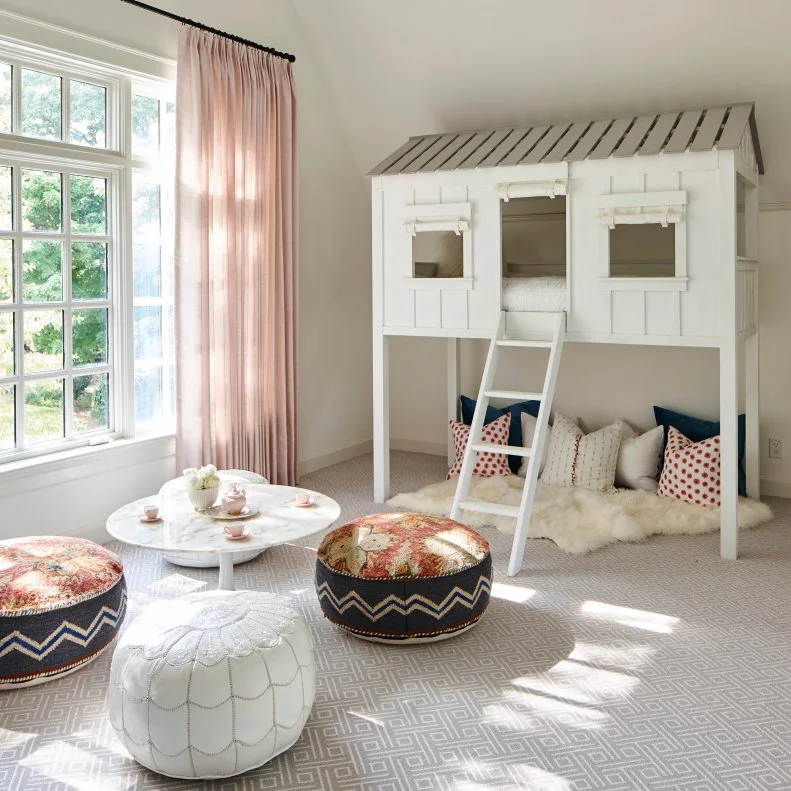
Set Your Child Up for Success With a Low-Stimulation Bedroom

Negotiating with your kiddo to snuggle up and stay put at bedtime is a rite of passage all parents experience, but for some, this battle of wills becomes a nightly occurrence that drains everyone involved. Whether your little one is highly sensitive to their surroundings or is a night owl who loves staying up past their bedtime, we’re here to share calming kid room design ideas to help them achieve nights of restful, restorative sleep. And, the best part? We consulted child psychiatrists, Dr. Larry Mitnaul and Dr. Willough Jenkins, and interior designers Deborah DiMare and Beatrice Tokayer to bring you the best insider tips possible for setting your child up for success.

More photos after this Ad

Photo: HGTV Home by Sherwin-Williams
2 / 21

Apply Color Psychology

It’s true. Color impacts our mood, and choosing the right tone for your child’s bedroom is one of the first steps in curating an environment that leaves them feeling grounded and at ease within their space. “Much of what we can do for our kids’ rooms comes from studies that look at kids in the classroom, how kids sleep and the impact of light in indoor work/school environments,” Dr. Mitnaul explains. “In one of the most cited studies on the topic, kids who struggle with calm and relaxation were found to be soothed by ‘cool[er]’ colors such as blue and green. By contrast, reds and oranges were associated with higher stimulation and dark colors with unease and tension.” This contemporary kids’ bedroom is coated in a soothing mid-tone blue from the HGTV Home by Sherwin-Williams 2024 Color Collection of the Year: Waterloo.

See Our Favorite Blue Paint Colors

More photos after this Ad

Photo: Jason Anderson (JA2 Photo). From: Dave Perry-Miller Real Estate
3 / 21

Include Sensory-Friendly Accessories

As with all good design, creating a bedroom tailored to your child and their sensory needs lies in the details. Dial in on the smallest features and hone them to aid relaxation and restorative sleep. "Maximize natural light, avoid harsh lighting and add sensory elements like a weighted blanket, a cozy chair or even a sensory swing to engage your child’s senses positively," Dr. Jenkins suggests.

More photos after this Ad

Photo: Suzanna Scott, Architect: CahillStudio, Contractor: Landers Curry, Landscape Architect: Rozanski Design. From: Regan Baker
4 / 21

Choose Opaque Storage Bins

Strategic storage solutions can make all the difference between your child’s bedroom feeling chaotic or tranquil. This soothing blue bedroom features a built-in window bench with integrated cubby storage. Opaque bins tuck neatly into the bench, providing easy access to books and toys while minimizing the visual clutter created by contrasting colors.

Make Fabric-Wrapped Storage Boxes

More photos after this Ad

Photo: Flynnside Out Productions
5 / 21

Dedicate a Space for Their Treasures

While minimizing clutter is paramount for creating a calming environment, Dr. Jenkins says it is equally important to encourage your child to put their personal touch on their space. “Dedicate a spot for them to display personal treasures — like drawings, family photos or mementos — giving them a sense of pride and ownership in a room that reflects who they are.” This DIY art display is easy to set up and puts a natural limit on the amount of photos, paintings and drawings in the room at the same time. Once the line is full, ask your child to remove one item for storage before adding their latest masterpiece to their micro gallery.

Clever Ways to Display Kids' Artwork

More photos after this Ad

6 / 21

Address All Their Senses

Clutter, harsh lighting and bright colors are all quick ways to overstimulate children with sensory sensitivities — but don't forget to cater to your child's heightened experience with sounds and scents too. "I always consider ways to relax all the senses," says Dr. Jenkins. "If your child would benefit, add a small speaker for soothing music or nature sounds, and perhaps a bit of lavender for a calming scent."

Shop the Best Essential Oil Diffusers

More photos after this Ad

Photo: Kevin J. Miyazaki. From: HGTV Magazine
7 / 21

Observe Before Acting

Before overhauling your child's room or bedtime routine, designer Beatrice Tokayer recommends an observation period and spending time with your little one in their space. "I would recommend observing their children to see what stimulates and what calms them and work from there," she says. "Parents can always tweak things as time passes and they see what works for their child. Additions like scents and noise machines are very trial and error.”

More photos after this Ad

Photo: Ryan Garvin, Architect: Cynthia Childs, Contractor: Chris Jenkins, Pool & Landscape Design: Garden Studio. From: sKout
8 / 21

Create Privacy in Shared Spaces

If your kids bunk together, it can be extra challenging to create an environment that deters late-night antics and promotes restful sleep. One of the most effective solutions? Create a physical barrier in the space. “If your child shares a room, consider adding a nook or divider to give each child a sense of privacy,” Dr. Jenkins advises. “A tent, cozy corner or room divider can create a retreat where they can recharge on their own terms.”

Find More Shared Bedroom Design Ideas

More photos after this Ad

Photo: Blynda DaCosta Photography
9 / 21

Prioritize Nontoxic Paints and Organic Textiles

Designer Deborah DiMare recommends approaching your kid’s room in stages for best results. “The initial stage of planning a calming room for a child with low stimulation needs should consider: creating a sensory environment with as few chemicals as possible and furniture and decor that is non-animal based,” she says. “Then dive deep: Paint should be zero-to-low in VOCs (volatile organic compounds), mattress and bedding must be GOTS Certified (Global Organic Textile Standard) and the area rugs should be organic cotton and GOTS or OEKO-TEX Certified.

More photos after this Ad

Photo: Julie Leffell
10 / 21

Skip the Screens

Both child psychiatrists consulted agree that removing phone screens and tablets from your child's room is essential to a healthy bedtime routine and achieving optimal sleep. "Aim to keep electronics out of the room, as screens can interfere with sleep and make it harder for kids to wind down," Dr. Jenkins says. "Screens often give off blue light, which can disrupt melatonin production," Dr. Mitnaul explains. "This is associated with sleep delays and poorer quality."

More photos after this Ad

Photo: Ashley Gilbreath. From: Ashley Gilbreath
11 / 21

Take the TV Out of the Equation, Too

While falling asleep to the sound of your favorite sitcom (or House Hunters reruns ) may work for the adults in your household, this isn't the best approach for your kiddos. "One of the biggest culprits of insomnia in kids is screens and often contributes to reducing the chances of a more robust communal life within the family," says Dr. Mitnaul. "For this reason, I do not recommend television screens in the bedroom." Limit your child's entertainment options to reading, drawing and otherwise screen-free activities to maintain a sense of calm in the space.

Create a Cozy Reading Nook Instead

More photos after this Ad

Photo: Genna Margolis. From: Genna Margolis
12 / 21

Embrace Natural Light

This key ingredient for establishing a solid sleep routine with your child may sound counterintuitive, but trust us, it makes a world of difference. “Natural light is crucial for establishing and stabilizing circadian rhythms,” explains Dr. Mitnaul. “Morning light may be among the most beneficial, as noted in several studies, especially for the delayed sleep phase syndrome we often see in teens. With this in mind, parents may be helped if they avoid obscuring windows that may offer better exposure to light.” When designing your child’s room, we recommend installing window treatments that allow you to tailor the light in the room to your child’s needs. For example, young children who take daily naps will benefit from blackout drapes layered with sheer panels as this combination supports their afternoon slumber and welcomes natural light into the room each morning.

More photos after this Ad

Photo: Regan Baker Design Inc. . From: Regan Baker
13 / 21

Add Under-the-Bed Storage

If you’re designing a space with tight quarters or want to maximize your out-of-sight storage options, we recommend a trundle bed or rolling under-bed storage drawer for your child’s room. This low-stimulation solution is ideal for consolidating toys, books and clothing and keeps the floor free from tripping hazards after dark. “Include storage that is easy for a child to open and grasp and has wheels,” urges DiMore. “Pushing and pulling is wonderful for children’s body awareness and relaxing a child.”

Shop Under-the-Bed Organizers

More photos after this Ad

Photo: Laurey Glenn
14 / 21

Tune In to Texture

The texture of your child’s throw pillow, duvet cover or area rug can irritate and overstimulate them or create a soothing, relaxed state at the end of the day. Neurodiverse children may find that touching soft fabrics aids self-regulation and brings comfort at bedtime. “Textures used throughout the room should be cushy, soft and mushy, combined with prickly squishy things to fiddle with, like sensory balls,” shares DiMare.

More photos after this Ad

From: Sara Touijer
15 / 21

Be Inspired by Nature

When in doubt, use nature as your guiding light for creating a low-stimulation color palette in your child’s bedroom. “Start with nature-inspired colors like soft blues, greens or lavender, which naturally set a relaxed, soothing atmosphere,” suggests Dr. Jenkins. This teen bedroom provides ample inspiration with lavender-washed walls and fresh, cloud-like bedding.

Find the Best Nature-Inspired Paint Colors

More photos after this Ad

Photo: Michael J Lee, Elissa Aldrich, Ashley Molnar. From: Ana Donohue
16 / 21

Declutter, Declutter, Declutter

A clear space promotes a clear mind, which makes falling asleep easier for your little one. "Designing a child’s room with mental health in mind is all about creating a space that feels calm, personal and supportive of healthy routines," says Dr. Jenkins. "Declutter by storing toys out of sight — this opens up the space, making it feel inviting and less overwhelming."

Find Smart Toy Storage Ideas

More photos after this Ad

Photo: Joshua Curry; Design by Tongue and Groove Design + Build. From: Tongue & Groove
17 / 21

Keep it Cool

One of the easiest ways to promote healthy sleep is by adjusting the temperature of your child's bedroom between 65° and 72°F. Rooms that are too warm make it more difficult for your little one to relax and may lead to overheating at night. Blackout drapes are great buffers for minimizing excess heat from entering their room during the afternoon, and a ceiling or freestanding fan works wonders to move air throughout the space at night.

Shop Our Favorite Ceiling Fans

More photos after this Ad

Photo: Trevor Ward Photography. From: Gail Barley Interiors
18 / 21

Choose Warm Lights

Create a cozy ambiance by swapping out the light bulbs in your little's room. Since blue lights and cool-toned lights are known for causing sleep disruption, Dr. Mitnaul suggests selecting the opposite for your child's bedroom fixtures. "Soft and warmer tone lighting is associated with a calmer bedroom environment."

Learn About Different Types of Light Bulbs

More photos after this Ad

Photo: Laurey Glenn
19 / 21

Less is More

It's important to edit your child's bedroom regularly to reduce their anxiety or distractions at night. This airy and open shared bedroom is a natural blueprint, limited to a pair of bean bag chairs and a few stuffed animals. "Clutter can be stressful for kids and parents," explains Dr. Mitnaul. "Out-of-sight storage and simply less items in a bedroom may be helpful for mood and frustration reduction. Kids who struggle with anxiety or ADHD have a higher rate of sensory sensitivity that can make bedroom clutter an overstimulating environment.“

Find Kids' Room Storage Ideas

More photos after this Ad

Photo: Debbie Wolfe
20 / 21

Consider a Weighted Blanket

Weighted blankets are beloved by children and adults alike because they create a cozy, cocoon-like feeling that provides security at night. Each child is unique, so we recommend talking with them about their needs, but adding a weighted blanket to their bedroom may help children with sensitivities or anxiety feel more at ease and relaxed at night.

Shop Our Favorite Weighted Blankets

More photos after this Ad

Photo: Frank Frances
21 / 21

Use the Buddy System

Whether your kiddo walks around with a raggedy blanket in hand or totes a well-loved teddy bear to and fro, be sure to keep their comfort item on hand at bedtime. A stuffed animal or blanket may minimize their separation anxiety and provide a soft texture for them to self-soothe as they wind down for the night.

Note: Children under 12 months old should sleep in a crib with nothing more than a fitted sheet to avoid suffocation. Plush animals and blankets are dangerous and not advised for children under 1 year old.

Find Stuffed Animal Storage Ideas