
Next Up

How to Decorate a Living Room: 20 Simple Tips from Professional Designers

July 15, 2025
Follow Lauren on:

Our pro tips can help you start from scratch, freshen up what you’ve got and put finishing touches on living rooms of all sizes and styles. Welcome to Living Room Design 101.

Price and stock could change after publish date, and we may make money off these affiliate links. Learn more.
Photo: Bob Coscarelli Photography. From: Shakoor Interiors
Scroll For More Photos
1 / 21

Do’s and Don’ts for Any Living Room

Dear reader, you may be looking for simple rules to turn your space into a beautiful, cozy living room. You’ve come to the right place, would-be decorator. We’ve pulled together tried-and-true advice from professional designers on how to decorate a small living room, how to decorate a long living room, how to decorate a living room with an awkward fuse box that spoils your gallery wall — you get the idea. Read on for tips and tricks that’ll help you establish your own classic space — and evolve it in the years and moods to come.

Get Inspired With 100+ Designer Living Rooms

More photos after this Ad

Photo: Stacy Zarin-Goldberg. From: Breeze Giannasio
2 / 21

Do: Lean Into Symmetry

Think of an ultra-balanced arrangement like the one in this eclectic, boho living room — which manages to make a traditional tapestry, ultra-graphic pillows, contemporary table lamps and an acrylic coffee table feel like the most intuitive arrangement in the world — as a series of two-part arguments. If you feel lost in space, anchor yourself in your room by identifying a line of symmetry — in this case, right between the two windows — and lining large, single pieces like your sofa, area rug and oversized art along it. Move out from that axis with pairs of items like throw pillows, armchairs and lamps; each piece will look just right because its mirror image echoes it across the room. Speaking of throw pillows…

Large Wall Decor Ideas

More photos after this Ad

Photo: Getty/ChrisNolan
3 / 21

Don’t: Go Overboard With Throw Pillows

Listen, decorative pillows are delightful. They’re a satisfying way to make use of textiles that would be too expensive or impractical to deploy as full-time upholstery materials! You can change them from season to season and completely transform the look of your room! That said, it’s all too easy to get carried away with cushions and end up with the grown-up version of a kid’s pile of stuffies crowding (and creeping) out the live humans who want to sit on your sectional. If you’ve got a really deep piece of furniture (like the mustard sofa in the previous slide), you have our blessing to back it with a generous helping of accessories. The overstuffed and undersized couch you see here, on the other hand, leaves no room for company.

Chic Sofa Pillow Looks From HGTV Editors

More photos after this Ad

Photo: Jeff Herr . From: James Farmer
4 / 21

Do: Sidestep Stale Neutrals

The living room in this classic Georgia farmhouse is both traditional and neutral; it also boasts, count ‘em, four different touches of leopard print. If wild patterns some of us still associate with look-at-me maximalism can feel at home in a space like this one, where can’t they go? “They are meant to blend in nature, so I absolutely think they do in design as well,” designer James Farmer told us. “They blend beautifully with fabrics and patterns and thus work very well as a neutral.” The next time you reach for a warm off-white or an oh-so-organic earth tone, might we suggest mixing things up with a cheetah or zebra print instead? Your space could use a bit more life.

See More of James's Use of Leopard Print

More photos after this Ad

Photo: Gianni Franchelluchi. From: Lucinda Loya Interiors
5 / 21

Don’t: Skimp on Framing

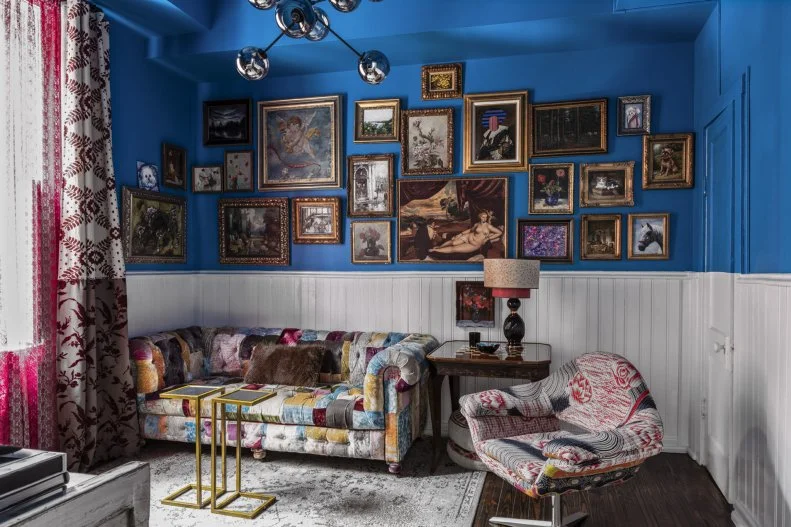
When you’re decorating a dorm room, a home office or a kids’ play space, less-is-more and ultra-casual displays like washi tape in lieu of frames are appropriate for artwork. When you’re looking to embellish a proper living room, now? It’s worth your time and resources to invest in the good stuff. That can mean keeping your eyes peeled at thrift stores and flea markets for ornate and undervalued vintage pieces like the ones arranged here; if you favor a more contemporary look, it could mean splashing out on a fleet of matching frames at an art-supply sale, or taking favorite pieces to professional framers one by one. Say it with us: The living room wall is not a refrigerator door.

How to Mat and Frame Artwork

More photos after this Ad

Photo: LifeCreated. From: Kirsten Holmstedt
6 / 21

Do: Give Stranded Seats Backup

If your living room is part of an open-plan layout, you’ll have the opportunity to divide it from areas adjoining it with a large piece of furniture, as in this contemporary space. Key to this (successful and chic) arrangement? The proportionate table behind the sofa that prevents it from feeling lost in space, and the fiddle-leaf fig that provides an additional anchor for the seating area. Environmental psychologists explain that the palpable comfort we feel when we’ve got (literal) backup is a holdover from our hunter-gatherer days, when avoiding dangerous surprises was key to survival.

Three Ways to Style a Sofa Table

More photos after this Ad

Photo: Regan Baker Design Inc. . From: Regan Baker
7 / 21

Don’t: Impulse-Purchase House Plants

The bird of paradise in this airy midcentury living room is a beauty, isn’t it? It requires a sunny spot like this one to thrive, it loves humidity and can get crispy if you’re not careful, it’s toxic to cats and dogs and it needs consistent watering and misting. Resist the meet-cute of a leafy, mysterious stranger at your local nursery; have details like these in mind and know that you can meet each other’s needs before you introduce a green roommate to your living room.

Plant Kween's Tips to Be a More Patient Plant Parent

More photos after this Ad

Photo: Haris Kenjar. From: Kenna Stout
8 / 21

Do: Integrate the Television

For many of us, the elephant in the room is a big old piece of tech that steadfastly refuses to please the eye. Some TV devotees tackle the problem with a hybrid model that displays digitized art; others create camouflage with built-ins and gallery walls. We’re especially fond of budget-friendly paints and papers that blend that dead screen into the background, as in this clever arrangement. Bottom line: If your television takes up serious living-room real estate, you should mitigate its visual effect on your space.

Ways to Camouflage Your TV

More photos after this Ad

Photo: Drew Kelly. From: Antonio Martins
9 / 21

Don’t: Cluster Art at Eye Level

Design pros often caution against hanging art too high, and in living rooms where walls are otherwise bare — say, if this two-story living room had a band of frames just above the Chesterfield and stopped there — that admonition makes sense. If you’ve got high or downright lofty ceilings, on the other hand, know that the eye will happily travel all over them, and that continuing to add visual interest as you move upward is a classic “more is more” move. Celebrate that height by drawing gazes upward!

Gallery Wall Ideas to Transform Your Space

More photos after this Ad

Photo: Sarah Dorio; Design by: CLOTH & KIND; Builder: Athens Building Company . From: CLOTH & KIND
10 / 21

Do: Layer Lighting

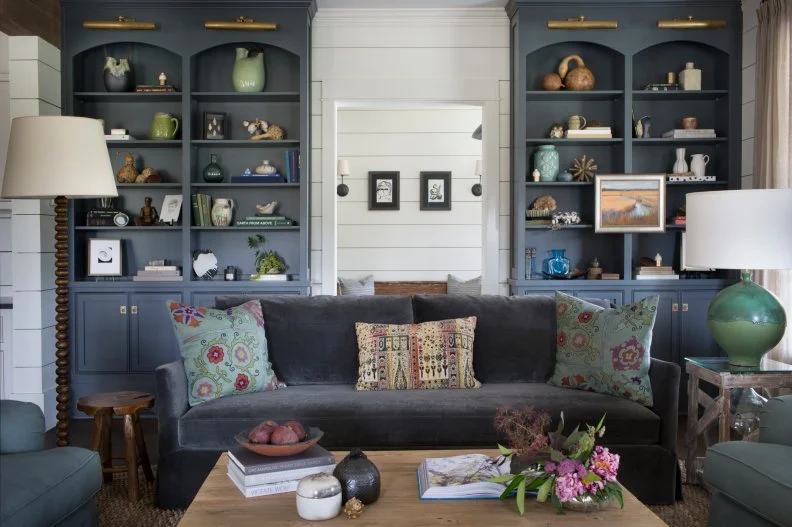
The difference between a living room that’s warm and welcoming and one that feels cold and clinical often comes down to lighting design. If you’re a renter, it’s easy to feel beholden to an inalterable fixture at the center of the room — but as a cozy space like this one (with a floor lamp, a table lamp and shelf-mounted picture lights) demonstrates, there’s always room for variation. Aim for a combination of ambient lighting (such as recessed, flush-mounted and pendant pieces in the ceiling, along with sconces) and task lighting (like floor and table lamps) at a variety of heights. Sources throughout your space, especially ones that don’t deliver drastic downlighting, will make you and your guests feel embraced rather than interrogated.

Living Room Lighting Design Ideas

More photos after this Ad

11 / 21

Don’t: Under- or Overdress Your Windows

Well-chosen window treatments are a bit like talented dance partners: They might throw in a flourish every now and again, but they’re at their best when they match your moves and make you both look good. Put your space’s best foot forward by considering ceiling height, window size, hardware options and other textiles as you prep your living room — and don’t worry, we’ve got precise, step-by-step pointers to choreograph each of those decisions.

Window Treatment Do’s + Don’ts

More photos after this Ad

Photo: Eron Rauch. From: Caitlin Murray
12 / 21

Do: Choose Versatile Accessories

One could point out any number of fabulous elements in this living room — the playful color choices, the touchable textures, the good boy — but we’re going to focus on the green velvet X-base stool beside the sofa, the funky pair of coffee tables and the shaggy stools beneath the acrylic consoles. All of those pieces are light enough to rearrange in an instant for special occasions, and the green stool can function as a seat or as an adjunct coffee table as needed That kind of versatility is helpful for both entertaining and staving off design ennui, since you can reconfigure this room in no time flat.

55 (Almost!) Free Living Room Updates

More photos after this Ad

Photo: Kyle Born. From: Michelle Gage Interiors
13 / 21

Don't: Fight Your Floor Plan

In this row house’s foyer-slash-living-room, perching the sofa beneath the window would deny sitters access to the best view (another move to avoid if at all possible, according to environmental psychologists). Instead, the space’s main seating floats at the edge of an area rug to create both an intimate gathering area (on the left) and a clear corridor between the front door and the rest of the home (on the right). Furniture formulas are well and good, but if they don’t translate to the specifics of your space, out the (unobstructed) window they go.

Simple Living Room Layout Ideas

More photos after this Ad

Photo: Ryan Garvin. From: Blackband Design
14 / 21

Do: Make Room for Foot Traffic

The two most important figures when you’re laying out your living room? Two and three. There should be two feet of clearance between pieces of furniture in lower-traffic areas; here, that would be the distance between the sofa and the tufted ottoman serving as a coffee table. There should be three feet of clearance, in turn, in higher-traffic areas (that is, between the ottoman and the French exterior doors and between the ottoman and the wall with shelving and the television).

Furniture Arrangement Tips

More photos after this Ad

Photo: Michael J. Lee. From: Robin Gannon
15 / 21

Don't: Default to a Sofa

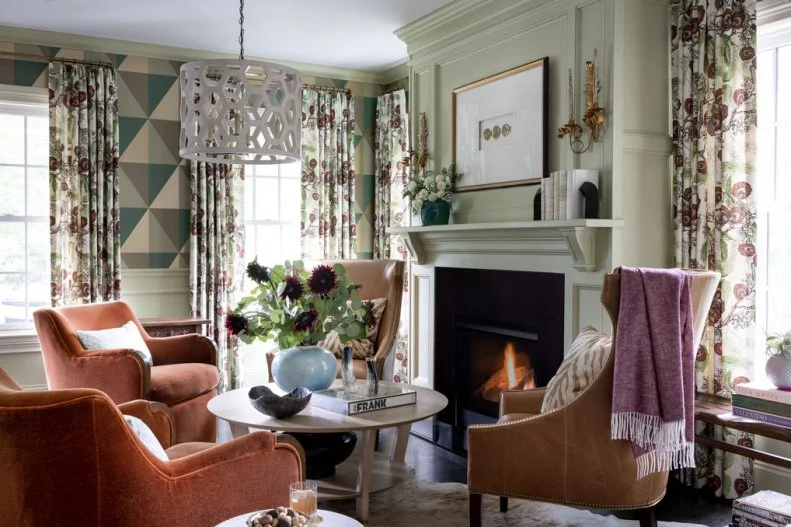
Consider this snug, extremely-well-appointed space: A cozy fireplace, ample perches for everyone’s refreshments, plush seating for four … and not a sofa in sight. In a smaller living room like this one, a substantial couch (to say nothing of a sectional) would provide seating and stifle everything else. The two pairs of armchairs it features instead create a cozy conversation area that takes full advantage of the hearth and makes the rest of the room feel as spacious as possible.

Smart Design Ideas for Small Spaces

More photos after this Ad

Photo: Matti Gresham Photography. From: Urbanology Designs
16 / 21

Do: Define Spaces With Color and Floor Coverings

This cottage’s living room and adjoining dining room are deliciously distinct from one another despite their shared footprint, thanks to confident color-drenching that turns the transition between the two spaces into a downright artistic frame. A flat-woven area rug in the living room emphasizes its independence from the functional area beside it — and doesn’t trip up foot traffic, thanks to that lack of pile. Use bold internal definitions like these to create visual rather than physical borders between your rooms; your party guests will thank you.

How to Cozy Up Your Open Floor Plan

More photos after this Ad

Photo: Kara Mercer. From: Allison Lind
17 / 21

Don't Clutter the Coffee Table

While we’ve never met the people who use this stylish living room, we can say with confidence that they’ve never sat on their handsome linen love seat, contemplated their ultra-cool trunk and thought, “This is great, but it really feels incomplete without a graduated stack of photography books and a pedestal dish full of ceramic links.” When working surfaces are few and far between, consider layering your living room’s design around the edges — on the mantel, occasional tables, and so on — and letting the coffee table take a breather.

Tips for Maintaining an Organized Living Room

More photos after this Ad

Photo: Sarah Stacey. From: Sarah Stacey Interior Design
18 / 21

Do: Triangulate As You Style

Okay, okay, so you do want to put something on your coffee table (or your mantel, or your bookshelves, or your console). Make like a designer and follow the simplest styling rule of all time: Accessorize in threes. Choose items of varying height and width — like the sculpture, spray of flowers and handled vessel here — and arrange them to form a triangle.

Designer Tips for Styling Your Coffee Table

More photos after this Ad

Photo: Chad Mellon Photography. From: Lindye Galloway
19 / 21

Don’t: Push Furniture Against the Walls

As you position pieces in your living room, a small, insidious voice might whisper that you’ll maximize your space by scootching them back and lining them up like dodgeball players. That voice deceives you! As professional stagers know, rooms feel largest and most comfortable when there’s breathing room between the walls and your furniture.

Ways to Make a Small Living Room Look Bigger

More photos after this Ad

Photo: Lisa Romerein. From: HGTV Magazine
20 / 21

Do: Deploy Mirrors

If your room is small, a mirror will make it look bigger. If it’s dark, it’ll look brighter. If it’s bright, you’ll have twice the view. We don’t make sweeping pronouncements often, but you can apply this one anywhere: Every living room is better with a mirror (or two, or three).

How to Decorate With Mirrors

More photos after this Ad

Photo: Adrian Gaut, Lauren Davis. From: Crystal Sinclair
21 / 21

Don't: Stick to a Single Height

An uninterrupted horizon of low-slung furniture can make a living room feel cluttered and lifeless, no matter how funky those low-slung pieces are. This living room avoids that aesthetic quicksand by mixing things up with a leggy tree, a saguaro-inspired floor lamp, massive urns on the credenza … you get the idea.

Modern Living Room Design Ideas With Timeless Appeal