How to Get Rid of Weeds: 20 Tested Ways, Plus How to Prevent Them From Growing Back
Find out how to kill weeds in your lawn and garden with expert tips and learn to identify eight of the most common weeds.
Julie Martens Forney
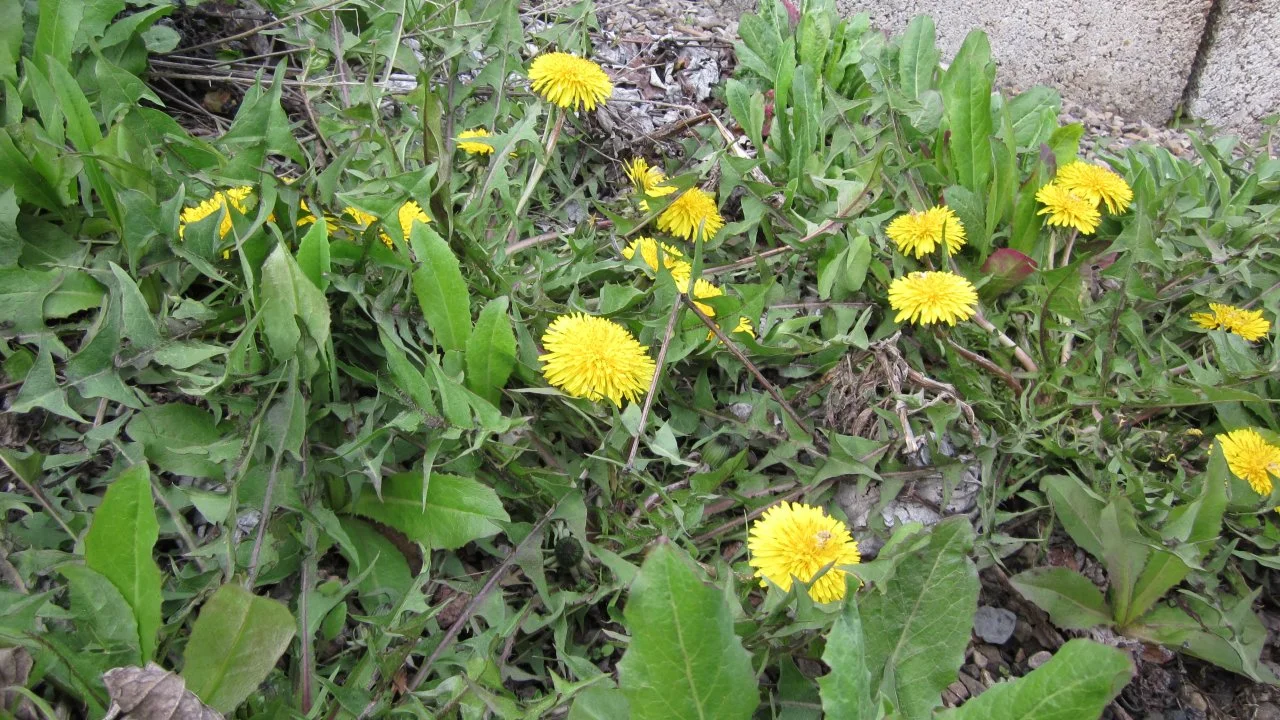
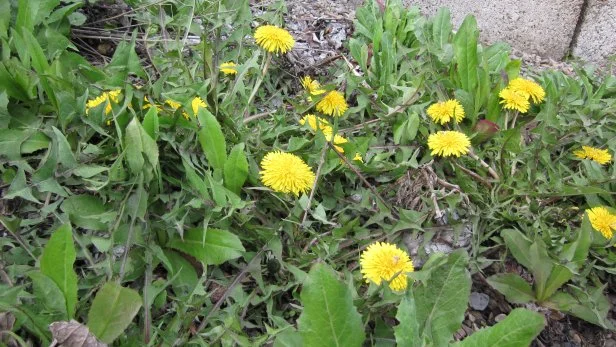
Be sure you pull up weeds by their roots, and don't just yank out the leaves. Weeds — such as the dandelion pictured — can re-grow if even small pieces of their roots remain.

You've probably heard that weeds are just plants that grow where they're not wanted. Maybe somebody — somewhere — tolerates weeds, but most of us see weeding as necessary. Weeds are aggressive and invasive, and left unchecked, they'll crowd out desirable plants. Even after you pull them, you can't toss them in a compost pile because any seeds that have already formed can sprout. It's not a good idea to leave them on top of the soil, either, thinking they'll wither. An unexpected rain or runoff from your hose can wash dirt over them, and they'll stage a comeback.
Weeds are survivors by nature, so don't be afraid to fight dirty. Try our tips to for how to get rid of weeds in your grass and garden. For the best intel, we consulted weed expert, Dr. Laura Ney, an agriculture and natural resources agent with the University of Georgia Cooperative Extension, and Troy Hake, owner of OutsidePride, a source for seeds and other lawn and garden needs.
Essential Weeding Tools to Own
Hoes with triangular blades, like this Asian hand plow, are good for closely spaced rows and underneath plants. Scuffle or loop hoes can be pushed and then pulled back over the soil to slice the weed's roots just under the surface of the soil. Be aware that when you loosen the soil, you're exposing any fallen seeds to light, which can cause them to germinate, so try not to disturb the soil too much.

Preen.com
For weeds with longer roots, use a garden knife, dandelion digger or hand weeder — a long, slender tool that looks like a screwdriver with a forked tip. Don't overlook a handy screwdriver. Got weeds shooting up between pavers or in the cracks of a driveway? Use an old screwdriver to pry them out.
How to Get Rid of Weeds

25 Garden Tools and Essentials for Year-Round Care
When you're ready to grow, use our shopping list to find great garden tools, gear and more.
1. Pull Out the Roots
This is the most important rule of weeding. If you yank only the leaves, weeds will grow back. Grab the weed close to the ground and pull straight up. Do it right the first time and you're done. (Unless pieces of the root break off in the ground. It happens.) You'll have less work to do in the future if you attack the weeds as soon as they're up. Young weeds have small roots, which makes them easier to pull and increases your chances of getting the entire plant.

Shain Rievley
2. Weed After a Rain
Weeds come up more easily when the ground is moist. However, be careful about walking around in a wet garden; you don't want to compact the soil. To make less impact on wet soil, put down some boards and walk on them to help distribute your weight. If there's no rain in sight, water your garden and start pulling. Again, it's easier to remove weeds while they're small, so don't wait for Mother Nature if you're in a dry spell.

Preen.com
3. Chop Off Their Heads
If you can't get weeds up by their roots, chop their heads off every now and then. That will prevent them from setting seeds, and with any luck, they'll eventually die. A hori hori knife has a serrated edge for cutting, a sharp edge for chopping and a pointed tip for prying up weeds.

Woodland Tools
4. Use Commercial Weed Killer--with Caution
Before you resort to herbicides, know your enemy. Identify your weeds and pick the right product to eliminate them. Then hang a spray bottle filled with weed killer on your mower and pause to spritz as needed when you cut the grass. For big areas, use a garden sprayer filled with weed killer. Weed killers can be tricky to use, because if you get them on your desirable plants, they'll kill them, too. This can happen, for example, if you're spraying weeds on a windy day and the spray drifts.

Spruce / Spruceit.com
5. Make a Homemade Weed Killer
Try this recipe for homemade weed killer made with a gallon of white vinegar, a cup of salt and a tablespoon of liquid dish soap. A mixture of one cup of salt dissolved in 2 cups of hot water will also work.

Julie Martens Forney
Be careful not to get homemade weed killers on your grass or desirable plants in your borders and beds as these natural solutions can't tell the difference between weeds and plants you want to keep.
6. Retill the Soil
Dr. Ney says soil keeps what is known as a "seed bank" — an invisible store of years' worth of weed seeds waiting for the right conditions to germinate.
"When we prepare our garden beds, we turn over the soil and expose a layer of these seeds," says Dr. Ney. "After a week or so, these seeds begin to germinate. At this point, you can re-till the soil, killing the newly germinated weeds and exposing a new batch of weed seeds." Repeat the process several times before planting to reduce the number of weeds that sprout in your new bed.

Mantis

Make Your Own Natural Weed Killer
Tackle troublesome garden weeds the sustainable way with this easy-to-make homemade weed killer.
7. Use Solarization
This how-to from the University of Georgia describes how to use summertime heat to kill weeds. This is the basic process:
- Till the garden area.
- Saturate the area with water.
- Overlay with clear plastic from a hardware store (2-6 mil). A thick, opaque plastic tarp, like the one below, also works.
- Stretch and pin down the plastic with garden staples or use heavy objects to hold down the tarp.
- Leave the plastic or tarp in place for at least a month; two months or more is better.

Julie Martens Forney
8. Consider Herbicides and Pre-Emergents
Herbicide glyphosates are effective and work by spreading from a plant's leaves to its roots. Available as liquids, solids or ready-to-use products, they eventually break down in the soil. However, glyphosates work only on growing weeds; they are not pre-emergents. And while they've been used in the U.S. for more than 30 years, debate continues about whether they present health risks to humans. Non-selective weed killers can kill or damage any plant they touch. See the US. Environmental Protection Agency website for up-to-date news and additional information on using them.

Preen.com
Pre-emergent herbicides can be used to control weeds in gardens that have established plants and where new seeds will not be planted. Pre-emergents are applied at specific times of the year and prevent new seeds from germinating.
Be sure to read the label for any chemical before application to ensure it is being applied appropriately.
9. Dehydrate Weeds
Some weed killers contain salt-based herbicides or natural solutions with ingredients like vinegar to kill weeds by dehydrating them. You can make your own dehydrating weed killer by mixing lemon juice and vinegar. If desirable plants are growing nearby, use a piece of thick cardboard to protect them from the spray.

10. Attack Baby Weeds Immediately
Carry a hand tool like a garden fork, trowel or multipurpose garden weeder with you when you're outside so you can attack baby weeds the minute you spot them. If the soil is dry, or if your weeds are too small to pull by hand, use a hoe. Keep the blade sharp for a fast cleanup in large areas. Take out weeds in cracks and crevices before they set seeds and spread.

Centurion Brands/Wendi Phan
11. Plant Densely
Plant densely to limit the amount of sunlight that reaches the ground, so weeds can't sprout. Shrubs like these 'Lemon-Lime' Nandinas and Baby Gem Boxwoods, placed close together and planted with flowers, will form a canopy and compete with weeds that try to take up water and nutrients. Just don't put them so close together that plants lack room to grow properly.

Southern Living Plant Collection
12. Fill In Open Areas
Weeds are opportunists, and they'll pop up in open areas in lawns and gardens. Overseed your lawn, if you've got bare spots, but first, follow the directions on any commercial weed killers you plan to use; some will also prevent grass seeds from sprouting. To avoid bare patches in garden beds and borders, space plants as directed on their tags or labels, or even a little closer, so weeds can't crowd in. Do not use weed killers in the soil or around edibles or ornamentals unless the products are labeled as safe for that use.

Johnson Giles, Loch & Key Productions

13. Dethatch Your Lawn
Thatch is a layer of living and dead organic matter that can build up between grass and the ground. When it gets too thick, it forms a warm, moist environment where weed seeds can sprout and grow. Use a manual or power rake or a pull-behind dethatcher to remove the thatch so more air, nutrients and water can reach the roots of the grass. Your lawn will become healthier, denser and better able to compete with weeds--or suppress them altogether.

Flynnside Out Productions
14. Aerate the Lawn
After you dethatch your lawn, it's also smart to aerate it. While aeration alone doesn't kill or prevent weeds, it loosens the soil so the roots of your grass can grow deeper and stronger to resist weeds. Like dethatching, it also allows more air, nutrients and water to penetrate. You can find a variety of tools to use, from powered aerators to handheld core aerators, spike aerators, lawn aerator shoes and broadforks like the one shown here.

Julie Martens Forney
15. Mow Them Down
When your healthy lawn starts to take off, keep it mowed regularly. Mow at the height suggested for the type of turfgrass you're growing; look for that information online or talk to a lawn care specialist. If you still have weeds in your lawn, mowing them will help prevent them from flowering or fruiting and reproducing. With good maintenance, you should have fewer weed seeds, and fewer weeds, as time goes on.

Fiskars.com
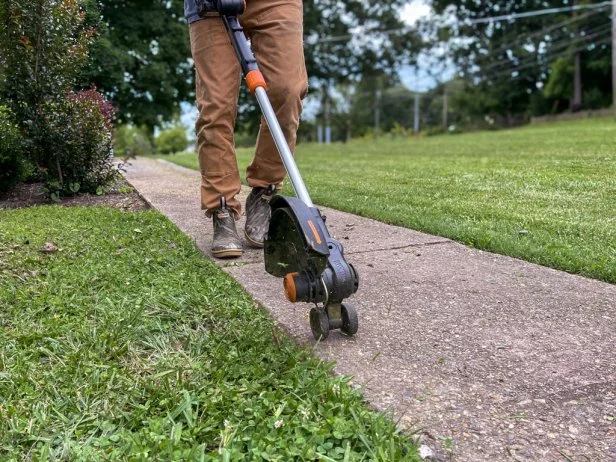
16. Trim Edges
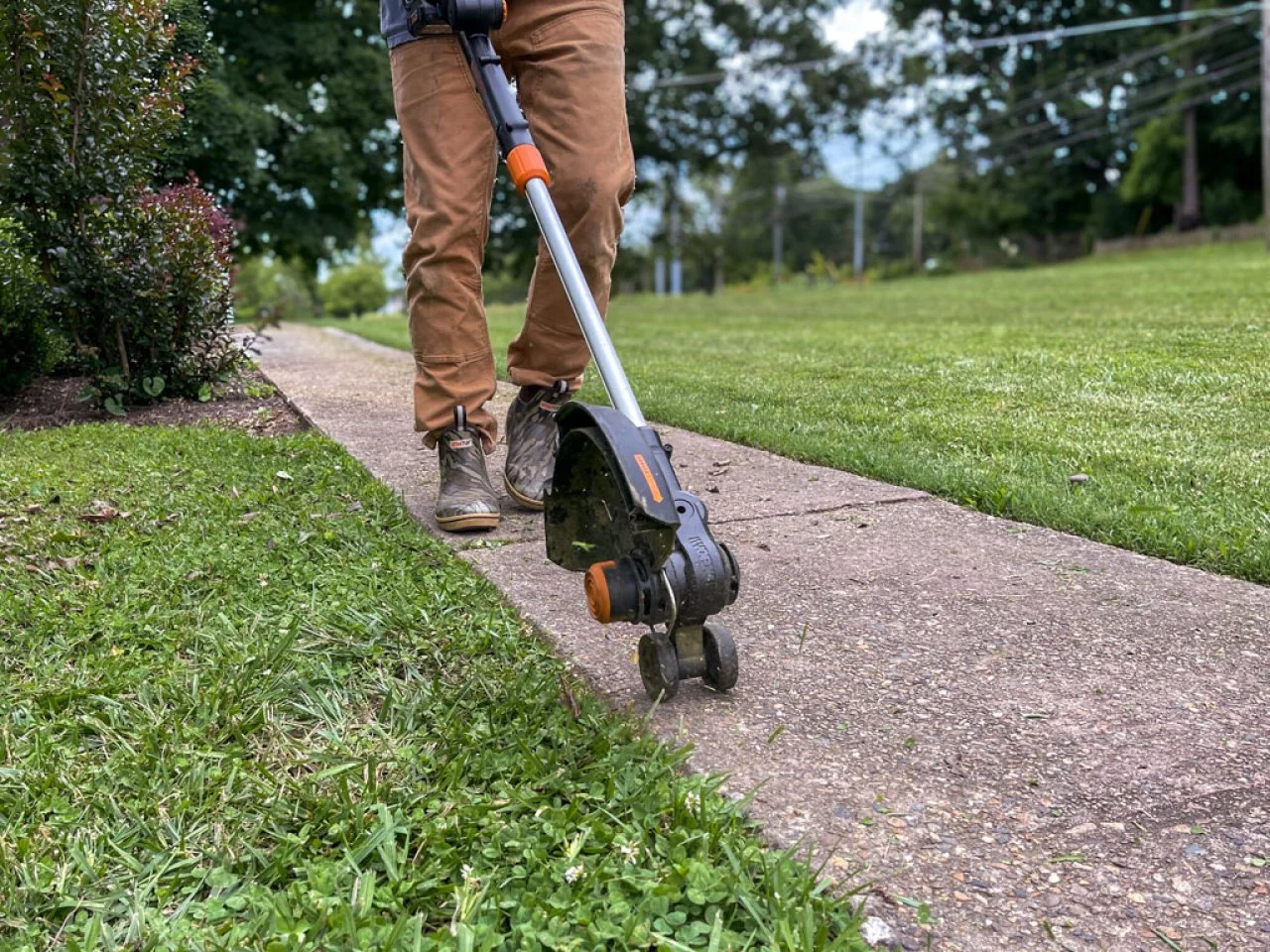
After you mow your lawn, don't forget to trim the edges of your driveway, walkways, paths, fences and walls and along the curbs of the street. These often-neglected spots can become weedy and set seeds that drift, blow or otherwise or make their way into your yard, beds and borders. While mowing, trimming and other lawn care practices won't eliminate all weeds, they're part of a good control program.
Kamron Sanders
17. Grow Groundcovers
Consider growing groundcovers to deter weeds. Vinca minor, bugleweed and other low-growing plants are good for shady spots; red creeping thyme and stonecrop are a couple of good choices for sun.
Troy Hake, owner of Outsidepride, suggests growing Miniclover, which spreads by stolons. “When overseeded into an existing lawn, this low-growing groundcover forms a dense, turf-friendly mat that helps keep weeds out," he says. Miniclover is a nitrogen-fixing legume that enriches the soil naturally, he explains, which reduces the need for fertilizers and promotes a more balanced growing environment.

OutsidePride.com
18. Let Chickens or Animals Graze
Your average subdivision or homeowners' assocation isn't going to welcome most grazing creatures. But if you live in an area that allows you to keep sheep, goats or horses, you'll find these four-footed friends will happily dine on many weeds--and other plants, so watch out for your ornamentals and human edibles. Chickens are also natural foragers that eat weeds. However, not all weeds and plants are safe for all animals and birds, so consult a trusted veterinarian before you allow them to eat or roam freely. Never let them consume any weeds, grasses or other plants that have been treated with chemicals.

Image courtesy of Blackberry Farm, 2013, HGTV/Scripps Networks, LLC. All Rights Reserved.
19. Eat or Drink Your Weeds
If you've got a small patch of weeds, you may be able to use them as food or drinks--but never use weeds that have been treated with chemicals or weeds from polluted areas. Because some weeds can interfere or interact with health conditions and medications, consult your health care professional or doctor before ingesting them. The tea pictured here is made from mint leaves (mint is an herb, but some species are considered invasive weeds in some states).
Caution: not all weeds, and not all parts of weeds, are safe to handle or consume. Do your research and know your weeds: it's crucial to correctly identify them. If in doubt, do not ingest any part of them.

Julie Martens Forney
20. Call in the Professionals
Professionals can help control your weeds, and while their services aren't free, you'll save on time and labor. They can also perform scheduled maintenance to keep your weed issues under control. Aside from lawns, some companies treat for weeds in flower beds, sidewalk and driveway cracks, mulched or graveled areas and between bricks and pavers.

The Davey Tree Expert Company
How to Prevent Weeds from Growing Back
Again, don't leave bare spots in your yard or garden. Weeds love to move in, so space plants as recommended on their tags or labels or slightly closer.
Mulch unused beds in a 3-inch layer of mulch, which also prevents water loss and protects plant roots from extreme temperatures. You may want to use a mulch with a weed preventer mixed in. Some products keep weeds from germinating for up to six months. By then, you'll probably need to add more mulch anyway.
"You do not want to pile mulch on too thickly, or you can suffocate plant roots," cautions Dr. Ney. "It is also important to keep mulch pulled several inches away from the base of plants so as not to encourage insect damage and rot issues."
Buy Crabgrass Pre-Emergent


Types of Mulch to Prevent Weeds
Straw will work, as long as it doesn't contain weed seeds. Pine straw, wood chips, and bark chips also suppress weeds by blocking sunlight, and they'll break down slowly and amend your soil. Pine straw tends to acidify the soil as it breaks down, so it's good to use around azaleas and other acid-loving plants. Straw and sawdust mulches use nitrogen as they decompose, so you may need to add some nitrogen fertilizer if you use them.

SHAIN RIEVLEY
Dr. Ney says a layer of unlaminated cardboard placed under the mulch can be used to prevent persistent weeds. Dr. Ney recommends keeping the cardboard to only one layer so water can soak through and get to the soil below the cardboard. You can use the cardboard and mulch in raised beds as well as in your garden and other beds and borders.

Shain Rievley
Landscape fabric is great for blocking sunlight so weeds can't grow. Also called weed cloth, it's often made of polypropylene fabric that lets air and water pass through. You can cover it with mulch to make it more attractive, although weed seeds can germinate in the mulch if the conditions are right.

ProvenWinners.com
How to Get Rid of 8 Common Weeds
1. Dandelion

Shutterstock/Lukas Beno
When weeding dandelions by digging them out of your lawn or garden, make sure you get at least 2 inches of taproot or they'll return as two plants.
Dandelions entrench themselves in your lawn or garden with deep taproots that can grow as long as 15 feet. The best way to keep them from spoiling your lawn is to grow thick turf. To get rid of dandelions, spray them or dig them out. If spraying, kick the dandelions a bit at first to scuff and wound the leaves — it helps the spray penetrate better. If digging, make sure you get at least 2 inches of taproot or they'll return as two plants.
2. Wild Violets

Julie Martens Forney
Wild violets spread easily by underground stems and seeds. Be vigilant when weeding by hand.
These common perennial weeds (though some consider them wildflowers) spread by underground stems and seeds and thrive in moist, shady sites. Vigilant hand weeding along with targeted herbicide use is required to eradicate them, if you must.
3. Thistle

Image courtesy of Preen
The spiny thistle is a familiar face along roadsides, and if it pops up in your yard, you’ll be dealing with a prickly problem. Grab your leather gloves and deal with this weed as soon as you spot it.
Prickly thistle grows from seeds that blow into your yard or it can sprout from root pieces, which may sneak in with bulk topsoil or mulch loads. Mature plants can reach 5 to 8 feet tall. Control through weeding, but dig deeply to get the horizontal roots. If you use an herbicide, the best time to spray is as soon as leaves break ground. Spray repeatedly through the growing season.
4. Bindweed

Tatiana Belkina / Shutterstock.com
Because they have persistent roots, bindweeds grow anywhere except deep shade.
This invasive perennial grows along the ground and will spread over anything in its path, wrapping its stems around any structure it comes across, much like a pole bean. Hedge bindweed (Convolvulus sepium) spreads by seed and creeping underground stems; field bindweed (Convolvulus arvensis) spreads by weeds and roots, which grow up to 30 feet deep. This plant, also known as wild morning glory, opens flowers that look like morning glory and can persist for up to 20 years. Since these plants are tough to eradicate, it's important not to let any get a foothold in your yard. Pull them as soon as you see them, and continue pulling each time they emerge.
5. Chickweed

Julie Martens Forney
For a small infestations of chickweed, hand-pulling works fine. Try to weed plants before they set seed, which can number up to 800 per plant.
Chickweed forms a low-growing crown of stems that spread and sprawl up to 18 inches. Chickweed can infest lawns with thin grass and heavy, moist soil. Hand-pulling works fine to control small outbreaks. Get the plants before they seed. You can use herbicides effective against chickweed (check the label) for larger infestations.
6. Yellow Wood Sorrel

Julie Martens Forney
The best way to beat yellow wood sorrel — also known as oxalis — in the lawn is to mow high and fertilize to grow a healthy, thick lawn. In planting beds, carefully hand-pull or spray with herbicide.
Also known as oxalis, this weed resembles clover with heart-shaped leaves and yellow flowers. Upright seed pods form after the blooms fade, then explode when ripe. Oxalis also roots from stem pieces and can find a home in a variety of places including lawns, planting beds, gravel drives or vegetable garden paths. Rid your lawn of oxalis by encouraging thick, healthy grass. In planting beds, carefully hand-pull or spray with herbicide.
7. Crabgrass

Julie Martens Forney
Getting the timing right for applying a pre-emergent herbicide application is crucial to keeping your lawn free of crabgrass.
This annual grassy weed germinates in the spring from seeds. Crabgrass is characterized by rough, pointy, light-green blades that grow in clumps that spread aggressively. The most popular and effective way to control crabgrass is to apply a pre-emergent herbicide. Pre-emergents prevent crabgrass seedlings from maturing, therefore preventing a crabgrass problem before it begins. A thick, luxuriant bed of desirable grass is the best crabgrass deterrent. Regular aeration and proper mowing go a long way to maintaining a healthy lawn. Crabgrass clumps can be pulled easily in spring when they have shallow roots.
8. Nutsedge

Julie Martens Forney
The best approach for dealing with nutsedge is to spray plants with an herbicide. For nutsedge that’s growing in lawn, be sure to choose a chemical that won’t kill grass.
Nutsedge not only produces seed heads, but also forms small bulbs or nuts underground. You can pull a nutsedge plant and still leave a network of nuts in the soil, each one capable of generating a new plant. The best approach is to spray plants with an herbicide. For nutsedge that's growing in lawns, be sure to choose a chemical that won't kill grass.