Potter Plants IRL
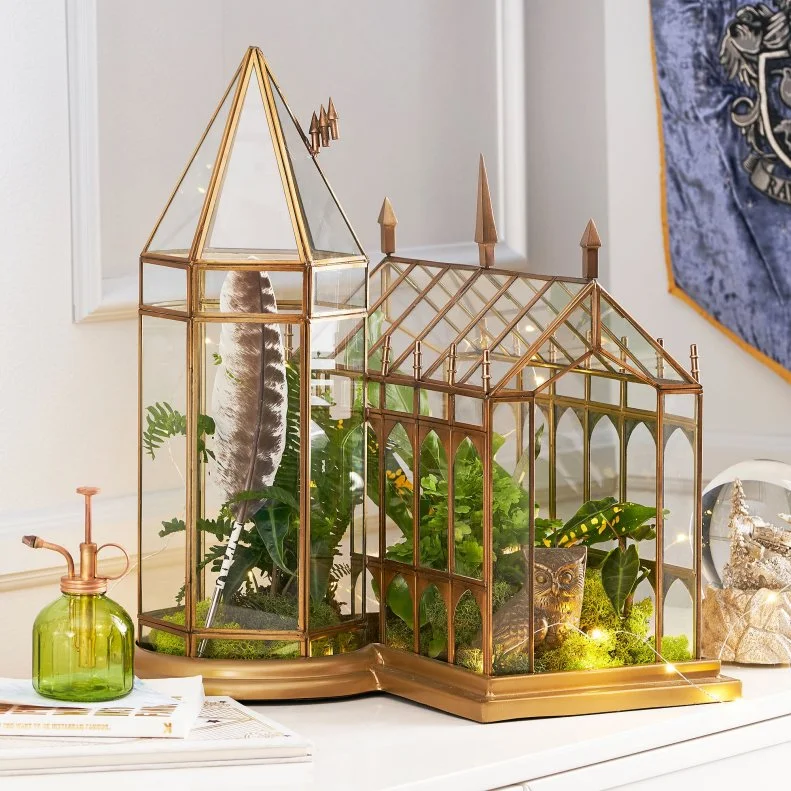
From books to movies to games to theme parks to set tours to flagship stores to traveling exhibits to the stage and beyond, the Wizarding World canon is vast, and, yet, we can’t help but notice that it always comes back to herbology, or the study of magical plants. (Even Pottery Barn Teen has a herbology line with Harry Potter terrariums!) From the stocked shelves of Diagon Alley to the Hogwarts Castle grounds, there are a lot of curious names and descriptions of plants mentioned in the Harry Potter and Fantastic Beasts franchises. But you may be surprised to learn that many of these sinister potion ingredients, dreamy flora or otherworldly-looking vegetation are not the stuff of fantasy. They're very real and of the humble muggle world. Here’s a look at some of the most iconic plants and fungi mentioned that exist in our natural world and, perhaps, in your garden right now.
Editor's Note: While very real to fans, Harry Potter is a work of fiction, and some uses of plants in the stories are not *actually* advisable in real life. We’ve noted poisonous plants when relevant.
SHOP: Harry Potter Great Hall Terrarium | Pottery Barn Teen
More photos after this Ad
Photo: Shutterstock/BudArt13
2 / 27
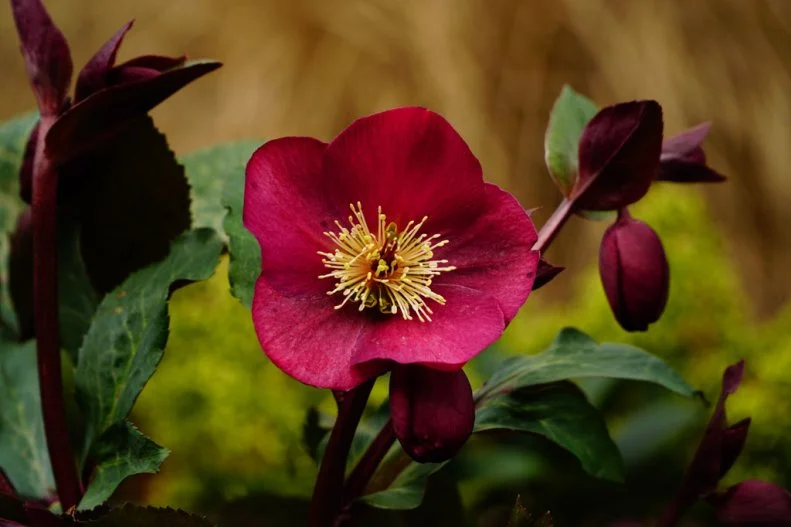
Hellebore
Much to Snape’s delight, Harry forgets the crucial hellebore ingredient during a potions class in the Order of the Phoenix book. In the Wizarding World, hellebore syrup – two drops to be exact – is used in the Draught of Peace. This popular, shade-loving flower is typically pink, red or a deep berry color, but Harry Potter mobile games show hellebore syrup as blue; so, perhaps the creators were inspired by the hybrid 'Blue Metallic Lady,' which is a deep, inky purple-blue. But regardless of color, please do not make your own hellebore syrup as this gorgeous winter bloom is highly toxic when ingested.
More photos after this Ad
Photo: Shutterstock/MaxAsrory
3 / 27
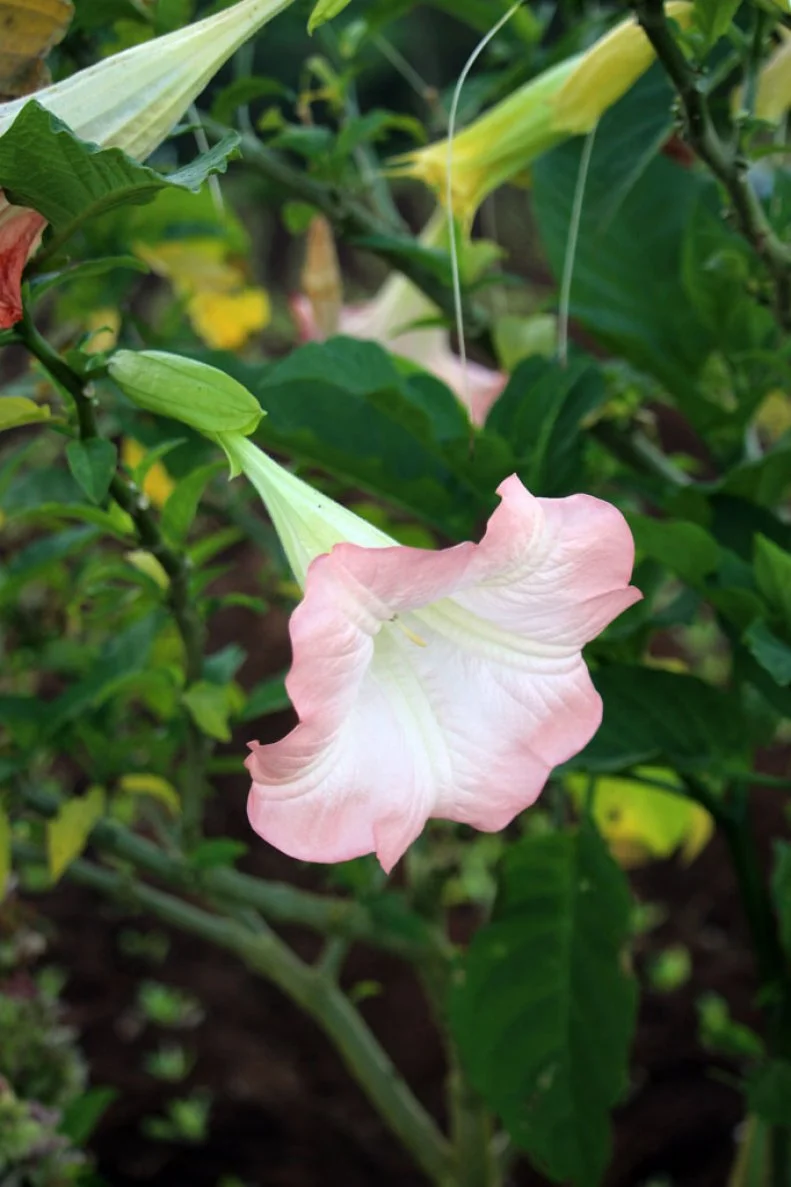
Angel's Trumpet
When the first Harry Potter film was released in theaters, a trading card game (appropriately named the Harry Potter Trading Card Game) was also released, and one sinister potion card features an Angel’s Trumpet Draught. Angel’s trumpet is also featured in the mobile game "Harry Potter: Wizards Unite" as a key ingredient for the Tonic for Trace Detection. This tropical showstopper is one of our favorite landscaping tricks as it creates a dramatic cascade of flowers. And it comes in quite a few colors, from a cheery peach to a bold orange to an ombre white-to-pink flower that appears in the video game. Angel’s trumpet has been associated with witchy ways long before Harry Potter, but please do not make your own tonic or draught as this plant is toxic to humans and fur babies.
More photos after this Ad
Photo: Shutterstock/ESTELLE R
4 / 27
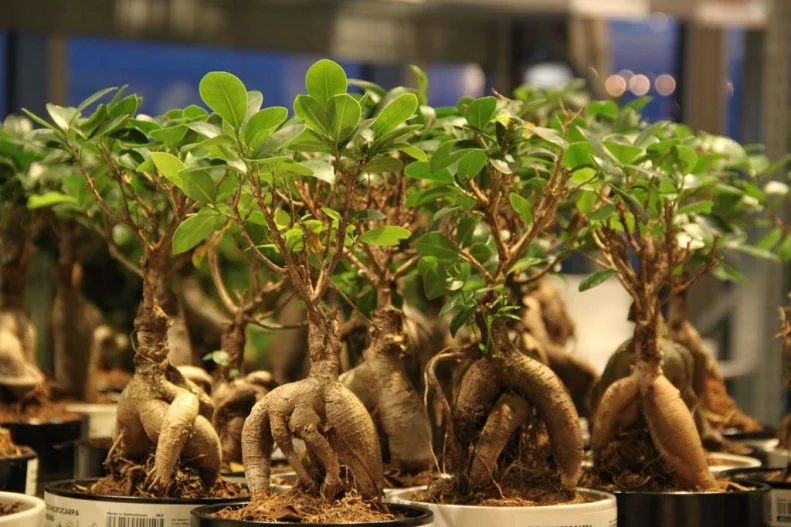
Mandrake
Of all the magical plants featured in the Harry Potter franchise – especially the films – the mandrake gets the most air time. As farfetched as those screaming babies made out of roots sound, this ancient Mediterranean plant is actually real. And it does look like a mad baby! It’s from the caudiciform family, which means it stores water in a large stem or caudex. The caudex is divided into swollen, elongated knobby roots that … kind of resemble human limbs. Pair that with some pretty lifelike indentions for eyes and a mouth and it’s easy to see why so many cultures have considered these plants steeped in magic for centuries.
Yes, really. The Harry Potter series did not invent this concept nor the idea that a mandrake’s scream could kill you. Mandrakes have been intertwined with fantasy since the 14th century B.C., from Homer to Shakespeare. And mandrakes have been believed to heal all kinds of ailments and issues over the centuries. However, in reality, the Greeks really should have cooled it on mandrake as a sleep aid because this toxic plant is from the deadly nightshade family.
More photos after this Ad
Photo: Getty Images/digihelion
5 / 27
Devil's Snare
Devil’s snare, the deadly vine that acts like a boa constrictor, is one of the first encounters with magical plants in the Harry Potter series. And the creepy, choking plant certainly feels alien with a hivemind strength that acts like a paper finger trap. While the giant, evil vine isn’t that big in real life, it’s definitely real and it’s definitely evil. OK, not evil. But it is a weed. And it’s rank. You likely know devil’s snare as jimsonweed, the pungent weed that smells like an old community pool locker room floor. Jimsonweed is part of the nightshade family and all parts are poisonous.
More photos after this Ad
Photo: Shutterstock/Oguzhan Kaymaz
6 / 27
Asphodel
“Tell me, what would I get if I added powdered root of asphodel to an infusion of wormwood?” It’s the storytelling allusion packed with Easter eggs. Rewatching this scene with Alan Rickman's performance and Snape's first exchange with Harry Potter is a masterpiece when you realize the subtext. Asphodel, a very real plant in the muggle world that makes half of the Draught of Living Death in the Harry Potter series, was considered a type of lily in the Victorian era. (It’s not). Lily was Harry’s mother’s name and it’s implied in the series that Snape still holds a candle for her. Even more impressive, asphodel was historically thought to cure snake bites (It doesn’t. Call 911.) which is ultimately how Snape dies. And in Greek mythology, asphodel is the name of part of the after-death underworld. How’s that for MCU-level clues?
In real life, asphodels are common garden flowers with uniform-striped white petals or solid yellow petals. In the Mediterranean, sometimes the leaves are used to wrap fresh cheese. Several parts of the plant are edible; however, the root is toxic.
More photos after this Ad
Photo: Shutterstock/nnattalli
7 / 27
Wormwood
The second plant mentioned in Snape’s cryptic message to Harry is also rooted in subtext. Common wormwood, a very real muggle herb that’s famously in vermouth and absinthe, has ancient connotations of pain and bitterness. The name is even used in the Bible’s Book of Revelations as an example – rather harbinger – of consequence. So, Snape is basically telling Harry that he regrets getting involved with Voldemort and being on the wrong side of wizard history, which ultimately kills Lily. I’ve never been a Snape fan, but, using plants to convey such deep remorse is a beautiful way to humanize the character. If you’re throwing a Harry Potter Halloween party, make a gin martini in Snape’s honor. You could even garnish with a candy snake if you’re feeling a bit crass.
More photos after this Ad
Photo: Shutterstock/Gaston Cerliani
8 / 27
Rue
Felix Felicis AKA Liquid Luck is one of the more wholesome, kismet creations in the Wizarding World and one of the few potions we see Harry actually take in the franchise. One of the key ingredients is powdered common rue, a real muggle herb with a long history in ancient medicine, sorcery and cuisine. It runs the gamut from earache treatments in Mexico to coffee in Ethiopia. Today, it’s still used as an herbal tea, but most people aren’t growing rue for their salads anymore because rue has a pretty big problem: It burns like hell if you touch it. The oil on rue leaves can inflict third-degree burns and, like a curse, the sap can linger in your body up to seven years. If you’re looking for tea garden ideas, maybe opt for non-skin-burning herbs such as lemon balm or chamomile.
More photos after this Ad
Photo: Getty Images/AYImages
9 / 27
Mistletoe
The iconic (and parasitic) Yuletide plant makes several appearances throughout the Harry Potter franchise, from that kiss in the Room of Requirement to a bevy of video game potion mentions – specifically the mistletoe berry. The plant is considered an antidote to poisons in the Wizarding World, but both European and American mistletoe are toxic to humans and extremely toxic to dogs. European mistletoe has a history of ancient and modern medicine with wide claims, but if you want mistletoe for Christmas snogging, just go with this felt DIY.
More photos after this Ad
Photo: Getty Images/EyeEm Mobile GmbH
10 / 27
Wolfsbane
“What is the difference, Potter, between monkshood and wolfsbane?” Trick question! It’s the same. And, as Snape points out, the poisonous purple flower is also known as aconite. In the Wizarding World, this plant is so toxic that students in Harry Potter: Hogwarts Mystery wear dragon-hide gloves to protect their skin. In the muggle world, you should protect your skin, too, as the roots can cause numbness when touched – not to mention the easily absorbed poison from virtually every part of this plant. The roots are poisonous to dogs, too. If you have a pup that loves to dig or curious kiddos, it’s best to avoid this plant.
More photos after this Ad
Photo: Shutterstock/Madeleine Steinbach
11 / 27
Valerian Root
Remember the Draught of Living Death? Another key ingredient is valerian root and this very real plant has a bewitching effect on cats just like catnip. Part of the honeysuckle family, some valerian varieties are edible and you can find valerian root teas and tinctures at grocery stores or valerian root tablets at drug stores. The root has a drowsy effect on humans and some claim it has a calming, soothing effect on the nervous system – similar to lavender – but you should always check with your muggle doctor before trying any wizarding supplements. While some swear by this sleep aid, others say it’s just a placebo.
More photos after this Ad
Photo: Getty Images/PicturePartners
12 / 27
Foxglove
Foxglove is one of our favorite curb appeal flowers and turns out Hogwarts Castle has them, too. During Prisoner of Azkaban, we see a deep burgundy variety of foxglove on screen when the dementors come onto the school grounds. The flowers quickly wither and then frost over to show how dementors suck the life out of anything in their dark path. Based on color, it’s likely the Excelsior Foxglove hybrid because that hybrid features a moody maroon and deep dark cherry red. But this showstopper comes in pink, peach, violet, butter yellow and more. Though incredibly beautiful, it’s best to leave these pretty petals in the garden and avoid cutting them for a floral arrangement as foxglove is highly poisonous to people and pets. The leaves can cause a bad rash and some people are even allergic to the pollen.
More photos after this Ad
Photo: Shutterstock/Danny Hummel
13 / 27
Vervain
We muggles have a vaccine for rabies, but in the Wizarding World high school freshmen are taught to mix plantains – yes, really – with a bunch of other plants for the “Famous French Method for the Bite of a Mad Dog.” One of those plants is a light purple vervain AKA verbena. We love verbena. It’s a great companion for the cardinal flower (another one of our favorites). Based on the color and shape of the petals featured in the Harry Potter: Magic Awakened mobile game, the preferred vervain variety for wizards is likely swamp verbena AKA blue vervain.
More photos after this Ad
Photo: Getty Images/onepony
14 / 27
Bloodroot
Bloodroot. It sounds completely made up, and, when mentioned in Harry Potter games, is the marquee ingredient for witchy poison. In real life, bloodroot is also poisonous. Simply touching this plant can give you a rash or worse skin burns. Even more gory: It bleeds. Well, sort of. The sap from this plant is bright red and, if cut, oozes like blood. Historically, bloodroot has been used as a dye, but given the risk of poisonous skin burns, we highly suggest one of these fruits or veggies as a natural dye instead.
More photos after this Ad
Photo: Shutterstock/Christoph Bunte
15 / 27
Sneezewort
Sneezewort is used for sneezing powder in the Wizarding World. In real life, it’s a lovely fall wildflower and, yes, it can make you sneeze. Historically, sneezewort has been ground into a powder (probably not unlike the Harry Potter universe) to make people sneeze. Once upon a time, it was believed that sneezing created a portal for evil spirits to enter and leave our bodies. And that’s why you still hear people say, “Bless, you!” when you sneeze.
More photos after this Ad
Photo: Shutterstock/Pavaphon Supanantananont
16 / 27
Stargrass
Star grass. Unicorn grass. This plant has several fantastical names. But it’s very real! In the Wizarding World, Star Grass Salve is a healing concoction featured in the Harry Potter Trading Card Game. In the real world, you’ll find this waterfowl snack along ponds and creeks. However, it’s sensitive to the cold so you won’t find this tropical perennial up North. True to the name, the bracts resemble a flower that resembles a star. The faux petals have an ethereal, elf-like vibe with elongated tapered white star points.
More photos after this Ad
Photo: Shutterstock/K Quinn Ferris
17 / 27
Jewelweed
Sometimes truth is stranger than fiction. Jewelweed is an ingredient in a couple of potions in various video games, but this hummingbird beacon (and one of our favorite fall wildflowers) has a real magic trick. Though gorgeous, the name probably doesn’t come from the bold tangerine flowers. It’s all about the leaves. If you place a jewelweed leaf underwater, the green color turns metallic. The illusion happens because the leaves have tiny, fuzzy hairs that trap air bubbles. But wait! There’s more! Other plant pros believe the name comes from the plant pod. If you squish the pod, sometimes you’ll find a turquoise-colored tiny gem among the seeds like a Cadbury egg prize. A word of caution though: If you stumble upon jewelweed in the woods, check for surrounding poison ivy before grabbing anything. While jewelweed is a natural counter-acting treatment for poison ivy irritation, the irony is that the two often grow next to each other in the wild.
More photos after this Ad
Photo: Shutterstock/Wirestock Creators
18 / 27
Hemlock
Hemlock is featured in a couple of video games as a key ingredient for Doxycide, which is like wizard citronella for little fairies that bite. That tracks as you’d need a powerful repellant for evil critters. And hemlock is as sinister as it gets. Don’t get it confused with Queen Anne’s lace, one of our favorite fall wildflowers. Hemlock is very different and very poisonous. But literature loves it. Even Shakespeare used hemlock a couple of times. The famous witch’s brew in Macbeth features hemlock. King Lear’s crown of weeds has hemlock. Henry V namedrops hemlock. And some believe the poison poured into Hamlet’s dad’s ear – that most murderous wet willy – is hemlock.
More photos after this Ad
Photo: Shutterstock/Lillian Tveit
19 / 27
Scurvygrass
Scurvygrass sounds like it came from an AI name generator. But it’s the real deal. Perhaps in a moment of maritime necessity or panic, British sailors found that eating this marsh plant prevented scurvy. However, in the Wizarding World, scurvygrass is not a source of vitamin C but a brain inflammatory. In the Order of the Phoenix, Harry learns (if he was actually paying attention) that scurvy grass is a key ingredient in the Befuddlement Draught, which makes a victim act completely reckless with no sense of consequence. Why the school curriculum thought it was a good idea to teach 15-year-olds how to shut down the prefrontal cortex is beyond me.
More photos after this Ad
Photo: Shutterstock/Karin Jaehne
20 / 27
Silverweed
We see silverweed in a jar briefly on-screen during the Sorcerer’s Stone. It’s depicted as a branch with little berry clusters. But in reality, common silverweed is a yellow, five-petal perennial. (The name comes from the underside of the leaves, which is a grayish green.) And it’s completely edible. It’s used in herbal teas and the silverweed root is like a starchy radish. However, most say the taste isn’t great.
More photos after this Ad
Photo: Shutterstock/Julian Popov
21 / 27
Arnica
First seen on screen during Half-Blood Prince and later featured in various Harry Potter merch, Potion No. 113 contains syrup of arnica, a real muggle flower that’s related to the sunflower. But unlike its late summer, Instagrammable cousin with delicious seeds, arnica is poisonous when ingested. It is, however, often used in a salve to treat skin ailments topically, including bruises.
More photos after this Ad
Photo: Shutterstock/iwciagr
22 / 27
Staghorn Mushroom
Mushrooms are mentioned throughout the Harry Potter franchise, however, only one specific mushroom is referenced: Staghorn mushroom. You see it for sale in a shop in Diagon Alley in the Chamber of Secrets and Hagrid has a jar in his hut in Prisoner of Azkaban. But the stereotypical brown-capped mushroom in the jar is not what a staghorn mushroom looks like. In reality, it’s way more fantastical with little vibrant gold, almost coral-like motifs. Though similar in color to the trendy, expensive chanterelle mushroom, this dramatic horn-shaped fungus is completely inedible.
More photos after this Ad
Photo: Shutterstock/Jon Benedictus
23 / 27
Belladonna
Essence of belladonna is a common ingredient for student potion kits at Hogwarts, and in Goblet of Fire, it’s mentioned that Harry’s stash was running low. In the muggle world, you likely know this plant by another name: Deadly Nightshade. The Wizarding World loves to sample from the Solanaceae plant family when referencing Dark Arts and nefarious brews. But we’d like to point out that not every Solanaceae member is wicked. Tomatoes, peppers, eggplant and potatoes? They’re in the family, too!
More photos after this Ad
Photo: Getty Images/Kiki_Tyra7
24 / 27
Bitterroot
Bitterroot entered the canon chat with the Harry Potter Trading Card Game. There’s a card for Burning Bitterroot Balm and it’s considered a healing salve. Bitterroot popped up again in the mobile game Harry Potter: Wizards Unite as an ingredient for the Exstimulo Potion, which enhances or super-charges a spell. For muggles, bitterroot is found in the West, from British Columbia, Canada to Arizona. The root is edible, but, as the name implies, tastes bitter. The bitterroot flower is usually a bold, Barbie pink and in some ways, it appears as if by magic. You’ll typically find bitterroot in barren, gravelly areas and the plant doesn’t have a large stem or much – if any – greenery so the flowers look as if they’ve magically grown from nothing.
More photos after this Ad
Photo: Shutterstock/Eko Budi Utomo
25 / 27
Goosegrass
Goosegrass appears in a jar briefly on-screen during Chamber of Secrets and it’s also mentioned in The Archive of Magic: The Film Wizardry of Fantastic Beasts: The Crimes of Grindelwald as a potion ingredient to buy. But you don’t need to visit a London wizard apothecary to find it. It’s probably in your backyard right now. This annoying weed can take over your lawn like an infestation of garden gnomes at The Burrow. And, as if by magic, it’s fairly herbicide-resistant. The best way to tell goosegrass to bugger off is to eliminate the crown – the whole crown – so it can’t seed and reproduce. Hand-pulling these can be difficult, so we recommend a good weeding tool.
More photos after this Ad
Photo: Shutterstock/Pics Man24
26 / 27
Knotgrass
Pumpkin juice, firewhisky and Butterbeer get all the hype, but there’s another magical beverage that doesn’t get much love: Knotgrass Mead. (Knotgrass is also famously used in the Polyjuice Potion.) The green bottles used to be on display in the Hog’s Head pub at Universal’s Islands of Adventure Inside Hogsmeade. Though, it was never a real beverage to order and drink. (But! Universal Studios Hollywood does have Bungbarrel Spiced Mead to drink.) In reality, knotgrass is just another weed. And you likely don’t want to make a mead out of this eyesore. Technically, common knotgrass is edible and there are health claims that it helps with diarrhea. But, in the muggle world, we have Imodium and Pedialyte.
More photos after this Ad
Photo: Universal Orlando Resort
27 / 27
Landscaping in the Muggle World
It’s unclear if the Wizarding World has to worry about plant hardiness and grow zones. But we do. Several of these plants mentioned likely won’t grow in your neck of the woods. But, here at HGTV, we love another kind of magic: The Dupe. The great thing about the plant world is that you tend to find patterns and similarities with plant families, especially in foliage. And that’s how Universal Orlando Resort fakes balmy Scotland in blistering Central Florida at The Wizarding World of Harry Potter.
“Many conifers found in northern areas like Scotland would not survive in Florida’s climate,” said Jason Lieffers from the Universal Orlando horticulture team. “So, extra care must be taken to use as many Southern-friendly conifer species as possible, without losing the intended ‘look’ inspired by the Northern trees seen in the films. Trees like the Cedrus deodara (Deodar Cedar), Juniperus silicicola (Southern Red Cedar), x Hesperotropsis leylandii (Leyland Cypress) and certain Thuja species (Arborvitae) are commonly used in our landscapes in The Wizarding World of Harry Potter. We also have many areas within The Wizarding World that use a mixed forest theme of mixing conifers with broadleaf shrubs and trees.”
Buy Universal Orlando Resort Tickets