7 Trendy, DIY Wall Paint Ideas To Update Your Space
Give a room a fresh look with one of these trending paint treatments.

It's no secret that we love a good accent wall. If you're ready to spice up your space with a new paint treatment, we've got you — and your walls — covered. The HGTV Magazine editors tested the coolest DIY paint trends so you can recreate the looks in your home. Read on for all the easy, step-by-step instructions.
Strié
This treatment has been a favorite in Europe for centuries, but America’s love for cottagecore has made strié extra popular in the States. The technique (also called “dragging”) involves pulling a brush through a tinted glaze to create a textured effect that make walls look as if they’re covered in fabric.

Blue Strié Painted Bedroom
“This looks like ripples on the water,” says designer Kristen Rivoli of the strié walls in this Boston bedroom. Decorative painter Lynda Stephens used a blue glaze over a white base coat.

Photo by: Greg Premru
Greg Premru
“This looks like ripples on the water,” says designer Kristen Rivoli of the strié walls in this Boston bedroom. Decorative painter Lynda Stephens used a blue glaze over a white base coat.
The How-To:
- Prime the wall and paint using your base color normally. Let dry completely.
- Using a roller and working from top to bottom, apply tinted glaze to the wall in a section about the width of your roller, then immediately drag a toothed brush vertically through the wet glaze. Wipe the brush clean.
- Working quickly, repeat in sections until the wall has been fully glazed and dragged. A team of two is best for this project: one to glaze, the other to drag.
Pro tip: Color choice is important! The two hues should contrast but not clash. For best results, pick from the same paint strip, a few shades apart: The lighter color is your base, the darker is your glaze.
Paint colors: Pacific Palisades and Chantilly Lace, Benjamin Moore
Limewash
Though limewash has been showing up everywhere lately, it’s not new: It appeared on buildings in ancient civilizations! The product is comprised of just a few natural ingredients (crushed limestone, water and pigments for color) making it an environmentally friendly alternative to traditional paint. Once it dries, it embeds tiny pieces of lime into the surface of walls, resulting in a perfectly imperfect chalky look.

Blue Limewash Bathroom
The limewashed walls in this bathroom fit right into this home's traditional aesthetic. “I wanted to emphasize the Old World feel of the historic Washington, D.C., house,” says designer Zoë Feldman.
Photo by: Stacy Zarin Goldberg
Stacy Zarin Goldberg
The limewashed walls in this bathroom fit right into this home's traditional aesthetic. “I wanted to emphasize the Old World feel of the historic Washington, D.C., house,” says designer Zoë Feldman.
The How-To:
- Limewash needs to cling to a porous surface. If your walls are drywall, a mineral-based primer can recreate that permeable environment. You can skip priming if you’re working on concrete, brick or stone walls.
- Dip a block brush into the limewash and apply a thin coat to the wall using random brushstrokes. The goal is to create an organic look with movement, so don’t overthink your brushwork. You want the opposite of uniform.
- Let dry and repeat with a second coat.
Pro tip: Stir the limewash every 10 minutes or so to keep the lime particles well distributed with the pigment and water.
Paint color: Fellowship, Portola Paints
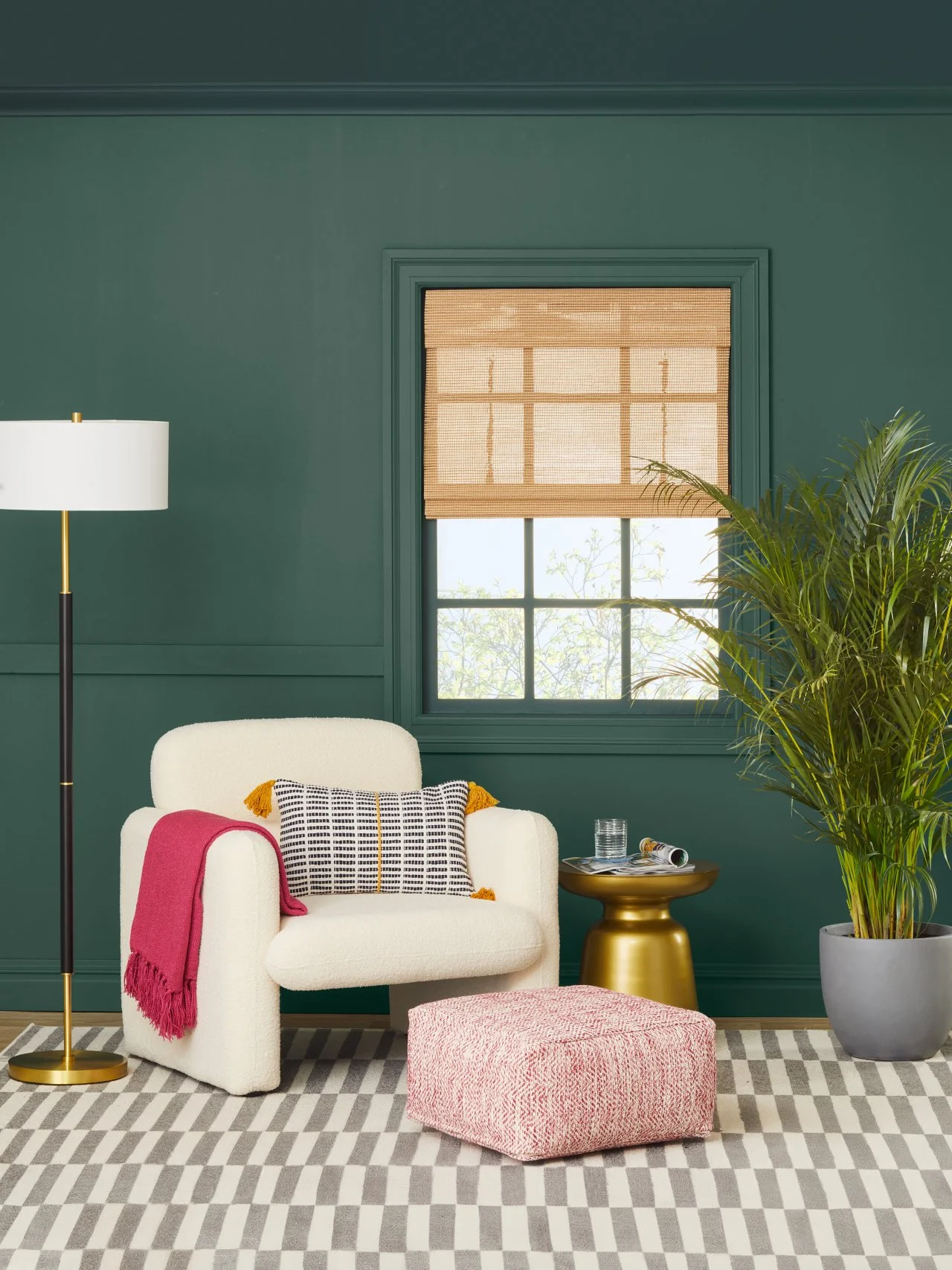
Color Drenching
This technique is exactly what its name implies. Coating your walls, trim and ceiling in the same color (but different finishes) is an easy way to create a bold, high-end look in your space — and designers love it. Color drenching is the key to giving a room that stunning jewel-box effect.
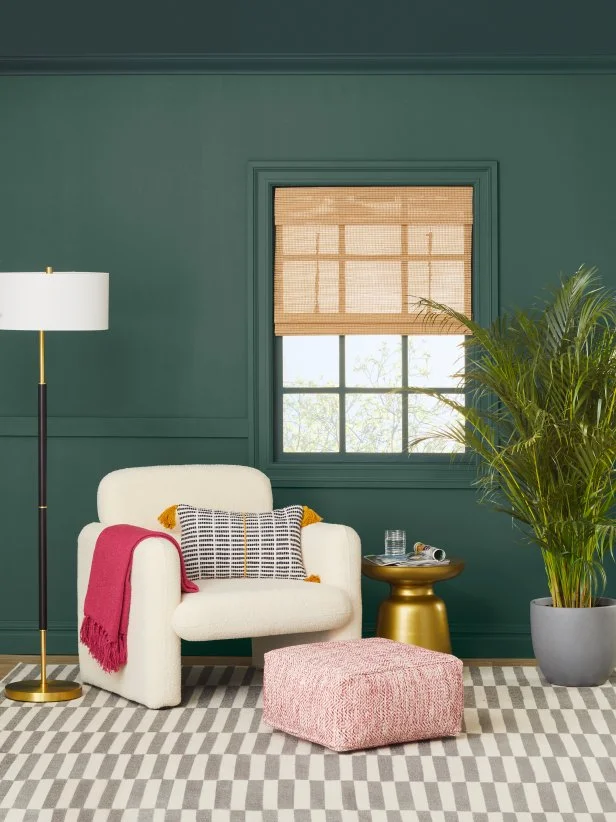
Contemporary, Color-Drenched Green Living Room
HGTV Magazine shares how to create this trendy, color-drenched look for any room.
Photo by: Philip Friedman
Philip Friedman
The How-To:
- Paint the ceiling with flat-finish paint; let dry.
- Using the same color paint in a satin or eggshell finish, paint the walls; let dry.
- Using the same color paint in a gloss finish, paint any trim and the baseboards; let dry.
- If you have a window, tape off the panes, then paint the muntins with the gloss-finish paint; let dry.
Paint color: Equilibrium, Behr
High Gloss
A high-gloss finish is synonymous with luxury, and it makes a space pop in a big way. In Colonial times, the paint’s reflective quality made candlelit rooms look brighter, but not all settlers could afford it, so high-gloss paint became a status symbol. Modern versions are more attainable, and now they’re a designer favorite. Just note: You need to be an accomplished painter to get this one right. You might want to hire a pro!

Teal Kitchen With High-Gloss Paint
When used all over a small space like this Washington, D.C., kitchen, high gloss creates a jewel-box effect, says designer Zoë Feldman.
Photo by: Stacy Zarin Goldberg
Stacy Zarin Goldberg
When used all over a small space like this Washington, D.C., kitchen, high gloss creates a jewel-box effect, says designer Zoë Feldman.
The How-To:
- Assess the condition of your walls. A super sheen will highlight any surface imperfections. Plan on cleaning and prep work (including meticulous sanding and priming) before the painting begins.
- Apply a thin coat of paint using a special brush suited for high gloss or a spray gun to minimize visible brushstrokes.
- Let dry completely overnight. Sand the entire surface with a very fine sandpaper (400 grit or higher) before starting the next coat.
- For an extra-glossy shine, apply a clear topcoat when done.
Pro tip: High-gloss paint is very durable. Don’t be afraid to use it in a high-traffic area prone to scuffs, like a kitchen or a door.
Paint color: Mediterranean, C2 Paint
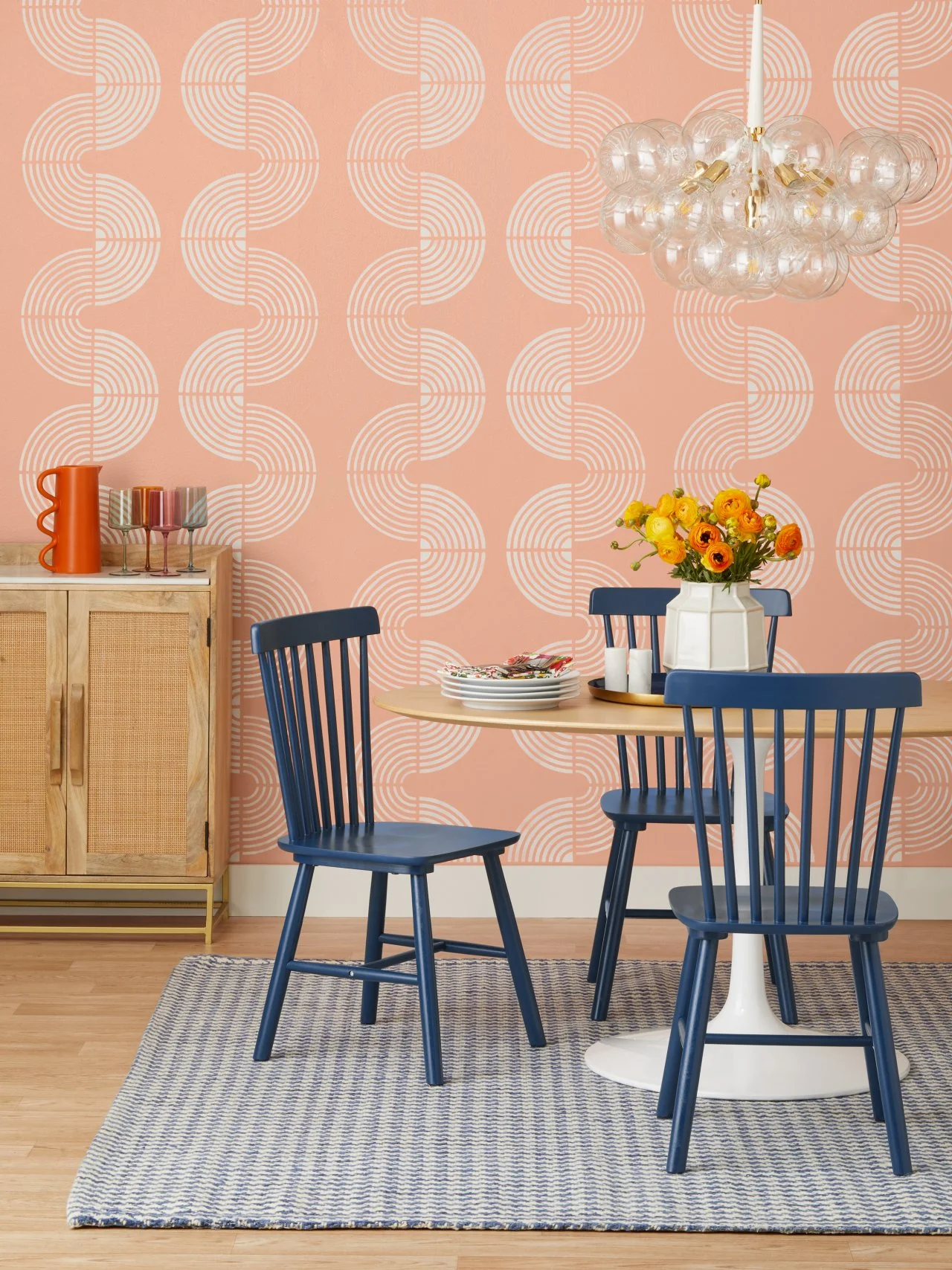
Stenciling
Get the look of wallpaper without the price or permanence. Whether you love midcentury modern-inspired waves, dainty florals or traditional damask, there's a stencil to suit every style.
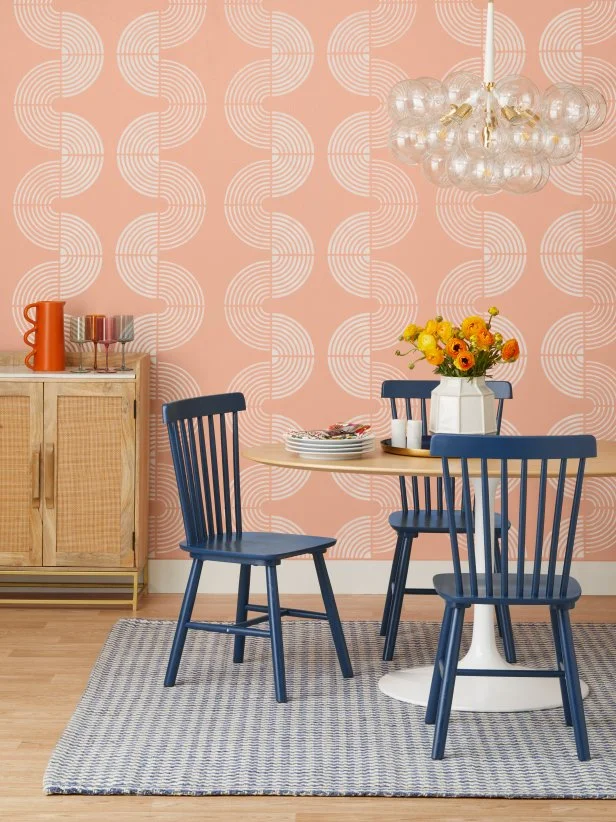
Eclectic Dining Room With Pink Stenciled Walls
HGTV Magazine shares how to create this wavy stenciled accent wall.
Photo by: Philip Friedman
Philip Friedman
The How-To:
- Paint the wall your base color; let dry.
- Use repositionable spray mount to stick the stencil to the top left corner of the wall.
- Dip a 3-inch foam roller in a different color paint and roll the excess onto a paper towel. Lightly roll over the stencil.
- Remove the stencil. Reposition it directly below the design you just painted, using the registration marks on the stencil as a guide so the pattern lines up. Repeat until you reach the bottom of the wall.
- To start a new column, turn the stencil upside down then repeat, allowing about 3 inches between columns. Repeat to cover the wall. Let dry.
Paint colors: Coral Cloud and Blank Canvas, Behr
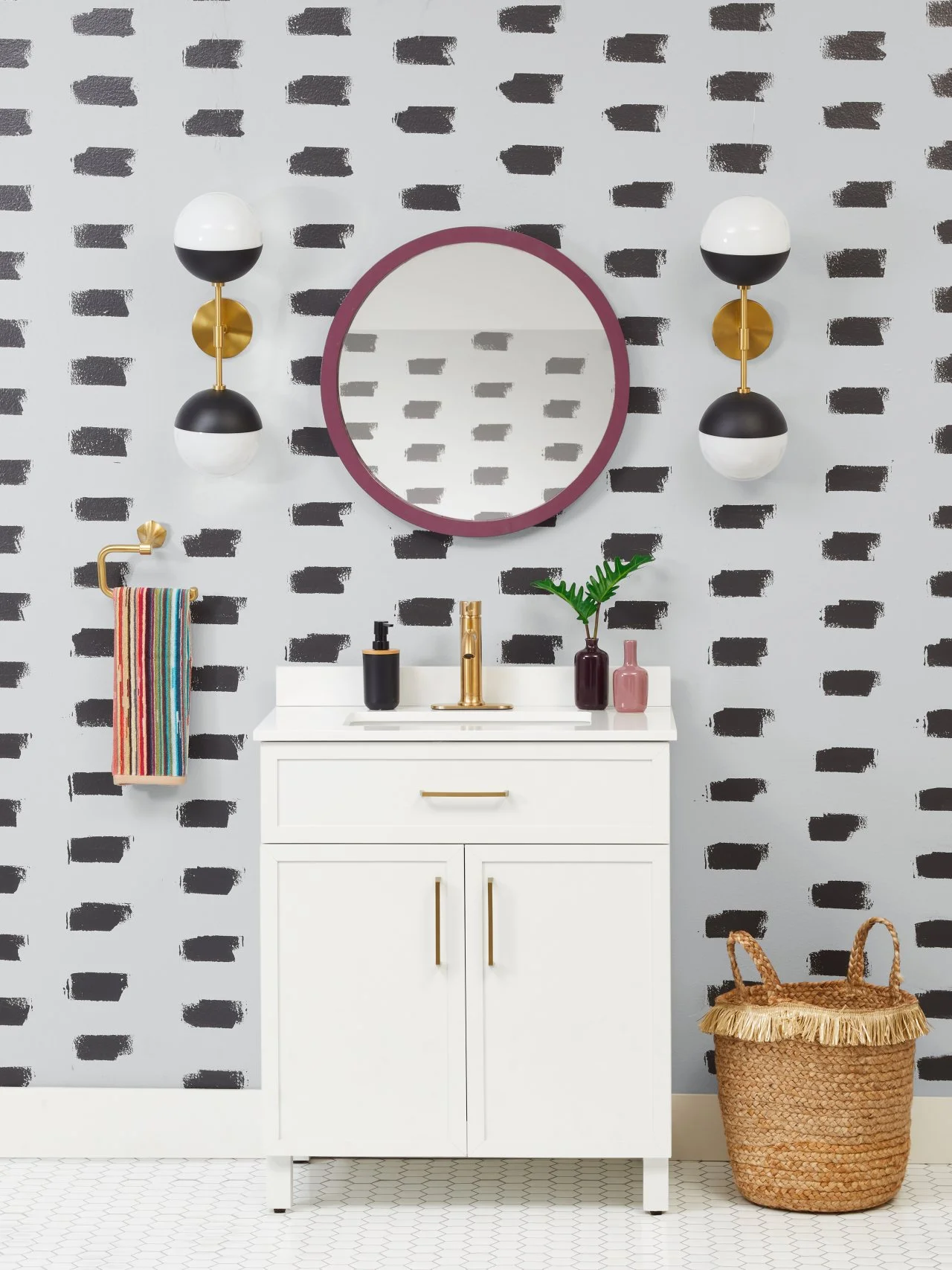
Freehand Brushstrokes
Looking for another wallpaper alternative that's even simpler than stencils? Try a freehand brushstroke design. You can use a tape measure to make it evenly-spaced or let your creativity run wild. Your wall is your canvas — literally!
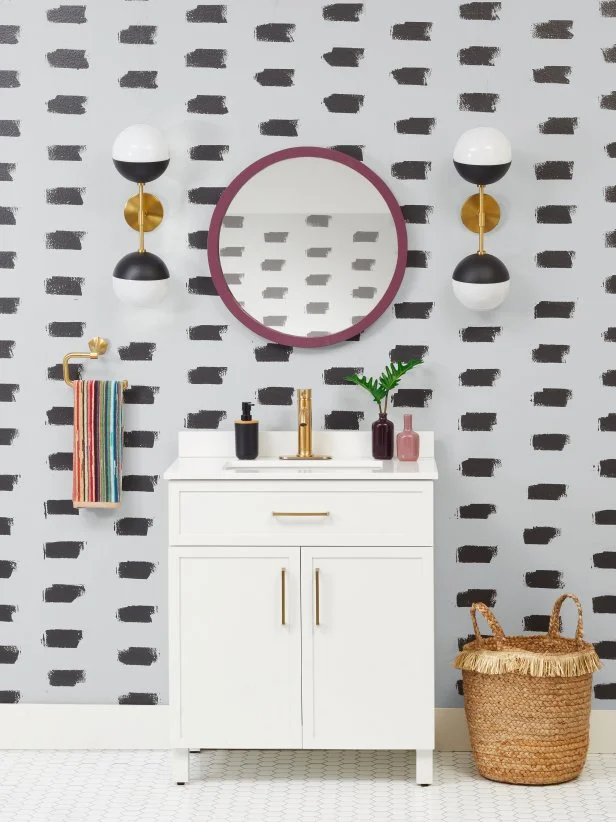
DIY Brushstroke Walls in a Contemporary Bathroom
HGTV Magazine shares how to DIY this trendy brushstroke design on your walls.
Photo by: Philip Friedman
Philip Friedman
The How-To:
- Paint the wall your base color; let dry.
- Starting about 3 inches from the top of the wall and 3 inches in from the left edge, use a 1-inch brush to paint a brushstroke about 2 inches tall and 5 inches wide. Brush first in one direction, then back in the other, overlapping the strokes.
- Repeat about 3 inches below the first brushstroke, then continue until you reach the bottom of the wall.
- Repeat to create a new column about 3 inches to the right, but this time start about an inch from the top of the wall so the rows are offset. Repeat to cover the wall; let dry.
Paint colors: Cracked Pepper, Silver Shadow and Exotic Eggplant (on mirror), Behr
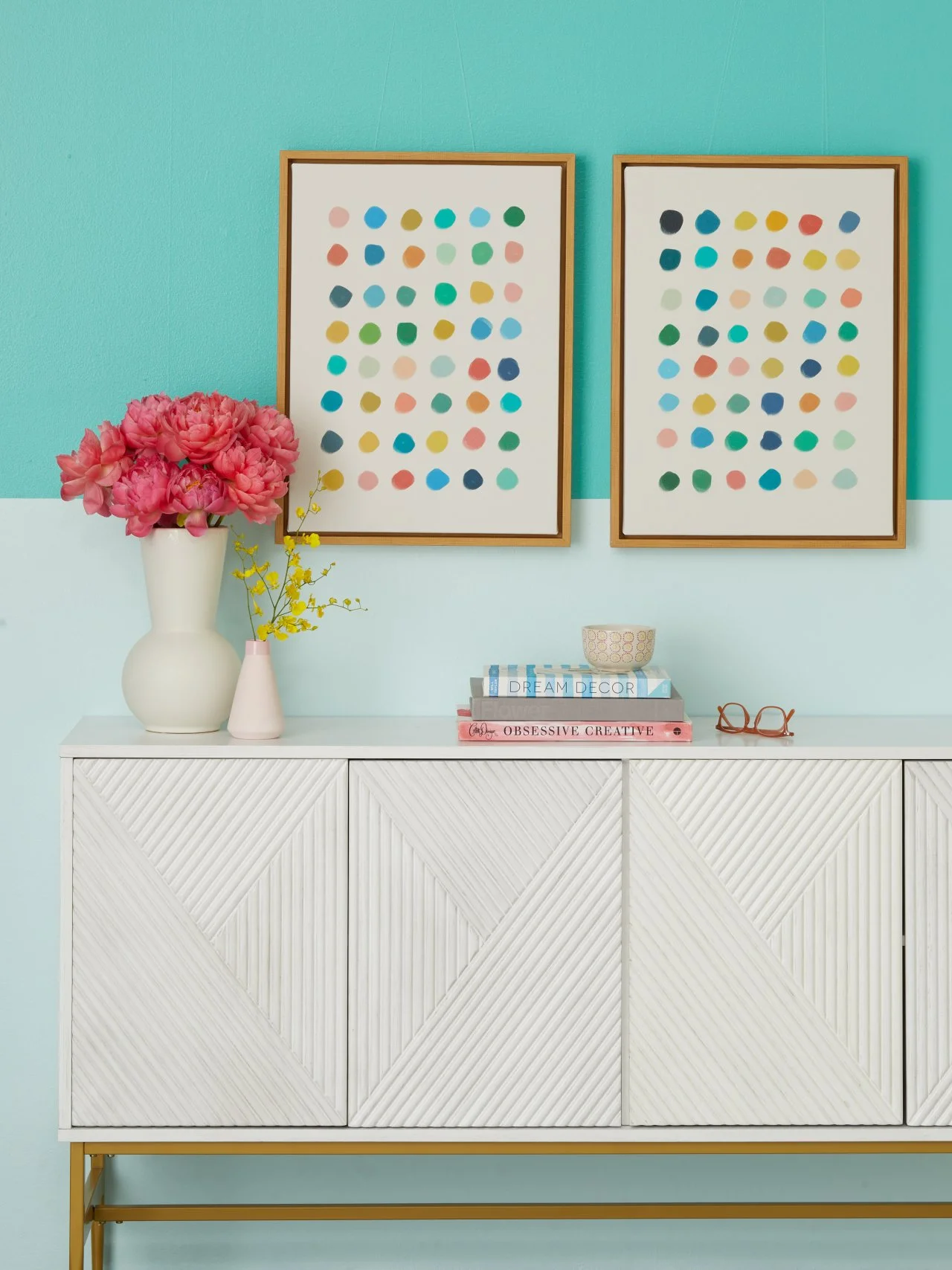
Color Blocking
Turn your walls into abstract art using this color blocking technique. You can divide the colors horizontally, vertically or try a playful diagonal look. Depending on how to break up the colors, you can make a room appear taller or highlight certain architectural features.
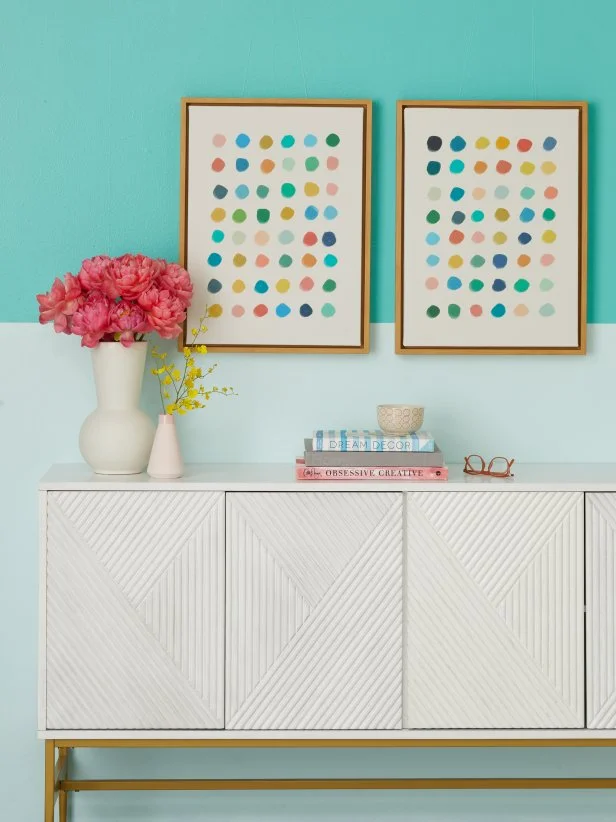
Contemporary Entryway With Color-Blocked Blue Walls
HGTV Magazine shares how to create this color-blocked wall treatment in any room.
Photo by: Philip Friedman
Philip Friedman
The How-To:
- Choose two colors and paint the entire wall the lighter color; let dry.
- Use a yardstick and pencil or chalk line reel to mark a horizontal line halfway up the wall. Stick delicate-surface painter’s tape below the line.
- Paint the wall above the tape the darker color. Remove the tape while the paint is still slightly wet; let dry.
Paint colors: Tidewater and March Aquamarine, Behr