How to Grow Tulip Tree
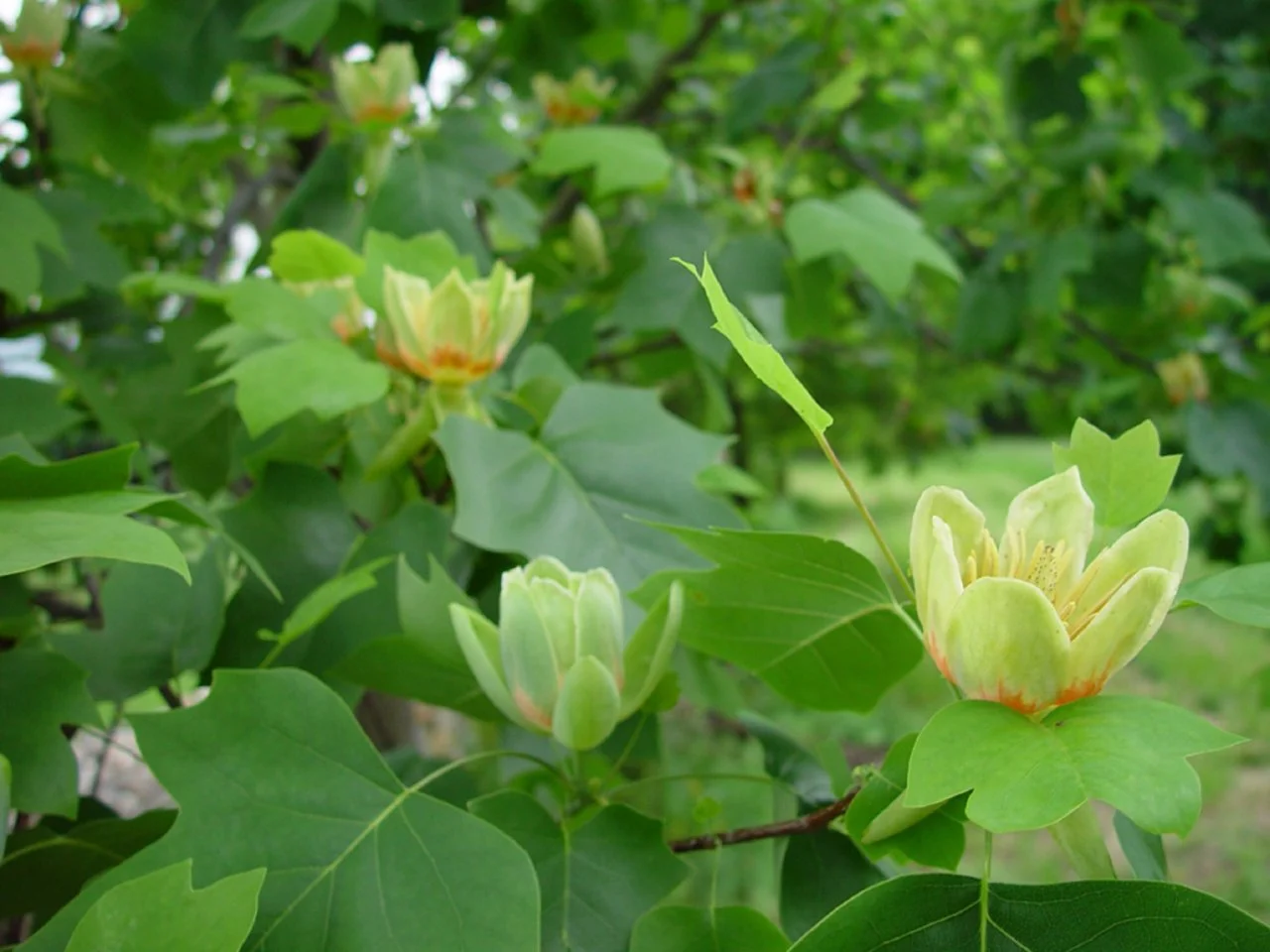
Tulip tree — Liriodendron tulipifera (also known as tulip poplar) — is a stunning addition in a large landscape.
MtCubaCenter.org
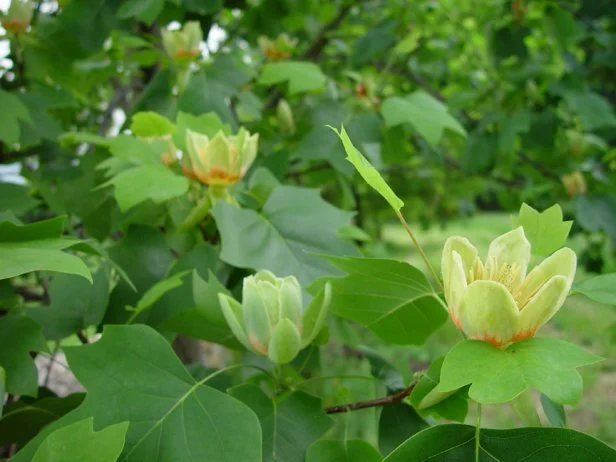
Tulip tree (Liriodendron tulipifera) is a native tree known for its towering size (70 to 100 feet) and yellow, tulip-like blooms that open in summer. Pictured here is ‘Little Volunteer’.

The stately, towering tree with brilliant golden yellow foliage that stands out in a treescape each fall is likely tulip tree (Liriodendron tulipifera), a fast-growing deciduous tree that has the distinction of being the tallest native hardwood in the US. The name refers to the tulip-shaped flowers, which are yellow-green with an orange band at the base, that bloom high in its branches in late spring and early summer. It’s also known popularly by other names, primarily tulip poplar or yellow poplar, though it’s not a poplar at all, but a member of the Magnolia family. The tree is native to Eastern North America and grows in US Hardiness Zones 4 – 9.
Tulip Tree Characteristics
Liriodendron tulipifera grows tall and straight with an oval-shaped canopy, and can reach 80 to 100 feet or more, though one variety, ‘Little Volunteer,’ may only reach a relatively diminutive 30 to 40 feet tall. The bright green, lobed leaves also resemble a tulip profile and turn a rich, golden-yellow shade before floating to the ground in the fall. The gray bark becomes furrowed and rough as the tree ages.
It’s a fast grower, increasing more than two feet in height per year, but the tulip-shaped flowers generally don’t appear until the tree is 10 to 12 years old. It may also be hard to spot the flowers when they bloom because they appear high in the branches after the leaves are fully developed. Later, the brown seed pods sit upright on the branches, opening to release their winged seeds.
How to Use Tulip Tree in a Landscape
Remember hearing the advice “The right tree in the right place?” Make sure you have the right place before you plant a tulip tree, or you could face trouble down the road. Because of its height and width, it’s not a good fit in a small yard.
As tulip tree grows, it drops its lower branches and twigs, and in the summer, anything parked or placed under a tulip tree is apt to be covered with the sticky honeydew produced by the aphids that feed on the leaves. Because of their height, they should not be planted under power lines. Tulip tree has a shallow root system, so it may be difficult to include other plants within the tree’s drip line.
Growing Conditions for Tulip Tree
To live its best life, tulip tree requires full sun — six or more hours of direct sunlight each day — and moist, well-drained soil. A tree planted in soil that stays dry will experience leaf yellowing, so it’s important to have a consistent supply of moisture. Tulip tree will also grow in partial sun, where it can receive 4 to 6 hours of sun daily. It prefers acid soil but tolerates alkaline soil as well.
How to Plant Tulip Tree
Tulip tree grows very tall and large, so make sure you plant the tree where it has room to spread its canopy.
To plant a tree grown in a nursery container:
- Dig a hole with sloping sides three to four times wider than the container, but only as deep as the tree’s root ball.
- Slide the tree out of the container, keeping the soil around the roots intact. If the roots appear to circle the root ball, use a sharp knife to cut an x across the bottom of the root ball and four vertical slices along the sides.
- Set the tree in the hole so that the base of the trunk is slightly above ground level.
- Backfill the hole with soil, eliminating any air pockets, until the soil is just below the root collar.
- Water the soil thoroughly and spread two to four inches of mulch in a three-foot-diameter area around the tree, but not touching the trunk.

How to Plant a Tree
To give your new tree a good chance for success, follow these simple instructions on planting a tree.
To plant a balled and burlapped tree:
- If possible, rototill an area five times the diameter of the root ball.
- Measure the depth of the root ball and dig a hole to that depth so the root collar will be at ground level when the tree is planted.
- Handle the tree by the root ball and set it in the middle of the hole, making sure the root collar is at or above ground level.
- Cut away the wire basket and remove any rope, twine, nails or staples; natural burlap fabric can remain in place, but any plastic or vinyl covering should be removed completely.
- Pack the soil around the root ball, eliminating any air pockets, until the soil is just below the root collar.
- Water the soil thoroughly, then spread two to four inches of mulch, keeping the material four inches away from the trunk.
Keep the soil around newly planted trees moist. When the weather is dry, water slowly at the tree’s drip line every seven to 10 days during the first year.
Care of Tulip Tree
Aphids and scale are two insects that can infest Liriodendron tulipifera. Both secrete honeydew, which drips onto lower leaves and anything else under the tree and provides a place for black sooty mold to grow. They don’t cause permanent damage, but the honeydew and sooty mold can be a nuisance.
Verticillium wilt can cause wilting and death of leaves and branches. Prune out infected branches that show dieback from cankers that may also affect growth. A regular maintenance program can keep trees healthy.
Tulip tree grows quickly, but the wood is somewhat weak and susceptible to breakage from ice and snow or in high winds.
Tulip Tree Varieties
‘Emerald City’: Has glossy green leaves and grows 55 to 60 feet tall, 25 feet wide.
‘Little Volunteer’: Grows only 30 to 40 feet tall and has smaller leaves than other varieties.
‘Fastigiatum’ (or ‘Arnold’): Upright branching tree grows 50 to 60 feet tall at maturity, 15 to 20 feet wide.
Fun Facts About Tulip Tree
- Three states in the US — Indiana, Kentucky and Tennessee — have chosen Liriodendron tulipifera as their official state tree.
- According to the Arbor Day Foundation, tulip trees were once favored for use as railroad ties and fence posts.
- Daniel Boone used the wood of Liriodendron tulipifera for his 60-foot dugout canoe.
- Tulip trees were among the many tree varieties that George Washington arranged to have planted at Mount Vernon in the late 18th century; those trees are now 140 feet tall.