How to Plant, Grow and Care for Hibiscus
Plus the best hibiscus flower varieties for cooking.

Here, everything you need to know about hibiscus, including what it is, types of hibiscus plants and a detailed guide to planting hibiscus.
What Is Hibiscus?
Hibiscus is an ornamental flowering plant that grows in many zones, depending on the variety, and has culinary and cosmetic uses as well.
Botanical Name: Hibiscus spp.
Common Names: Hibiscus, hardy hibiscus, tropical hibiscus, rose mallow, rose of Sharon
Plant Type: Various, annual and perennial herbaceous plants, woody shrubs
Bloom Time: Summer to fall
Hardiness Zones: Zones 9-10 (any species), Zones 3-8 (hardy species)
Plant Appearance
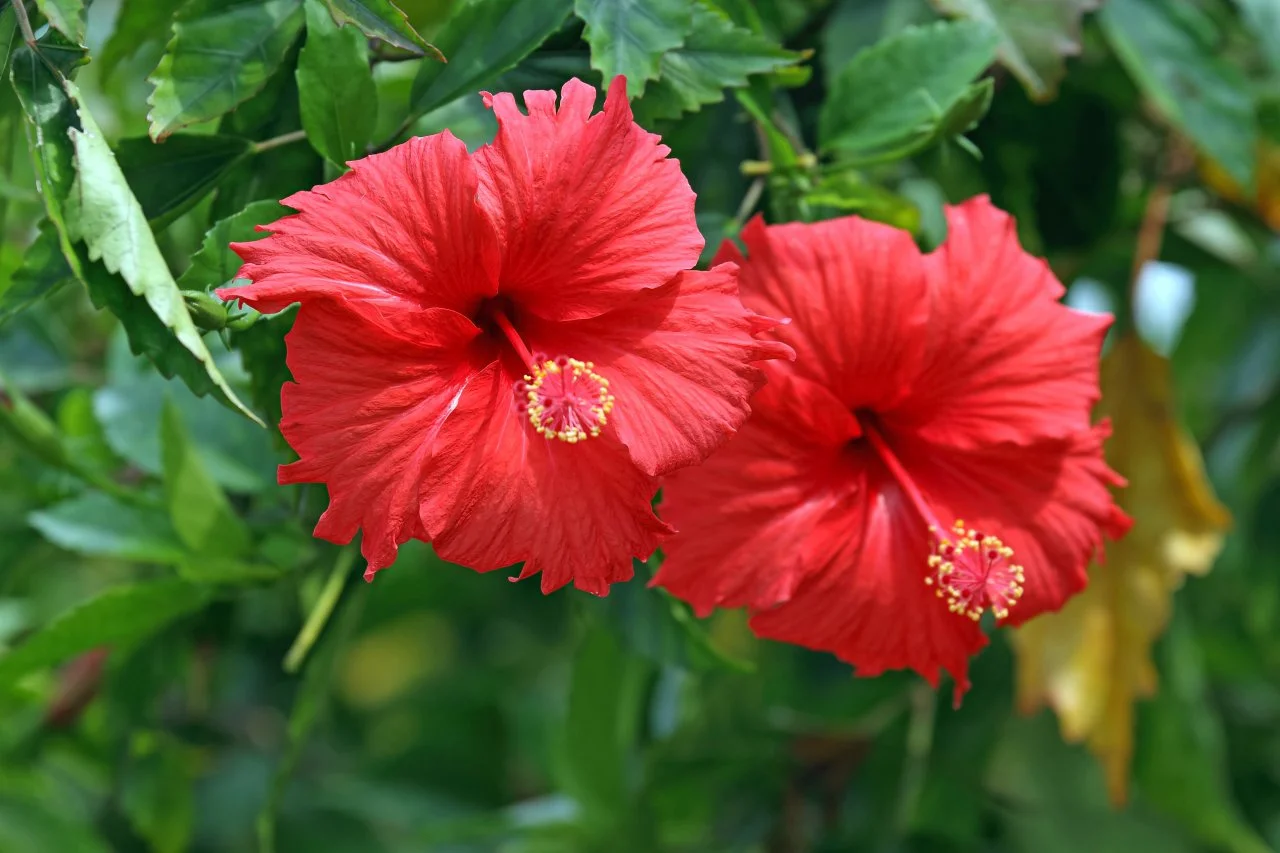
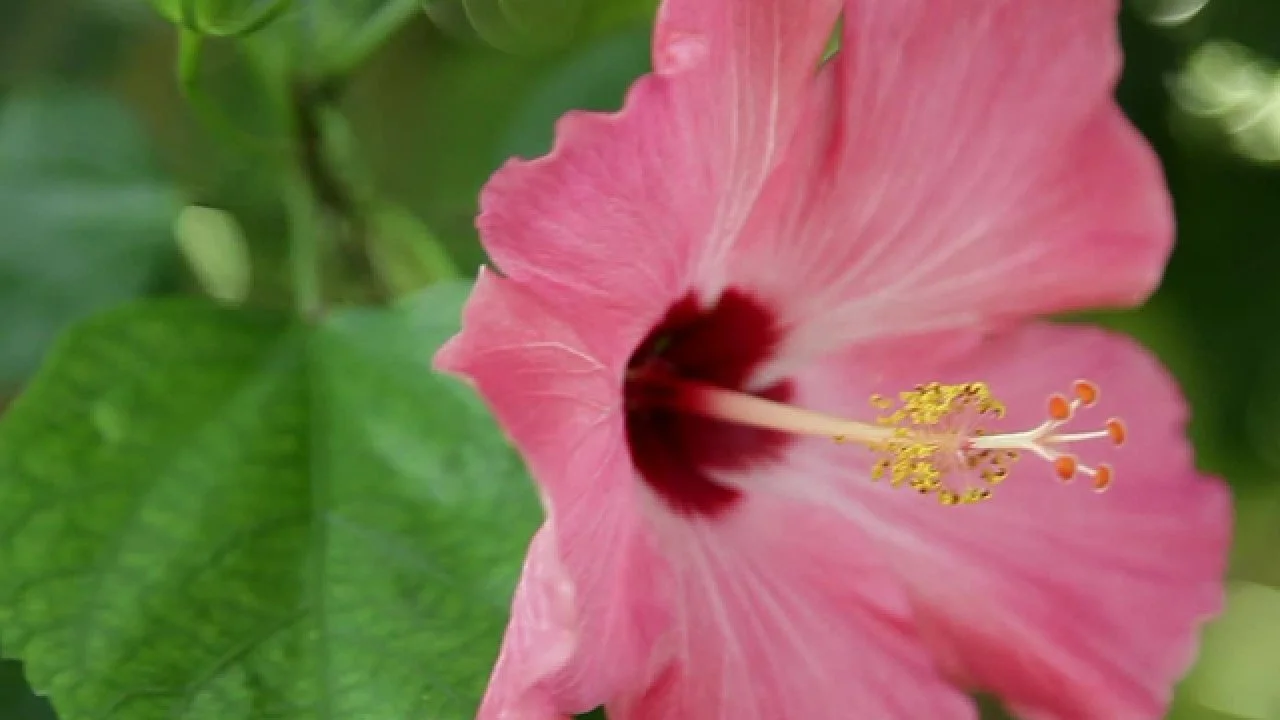
Hibiscus plants are iconically identified by their watermelon red, saucer-shaped blooms, punctuated by bright sparks of pollen. But depending on the species and cultivar, hibiscus flowers can be found in a range of colors.
Growing Zones
Characteristic of tropical locales, the hibiscus genus actually offers astounding versatility — gracing gardens from north to south with winter-hardy species in addition to tropical ones. Hibiscus are generally easy keepers. However, choosing the appropriate species for your space and goals will ensure your success. If you live in Zones 9-10, any of the hibiscus highlighted here can be grown year-round. If you live in Zones 3-8, make note of the hardy species versus the tropical ones. Hardy species will lose their leaves in fall, but return each year in spring. In Zones 3-8, tropical species must be grown as annuals or overwintered indoors; they cannot tolerate even a light frost.
Benefits for Your Garden
Members of the Mallow (or Malvaceae) family, hibiscus are closely related to hollyhock, cotton and okra. They are favored by hummingbirds, butterflies and other pollinators, making them useful additions to your garden ecosystem.
Read on to explore unique options of both tropical and hardy species, and learn how to plant and care for hibiscus confidently.
Culinary Uses of Hibiscus
Tea: Hibiscus flowers are edible and are often infused as tea. Roselle hibiscus makes a particularly refreshing tea, hot or iced.
Salads and stir-fries: The flowers may be candied or used in salads and stir-fries as well. The tender leaves of roselle and cranberry hibiscus are delightful in stir-fries and salads.
Jam: The crimson blooms make striking jellies and are delicious with rose, ginger, lemongrass, blackberry and strawberry (among many others).
Hibiscus Recipes
Types of Tropical Hibiscus
The following species thrive in tropical Zones 9-10 year-round and are grown as annuals in Zones 3-8 (or overwintered indoors). Each offers distinct characteristics to suit different spaces.
Shutterstock/topimages
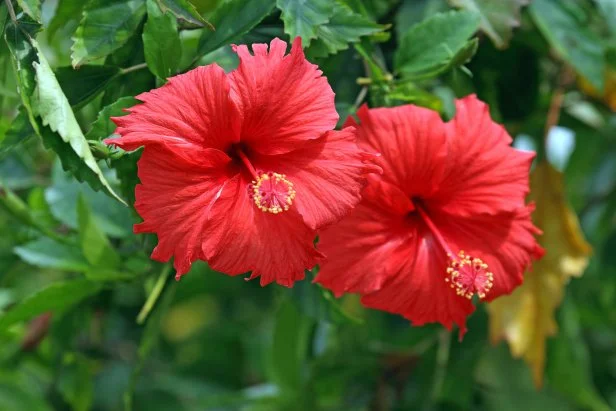
The Chinese hibiscus (Hibiscus rosa-sinensis) attracts birds and butterflies and prefers a moist, well-drained soil.
Tropical Hibiscus, aka Chinese hibiscus (Hibiscus rosa-sinensis)
Appearance: Glossy-leaves, bursting with juicy blooms in Starburst shades.
Where to plant: Tropical or Chinese hibiscus is a lovely choice for gardeners seeking a showy statement for a colorful flower bed or pool-side container garden. Tropical hibiscus may also be kept as a houseplant — a great option for those with cold winters; indoors, it requires bright light along with consistent water and fertilizer.

Yuphayao Pooh's
Roselle Hibiscus, aka Jamaican Hibiscus (Hibiscus sabdariffa)
Appearance: In the garden, roselle grows 3 to 5 feet tall with deep burgundy stems and veins, emerald foliage and cream-colored blooms. Roselle calyces can sometimes be found at farmers markets in late summer and fall. Creative flower farmers sell calyx-studded stems as textural elements in market bouquets and wholesale to florists.
Culinary uses: Roselle is grown less for its flower and more for it's calyx — the succulent sepals enveloping the fertilized seeds — which are edible. They have a delightfully zingy flavor and are high in vitamin C. In Jamaica, roselle or rosella tea is a traditional beverage and household staple. While red hibiscus flowers can be used to make tea, roselle calyces are what you need to capture the tart, bold essence of the plant. Even the leaves of roselle have the signature sour flavor; Southern Exposure Seed Exchange notes that the leaves are popular in Burmese kitchens as a stir-fry ingredient.

Shutterstock/Donna Bollenbach
Cranberry Hibiscus, aka Red-Leaf Hibiscus (Hibiscus acetosella)
Appearance: Native to East Africa, this stunning species stands out for its wine-colored, palmate leaves, which look almost like Japanese maple. In tropical environments, this species will produce pink blooms through summer. If grown as an annual it is unlikely to bloom, but the foliage alone is worth having. Cranberry hibiscus makes a stunning backdrop for summer and fall flowers, taking on an almost bronzed hue in autumn. Red-leaf hibiscus typically grows 3 to 5 feet tall and 24 to 30 inches wide when grown as an annual.
Culinary uses: Like roselle, its leaves are edible with a tangy flavor; leaves picked young will retain their color when cooked.
Types of Hardy Hibiscus
Some species of hibiscus are “hardy” — that is, they may be grown as perennials across the US. Hardy hibiscus go dormant in winter and return the following spring. Growing perennials is a fantastic way to boost the ecological health of your garden, thanks to their ability to prevent erosion, generate microbial activity in the soil, attract a host of pollinators and provide habitat. Each of these species thrives in full sun to part shade, adapts to a range of soils and takes stressful conditions in stride.

Walters Gardens, Inc.
'Perfect Storm' is related to rose of Sharon. Commonly called rose mallow (Hibiscus moscheutos), it's a bushy perennial with white and pink flowers and dark foliage.
Rose Mallow, aka Swamp Mallow (Hibiscus moscheutos)
Appearance: Rose Mallow is an impressive specimen reaching 4-6’ tall and 3-4’ wide. Striking flowers the size of dinner plates open in white, pink, red and sometimes bicolor blends. The broad leaves are velvety with toothed edges. For lovers of Chinese hibiscus living in temperate regions, this species offers the classic hibiscus look without having to plant anew each year.
Where to plant: Native to the wetlands of central and eastern North America, swamp mallow establishes easily in full sun with moist soil but will adapt to less hospitable conditions.
Varieties: Favorite swamp mallow varieties include those of the 'Disco' and 'Luna' series for their large flowers; 'Kopper King' with gorgeous purple foliage; and 'Sweet Caroline' with pink flowers featuring red centers. For smaller gardens, ‘Midnight Marvel,’ ‘Luna’ and ‘Disco Belle’ varieties offer compact forms without sacrificing blooms.

Shutterstock/billysfam
Scarlet Rose Mallow, aka Texas Star (Hibiscus coccineus)
Appearance: This shrubby perennial reaches 6 to 10 feet tall and 3 to 4 feet wide. This species is known for its unique crimson blooms — easily recognizable as hibiscus but with petals that are pointed like a star instead of broadly rounded. The palmate, compound leaves echo the star shape of the flowers — skinny, with finely toothed edges.
Where to plant: Another hardy hibiscus native to swampy regions of the eastern US, this species is largely interchangeable with rose mallow in terms of its preferences. Individual plants may need staking.
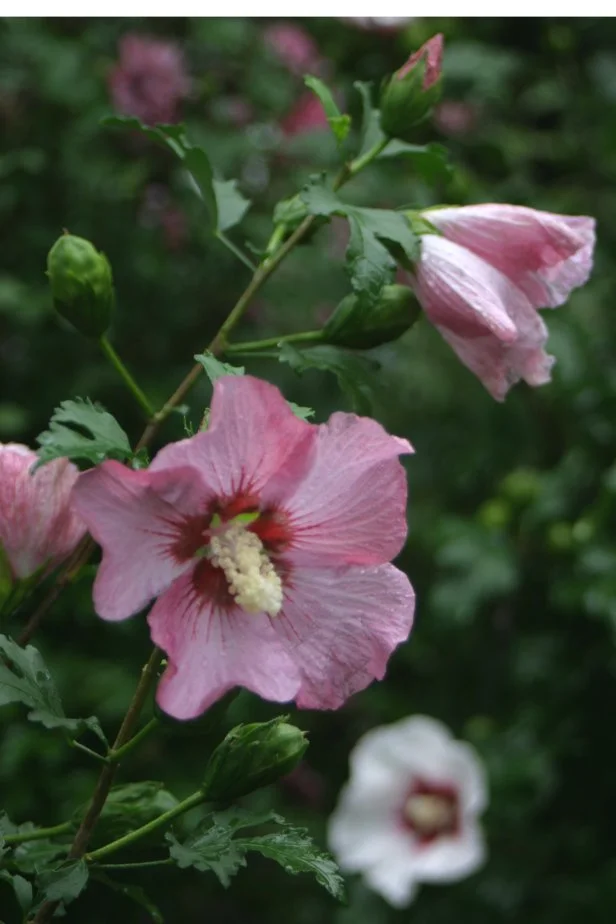
Photo courtesy of ProvenWinners.com
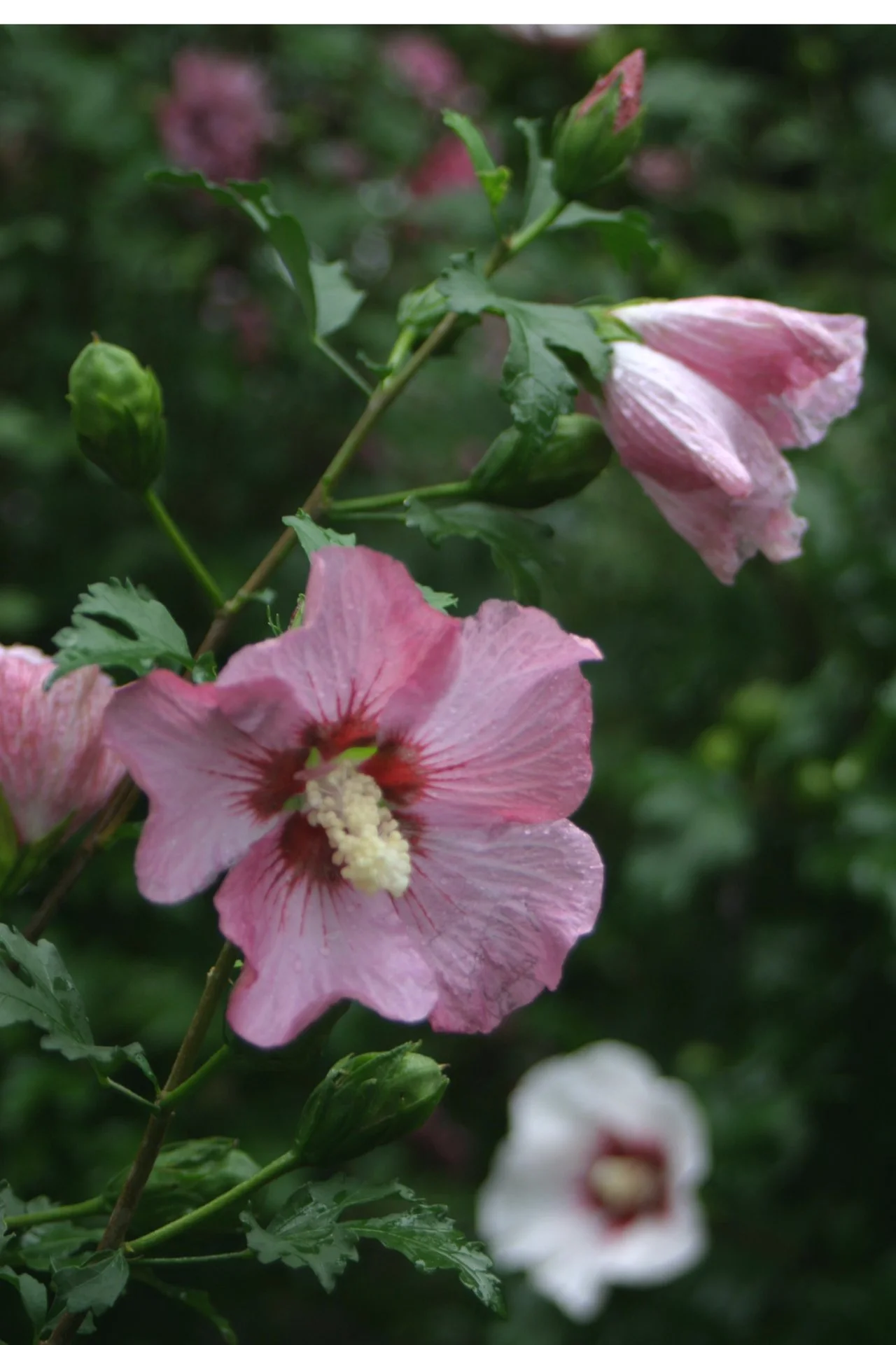
'Rose Satin' Rose-of-Sharon (Hibiscus syriacus 'Rose Satin')
Rose of Sharon, aka Shrub Althea (Hibiscus syriacus)
Appearance: Not actually a rose at all, the rose of Sharon is a remarkable hibiscus with a lush growth habit. Native to parts of Asia, rose of Sharon is popular for its varied palette of blooms, many with double-layered and ruched petals. Explore enchanting varieties of rose of Sharon, including ‘Blue Chiffon,’ ‘Sugar Tip,’ and ‘Diana.’
Where to plant: While swamp and scarlet rose mallows adapt to a range of soils with a preference for wetlands, rose of Sharon is adaptable but with a preference for dry, even depleted soils. Tolerant of air and soil pollution, rose of Sharon is a reliable choice for urban gardens. In hot southern gardens, rose of Sharon performs best with morning sun and afternoon
Varieties: Modern cultivars vary broadly in scale, from dwarf varieties to those reaching 8 to 12 feet tall and 6 to 10 feet wide. Dwarf varieties make excellent container plants. shade.
Growing Hibiscus
Starting Hibiscus from Seed
The hardy varieties, as well as roselle and cranberry hibiscus, are relatively easy to germinate and worth growing from seed at home. Chinese hibiscus is slower-growing and, considering it's wide availability at garden centers, it makes more sense to start with nursery plants each spring. Any hibiscus can be propagated by stem cutting.
Hibiscus seeds have a hard outer layer that can make germination slow. To speed up the process, soak seeds in water overnight, or nick them with sandpaper or a knife before sowing. Soil should be around 75-80 degrees for best germination, so use a heat mat.
Preparing Healthy Soil for Hibiscus
Even though hardy hibiscus tolerate a range of soils from wet to dry, any hibiscus will be happy in moist but well-draining soil. Before planting, amend the soil with rich organic matter to ensure active biology and excellent drainage. Natural amendments include compost, leaf mold, soil conditioner or peat moss. The most sustainable, economical way to source soil amendments is to research what is abundant in your region and utilize those resources. Does your municipality produce its own compost or leaf mold? Handy local resources not only tend to be the most environmentally sound but also the most affordable, too.
Ideal Growing Conditions In the Garden and Yard
Plant hibiscus as a tall focal point in flower beds, in a beneficial hedgerow or in mass around a water feature. Since sizes vary within the hibiscus genus, check your plant tag or seed packet for specific spacing and sun exposure recommendations. With the exception of dwarf varieties, most hibiscus need to be planted 3 to 6 feet apart, depending on the spread of your chosen cultivar. Hibiscus generally thrive in full sun, although the hardy species can take a bit of shade — especially rose of Sharon in southern gardens.
How to Plant Hibiscus
- Dig a hole: Dig a whole larger than your plant’s root ball and loosen the soil to create a soft place for roots to settle.
- Fill the hole with water: Fill the empty hole halfway with water and wait for the soil to receive the moisture.
- Lower the hibiscus into the hole: Use your fingers or a trowel to loosen the hibiscus’ root ball before lowering it into the new hole.
- Surround the root ball with soil: Gently use your hands to push soil back around the plant, filling the hole and pressing down to eliminate air pockets.
- Water after planting: Water well after planting and keep the soil moist around the young plant. Hardy hibiscus are drought tolerant once established.
Growing Hibiscus In Containers
Dwarf varieties of tropical hibiscus, swamp mallow and rose of Sharon make excellent container plants. Since they love humidity, hibiscus plants are perfect for colorful containers around swimming pools or fountains. For blooms all season, keep the soil evenly moist and fertilize regularly. Flower buds may drop with either too little or too much water or fertilizer, so hone amounts as you go.
Hibiscus Care
Fertilizing Hibiscus
Most hibiscus benefit from the application of organic, flower-specific (higher phosphorus and potassium, lower nitrogen) fertilizer. Consistent application of fertilizer all season helps ensure steady production of blooms, especially for rose of Sharon and Chinese hibiscus.
While this recommendation holds true for swamp and scarlet rosemallow, if they are being grown for native landscape purposes, fertilizer isn’t necessary — they tolerate poor soils. If they are being grown as floral focal points in the garden, however, fertilizer is helpful. The exceptions to this recommendation are cranberry-leaf and roselle hibiscus; soil amended with compost should be sufficient. Always follow package instructions carefully when applying fertilizer.
Mulching Hibiscus
Mulch effectively suppresses weeds and helps keep soil moisture consistent, which is essential for happy hibiscus. For winter care of hardy hibiscus, mulch is key to protecting roots from harsh elements. Layer 2 to 3 inches of pink bark mulch or leaf mold around your hibiscus plants — whether planted in the ground or in containers.
Hibiscus Pests and Disease
The most persistent pests of hibiscus are Japanese beetles and aphids. While neither is likely to kill your hibiscus, decimation of the leaves by insects can make plants unsightly by late summer. Manage beetles by picking or shaking them off stems and into a bucket of soapy water. Address aphids by spraying a soapy water or neem oil solution on both sides of the leaves, at dawn or dusk.
Hibiscus don’t habitually suffer from disease, but potential issues to monitor include rust, blight, canker and leaf spot. Check with your cooperative extension service if you spot disease in your garden and are unsure how to manage it — you can ask for organic recommendations.
Pruning Hibiscus
Perennial hibiscus should be pruned annually to maintain their shape, remove dead growth, and encourage prolific blooms.
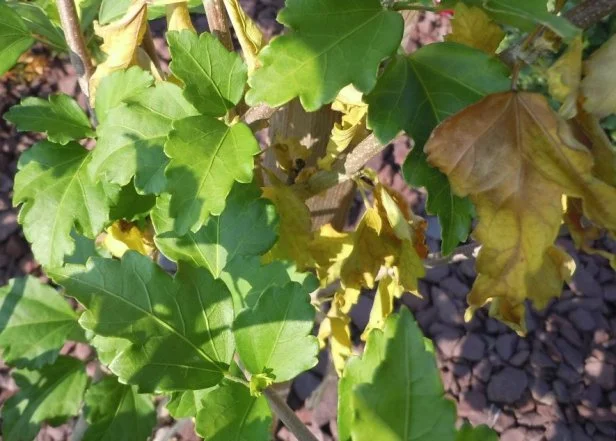
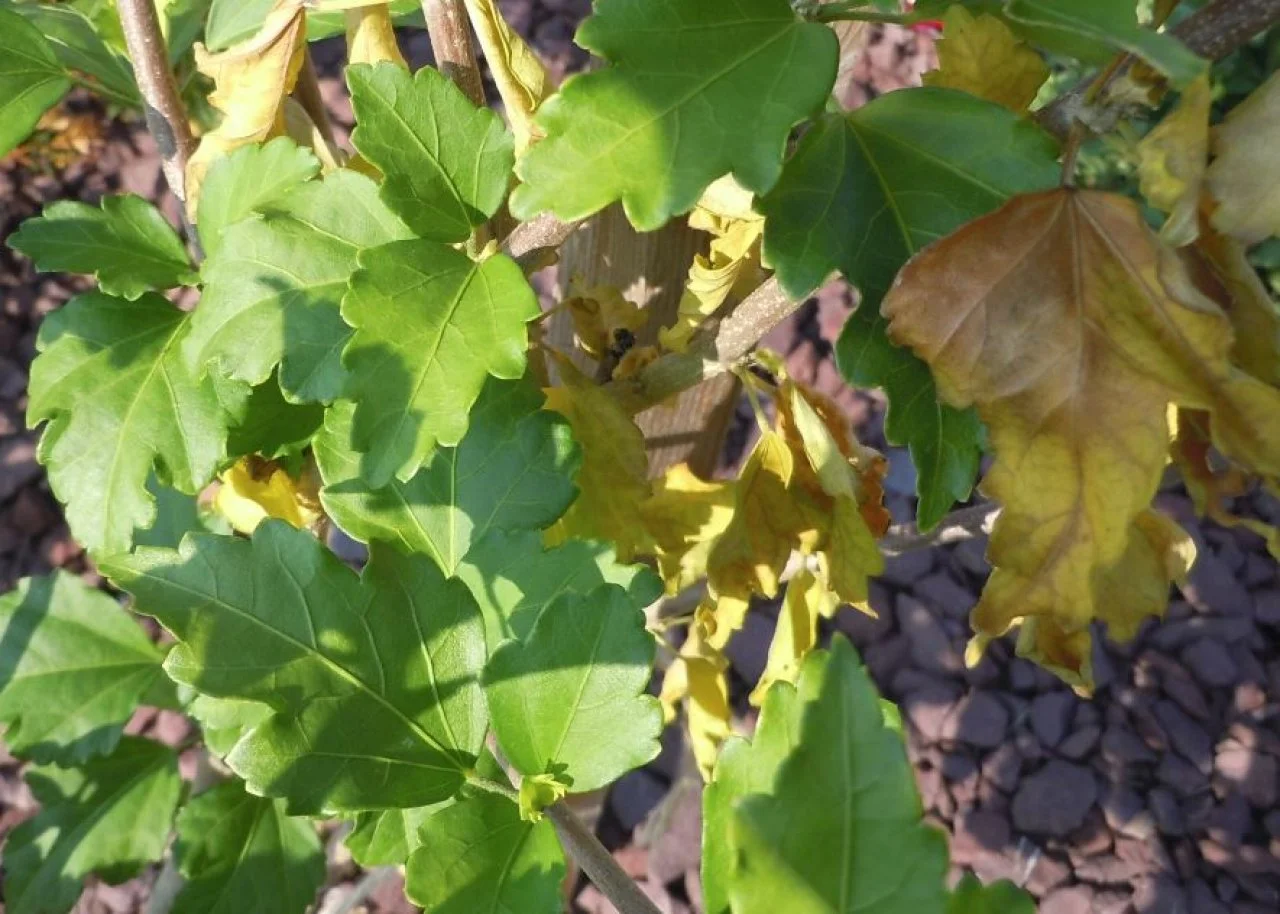
The leaves on this rose of Sharon plant are yellow after rain.
Why Hibiscus Leaves Turn Yellow
If your hibiscus leaves are suddenly yellowing, first of all — don’t panic. There are many issues that might cause stress for hibiscus and yellow leaves are the language they use to ask for help. In most cases, the stressful situation can be easily remedied by restoring optimum growing conditions and these resilient plants will bounce back with glowing emerald growth. The following shifts and pitfalls may cause hibiscus leaves to turn yellow.
1. Transitional Seasons
The hibiscus experts at Southern California Hibiscus Society receive loads of emails during transitional seasons — fall, late winter and early spring — from growers baffled that their otherwise healthy hibiscus have suddenly started to turn yellow. During seasonal transitions, there’s no need to worry or do anything about yellowing leaves. When temperatures swing from cool to warm to cool again, leaves may yellow from this mild stress. University of Florida Extension notes that this seasonal yellowing often happens to gardenia as well as hibiscus; when you see both start to yellow, it’s a good indication that plants are just riding the wave of the season’s change.
During late winter into early spring, yellow leaves are a sign of hibiscus’ normal, healthy renewal process: as new leaves form, the old leaves turn yellow and drop. Genetic differences across hibiscus mean that some plants will form new leaf buds as the old ones are beginning to yellow and drop, while others may drop the old, yellow leaves before producing new ones (causing many gardeners to panic). Take heart, if this happens in spring, that you are likely observing this plant’s normal seasonal patterns. Still, check it is growing in healthy conditions. The SoCal Hibiscus Society has a helpful guide for identifying normal springtime yellowing.
2. Too Much or Too Little Water
Yellow leaves can help guide you to better understand the hibiscus plant’s boundaries and needs when it comes to watering. While hibiscus love water, they require excellent drainage and a bit of time to dry between waterings (except for wetland species).
If your plant is receiving too much water, it will likely have increasingly veiny top leaves and yellow bottom leaves. Stick a finger into the soil and see how drenched it is, and let up on watering if it feels soggy throughout. Assess the quality of drainage, and repot or transplant into better-draining soil if you suspect the roots are getting waterlogged. After too much time in soggy soils, hibiscus may suffer from root rot, in which case the veiny yellowing branches will start to die off at their tips. Plants with root rot must be immediately dug up and either treated for pathogens or replaced; SoCal Hibiscus Society has a helpful guide for how to identify and address branch tip dieback and root rot.
While hibiscus are generally drought tolerant, their lush foliar growth needs an ample reservoir of water to stay hydrated through long hot spells — especially larger specimens. If leaves are both wilting and yellowing during a heatwave, amp up your watering routine and give the roots a good, long soak. Using soaker hoses, a drip irrigation system or self-watering pots can be helpful. New growth should be a healthy green and the process of yellowing should stop once the plant is hydrated.
3. Too Much or Too Little Sunlight
While hibiscus generally love sun, gardeners who experience very hot summers may find that afternoon shade helps protect hibiscus from yellowing during intense sun exposure. If you find yellowed leaves combined with white spots (sunburn) on the part of the plant most exposed to afternoon sun, too much exposure is likely the root cause, according to Hidden Valley Hibiscus.
Low-light conditions are very likely to cause yellowed leaves that drop quickly, so keep an eye out for this and move your hibiscus to a sunnier spot if you suspect shade is the culprit. This issue is common when gardeners try moving their hibiscus indoors over winter. Make sure hibiscus receive bright light and are free from cold drafts for success inside.
4. Soil Fertility or pH Issue
While the aforementioned problems usually turn entire leaves yellow and cause them to drop, you may find leaves that are a mottled mix of green and yellow but remain on the plant. This is likely an indication of nutrient deficiency, according to Hidden Valley Hibiscus. Chlorosis is a condition arising from insufficient nitrogen and may happen if you plant hibiscus into deficient soils without fertilizer. To remedy this issue, incorporate a slow-release organic fertilizer (either granular or liquid) following the application instructions on the package.
If you have already fertilized and still observe this conundrum, it could be that your soil’s pH is off, which impacts the ability of plants to absorb the soil’s existing nutrients. In this case, do a soil test and seek professional guidance from your Cooperative Extension service or local garden center. Do not apply additional fertilizer or try to adjust the pH without having clear recommendations from a soil test.
5. Spider Mites
Also resulting in mottled green and yellow leaves, spider mites are a problematic garden pest that you may find setting up camp in your hibiscus. Left unchecked, spider mites can kill hibiscus, moving from the base of the plant to the top (with leaf yellowing beginning at the bottom and gradually appearing further up). Along with leaf discoloration, you may observe dead-looking spots and slight curling, along with a sticky, dirty feeling on the undersides of the leaves. SoCal Hibiscus Society has a helpful guide for dealing with spider mites on hibiscus.
How to Treat Hibiscus Plants With Yellow Leaves
Hopefully these potential stumbling blocks help you translate hibiscus language next time your plants cry for help. It helps to think of light, sun, nutrients, and water as separate variables in the gardening formula, and to tweak one at a time until you notice an improvement. If you start tweaking too many variables at once, it will be hard to pinpoint exactly what your hibiscus is trying to communicate and which remedy was the most effective.