





How to Eliminate Underground Wasp Nests
Learn how to get rid of yellowjacket wasps that build their nests in the ground, plus get tips from an entomologist on ways to avoid run-ins with yellowjackets.

Shutterstock/Nannycz
While ground wasps, like yellowjackets, can be predators of pest insects, they can become a nuisance if they build their underground nests in heavily trafficked areas.

Ground bees and wasps such as yellowjackets do lots of good for the garden and landscape. Some are pollinators, after all. Some feed on insects, which may include garden pests. For these reasons it pains us when these beneficial insects decide to nest in outdoor living spaces or areas that get frequent foot traffic. Then the risk of a sting outweighs the benefits they bring.
Yellowjackets are the most common type of ground wasp. Often considered the most dangerous stinging insects in the US, yellowjackets will sting if their nest is disturbed. Yellowjacket stings can result in a life-threatening situation if their target is allergic to the venom.
Yellowjackets are easily identified by the alternating yellow and black bands on the abdomen that give them their name. These 1/2 inch-long wasps are commonly seen buzzing around food sources such as trash cans or picnics. They are particularly fond of sweets, such as ice cream and soft drinks, but will also eat meats and most other things we enjoy, says Karen M. Vail, professor and Extension urban entomologist at the University of Tennessee. Yellowjackets are seldom aggressive in the spring or early summer, but that changes when food sources become scarce.
"By late summer or early fall, the colony is at its largest size and is more defensive," says Karen, who received her doctorate in entomology from the University of Florida. "That’s when people are most likely to interact with a yellowjacket colony, especially when pushing the lawnmower over the nest entrance."
What Does a Yellowjacket Nest Look Like?
Yellowjacket nests are often located underground in old rodent burrows or beneath rocks or landscape timbers. They also build nests in walls, attics, crawlspaces and behind the siding of buildings. Yellowjackets can be most troublesome when they’re in the grass or in between patio stones where the opportunity for run-ins with humans is greater.

Emily Fazio
Ground wasps, such as yellowjackets, build their nests underground.
If no one disturbs the nest and is not being stung, it typically will die off after the second hard frost and may not need to be treated, Karen says. But if waiting for cold weather isn't possible, there are several ways to get rid of these ground wasps.

Emily Fazio
Yellowjackets often nest in areas near human activity, such as in cracks between patio stones.
To find a yellowjacket nest, track their movements during the day, when they are most active. Yellowjackets are extremely defensive when their nests are disturbed, so use caution when in the vicinity of their nest.
Try to determine all the nest entrances and mark the openings. There may be more than one. Close all openings except one. Stuffing a rag in the nest opening and covering it with a rock should do the trick, for example, but be very careful not to disturb the nest, Karen says.
Treatment of the nest should be done at night when most yellowjackets are in the nest and less active due to cooler temperatures.
Approach the nest cautiously. Don't point your flashlight directly into the nest as the bright light may stimulate the wasps. If your flashlight has a red-light setting, use it, or place red cellophane or acetate over the lens, or place the flashlight on the ground. A bee suit is an option if avoiding stings is a must. Hire a professional if you are allergic to yellowjacket stings.
How to Get Rid of Underground Wasp Nests
Before you go straight for the poisonous sprays (and yes, they work), consider these alternative techniques for ridding your backyard of pesky yellowjackets that nest underground.
Cover With Diatomaceous Earth
Diatomaceous earth is a very soft powder made of crushed fossilized remains called silica. While soft to the touch for humans, this powder is often compared to "little shards of glass" against the bodies of insects. Its abrasive nature will not only damage the wings of the pests, but it’ll gradually kill any other insects that come in contact with it and, with time, treat the whole nest.
Dust generously atop the nest and inside any visible holes. As the yellowjackets come and go, they’ll come into contact with the powder.

Emily Fazio
Diatomaceous earth is abrasive to yellowjacket wings and bodies.
If you dump a half-cup into the ground hole at night (when the insects are "home" and less active) and then cover the hole with a flat rock, you will see a difference in activity the next day. Diatomaceous earth needs to be reapplied after rainfall or every few weeks if the insects return.
Treat With Soap and Water
1. At night (again, when the insects are in their hole and less active) cover the hole carefully. A screen or a piece of landscaping fabric works well for this, as the goal is to cover the hole so that the pests can’t escape, but water can still flow in. Landscaping pins, scrap pieces of lumber or pavers are helpful at keeping the fabric in position and escape routes to a minimum.

Emily Fazio
Cover yellowjacket nest holes at night with landscaping fabric.
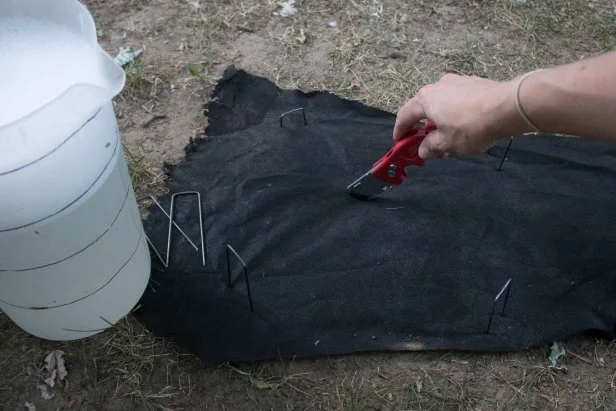
2. Use a blade to cut a small slot into the top of the material over the hole — it’ll help the water flow in fast without giving the pests an easy spot to escape.
Emily Fazio
Cut a hole in the fabric over the yellowjacket nest.
3. Mix a gallon of water and 1/4 cup of dish soap into a one-gallon container. You'll dump this into the hole. The soap affects the wasps' ability to fly, the fabric will trap them, and the water will drown out the hive. Depending on the size of the hole, you might also consider a half-cup of soap in two gallons of water.

Emily Fazio
Pour soapy water into the yellowjacket nest to drown the hive.
Usuing Insecticidal Treatments
There are a number of insecticides for eliminating underground wasp nests available at your local hardware or home improvement store. Aerosol-type insecticides are sprayed into the nest opening. Insecticidal dust formulations are especially effective when applied by a hand duster into the nest opening. A dry, empty, liquid detergent bottle filled no more than halfway with dust and shaken before dispensing also works if a duster is not available.
Karen says insecticidal dusts can be slower acting but may cause less nest disturbance than a spray or aerosol. Desiccant dusts, such as diatomaceous earth, work better in a dry environment. Be sure to follow all precautions and instructions on the product label.
When to Contact a Professional to Get Rid of an Underground Wasp Nest
Homeowners should contact a pest management professional when the yellowjacket nest opening is difficult to access, if people living in the area are known to be hypersensitive to yellowjacket venom, or if they don’t want to treat it themselves, Karen says.
Preventing Unwanted Interactions with Yellowjackets
Karen recommends several ways to improve your chances of avoiding stings and unwanted run-ins with yellowjackets.
- Minimize attractive food sources by keeping picnic food covered before eating.
- Rake and discard fruits fallen from trees.
- Quickly clean up spills and leftovers at outdoor events.
- Place tight-fitting, self-closing lids on garbage cans.
- Locate trash cans away from food tables and other areas of outdoor activity.
- Line trash cans with plastic bags so food debris does not build up, and clean the trash cans frequently.
- Traps attractive to yellowjackets can be placed away from areas of human activity. This may trap a bunch of foragers but will not likely eliminate a nest.
- Observe the lawn for yellowjacket activity before mowing.
Keeping Wasps Away With a Wasp Trap
This wasp trap was made from an upcycled, corked wine bottle with a hole drilled through the bottom. Keep it maintained with fresh sugar water (1-to-1 ratio of water and sugar diluted into a simple syrup), and you’ll keep the pests at bay, though it may not be enough to kill the whole colony.

Emily Fazio, 2016
Upcycle a wine bottle into a wasp catcher and place it away from human activity to improve your outdoor entertaining area.


