

What Can Be Composted?
Here, 25 things you can compost (some may surprise you!)

Rich soil? Yes. Less waste? Yes-Yes. Environmental benefits? Yes-Yes-Yes! Next time you take out the trash, ask yourself if you’re bagging up things that you could compost to improve your garden soil. The answer is probably yes.

Shutterstock/Evan Lorne
Compost organic scraps, and immediately cut back on the volume left to decay in landfills. Composting has a direct effect on the environment, as the organic materials we throw away undergo anaerobic decomposition (rotting without oxygen) and produce methane gas, which is among the most dangerous of the greenhouse gases. Adding scraps to a compost pile is advantageous for eco-enthusiasts and gardeners of all levels, because the items discarded can rot in an open area and undergo aerobic decomposition (with oxygen) and produce carbon dioxide instead of methane.

Gardeners.com
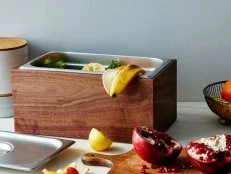
A brushed stainless steel compost pail like this one resists odors, cleans up easily and doesn't take up much room on a countertop.
If you’re just starting your own at-home compost (or you've made a container to accessorize your kitchen), or even think you’re doing a fair job at composting food scraps instead of putting them through the disposal, remember that a nice balance of green and brown organic materials is important to generating a good pile of compost.
Think beyond “ordinary” compost additives like orange peels and eggshells, and challenge yourself to add more variety to your bin. Your resulting compost will be nutrient-rich, and you’ll have a lot more of it.
What Can You Compost?

Shutterstock/Bowonpat Sakaew
Save your waste from cotton yarns for your compost pile, and shred or snip unwanted textiles into small pieces.
Natural Fibers: More fibers qualify for composting than you might think: silk, leather, cotton, wool or wool felt, linen are all carbon-rich and will decompose with time. Cut the fibers into smaller pieces to help them break down faster.

Use a grooming brush to collect hair from your furry dog or cat. It'll improve your compost bin; you know it doesn't improve the looks of your sofa.
Hair: Add nitrogen to the soil by composting hair pulled from hairbrushes, pet grooming tools or --ugh-- from the shower drain.

Shutterstock/ridersuperone
Nail clippings can take years to break down because keratin is tough, but they'll eventually decompose in a moist, warm compost heap.
Nail Clippings: Keratin is good for the soil, and those nail clippings, though they’re tiny, will decompose well and add to the earth. Toss your pet's nail clippings in, too (chop them into smaller pieces if needed, so they break down faster).

Julie Martens Forney
Wood chips used as mulch can take four years or more to completely break down, but they'll improve the carbon to nitrogen ratio in your compost and encourage beneficial fungi that aid in decomposition.
Wood: All kinds of small pieces of wood add carbon to the soil; add layers of natural wood chips, short branches or even toothpicks, burnt matches and sawdust generated from outdoor landscaping (not treated lumber) to make the microbes in the compost more balanced. Don't use painted or treated wood.

Fiskars.com
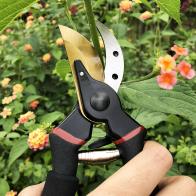
Pine needles are acidic and can slow decomposition in your compost pile, but other organic materials in the mix often help neutralize them.
Pine Needles: Slower to decompose, pine needles are a great brown organic material that aids air circulation in the soil. They are acidic, however, so keep the amount you add balanced with other additives. Next holiday season, add the needles swept from beneath your Christmas tree to the compost bin.

Shutterstock/Irina Shatilova
Don't compost dryer lint that contains synthetic fibers or the residue from dryer sheets. It's fine to use lint from 100% natural cotton or wool.
Dryer Lint: The collected fibers from your lint trap are still carbon-rich and will decompose easily in the compost, so keep a jar next to the dryer to make it easy to remember to harvest them with every load.

Clara MacLellan
Unbleached paper products that haven't been treated with chlorine bleach are generally safe to compost.
Unbleached Paper Products: Opt for unbleached “disposable” products such as napkins, paper plates and paper towels for your next picnic, and set up a separate bin to collect the throw-aways. These carbon-rich items will break down relatively quickly in the compost, but be wary of adding too many at one time. Also, consider folding in the items to help expedite decomposition. (Better yet, skip the paper products and ask your friends and family to use reusable items — it’s really not that inconvenient.)

15 Countertop Compost Bins for Your Kitchen
Shop these best-selling countertop compost bins.

Shutterstock/Ermak Oksana
Newspapers are a good source of carbon for compost piles; they're considered a "brown" compost material.
Newspaper: These days, newspaper ink is non-toxic, so shred your newspapers up into narrow strips. When you put the strips in your compost, it will remain light and fluffy and the newspaper will break down more easily.

Shutterstock/DimaBerlin
Wet down the dust before tossing it into your compost to speed up decomposition. Do not compost vaccum bags unless they're labeled for that purpose.
Dust: Deposit the dust you sweep or vaccum from your home into the compost. What you collect from the floors is typically all organic matter from our bodies or from soil we track into the house.

Shutterstock/Efired
Corn cobs add nitrogen, phosphorus and potassium to compost, which helps improve the soil's structure and ability to retain moisture.
Corn Cobs: Post-picnic, toss your corn cobs in the compost to help with soil aeration. Remember to compost the husks, too, even if they've been grilled or roasted.

Photo by Mick Telkamp
Not all animal and bird manures and droppings are safe to compost. Ask your extension service agent for complete instructions on how to safely use any manures or droppings.
Rabbit or Bird Droppings: Whether from caged pets or free-roaming animals, droppings from non-carnivorous pets are a super nutrient-rich additive for your compost. Always wear gloves when handling droppings and wash your hands thoroughly afterwards.

Julie Martens Forney
Save used coffee grounds to add to your compost pile along with roughly four parts chopped leaves and a handful of lime or wood ash. That’s the safest way to use them in the garden. If you're not a coffee drinker, ask your local coffee shop for their used grounds.
Coffee Grounds: This daily addiction’s good for something! Add nitrogen to your soil by sprinkling grounds into the compost. Many coffee shops will offer their grounds too, so even if you’re not caffeinated, there are easy ways to get your hands on this great additive. (Throw in the coffee filter too, as long as it’s unbleached paper.)

Shutterstock/Elena Babanova
Before putting tea bags in your compost pile, be sure the strings and bags are compostable. If they're not, remove them and empty the tea from the bags into the pile.
Tea Bags: Put in tea bags without a staple or remove the staples, or opt for loose-leaf to deliver additional nutritional value to your compost.

Gardeners Supply Company
Use wood ash in your compost bin in moderation, so the finished compost doesn't become too alkaline.
Ashes: Natural wood, burnt, is an excellent source of potassium for the soil. As a rule of thumb, add no more than one part wood ash to 10 parts of other compost materials, so your compost won't become too alkaline. Use only ash from untreated wood; don't use ash from painted or treated wood or charcoal ashes.
Faith Durand, Elana's Pantry
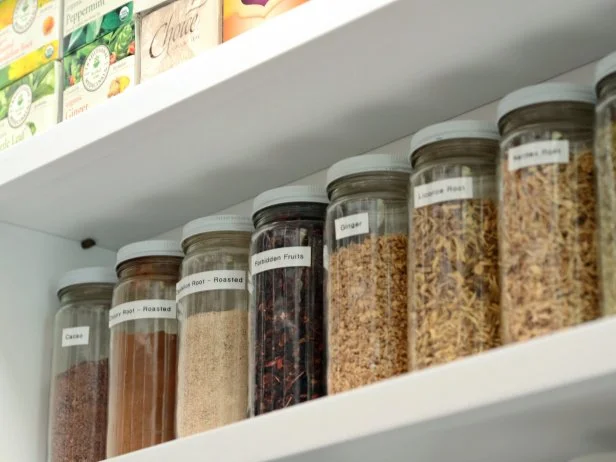
You can compost old or fresh spices, but don't use any that have been cooked in oils or sauces.
Old Spices: Have they gone stale? Compost the remnants instead of simply tossing the jars. Avoid using spices with a high salt content, like taco seasoning. A bonus: spices like cayenne pepper may deter pests from plundering your pile.

Misfits Market
Mail-order items wrapped in environmentally-friendly packaging are the wave of the future; this type of packaging can be recycled or composted.
Eco-friendly Packaging: Check packaging for compostability; cornstarch- and wheat-based styrofoam, which dissolves when put underwater or added to your compost, as well as BioBags, made of a plant-derived compostable resin named Mater-Bi®, are becoming more mainstream. (Special claps to Misfits Market, whose bi-weekly grocery deliveries are an absolute treat for Emily's compost bin.)

Shutterstock/TatianaKim
Foods are said to have freezer burn when they become dehydrated or oxidized. If they're not spoiled, they can be composted.
Freezer-Burned Foods: They might look icky and become mushy when they thaw, but freezer-burned foods are still organic matter, and they'll compost perfectly well. What about old, freezer-burned ice cream? Sure, but add it only in small amounts and bury it under other materials in the pile because it can attract pests.

Shutterstock/Ahanov Michael
Gelatin, a protein that comes from animal collagen, is natural and biodegrable.
Gelatin (jelled or powder): This protein-rich product is a great additive to the soil, as it acts as a fertilizer for plants.

Chop up thick stems and shred the blooms of wilted or drying flowers so they'll rot faster.
Cut Flowers: When they begin to wilt and dry, cut flowers can be transferred into your compost as brown material. However, avoid putting weed flowers, such as dandelions, into the compost as it can become a spot for them to self-seed.

Shutterstock/Stenko Vlad
To avoid contamination, don't compost cotton swabs that have been used with nail polish remover or other chemicals.
Cotton Swabs (if paper): If the product has a plastic stem, skip the compost, but if the swabs and stems are paper, throw the used ones into the compost to break down.

Shutterstock/PeopleImages.com - Yuri A
If your tissues have been used to clean up pet waste, or with cleaning products or other chemicals, trash them--don't compost them.
Tissues: Relatively quick to disintegrate, used tissues are safe to compost. It'll free up a lot of space in your garbage cans during allergy and cold season.

Shutterstock/FotoHelin
Gardeners often add dolomitic limestone powder to gardens and lawns to change the pH and provide nutrients.
Limestone: While it naturally acts to balance topsoils in lawns and gardens, limestone is a soft rock that you can buy pre-crushed if you also need to neutralize your compost. While many gardeners once added limestone to their compost, current research indicates that it's no longer necessary or desirable. According to a 2022 article from the University of Missouri Extension, "Compost naturally becomes less acid as it matures." It goes on to say that adding ground lime can create odor, decrease the nutritional content of the compost and raise the pH of the finished compost too high for optimal plant growth.

Shutterstock/Keith Homan
Blood meal, a high-nitrogen, organic fertilizer, can make high-carbon materials like wood chips and straw break down faster.
Blood Meal: A natural additive to spike nitrogen levels in soil, blood meal doubles as a weapon against garden pests such as deer, moles, and squirrels. Use it in your compost to enhance the nutrient quality.

Shutterstock/sasirin pamai
Peat moss is organic matter that helps control moisture in compost piles. It can also help reduce odors and improve drainage and aeration.
Peat Moss: If you’re want to fertlize plants that favor acid-rich soil, add peat moss to your compost. It’s good for holding moisture too, making it especially good if you plan to use compost as mulch or in potted plants.

Gardener's Supply Company
For best results, a compost pile should be about as damp as a wrung-out sponge.
Water: If you live in a dry climate or are experiencing a lack of rainfall, add water to your compost to keep it moist. Use a watering can or your garden hose. Your compost should never be soggy (and should have adequate drainage), but water is essential to help break down materials.