





How to Plant, Grow + Propagate Pothos
Discover one of the easiest houseplants to grow. Pothos requires little maintenance, likes low light and looks great with every type of decor style.

Pothos (Epipremnum aureum), also called Devil's Ivy, is a tropical vine native to French Polynesia. Because of its attractive foliage, low maintenance requirements and virtual indestructibility, the pothos plant is one of the most popular houseplants in temperate regions.

Shutterstock/Myimagine
Types of Pothos
A variety of pothos cultivars offer diverse colors and patterns on heart-shaped leaves. 'Jade' pothos has deep green leaves. 'Neon' pothos leaves are a striking chartreuse color.
'Golden' pothos features bold yellow and green variegation. 'Marble Queen' pothos has silvery-white and green variegation. Regardless of cultivar, all pothos have the same growing requirements.
Zones: 10 to 12 (if growing outdoors)
Height: 6' to 10' or more
Spread: 8" to 12"
Bloom Time: does not bloom
Sun: shade to part shade outdoors, bright indirect sunlight indoors
Water: low
How to Use Pothos
Pothos are best kept as indoor plants. Let them spill over the edges of hanging baskets, alone or in a mixed planting. Keep them neatly trimmed, or let the runners grow long and train them to grow along a stair rail or mantel. Pothos can be grown in an aquarium to help maintain water quality.
Be aware that pothos is toxic if ingested and may be problematic for households with pets or children. If ingested it may cause oral irritation, difficulty swallowing and vomiting. The culprit is calcium oxalate, small insoluble crystals that abraid the lips, mouth and throat when consumed. Ingestion of the plant isn't usually life-threatening unless there is enough swelling to obstruct breathing. However, properly handled and kept out of the reach of pets and children, this plant is safe and nearly indestructible.

How to Grow Pothos
Pothos is one of the easiest houseplants to grow. For best results, be sure to give it favorable growing and light conditions.
Plant pothos in average potting soil. Feed every six to eight weeks with a liquid houseplant fertilizer. Water thoroughly and allow it to completely dry out between waterings. Give it high humidity by placing the pot on a pebble tray that you keep filled halfway with water.
Pothos grows best, and keeps the best leaf color, in bright indirect light. While it does tolerate low light, it may lose variegation. Solid green leaf cultivars are best for lower light areas.
Propagating Pothos
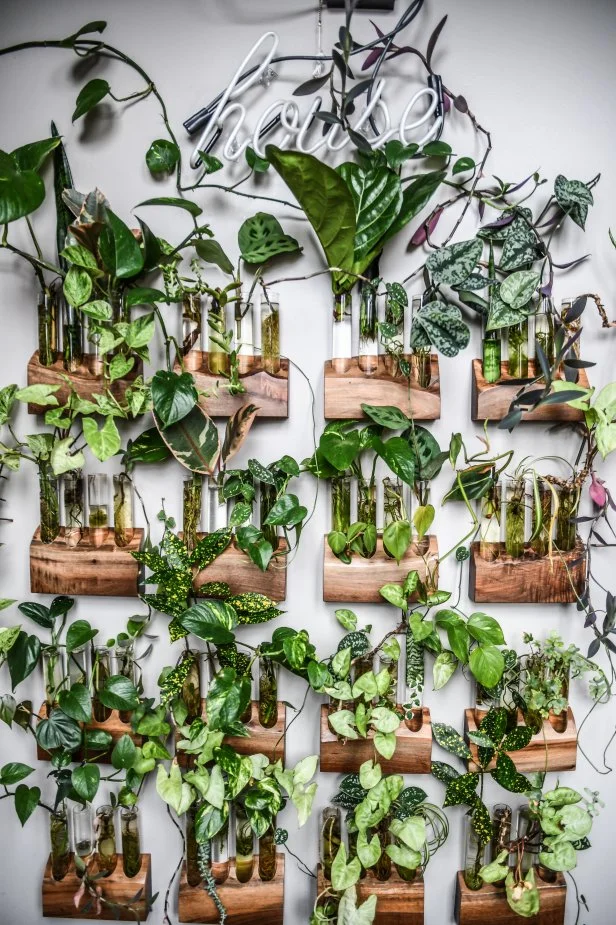
Propagate pothos by stem cuttings. Take 6-inch cuttings from growing tips. Remove the leaf closest to the cut end. Place the cutting into a glass of water. Keep the cuttings in bright, indirect sunlight for a month and check for root development. As soon as roots have begun to form, pot the rooted cuttings into containers with potting soil and treat them as a normal houseplant.

Parijatplant
Use a very sharp, sterilized blade to remove a small section of the plant. Each cutting should have about three nodes (the bumps where the leaves form). If propagating in water, skip the rooting hormone and simply place the cutting into water. Roots should be approximately 2-3 inches long before planting in soil.
Another method is to dip the cuttings into rooting hormone and then stick them into a moist rooting mix made of one part perlite and one part peat moss. Keep the rooting mix moist. Roots should begin to form within a month. When roots form, pot up into normal potting soil.
Courtesy of Hilton Carter
How to Care for Pothos
Pothos are truly low-care plants. Water them when they dry out. Feed every six to eight weeks with a houseplant fertilizer. Repot into new potting soil when the old soil degrades.
Trim long runners to keep the plant full and dense. Periodically, clean the foliage. Place the pothos plant in a sink or shower and run lukewarm water over the leaves and stems.
Excessive soil moisture can lead to a fungal infection that causes root rot. Drought conditions can cause misshapen or undersized foliage. Water deeply when the soil dries out. Do not wait until the soil shrinks away from the sides of the pot — that's too dry.
If mealybugs or other insects become a problem, wipe them off with a damp cloth. Use water or rubbing alcohol. Monitor and continue this treatment regularly until the problem is gone.

30 Best Low-Light Indoor Plants 31 Photos
These houseplants are perfect for homes and offices with little or no natural sunlight.

20 Plant Decorating Ideas 21 Photos
Check out some of our favorite creative ways of styling with houseplants.