Next Up

20 Popular Purple Perennials

February 04, 2025

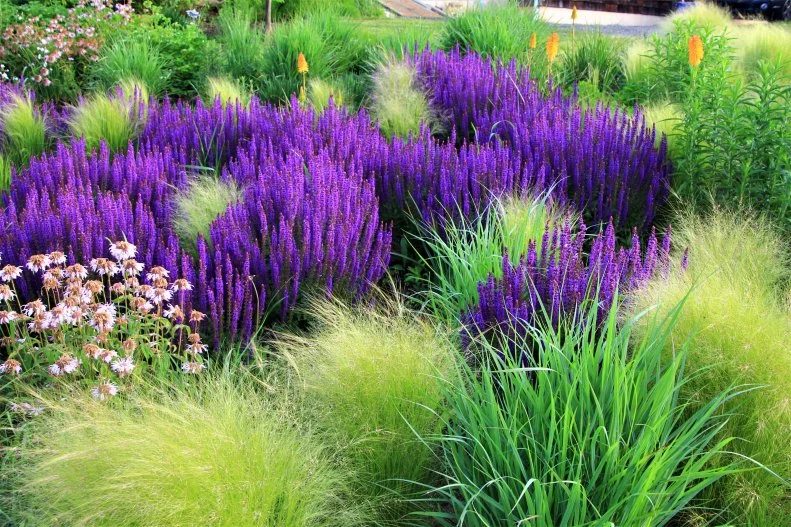
These purple plants, which come back year after year, have many garden benefits. Not only can they create the illusion of more space, but also they may help reduce garden pests.

Photo: Donald Pell. From: Donald Pell Gardens
Scroll For More Photos
1 / 21

Purple Perennial Plants and Flowers: The New Neutrals

Think of purple, which goes with almost any color, as a neutral for your garden. This mix of red and blue reads "cool" when you grow tall purple perennials with silver and blue plants or "warm" with you pair it with oranges and reds. Soften purple with white and pink plants for a serene look, or mingle purple perennials with bright yellows and hot oranges to add drama and contrast to containers, beds, borders and landscapes.

What Are Purple Perennials?

Unlike annuals that live for one year or growing season, perennial flowers and plants die back, go dormant and return for three or more years. Perennials might be long-lived, like peonies that can come back for decades, or short-lived, like delphiniums and columbines that usually die in two or three years. Perennials can be more expensive than annuals, but they're a good investment because they yield lots of blooms, year after year, for your gardening bucks.

How to Use Purple Perennials In Garden Design

Plant a monochromatic scheme: For a big impact, grow a monochromatic garden in the same color of purple, or combine shades like lavender and lilac.

Create the illusion of more space: Play with purple perennials to get different visual effects; for example, we tend to perceive dark purple plants as further away than plants in other colors, so they can make a garden space feel bigger. Tall purple perennials can also create a sense of depth in beds and borders when they're grown behind other plants.

Evoke a mood: Purple has long been associated with royalty, and purple garden plants are versatile enough to feel rich, vibrant, restful, calm or intense.

How to Care for Purple Perennials

Light: There are tall purple perennial flowers and plants for sun or shade; read their labels to know how much light and water to give them.

Fertilizer: Fertilize as needed, following the directions on your product.

Pests: Purple plants are subject to most of the same garden pests as other plants, but they have one advantage. Purple plants may actually help reduce garden pests by attracting hungry pollinators, like ladybugs that gobble up whiteflies and aphids on purple coneflowers.

Diseases: Most purple perennials are also subject to the same diseases as other plants (except for purple coneflowers, which are disease-resistant in general). As soon as you notice a problem, do some research to see how to manage it. Before you reach for chemicals or pesticides, try environmentally-friendly strategies, like adding compost to improve your soil's drainage and combat fungal diseases, or using controls like non-toxic sticky traps and insecticidal soaps.

Browse our list of regal beauties to find your favorite tall purple flowers and plants.

More photos after this Ad

Photo: Burpee
2 / 21

'Magnus' Coneflower

Purple coneflower (Echinacea purpurea) is a daisy-like perennial flower that's as tough as it is pretty. These butterfly magnets like full sun, tolerate dry soil and heat and bloom from summer into fall. Use them in rock gardens, beds, mixed borders, cutting gardens or native plantings. This purple coneflower cultivar, 'Magnus,' is a bright rosy-purple that matures at 30 to 36 inches tall. Cut the flowers when they fade to encourage it to rebloom. Hardy in USDA Gardening Zones 3 to 9.

More photos after this Ad

Photo: Longfield Gardens
3 / 21

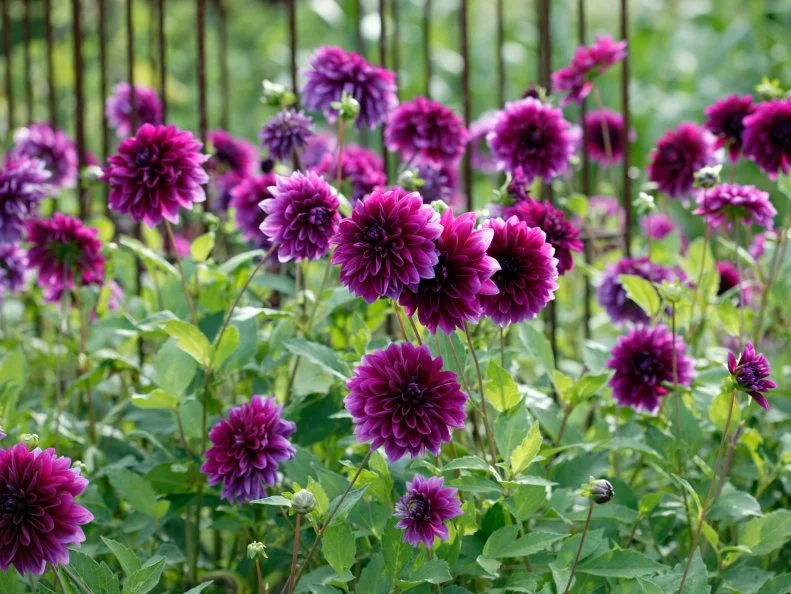
Dahlia

Introduced in the 1940s, this dahlia, 'Thomas Edison' (Dahlia pinnata), still adds splashes of bright purple to modern gardens. Dahlias can take full sun, although Southern growers may need to give them afternoon shade to protect them from the intense heat. They're available in a range of sizes, from about 15 inches to over six feet tall; 'Thomas Edison' grows 3 to 4 feet. Dahlias grow from tubers that will die if they're left in the ground when the temperatures get close to freezing. If you live where the winters are warm and mild, you can leave them in the garden. Otherwise, treat them as annuals and replace them each year, or dig up the tubers, let them dry and store them for the winter in an unheated, dark place that won't freeze. Hardy in Zones 8 to 11.

More photos after this Ad

Photo: Longfield Gardens
4 / 21

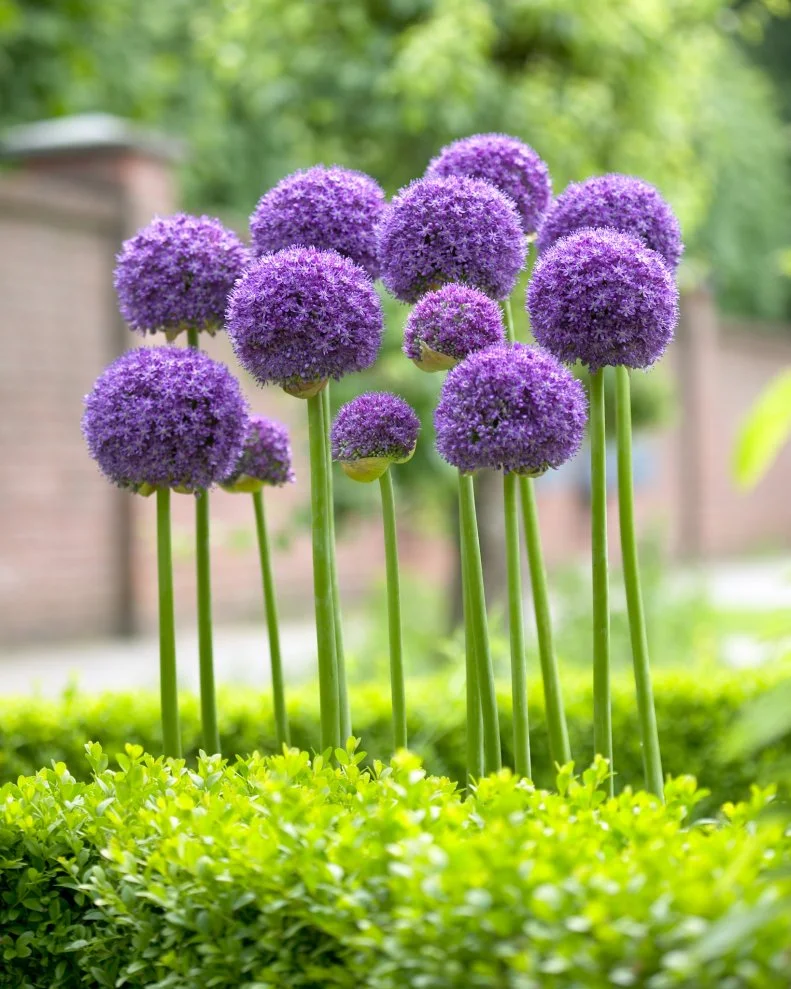
Allium

'Gladiator', shown here, is an award-winning Allium, a member of the onion family. It's also one of the tallest Alliums. Its violet-blue, globe-shaped flowers (they're actually clusters of individual florets) grow to 6 inches in diameter atop 3 to 4 foot-tall stems. This ornamental onion blooms from late spring into early summer, attracts butterflies and other pollinators and resists deer and rabbits. Give this tall purple perennial flower full sun; it can tolerate partial shade. Grow masses of these bulbs to make a focal point or plant them in the back of beds and borders. Hardy in Zones 4 to 9.

How to Grow and Plant Allium

More photos after this Ad

Photo: PerennialResource.com
5 / 21

Catmint

Perennial plants don’t get any tougher than long-lived catmint (Nepeta cataria). This flowering perennial thrives in hot, dry climates and blooms from late spring to fall. The plants form aromatic mounds of gray-green foliage and top out at 10 to 24 inches tall. Depending on the variety, catmint plants bear spikes of lavender-blue, pink, violet, purple or white flowers. This purple perennial doesn't need much little help to thrive, attracts birds and butterflies and is great for cutting. It will grow in partial shade but flowers best in full sun and well-drained soil. Hardy in Zones 4 to 8.

More photos after this Ad

Photo: Shutterstock/Gardens by Design
6 / 21

Verbena

Verbenas can be annuals that grow 6 to 18 inches tall or short-lived perennials that can reach 2 to 5 feet in height. This Tall Verbena (Verbena bonariensis), also called Purpletop Vervain, has small, purple flower held in on slender, airy stems and blooms from early summer until frost. Also called purpletop verbena, this perennial plant needs full sun and well-drained soil to grow 3 or more feet tall. It's relatively drought-resistant and has naturalized in places with mild climates, like California and Texas, where it may be considered a weed. Try it with purple coneflowers for a lovely monochromatic display. Hardy in Zones 7 to 11.

Find More Types of Verbenas

More photos after this Ad

Photo: ProvenWinners.com
7 / 21

Angelonia

Also known as summer snapdragon, Angelonia (Angelonia augustifolia) has a sweet fragrance reminiscent of grape soda. Angelface 'Wedgewood Blue', shown here, grows as an annual or as a tender perennial in hardiness Zones 10 and 11. This sun-lover with purple, blue and white flowers tops out at 18 to 30 inches tall in average soils and blooms from spring into fall.

More photos after this Ad

Photo: ProvenWinners.com
8 / 21

Butterfly Bush (Buddleia)

Lo & Behold® ‘Purple Haze’ butterfly bush (Buddleia x), is a purple perennial shrub that tempts butterflies and hummingbirds to visit. Its fragrant, purple-blue flowers start in mid-summer and continue until frost. Like other buddleias, it needs full sun and tolerates heat and drought. While it provides nectar for butterflies, it’s a good idea to also grow host plants for the caterpillars, such as milkweed, dill, and clover. Deer usually leave this deciduous purple perennial alone. It grows 2 to 3 feet tall and is hardy in Zones 5 to 9.

More photos after this Ad

Photo: bulb.com
9 / 21

Gladiolus

Gladioli (Gladiolus spp.) are popular for cutting gardens. To enjoy these tall, purple perennial flowers, grow 'Purple Flora', which grows 4 to 5 feet tall, or 'Purple Milka,' which tops out at 3 to 4 feet. Glads are planted as corms and need loose, well-drained soil and plenty of sun. As the stems grow, stake or cage them so the wind won't topple them over. When the flowers are finished and the foliage dies back, lift and store the corms if you live in Zones 7 or colder. Let them dry and store them in a cool, dry unheated space that stays about 40 degrees F. In other regions, they can overwinter in the ground; they're hardy in Zones 8 to 10.

More photos after this Ad

Photo: Bulb.com
10 / 21

Calla Lily

Calla lilies (Zantedeschia aethiopica) have purple perennial flowers that come in many shades, from soft lavender to plum, like 'Purple Accent,' to deep purple-black, like 'Odessa.' They're also available in other colors--whites are especially popular for wedding bouquet--and the flowers are stunning in containers and garden beds. These undemanding plants need little more than well-worked soil that drains easily and a sunny site. In warm climates, they can take part shade. Callas sold in gift pots often wind up in the compost pile after the flowers fade, but the bulbs are perennials and can be planted outdoors. These purple perennials can reach 12 to 36 inches tall. Most calla lilies are hardy in Zones 8 to 11.

More photos after this Ad

Photo: Sarah Busby
11 / 21

Hydrangea

One of the most popular shrubs with bluish-purple perennial flowers, mophead hydrangeas, also known as bigleaf hydrangeas (Hydrangea macrophylla), can grow 5 or more feet tall. Hydrangeas are also available in other colors, which vary by the variety and the acidity or alkalinity of the soil. Most mophead hydrangeas like light shade, although they can take some sun in cool climates and benefit from afternoon shade in climates with hot, intense light. Cut the tall purple flowers for vases and arrangements or let them dry on the bushes for fall and winter interest. Hardy in Zones 5 to 9.

Learn How to Grow Hydrangeas

More photos after this Ad

Photo: PerennialResource.com
12 / 21

Salvia

'May Night' salvia (Salvia x sylvestris 'May Night') is a staple on our list of purple perennial flowers. These plants mature at 18 to 24 inches tall and produce spikes of deep purple blooms in spring. If they're deadheaded, they'll rebloom in late summer. Salvias are native to hot, dry climates in Asia, the Mediterranean and Central and South America, so they like full sun and don't mind heat and drought. 'May Night' attracts pollinators like hummingbirds and bees. Hardy in Zones 4 to 9.

Learn How to Grow 'May Night' Sage

More photos after this Ad

Photo: Horticopia
13 / 21

Clematis

Want really, really tall purple perennial flowers? Grow 'Jackmanii' clematis (Clematis x jackmanii), a climbing vine that grows 7 to 15 feet long and opens vibrant purple blooms from early to late summer. Dress up your yard by letting it twine and trail around your mailbox pot, trellis, porch or arbor. It craves full sun to part shade and thrives in fertile, well-drained, moist soil. There's an old saying: for best results, plant clematis with their feet (roots) in the shade and heads (leafy vines) in the sun. If you don't have a spot like that, keep the roots cool and shaded with mulch or use low-growing evergreen shrubs around them. Hardy in Zones 4 to 8.

Find More Types of Clematis

More photos after this Ad

Photo: Colorblends.com
14 / 21

Tulip

Bold purple tulips wake up beds and borders. 'Yume no Murasaki' (Tulipa 'Yume no Murasaki') is a lily-flowered tulip that holds its bright, purple-pink petals for a long time in the garden or in vases. Also called 'Purple Dream,' these perennials love full sun and well-drained soil and grow 22 to 24 inches tall. On warm, bright days, when the blooms are wide open, you can see a spot of white in their throats. For perfect, uniform tulips, treat these lovelies as annuals and replace them with new bulbs every fall. If you don't mind flowers that are slightly less uniform, or you can be content with fewer flowers, let the bulbs remain in the ground over the winter where they are hardy, in Zones 3 to 8.

More photos after this Ad

Photo: Image courtesy of Burpee
15 / 21

Lavender

There are so many reasons to grow lavender. It's low-maintenance (just give it plenty of sun), it has a calming scent that's delightful for making soap, bath bombs, sachets and potpourris, and its dainty flowers up nicely in fresh or dried arrangements. Lavender is native to the Mediterranean where the summers are hot and dry and the winters are moist and cool. However, several types of these purple perennial plants have been developed for other growing conditions and will hold up to high humidity. Popular kinds are Spanish lavender (hardy in Zones 8 and 9) English lavender (hardy in Zones 5 to 9) and French lavender (hardy in zones 8 to 11). If you garden in the North, look for cold-tolerant varieties or grow lavender in containers that you can bring indoors in the winter. Most lavenders are hardy in Zones 5 to 9.

Learn How to Plant, Grow and Care for Lavender

More photos after this Ad

Photo: Photo By: Michele Lewellyn
16 / 21

Iris

Irises (Iris) come in a variety of colors, and the colors come in a variety of shades. This genus includes about 300 species that grow from bulbs or rhizomes. Popular bearded irises, also called German irises, hold their blooms on stems that grow to 3 feet tall. Japanese irises grow to about 3 or 4 feet, while Siberian types average 2 feet tall. Purple perennial irises range from classic violet to lilac and from grape to neon purple. Iris 'Rosario' is a Dutch iris with lavender-pink to purple petals and buttery-yellow markings. It takes sun and grows to 24 inches tall. 'Rosario' is hardy in Zones 6 to 10.

More photos after this Ad

Photo: Photo courtesy of Tesselaar.com


17 / 21

Phlox

Phlox's classic good looks, its disease resistance and sweet fragrance make this purple bloomer a winner in any garden. Tall phlox, also known as garden phlox (Phlox paniculata), is a perennial that comes in shades of purple, pinks and blues as well as in white and magenta. Most garden phlox plants grow 2 to 4 feet tall. 'Nicky Purple' starts opening its fragrant blooms in mid-summer and matures at 3 feet tall. Luminary 'Ultraviolet' is another tall purple phlox; it takes part to full sun and also grows to 3 feet. These purple perennial plants need well-drained, moist soil and good air circulation to avoid fungal diseases. Tall perennial garden phlox plants are typically hardy in Zones 3 to 8.

More photos after this Ad

Photo: iStock/stocknshares
18 / 21

Delphinium

This old-fashioned, tall perennial flower, delphinium (Delphinium elatum) produces spires of blooms in color-saturated tones of purple. It's also available in shades of blue, red, pink and white. There are even coral varieties and some very rare yellows. The biggest varieties can reach six feet, although many top out at one to three feet. Give these stately, short-lived perennials organically rich, well-drained soil and six to eight hours of sun each day and they'll add a vertical element to beds and borders. They bloom in summer. Hardy in Zones 3 to 7.

More photos after this Ad

Photo: Julie Martens Forney
19 / 21

Aster

Asters are all-time fall favorites. You can find them in various shades of purple that range from amethyst to burgundy, as well as in pink, white and blue. New England asters (Aster novae-angliae) and New York asters (Symphyotrichum novi-belgii) are among the most common and popular perennial asters, available in varieties that grow from one to six feet tall. These late-blooming flowers beckon late-season pollinators, including bees, butterflies and hummingbirds, and do best in full sun when the nights are cool and moist. Use them in containers or your garden in well-draining soil or potting mix. Hardy in Zones 5 to 8.

More photos after this Ad

Photo: PerennialResource.com
20 / 21

Monkshood

Monkshood (Aconitum napellus), true to its name, bears flowers that look like they're topped with monks' hoods. Give these tall purple perennial flowers full to partial sun and moist, easily draining soil. Also called wolfsbane, monkshoods mature at 2 to 5 feet tall and flower from summer to fall. You can also find monkshoods with white, yellow, pink and blue blooms. Be aware that all parts of these plants are highly toxic to people and animals, including pets, even in very small amounts. Hardy in Zones 3 to 8.

More photos after this Ad

Photo: Courtesy of Proven Winners
21 / 21

Daylily

Some flowers fade in heat and direct sun, but daylily Rainbow Rhythm ‘Nosferatu’ (Hemerocallis hybrid) holds its color. The fragrant, ruffled, dark wine-and-purple blooms have chartreuse throats and start opening in mid-summer. Plant this tough purple perennial in full to part sun and fertile soil that drains easily, and keep it watered, especially when the temperatures climb. It grows to 26 inches tall, so it's suitable for containers, the landscape, mass plantings and borders. It also makes a striking specimen plant. Hardy in Zones 3 to 9.