






Does a Compost Bin Need Air Holes?
Yes! Good airflow is one of the secrets to successful composting. Without it, your compost pile could turn into a stinky mess (literally). Learn how to increase airflow in your compost pile.

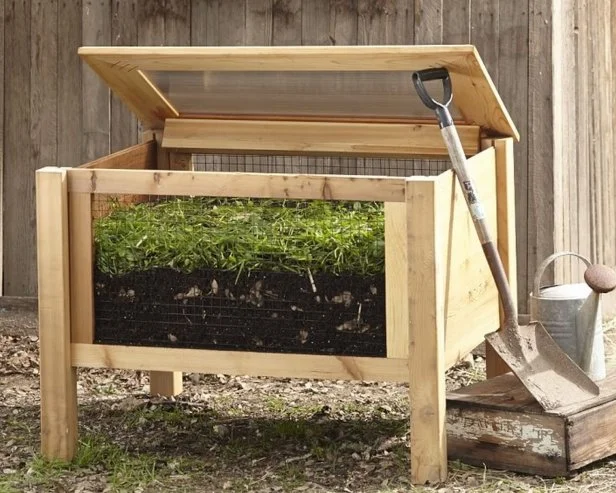
Williams-Sonoma.com
When it comes to making great compost, airflow is one of the most important ingredients. The bacteria that break down leaves, grass clippings and other yard waste into compost need air to function. The air that’s available to them can be tiny pockets — almost microscopic — tucked inside a pile of twigs, leaves, banana peels and coffee grounds.
If a compost pile becomes compacted or gets soaking wet, those little air pockets disappear. As the oxygen supply dwindles, the activity of air-loving bacteria slows and eventually stops when there’s no air available. At that point, composting grinds to a halt and the bacteria that don’t need air to function kick into gear. They’re the ones that produce a sewer-type smell, giving a compost pile a funk that’s tough to beat.
When you attempt to get air into your compost, you want it to reach into the center of the pile, where the temperature is the highest. Getting oxygen into that center area speeds material breakdown and keeps the temperature high, creating a hot composting process. Hot composting is the way to kill weed seeds, plant pests and diseases.
Ways to Add Air to Compost
To increase the air content in your compost, you can use several different methods. Try some of these techniques to boost the airflow inside your compost pile.
- Turn the pile. The traditional way to get air into the center of a compost pile is by turning the pile, manually flipping the compost like a pineapple upside-down cake. Shaking things up like this also helps speed up the composting process. To take the labor out of turning compost, use a compost tumbler type of bin, which you spin with a handle. These types of bins typically have screened holes to allow air to reach composting materials.
- Stir it up. Use a tool like an auger or compost aerator to mix the material around.
- Add a pipe. Take a PVC pipe (1" or larger), drill holes along the length, and insert it into your compost pile. The pipe acts like a straw, letting air move down and into the compost pile. Use multiple pipes inserted in different spots to increase airflow even more.
- Create holes. Add ventilation shafts (holes) in a compost pile with a broom handle or piece of pipe. Re-create holes any time they fill in.
- Elevate the pile. If you’re using a cold compost system, where you pile up fall leaves, grass clippings and spent plant tops and simply let it sit until the following year, you can facilitate airflow into the compost by placing your materials on an elevated foundation. It can be as simple as lots of branches and sticks laid across each other to create a raised platform. Get branches from local tree trimmers or a yard waste drop off. If you’re piling up leaves, create air pockets by placing branches and sticks between leaf layers.
- Mix materials. When you add compostable materials to your pile, use things with a variety of shapes and sizes. Avoid cutting everything into small pieces. It may help things to compost faster, but it also encourages materials to mat together. Instead, mix in materials that form air pockets, like corn cobs, sunflower or brussels sprout stalks, straw or sticks.
- Shed water. If a compost pile gets too wet, water fills up all the air pockets. (The ideal moisture level makes compost feel like a damp sponge.) To prevent soggy compost, cover your compost pile with a lid that sits above (not directly on) compost. This tip only applies in wet regions or during excessive rainfall.


.jpg.rend.hgtvcom.231.174.85.suffix/1738869106004.webp)


