






How to Compost
Learn the easy process of composting at home with our tips for where to locate your composter and how to make a compost bin from items you already have.
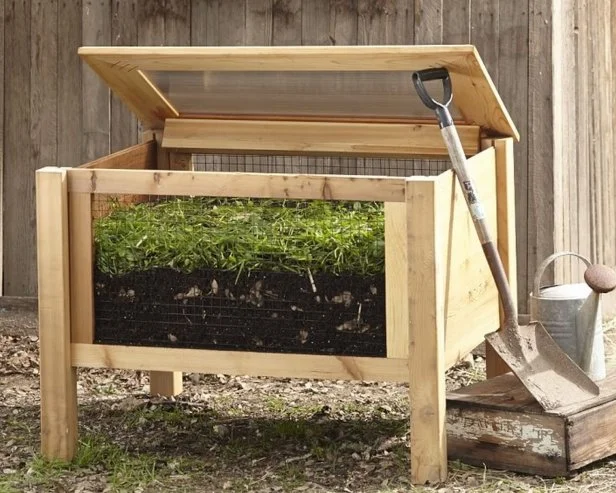
Williams-Sonoma.com
Basically, if you toss organic material into a pile, give it a little oxygen and water, and wait a while, you'll wind up with compost, which is the finest soil amendment, conditioner, and fertilizer you can get your hands on ... or in. But if composting is so easy and good for the garden, why don't more people compost? Well, some people think it's a lot of work, or they simply don't know how to get started. But we're here to assure you it's far easier than you think to learn how to make a compost bin.

Why You Should Compost
Until you try it, composting may seem like an intimidating prospect. What's the best way to collect your food scraps? What's the best composter to buy? Will it be messy? Will it take a lot of time?
But there's no time like the present to discover the merits of composting for both keeping food waste out of landfills and for turning waste into rich, beneficial dirt with direct benefits for your garden. But don't just take our word for it.

25 Things You Can Compost (Some May Surprise You!)
Did you know you can compost hair, dryer lint and nail clippings along with your kitchen scraps? It’s not gross; rather, it helps amp up the quality of your garden soil.
EcoScraps founder Dan Blake, whose company turns food waste into rich compost, is one of the many advocates of composting and offers these reasons why starting your own compost pile, whether by making a simple mound in your backyard, or by purchasing a home composter makes good sense.
Three Reasons to Try Composting
- Compost delivers a balanced blend of nutrients plants need to grow.
- Unlike fertilizers, which act quickly and can burn plants, compost is gentle and slow to release.
- Compost adds organic matter to your soil which allows for more oxygen penetration and greater water retention.
Composting 101: Make it Easy
Take the hassle out of composting, or you'll never get into the routine. When selecting a site for your compost pile or bin, make it convenient. If you plan on adding mostly kitchen scraps to your pile, locate it near the house. If the bulk of your raw materials is to come from the vegetable garden, your pile should be close to the garden. If you compost a lot of kitchen scraps, it's a good idea to keep a bucket under the kitchen sink, preferably one that holds up to a week's worth of scraps.
Compost Pile Location Tips

Photo by Julie Martens Forney
Ideally, a compost pile or bin should be situated away from nearby tree roots, because roots will quickly spread through the pile and suck all the nutrients out of the compost. Make more compost faster by locating the pile in an area that gets at least a few hours of sun a day: the heat will help drive the decomposition process. Keep your pile within range of the hose because a compost pile should remain slightly moist at all times. If it dries out, the process of decomposition will come to a standstill, but thankfully, all it takes is a blast of water from the hose to get things decomposing again.

If the perfect spot for your compost pile/bin happens to have grass growing on it, the first thing you want to do is get rid of the grass. Take a shovel and dig out the turf, taking a few inches of soil along the way, and flip the sod over as you go. This will actually kill the grass and at the same time create a good base for your pile. At this point, all you have to do is dump a bunch of raw material on the ground, such as leaves, grass clippings, hay or straw. After all, a compost pile is just that, a pile.
The Proper-Sized Compost Pile
To generate the kinds of temperatures it takes to really cook its contents, the pile should be at least three feet square at the base and roughly three feet high. Any smaller and it won't cook well, and any taller the pile may not get enough oxygen in its center. A compost pile doesn't have to be contained within a fancy enclosure, and since turning a pile is the simplest and surest way to get a lot of compost in a hurry, the most effective and efficient setup is no enclosure at all.
How to Disguise Your Pile
Some people don't compost because they're concerned about destroying the look of their landscape. A compost pile can be unsightly, but ways exist for getting around the problem. The simplest enclosure can be a cylinder of wire fencing, which you can put in a corner of your yard. Wooden snow fencing is a bit more attractive, but more expensive. When it comes time to turn the pile, all you have to do is lift the fencing, move it a few feet, and toss the compost material back into the bin. Setups also can be made using cinder blocks, shipping pallets, or bales of hay or straw.
An old metal or plastic trash can is the perfect small space to make compost. You can buy all sorts of compost bins, but a slightly modified metal trash can is one of the best homemade compositors. To make one for your back yard, punch several holes in the bottom of a 20- or 30-gallon trash can with a hammer and a large nail. Flip the can over and set it on a few bricks so air can circulate underneath it. Next, fill the can with about three inches of garden soil, followed by three inches of kitchen scraps, three inches of shredded newspaper, and finally three inches of leaves or grass clippings. Keep the lid on the can, and continue building more layers until the can is full. Within about three months, the compost will be cooked to perfection, all without turning or watering.


