




How to Grow and Care for Primrose Flowers
Primrose comes from the Latin word for first, and these easy-to-grow beauties are among the first flowers to bloom in spring.

Walters Gardens

Robins are a sign of spring, much like primrose flowers. These vigorous, short-lived perennials are easy to grow. Early in the growing season, they open yellow, red, pink, white, purple, orange or blue flowers over rosettes of green leaves. They're great for planting in beds, borders, indoor and outdoor containers or naturalized areas.
Primroses are in the Primula genus. There are hundreds of species in different sizes, forms and colors, and some are hardy in Zones 2 to 9. We call most cultivated varieties "primroses," and the majority of those are hardy in Zones 5 to 7. Gardeners in other regions can grow them as annuals. Under the right growing conditions, the plants can live up to five years.
How to Grow Primrose Flowers
Light
Primroses need partial shade, although some varieties can take more sun than others and some species need full shade. Indoor plants need indirect light, such as a bright, northern exposure.
Fertilize
Feed primroses in early spring with a balanced fertilizer or bloom booster (10-10-10 or 5-10-5). One liquid fertilizer application is enough for indoor primroses. Feed double-blooming primroses, which are heavy feeders, with liquid fertilizer after flowering or mulch outdoor double-bloomers with composted manure. This helps promote leaf growth.
Soil
Primroses need loose, slightly acidic, moist soil that drains easily. Work in some organic matter when planting them outdoors. For primroses in containers, use a standard potting mix, preferably with peat moss.
Water
Primroses need regular water but can’t tolerate wet soil. Don’t let them dry out, either. Reduce watering in fall.
Mulch
Suppress weeds and retain moisture in the soil by mulching outdoor plants with 3 or 4 inches of compost, loose straw or shredded leaves. Don’t pile it around the crowns.
Deadhead
Remove faded flowers to encourage more blooms. Florist primroses may bloom from eight to 10 weeks if kept deadheaded.
Planting Primroses
Choose a site with partial shade and well-draining soil. If needed, mix in some organic matter. Plant the primroses about two weeks before your last expected frost, spacing them 6 to 12 inches apart. Cover them with a frost cloth if there's a freeze, keeping it off the leaves. Remove it when temperatures rise the next day. After planting, mulch the plants and water them.
Buy Seeds and Supplies


How to Propagate Primrose Plants
Divide primroses to make more plants. Dig them up when the flowers finish and use a spade or knife to cut them into sections, each with some leaves and roots. It may take a year or more before they bloom.
It's hard to grow primroses from seeds, which must be kept at 40 to 50 degrees from the time you sow them until they bloom — and that can take up to three years. If you want to try, sprinkle the small seeds over a mixture of equal parts sand, peat moss and soil in a cold frame outdoors or a cool spot indoors. Keep them in bright, indirect light and mist to keep them moist. Unfortunately, the seeds have a low germination rate. Thin the strongest seedlings that come up and transplant them when they have three or four leaves.
Note: It’s illegal to propagate patented plants. Check the plant tag or label for patent information.
Primrose Care for Florist and Garden Center Plants
Primroses from florists, nurseries or garden centers are often forced, and their blooms will last for about six weeks. When the flowers finish, move the plants outside when the weather is warm and bring them back in for the winter. If you leave them indoors, they'll usually live about six months.

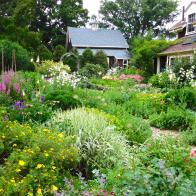
Cottage Garden Design Ideas 31 Photos
The perfect partner for a charming cottage is a colorful and oh-so-delightful landscape.
Primroses get root-bound quickly, so repot and divide them as needed, using fresh potting mix and containers with drainage holes. To rebloom indoors, primroses need nighttime temperatures of 50 to 60 degrees and daytime temperatures under 80 degrees. Forced plants will revert to their natural, unforced bloom times.
Primrose Pests and Diseases
Few pests attack primroses, but if spider mites, aphids or whiteflies show up, knock them off outdoor plants with water from your hose. Spray primrose houseplants with the spray attachment in your sink or shower. If plain water isn't enough, spray with soapy water or horticultural oil.
Yellowing leaves with brown spots often signal leaf spot, a fungal disease. Remove the infected leaves and be sure your plants have good air circulation.
Overly wet soil can rot crowns and roots. Move your plants to a site with better drainage or amend their soil with compost. Repot indoor plants with fresh potting mix and use a container with good drainage.
Snails and slugs like moist, cool conditions, just like primroses, and will chew on their leaves. if you can stand it, hand pick them and drop them in a pail of salty water. You can also make a barrier of diatomaceous earth around your plants or trap the pests in saucers of beer sunk 1/2-inch below the soil surface. Commercial deterrents are also available.
Types of Primroses
There are primroses for every garden, from woodland settings to cottage gardens, bog gardens, shade gardens, rock gardens and container gardens.
P. vulgaris — Hardy in Zones 4 to 8, this wild primrose, native to parts of Europe, has pale yellow flowers and has been used as a parent plant for many hybrids. Look for cultivars like ‘Quaker’s Bonnet’ or ‘Cottage White'.
P. veris — This sun-lover is hardy in Zones 3 to 8. Its lemon-yellow flowers, called cowslips, attract butterflies. The plants self-seed and sometimes drop their leaves in hot weather.
P. vialii — Hardy in Zones 5 to 8 and sometimes called the orchid primrose, this species has strong stems topped with spires of tiny, red buds that open into pink-purple flowers.
P. acaulis — ‘Belarina Cobalt Blue' These blue blooms like the sun but can take some shade. The plants are hardy in Zones 4 to 8.
P. acaulis — 'Zebra Blue’ Also hardy in Zones 4 to 8, these flowers have white and blue stripes and golden eyes. Blooms start in late winter and continue into late spring.
P. denticulata — Also called the drumstick primrose, this Himalayan native is hardy in Zones 2-8 and grows about 12 inches tall. The ball-shaped flowerheads are purple, white, blue, lilac or pink with yellow eyes.
P. auricula — Hardy in Zones 3 to 8, this primrose has vibrant purple blooms with creamy centers. You may hear it called Adrian primrose.
P. polyanthus — ‘Crescendo Mixed’ (P. veris x P. vulgaris) Hardy in Zones 4 to 7, these plants start blooming in late winter or early spring in yellow, red, wine, blue, orange and other colors.
P. japonica — Hardy in Zones 4 to 8, these plants, also called candelabra or Japanese primroses, love moist, shady conditions. They grow 12 to 24 inches tall and open pink, red, purple, or white flowers from late spring into early summer.





.jpg.rend.hgtvcom.231.174.85.suffix/1716908436155.webp "2416424405")
