How to Grow Foxgloves
Prolific blooms make foxglove a great plant for your cottage garden. Find out how to grow and care for these pretty, dramatic flowering plants.
Walters Gardens
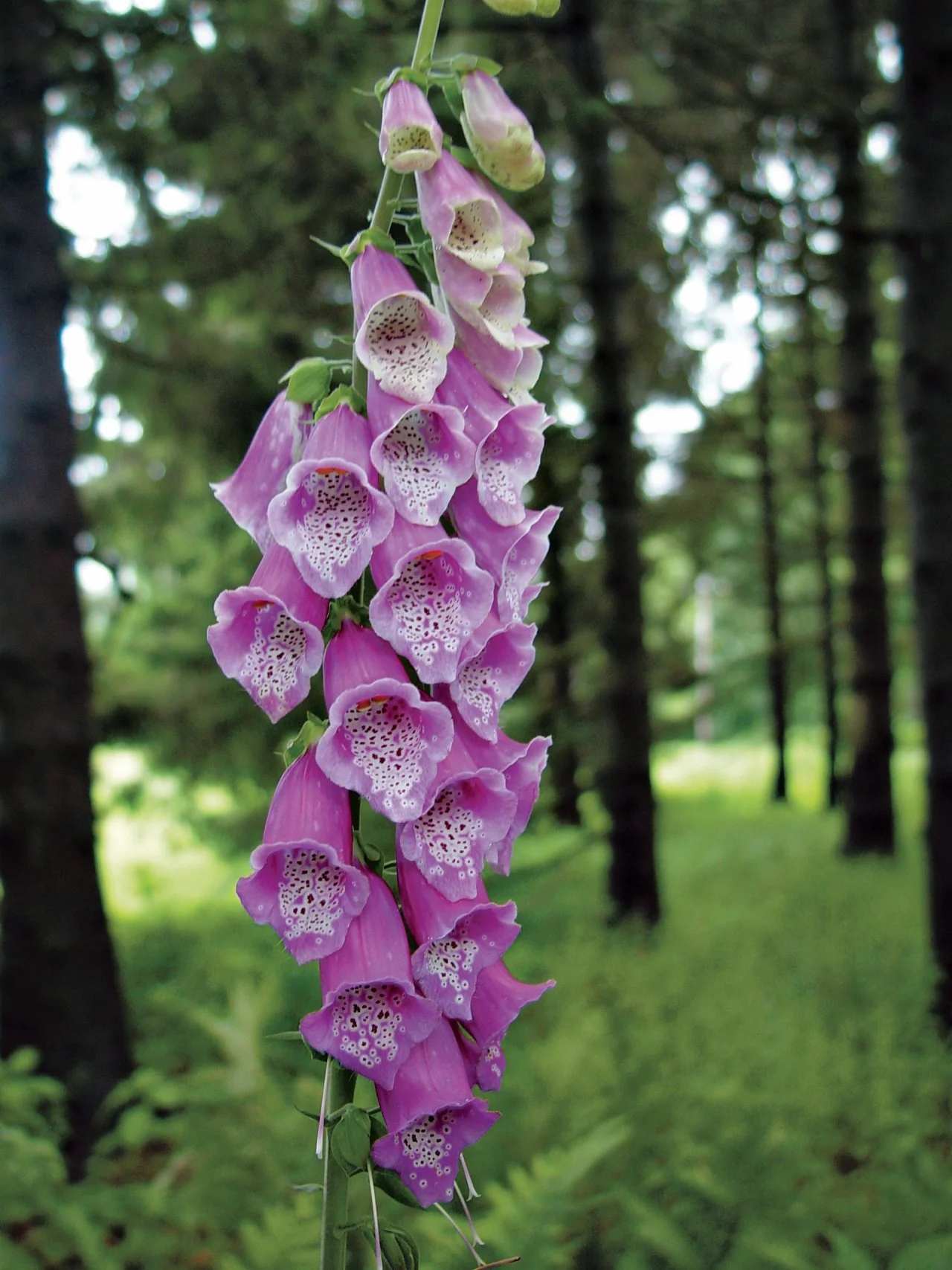
If you're thinking about adding a cottage-garden look and a vertical element to a planting bed, you may want to consider foxglove (Digitalis purpurea), which can extend up to 6 feet when in bloom, depending on the variety and growing conditions.
In This Article
With their tall vertical lines, foxgloves are lovely when grown against a fence, against a hedge of large shrubs, or at the edge of a woodland. Coral bells, roses, delphiniums, daises, peonies, astilbes, snapdragons, and iris make good companion plants for very tall foxgloves, like 'Sutton's Apricot' or 'Giant Spotted Foxglove', which can grow to five or six feet.
- Botanical Name: Digitalis purpurea
- Common Name: Foxglove, Common Foxglove, Digitalis
- Sun: Full sun, partial sun, part shade
- Height: 2-6 feet
- Soil: Acidic, moist, well drained
- USDA Hardiness Zone: 4-10
- Bloom time: Early summer, late spring
- Diseases: Plants are susceptible to crown rot. Space them adequately apart to promote air circulation because powdery mildew and leafspot also can be a problem.
Other foxgloves will top out at two to three feet high, making them better companions for low-growing flowers. Try zinnias, phlox, cornflowers, dianthus, petunias, alyssum and lobelias, keeping in mind that some of these plants may need more sun than your foxgloves.
- Foxglove is biennial (it blooms the second year, then dies), but nevertheless seems like an enduring perennial because it reseeds so readily that every year the dramatic flower spikes will appear in the garden. It prefers moist, well-drained soil and full sun to medium shade. Its blossoms — in purple, pink, yellow and white — attract hummingbirds.
- All parts of the plant are poisonous to people, pets and livestock. Foxglove is considered invasive along the West Coast and in some parts of New England.
- The plants are used in the production of heart medications, such as the well-known Digitalis, despite being poisonous.
- Foxglove blooms attract hummingbirds and other pollinators.
Foxglove History
In Britain, the so-called common or purple foxglove is actually an old wildflower. It was grown in cottage gardens in the Middle Ages, tucked in between the vegetables and herbs.
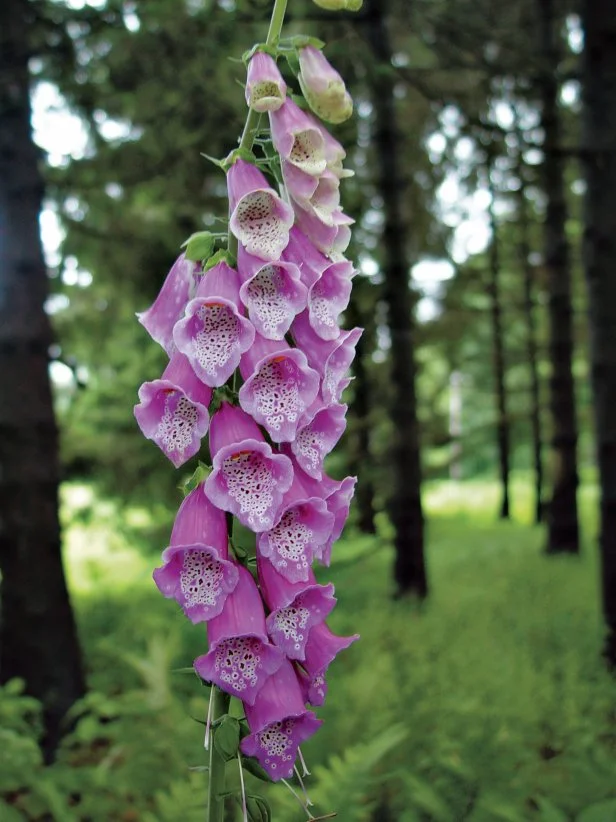
Image courtesy of Burpee
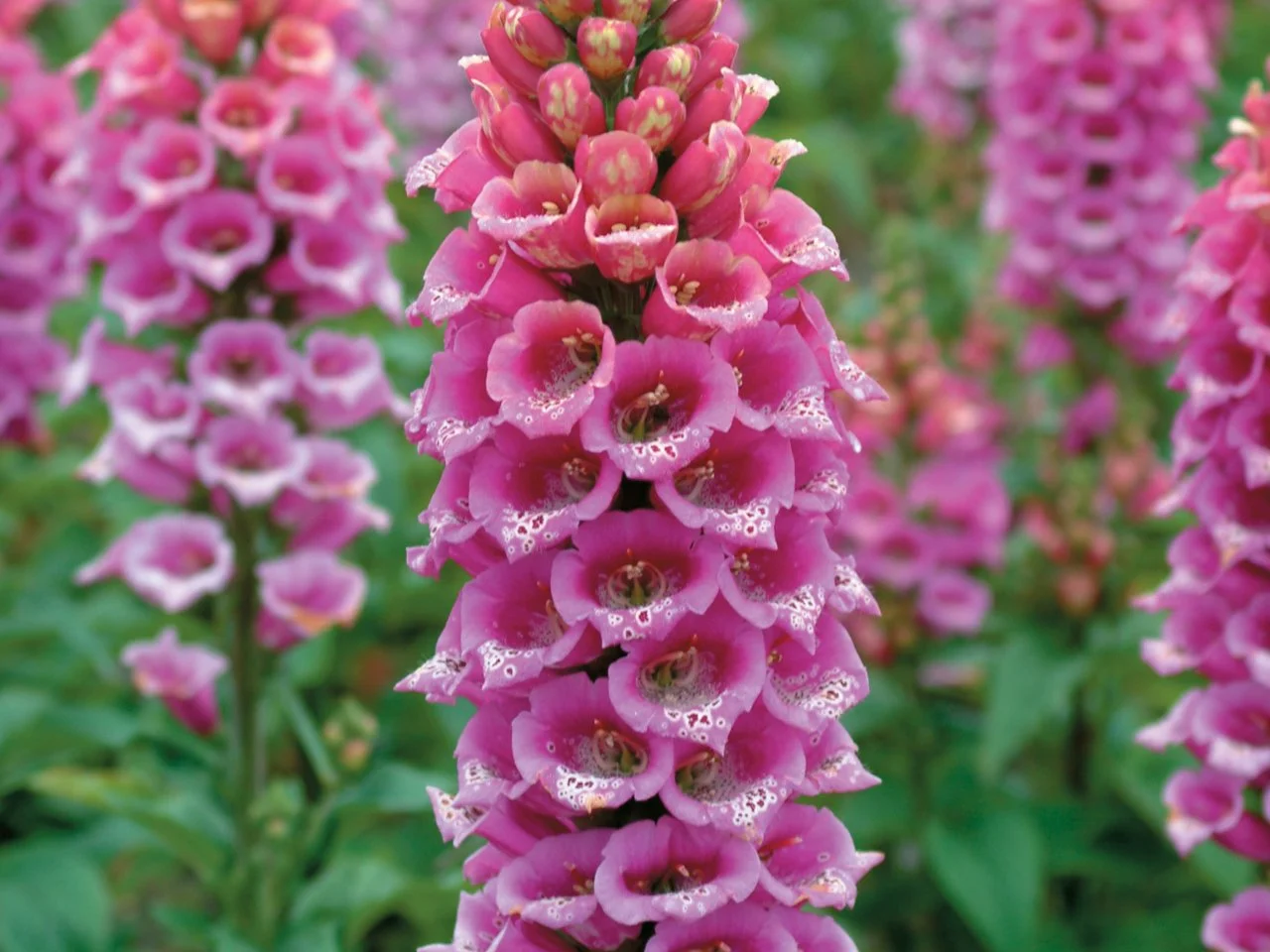
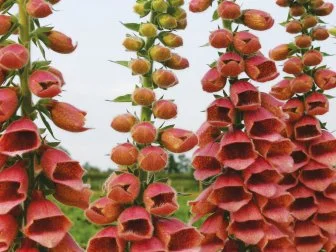
This nearly carefree foxglove, 'Rose Shades', opens pale to deep pink flowers in late spring. Hardy in zones 4 to 8, the plants can take full sun to half shade. Use them in a cutting garden; they'll grow to 30 inches tall.
Other species of Digitalis are native to Europe, northwest Africa, and parts of Asia, where they've long been grown for their beauty as well as for medicinal uses.
11 Foxglove Varieties to Try 12 Photos
Looking for a striking vertical flower to punctuate your garden? Try harnessing the power of foxgloves.
Dioscorides, a first-century Greek surgeon, is said to have carried foxgloves with him when he traveled with Nero's army. In the 17th century, herbalist Nicholas Culpepper recommended using the flowers to make a salve for a "Scabby Head."
Planting Foxgloves
Aside from practical applications, foxgloves are simply beautiful. If you purchase plants, they are likely in their second year and will bloom after planting. Otherwise, when you start from seed, you should expect to wait until the next year to get blooms.
Starting From Seed
Outdoors: You can start foxglove seeds, which are small and fine, by scattering them over the ground and lightly pressing down on them. Don't cover them with soil, because they need light to germinate.
Indoors: If you'd rather start your foxglove seeds indoors, sprinkle them over a growing medium and again, keep them moist but not wet. Harden them off by gradually exposing them to the outdoor weather for a week to 10 days before planting them in the garden.

David Austin Roses Ltd.
Foxgloves in the foreground with roses.
Keep the seeds moist until they sprout. In early fall, transplant the seedlings to a permanent location in your garden.
Foxglove Care
Soil and Drainage Requirements
Foxgloves like rich soil and shade to part shade, and they'll need watering during dry spells. But don't overdo it, especially when these biennial plants go dormant during the winter. If the ground stays too wet, they may rot, so be sure to give them good drainage.
Cutting and Pruning
You'll get blooms in the second year after planting. Keep the faded flowers cut to encourage repeat blooms, and stake taller varieties if they start to topple over.
After their flowers fade, deadhead the spent bloom, leaving the crowns in the ground. If you're lucky, your foxgloves may return the next year for a command performance.
Foxgloves Are Self-Sowing
Foxgloves will usually sow themselves, unless they are hybrid sterile varieties. Just leave some flowers to dry on the plants at the end of the growing season, and the ripened seeds will drop when they're ready.

22 Plants to Attract Hummingbirds 22 Photos
Want to appeal to hummingbirds? Foxgloves and a host of other flowers attract these lovely pollinators.
If you want to plant your foxgloves somewhere else, tap the capsules over a paper bag to collect the dried seeds. You may even want to tie the bag around the flowers, to make sure the seeds don't open and fall before you can get to them.
Foxgloves seeds that drop naturally may stay dormant for several years, if the growing conditions aren't quite right, so don't be surprised if you see seedlings after the parent plants are gone.