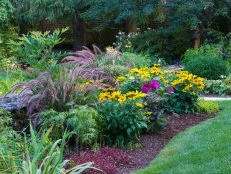


Deer-Resistant Perennials
Give Bambi the brush-off by filling your landscape with deer resistant perennials.

PerennialResource.com
Many plants used in traditional herbal medicine are ones deer avoid, including purple coneflower.

Design a garden that’s unappealing to deer by filling it with deer resistant perennials. This group of plants includes beautiful bloomers, along with eye-catching foliage perennials. Plants that deer dislike typically feature certain attributes that these four-footed munchers find unpalatable. Although deer usually leave these plants alone, no plant is foolproof. If a deer is hungry enough, even deer resistant perennials can be nibbled.
In general, deer resistant perennials boast characteristics like a bitter flavor, thorny stems or strong scent. Other plants have prickly or rough leaves. For instance, the fuzzy leaves of lamb’s ears (Stachys byzantina), lady’s mantle (Alchemilla mollis), Dittany of Crete (Origanum dictamnus) and mullein (Verbascum) are ones deer typically leave alone.
Deer usually pass on perennial herbs, including oregano (Origanum vulgare), fennel (Foeniculum vulgare) and thyme (Thymus). Mints, including mint family members like bee balm (Monarda didyma), are also deer resistant perennials. Russian sage (Perovskia atriplicifolia), with its strong scent, is another perennial deer don’t usually touch.
Some deer resistant perennials have thickened, tough leaves, like leathery Lenten rose (Helleborus), while others have a prickly feel. Prickly-leafed deer resistant perennials include bear’s breeches (Acanthus mollis), Oriental poppy (Papaver orientale) and globe thistle (Echinops ritro).
Deer equally avoid leaves with coarse hairs that create a sandpapery, rough surface. This group includes coral bells (Heuchera), black-eyed susan (Rudbeckia hirta), blanketflower (Gaillardia x grandiflora) and Japanese anemone (Anemone x hybrida). Other plants that offer a tactile experience, like Artemisia or astilbe (Astilbe chinensis), also seem to unpalatable to deer.
Many plants used in traditional herbal medicine are ones deer avoid. These deer resistant perennials include purple coneflower (Echinacea purpurea), yarrow (Achillea millefolium), meadowsweet (Filipendula ulmaria) and evening primrose (Oenothera speciosa). Plants like monkshood (Aconitum napellus), foxglove (Digitalis purpurea) and Delphinium possess chemical compounds with poisonous qualities—deer don’t usually touch these plants.
Some deer resistant perennials have a sap that’s disagreeable to deer. These sappy plants include false indigo (Baptisia australis), cushion spurge (Euphorbia polychroma) and bleeding heart (Dicentra spectabilis). Deer also leave daffodils (Narcissus) alone, presumably due to the sap.
Create an entire deer resistant garden using only plants these hoofed critters dislike. Or place deer resistant perennials strategically throughout other plantings. For instance, arrange deer resistant perennials around plants they usually love, such as garden phlox or hosta. Or intersperse plants deer dislike throughout planting areas, using them heavily along bed edges, to give deer the impression that the planting contains nothing they like.
You can tell that deer are nibbling your perennials by the damage left behind. Deer are browsers. By the time plants are mature in late spring, deer tend to take the tips off plants, as opposed to eating it down to the ground. Deer lack upper incisors (front teeth), so when they close their mouth over a plant, they jerk their heads and yank the plant part free. This leaves behind a torn, jagged edge on leaves or stems.