








How to Grow Tomatoes in a Raised Bed
If your soil doesn't drain well, you might be better off growing your tomatoes in raised beds.
Like most vegetables, tomatoes like well-draining, nitrogen-rich soil with a pH of around 6.5. Growing in a raised bed allows you to create the perfect conditions for your tomato plants, rather than trying to amend your native soil to get just-right conditions.

Image courtesy of Gardener's Supply
Prepare the Site
Choose a site for the raised bed that's level and free of debris. Select a well-draining spot that's close to a water source and receives at least eight hours of direct sun daily.
- Remove sod and use a tiller to turn and loosen the soil. If the ground is very hard and there isn't access to a tiller, use a spading fork to break up the soil. Deeply rooted plants to be planted in the raised bed will need to penetrate the soil below.
- Create an outline of the raised bed with the edging material or even flour from the kitchen. Calculate the estimated volume of soil needed for the project by measuring the length times the width times the depth of the raised bed; the bed should be at least 12" deep to give the roots room to grow and allow for proper drainage.
- Edging materials can include umber, cinderblocks or stone. They're heavy enough to keep a raised bed in place for a long time, and they can be inexpensive or free. The only cost may be the time and effort required to move them into place.
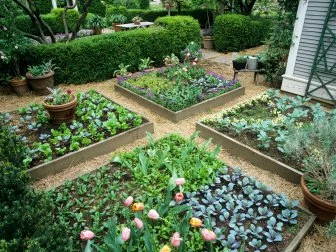
Tips for a Raised Bed Vegetable Garden
Raised bed vegetable gardening takes very little space and allows vegetables to be grown closer together. It's also a great solution for areas with poor native soil. Discover how to make the best use of your raised beds.
Add the Soil
The soil is the key ingredient to a successful raised vegetable bed. Get enough light topsoil or raised bed soil to fill the estimated depth of the raised bed. Since tomatoes are heavy feeders and prefer a rich, organic soil, mix in two- to three-inch layers of compost or cow manure to the top one-third of the topsoil. Rake the soil smooth.
Plant Tomatoes
Tomatoes can be deeply planted since roots can form along the length of the stems. Plant them at 18- to 24-inch spacing. Don't worry about letting the plants lean to one side; in a few days, they straighten up on their own.
- Water tomatoes at planting and regularly while growing to avoid blossom-end rot, which is caused when the soil is allowed to dry out. Keep the soil moist but not soggy, and regularly feed plants with vegetable-safe or 10-10-10 fertilizer according to the label recommendations.
- Mulch with a two- to three-inch layer around the base of the plants.
- Stake tomato plants for support as they start growing. Use wooden stakes, cages or wire supports to train tomatoes.


