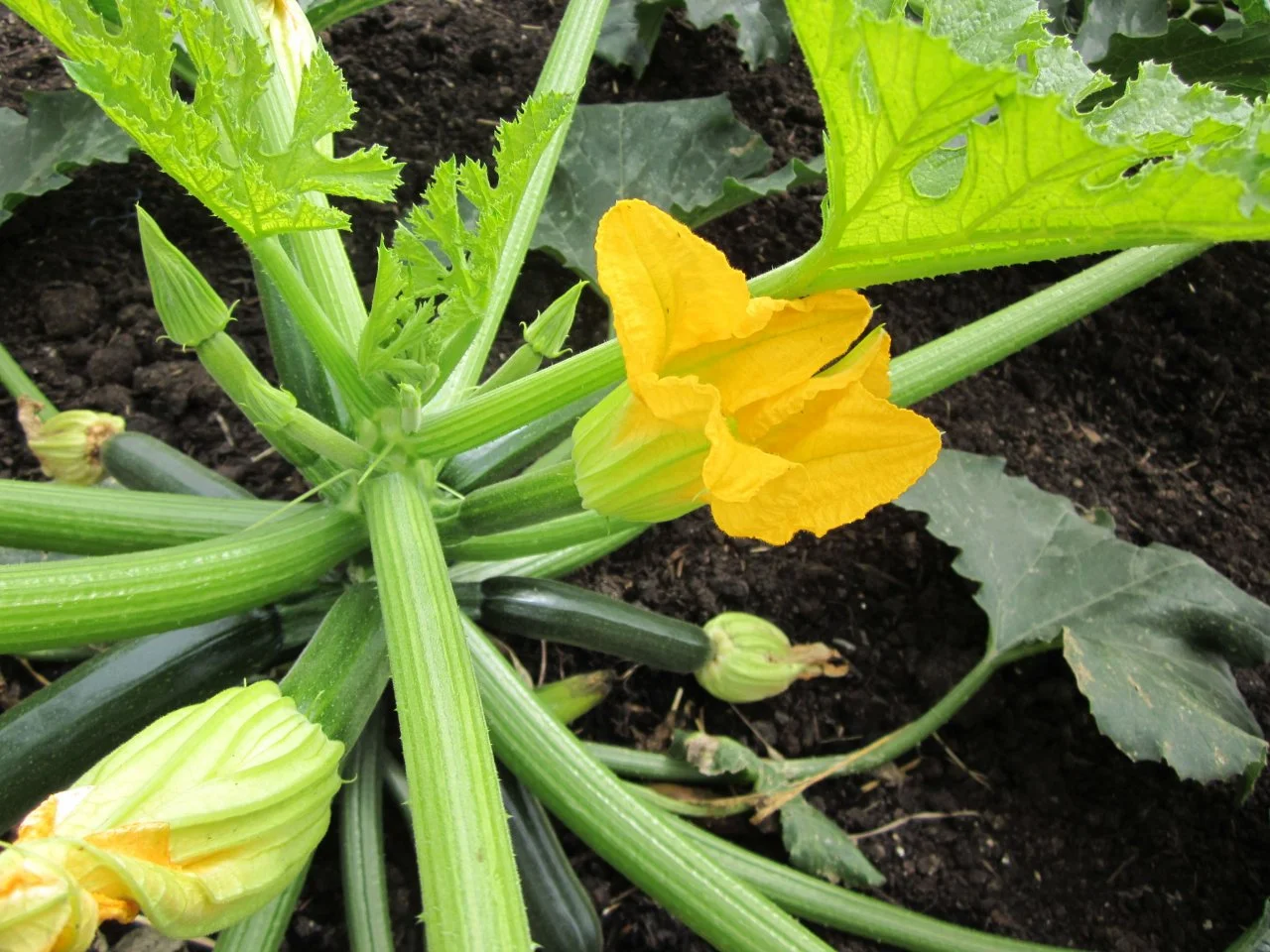
Companion Planting for Zucchini
Zucchini plants will produce loads of fruit if they don't get taken down by common pests and diseases. Try companion planting techniques to boost your zucchini harvest.

Zucchini are one of the most rewarding plants to grow. With rich soil, full sun, and plenty of water, these prolific growers will produce bumper crops of tender, smooth, delicious fruit. The harvests can be cut short by pest and disease damage. Practice companion planting to extend the bounty and boost plant health.
Julie Martens Forney
What is Companion Planting?
When we cultivate just a handful of our favorite vegetables each season, pests move in, feed on their favorite crops, and populations boom. Disease pressures can build up and the soil ecosystem can suffer due to this lack of diversity too. Filling available space and pairing our beloved veggies with other species of vegetables, herbs, and flowers minimizes pest and disease pressures a few different ways.
Flowering insectary plants attract beneficial pollinators and predators to the garden. Zucchini, like all squash varieties, are monoecious, which means they have both male and female flowers, and they rely on pollinators moving pollen from the male flowers to the female flowers in order to develop fruit. Grow a mixture of flowering plants that have a variety of flower shapes and bloom at different times to ensure that pollen and nectar are available throughout the season.
Trap crops are more appetizing than zucchini plants to certain pests, like cucumber beetles, squash bugs, and squash vine borers. For best results, start trap crop plants a couple weeks ahead of zucchini plants. Grow trap crops around the perimeter of large zucchini patches or several feet away from zucchini in the vegetable garden. If pest populations are on the rise in the trap crop, remove and destroy them before they spread to your zucchini.
Living mulches feed the soil, provide habitat for predators of pests, and make zucchini harder for some pests to find. Some common garden pests, like aphids, locate zucchini by visually contrasting the green foliage against the brown soil in the background. Underplanting with a living mulch makes it harder for these pests to spot crops.
Cover crops are excellent partners for zucchini and other cucurbits. Grow a cover crop the season before planting zucchini to feed soil organisms, improve soil structure, and make nutrients more accessible for crops. If the cover crop survives winter weather, simply cut the foliage back before the plants set seed. Leave the residue on the soil surface as a mulch.
Companions for Zucchini
- Use a trap crop of ‘Blue Hubbard’ squash to lure squash bugs, cucumber beetles, and squash vine borers away from zucchini.
- In her book Plant Partners: Science-Based Companion Planting Strategies for the Vegetable Garden, companion planting expert Jessica Walliser suggests growing zucchini with nasturtium to limit squash bug damage and attract pollinators.
- Interplant zucchini with buckwheat or yellow mustard to limit aphid and whitefly feeding and prevent them from spreading diseases. These flowering companions will also attract important predators of garden pests, including lacewings, big-eyed bugs, minute pirate bugs, ground beetles, and coccinellid beetles.
- Grow a living mulch of sunn hemp (Crotalaria juncea) around zucchini to deter cucumber beetles and squash bugs and to provide habitat for predators of pests like spiders. Scared of spiders? Apparently, cucumber beetles are too. Some research suggests that when cucumber beetles come across spiders in the field, they run away. Keep sunn hemp trimmed back to limit competition with zucchini for water, sunlight, and nutrients.
- Grow zucchini after a cover crop of garden vetch. Cut back the vetch before it sets seed and leave the cuttings on top of the soil as a mulch. The residue will feed soil organisms, conserve water, and suppress weeds, and the vetch will have fixed nitrogen from the atmosphere that the zucchini can use.
- Zucchini are closely related to squash, gourds, and pumpkins. In fact, they’re the same species (Cucurbita pepo) as many other squash, including summer squash, patty pans (or “scallop squash”), and some pumpkins. The companions presented here have been studied with zucchini specifically, but the recommendations for other squash relatives may work for zucchini too.

Baker Creek Heirloom Seeds
‘Blue Hubbard’ heirloom squash is a great variety in its own right, but it's also useful as a trap crop — a sacrificial plant — to keep pests off your other squash varieties.
Tips for Growing Zucchini
Zucchini is a breeze to grow from seed or transplants. Find a sunny spot with moist but well-drained soil. Zucchini are heavy feeders, so amend with compost or manure to boost the organic matter in the soil. Set out in rows or hills with at least 3 feet between plants.
Give these thirsty plants plenty of water on a consistent basis. For best results, lay a soaker hose or drip line at the base of the plant below the leaves. This will keep the foliage nice and dry, which will ease fungal disease pressures like powdery mildew.
Pick tender young fruits when they are about 6 inches long, and keep picking to keep plants productive. Pro tip: Nip off a couple of the larger leaves at the base of the plant to make it easier to spot hidden green fruits.
Even with best practices and companion planting, you may need to grow a few successions of zucchini to keep a continuous harvest through the summer. The first wave of zucchini can be planted out in the spring after the danger of frost has passed, and the last succession can be sown late in the summer (July is a good time for many areas of the country).

Photo courtesy of Syngenta Flowers, Inc.
This 'Cuarzo' grey zucchini variety is sought after for its high yields and resistance to disease, which gives it a longer growing season.
Tips for Crop Rotation
Zucchini and other cucurbit relatives (including squash, pumpkins, cucumbers, and melons) are often susceptible to the same pests and diseases. Large gardens can set aside multiple beds for cucurbits to ramble or run up trellises and alternate where they are grown each season. Try to go at least one year between cucurbits, although three years is ideal.
In smaller gardens, it may be more practical to grow zucchini as a living mulch around tall corn, okra, and tomato plants. Keep a record of what crops were grown in each region of the garden, and try to give at least one year between zucchini and related crops.

Freezing Zucchini and Summer Squash
Follow these steps to enjoy nutritious zucchini any time.