

How to Keep Bees Away from Hummingbird Feeders
Bees love to feast on nectar like the sugar water in a hummingbird feeder. Learn effective ways to keep bees away from a hummingbird feeder.
Shutterstock/Christopher Landis
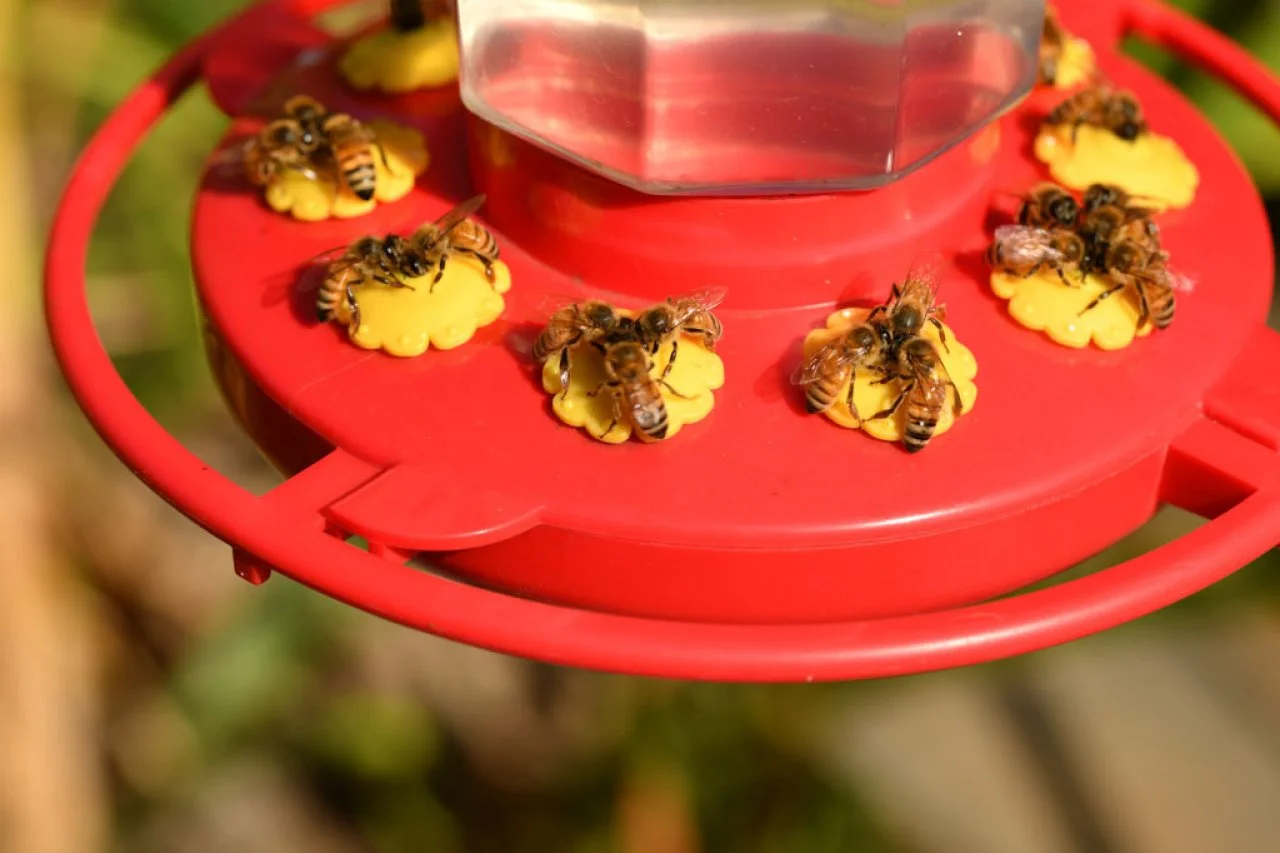
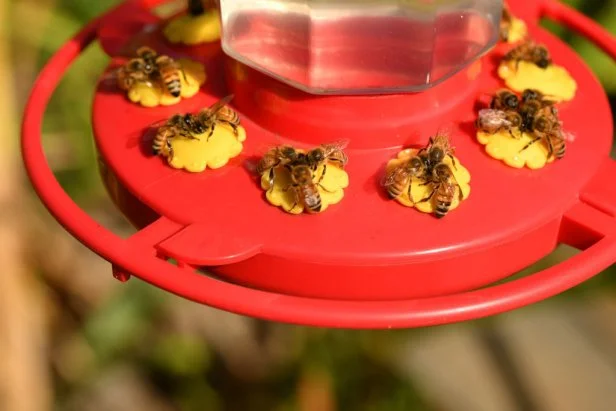
When natural food sources are unavailable, honey bees may mob hummingbird feeders where the sugar water is accessible.

Hummingbirds are nature's jewels — aerodynamic flyers that zip and zoom around the garden seeking out flower nectar. These feisty little birds are happy to dine at hummingbird feeders filled with sugar water.
Unfortunately, they're not the only garden visitors who want to snag a sip of sugar water. Bees also like the kick of quick energy that homemade nectar delivers. So is it possible to feed hummingbirds without beckoning bees? Absolutely. Learn what you need to know about keeping bees away from hummingbird feeders.
Simple Hummingbird Nectar Recipe
This easy and inexpensive hummingbird food recipe will have these beloved pollinators making return visits to your garden for your DIY hummingbird nectar.
Why Do Bees Come to Hummingbird Feeders?
The reason bees visit hummingbird feeders is because the sugar solution is similar to the nectar that bees find in flowers. Bees shift from flowers to hummingbird feeders when floral food sources are scarce. That could happen during a prolonged drought, heat wave or toward the end of the growing season when flowers have faded.
If the bees feasting at your hummingbird feeder are wasps and yellow jackets, it's more likely that they have a nest nearby and, like honey bees, are suffering from a dearth of other natural nectar sources. Typically these types of stinging insects rally around hummingbird feeders in fall, when their numbers are greatest.
The reality is that hummingbirds and bees can coexist. In fact, they do so daily in a natural environment. Hummingbirds are highly territorial and often chase bees from the feeder. But it's safest for everyone involved — including you, the person trying to clean and fill the feeder — to keep bees away from hummingbird feeders. Try some of these methods to discourage bees from depending on your feeder for food.
9 Tips to Keep Birds Away From Hummingbird Feeders
1. Buy the Right Hummingbird Feeder
The easiest way to keep bees away from a hummingbird feeder is to buy the right type of feeder. A feeder's design affects how easily a bee can steal the sugar solution.
Julie Martens Forney
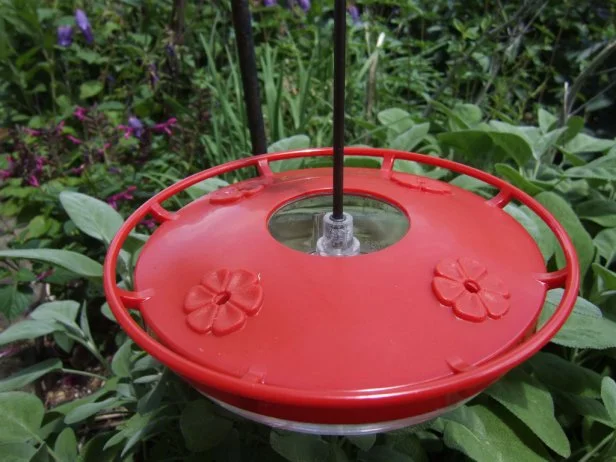
A saucer-type hummingbird feeder is a perfect solution for defeating bees because the nectar level remains beyond the reach of a bee’s tongue.
A hummingbird has a long proboscis, a tongue-like structure that siphons up nectar. A proboscis can reach as far as 1.5 inches to plumb the depths of a tubular blossom, such as trumpet vine. A honey bee, on the other hand, has a tongue that isn't even 1/2-inch long.
If you choose a feeder that keeps the nectar level more than one-half inch below the ports, that design should outwit bees. In general, a saucer-type feeder, shown above, is one of the best types of hummingbird feeders to deter bees. You control how much nectar you add, and the feeder design itself ensures that nectar is beyond the reach of a bee's tongue.
Another important aspect of feeder design is the size of the feeding ports. To limit most bees' access, ports shouldn't be more than one-quarter inch across.
Although many gardening articles shoo consumers away from an inverted bottle feeder design, this type of feeder can be built in such a way that the nectar stays more than one-half inch below the feeding ports. For instance, the ports may be raised up to increase the distance between port and nectar. Also, as long as the ports are too small for bees to access, the sugar solution is safe.
Lastly, look for a feeder made from UV-stabilized plastic. The plastic on the feeder basin should have a good thickness. Otherwise, bees have been known to chew holes in thin plastic to access the nectar.
2. Choose the Feeder Site Carefully

Where is the Best Place to Put a Hummingbird Feeder?
Invite energetic hummers to your yard with a nectar-filled feeder.
Placing a hummingbird feeder in a slightly shady spot helps discourage bees, who tend to stay in sunny locations. A shaded location also helps slow fermentation of the nectar solution, which means you need to change it less frequently.
3. Remove the Hummingbird Feeder
When bees first discover a hummingbird feeder, the simplest way to discourage them is to remove the feeder. Do this after dark to avoid interacting with the bees. Clean the feeder and keep it indoors for a few days before rehanging it. This gives the bees time to find alternate food sources.
4. Clean the Hummingbird Feeder
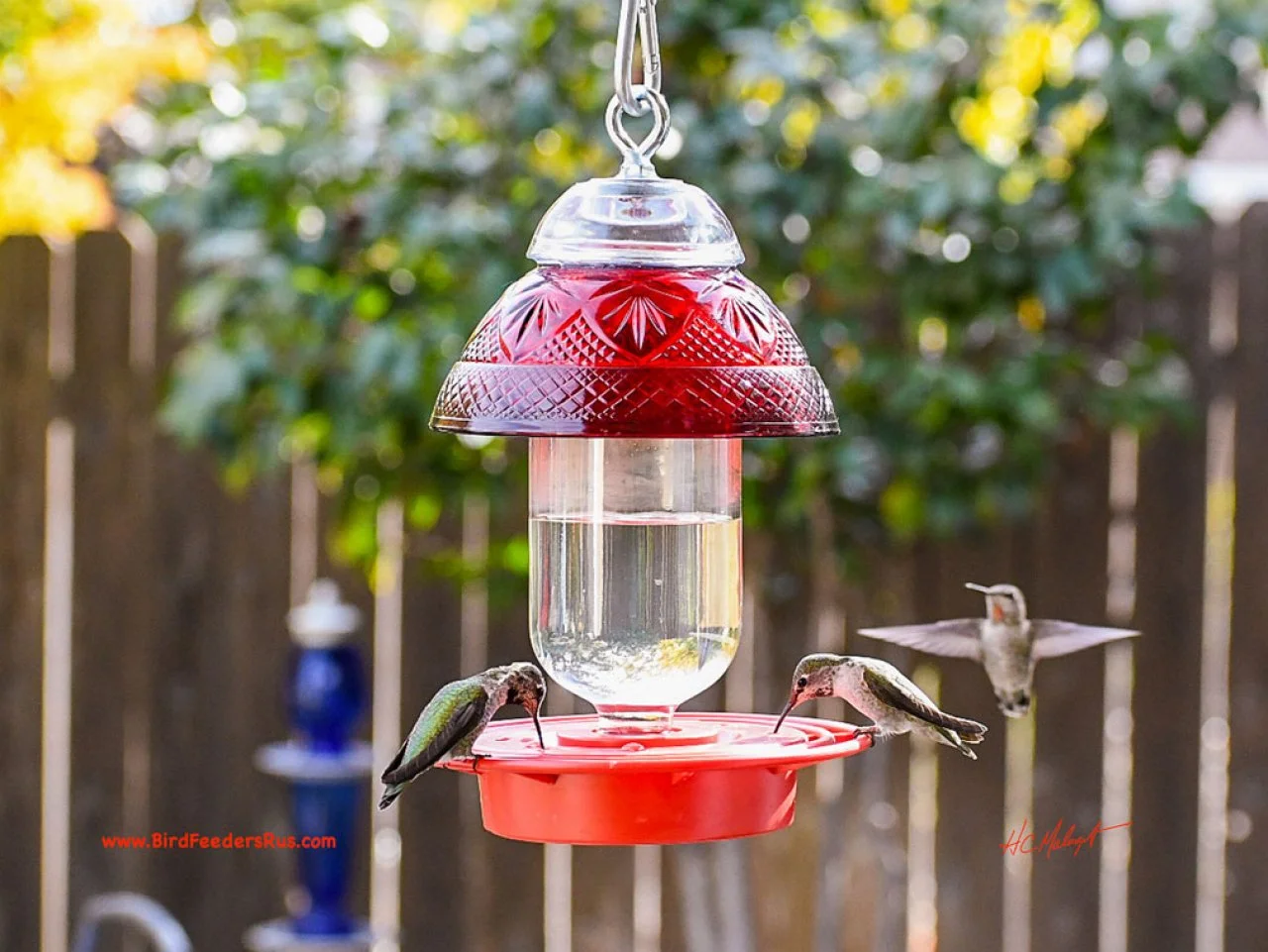
BirdFeedersRUs.com
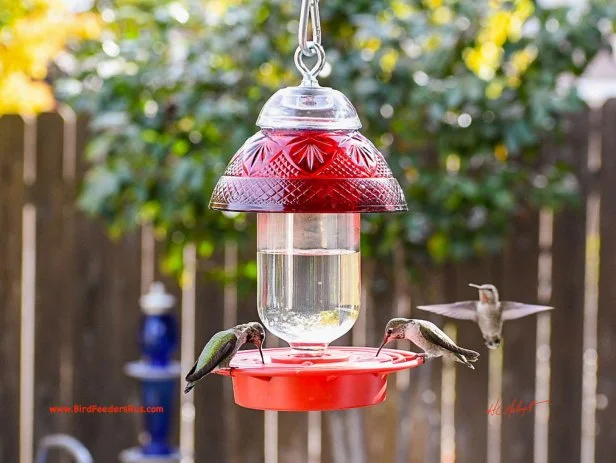
A gravity-fed hummingbird feeder like this one deters bees because feeding ports are small and the nectar solution is at least a half inch below the port.
Empty and clean your hummingbird feeder every few days — more often in hotter weather. If the solution is cloudy, it needs to be replaced. The reason a clean feeder won't attract bees is because there won't be any sugar solution on the outside of the feeder where bees can discover it.
When cleaning, inspect the feeder for cracks or leaks. If the nectar is leaking out of the feeder, bees will find it.
5. Move the Hummingbird Feeder
If you have a hummingbird feeder located in a windy spot, it's more likely to have sugar solution spill out as it rocks in the wind. Try to keep your feeder in a sheltered spot to help the nectar stay inside.
When bees are swarming on your feeder, you can also try moving it to a new location at least 10 feet away from its current one. You'll have best results if you can move it 25 feet and on the other side of a tree. Hummingbirds will find it again, but bees will take longer and may find alternate nectar sources in the interim.
6. Avoid Yellow
Bees see ultraviolet color patterns, including yellow, orange, blue, green and violet. Red isn't on that spectrum. When a bee sees an all-red feeder, it doesn't stand out to them. But when they see a yellow nectar guard or decoration on a feeder, they find that more attractive. In fact, yellow items on a feeder can act as a signal that alerts bees to a potential food source.
Hanging a hummingbird feeder in the shade helps to dull the feeder's colors, decreasing a feeder's attractiveness to bees.
7. Consider Bee Guards

Julie Martens Forney
Despite being yellow, a bee-attracting color, this type of plastic flower works effectively as a nectar guard because it increases the distance to the nectar so that a bee’s tongue can’t reach the sugar solution. If this feeder lacked the nectar guards, bees could easily reach the nectar through the too-big port.
Look for bee guards or nectar guards that you attach to a hummingbird feeder to help block bee access to the sugar solution. These items snap easily onto a feeder. Just be sure to read the manufacturer instructions to make sure you get ones that fit your feeder.
8. Hang a Wasp Nest
Placing a fake wasp nest in your yard can help deter wasps from adopting your hummingbird feeder as a food source. Wasps are territorial and won't invade a space already occupied by other wasps.
9. Feed the Bees
One of the simplest ways to discourage bees from feasting at your hummingbird feeder is to plant a pollinator garden filled with flowers from which they can forage. Both bees and hummingbirds prefer floral nectar sources over feeders, so adding a flower garden will definitely help nourish these creatures.
Pollinator gardens don't have to be large to be effective. Fill them with nectar-rich plants, such as joe-pye weed, coneflowers, bee balm, butterfly weed and Russian sage. Consider including shrubs, such as elderberry, summersweet or viburnum to offer more nectar. A pollinator garden can provide season-long color that adds to the beauty of your yard and enhances the natural environment.
Bees and Hummingbird Feeders FAQ
- Will hummingbirds feed if bees are around?
Yes, hummingbirds continue to feed when bees are present, unless there's a great swarm blanketing the feeder. When numerous bees are present, hummingbirds tend to avoid a feeder. - What can I spray on my hummingbird feeder to keep bees away?
It's best not to spray your feeder with anything. Definitely don't spray it with pesticide to deter bees. That will potentially harm the hummingbirds, and you don't want to hurt honey bees, either. - Will Vicks' salve keep bees away from hummingbird feeders?
Do not apply any kind of salve, petroleum jelly or other sticky substance to any part of a hummingbird feeder. If hummingbirds accidentally brush the sticky area and get that material on their feathers, it will affect their flight. When they preen their feathers, they'll ingest the substance, which could harm them. - Is there a bee-proof hummingbird feeder?
The best hummingbird feeder is one that's designed to keep the nectar solution at least one-half inch below the feeding ports. It should also have small ports that measure one-quarter-inch across to prevent bee access.