Next Up

25 Victorian Design Ideas To Create Stunning Spaces

Updated on March 12, 2026
Follow Lauren on:

Victorian tastemakers constructed iconic buildings and seriously over-the-top interiors. Learn all about their signature design moves — and how to make modern history with their style.

Price and stock could change after publish date, and we may make money off these affiliate links. Learn more.
Photo: Diana Paulson. From: HGTV Magazine
Scroll For More Photos
1 / 26

Victorian Decorating Ideas for Your Home

Prim in the streets and insatiable with pleats! The Victorian era in design can be defined as the reign of Alexandrina Victoria as Queen of England from 1837 to 1901 — more loosely, the period began around 1820 and ended at the start of World War I in 1914 — but aesthetically, we're still seeing the influence of Victorian style in our homes today. Want to channel some of the let's-decorate-everything exuberance of the era with today's creature comforts? Here's how to make Victorian design work for you.

Tour This Very Cool Victorian

More photos after this Ad

Photo: Avery Nicole Photography. From: Sarah Stacey Interior Design
2 / 26

Rich Color and Layered Lighting

Floor-to-ceiling plum paint is the MVP in this updated 1910 Queen Anne Victorian, where it modernizes the old-school molding and interior door. Streamlined window treatments and a contemporary chandelier contrast with more traditional elements, like the intricately-patterned rug, gilded frames and tufted Chesterfield sofa. Balancing history and livability here is all about establishing a confident, maximalist mix.

Tour a Victorian With Moody Hues

More photos after this Ad

Photo: Emily Minton Redfield. From: Duet Design Group
3 / 26

Victoriana Gets the Blues

Here’s a variation on that monochromatic move in a brighter colorway. In this Victorian-influenced living room, classic crown molding and paneling turn textural with an enveloping, midtone blue that carries across the ceiling, letting the ornate fireplace take the spotlight. Acrylic sconces above the mantel and a pair of sleek glass table lamps balance out the busier and more historic elements.

Blue Paint Colors We Love

More photos after this Ad

Photo: Graham Joyner, Metal + Petal
4 / 26

Fronds Forever

Victorians were notorious for their pteridomania, or fern madness. First marketed in the 1830s as plants that appealed to intelligent people, ferns were collected, grown and sold as exotic specimens. They also became decorative motifs for everything from textiles and ceramics to sculptures and gravestones.

Whether they're potted like the bird’s-nest fern on this bar cart, pressed and dried to be displayed as art or tended in a terrarium, ferns of one’s own are an inexpensive and authentic nod to the quirky amateur botanists of yore.

The Best Ferns to Grow Indoors

More photos after this Ad

Photo: Dylan Chandler. From: HGTV Magazine
5 / 26

Play With Patterns

Continuous, machine-made wallpaper became commercially available in the mid-1800s, and it revolutionized the look of Victorian homes. Since it was cheaper than decorative elements like millwork, tapestries and murals, it gave decorators the ability to maximize spaces with minimal effort — and it conquered walls and ceilings alike.

Add Victorian character to a utilitarian space with a print featuring flora and fauna, like this paper inspired by William Morris’s iconic 1883 Strawberry Thief design — then double down with another pattern, like the floor’s checkerboard. Framed “specimens” and a fern in a footed planter round out the room Victorian vibes.

Tour This House

More photos after this Ad

Photo: Mike Chajecki
6 / 26

New Moves for Classic Checkerboard

Checkerboard floors date back to ancient Egypt and found favor with Roman and Renaissance builders before trending in Victorian entryways, where their high-impact look suited grand interiors designed to impress guests (who might have needed to freshen up from their travels before continuing into carpeted spaces). This reimagined Victorian interior riffs on the checkerboard look with black-and-white geometric tiles. Paired with a extra-large gilded mirror and a tufted velvet bench, this entry captures the grandeur of Victorian style with chic, modern flair.

More photos after this Ad

7 / 26

Intricate Installation

When we envision the Victorians' love of busy spaces, we think of their tiers of framed art, densely patterned wallpaper, heavily decorated furniture and innumerable tchotchkes. With strong woodwork, generous gilding and layers of frames, this built-in focal wall channels the Victorians’ maximalist spirit in an up-to-date way. Surrounded by intentionally unembellished walls and ceiling beams, the cumulative effect is drama rather than clutter.

Try These Gallery Wall Ideas

More photos after this Ad

8 / 26

Strategically Stacked Frames

Condense Victorian drama in a reading nook, like this one, by creating a staggered stack of varied art that starts low and extends beyond the height of the windows. Because these pieces are relatively small, their sill-to-ceiling arrangement feels daring as opposed to overwhelming — and they draw the eye upward.

More photos after this Ad

Photo: WE Studio Photography. From: Sheila Mayden
9 / 26

Ornament With Orchids

Much like fern madness, the orchid obsession of the 1800s — which was then known as orchidelirium — motivated collectors to send explorers all over the world to gather rare specimens (which were worth thousands of dollars). Some of the first terrariums, known as Wardian cases, were sealed-glass containers created to protect delicate flowers on sea journeys back to Europe. Though transporting orchids is far less painstaking these days, it’s hard to deny their traditional appeal.

How to Grow and Care for Orchids

More photos after this Ad

Photo: Rustic White Interiors by Robert Peterson. From: Copper Sky Design + Remodel
10 / 26

Favor Florals in the Dining Room

That wallpaper! The tablecloth! The floral light fixture! This eclectic dining room features floral motifs that would have delighted the more-is-more Victorians. Rercreate this fanciful space by deploying bloom-filled paper on the upper half of your wall, then transitioning to paneling beneath it. The antique chairs’ Gothic-revival silhouette and inlaid accents add even more historic oomph (and don’t feel too fussy, thanks to the playful colors surrounding them).

More photos after this Ad

Photo: Paige Rumore Photography. From: Lori Paranjape
11 / 26

Pair Decorative Molding With Abstract Art

Here, traditional interior architecture and seating details with Victorian character (a slipper chair here, gray velvet there) feel fresh paired with a bold, large-scale canvas above the sofa. In lieu of an antique floor covering that could make the space feel busy, a faux sheepskin rug layered over a neutral flatweave adds brightness and texture.

How to Highlight Trim With Paint

More photos after this Ad

Photo: Tomas Espinoza
12 / 26

Give Your Windows Special Treatment

Prioritizing privacy rather than natural light, Victorians festooned their windows with elaborate swags, heavy velvets and intricate laces. Mimic their enthusiasm for detail with a formal treatment like this one, where a custom cornice board features fern-printed fabric — which a 19th-century botany enthusiast would have found downright delightful. A secondary shade in a complementary pattern can admit sunlight as needed.

More photos after this Ad

Photo: Catherine Truman. From: Kendall Simmons
13 / 26

Trim With Tape

For a designer-approved, 21st-century take on Victorians’ beloved window treatments, try giving solid curtain panels an ornate border with decorative tape trim. Keep this look simple and cost-effective by only adding detail to the leading edges (the inner borders that overlap when the drapes are drawn together).

How to Add Tape Trim to Curtains

More photos after this Ad

Photo: Sean Litchfield. From: Casagrande Studio
14 / 26

Layer Lots of Details

Victorian homeowners displayed wealth by covering their floors with intricately patterned rugs (both imported from the East and, later, created by English craftsmen in the style of Turkish and Persian rugs) and piling their furniture with pillows. Lean into Victorians’ love of textural, opulent seating by layering a jewel-toned velvet sofa with bold, detailed pillows. Patterns are good; generous fringes and tassels are even better.

Tour a Jewel-Toned Home

More photos after this Ad

Photo: Erin Williamson. From: Erin Williamson
15 / 26

Get Busy With a Bold Rug

A Persian rug’s saturated tones and detailed pattern pair beautifully with midcentury-inspired furniture and bold color blocking in this bedroom. If you’re cautious of complexity, a rug like this one is easy to add to your home — and to swap in and out of your rooms to complement and contrast with other decor.

How to Layer Rugs Like a Pro

More photos after this Ad

Photo: Robert Peterson; Rustic White Photography. From: Brian Patrick Flynn
16 / 26

Heavy-Metal Bedroom

A replica of Queen Victoria’s brass bedstead greeted visitors at the New York World’s Fair in 1853, and brass and iron beds’ popularity surged in the decades to follow. By the 1880s, everyone who was anyone had a brass bed. Frames evoking that era are typically brass-accented iron or iron altogether these days — a brass bed, after all, is quite a lot of look — but their silhouettes remain iconic.

More photos after this Ad

Photo: Rustic White Interiors by Robert Peterson. From: Copper Sky Design + Remodel
17 / 26

Customize Bathroom Tile

The democratization of indoor plumbing gave middle-class Victorians the opportunity to embellish installations that had once been luxuries for the ultra-wealthy. The advent of germ theory at the end of the 19th century also motivated them to transition from wood floors to more hygienic hexagonal tiles — which promptly bloomed into intricate designs. Borrow a page from their playbook by elevating humble hex tile to a bespoke decorative element in your own bathroom.

30 Luxurious Bathrooms From the Stars

More photos after this Ad

Photo: Jared Kuzia, Sean William Donovan. From: Casagrande Studio
18 / 26

Indulge in a Clawfoot Tub

Double up on Victorian bathroom delights by pairing hex tile with a clawfoot tub, synonymous in that era with both cleanliness and luxury. The sleek, architectural vessels of contemporary spa baths are elegant, of course, but to truly set the tone for a special-occasion soak, draw inspiration from a society where some bathers spent hours in their tubs.

More photos after this Ad

Photo: DENNYS ILIC. From: Jonathan Scott and Drew Scott
19 / 26

Top a Traditional Vanity With Marble

Layer Victorian design elements by creating a checkerboard on the floor — upgraded here with marble tiles — and installing a vanity that combines the embellished look of a dresser with the functionality of a stone washbasin. Here, those more ornate elements share space with sleek shower doors and a simple mirror; the collective look feels historic and contemporary.

How to Build a Vanity From a Cabinet

More photos after this Ad

Photo: Jared Kuzia, Sean William Donovan. From: Casagrande Studio
20 / 26

Build Your Own Jewel Box

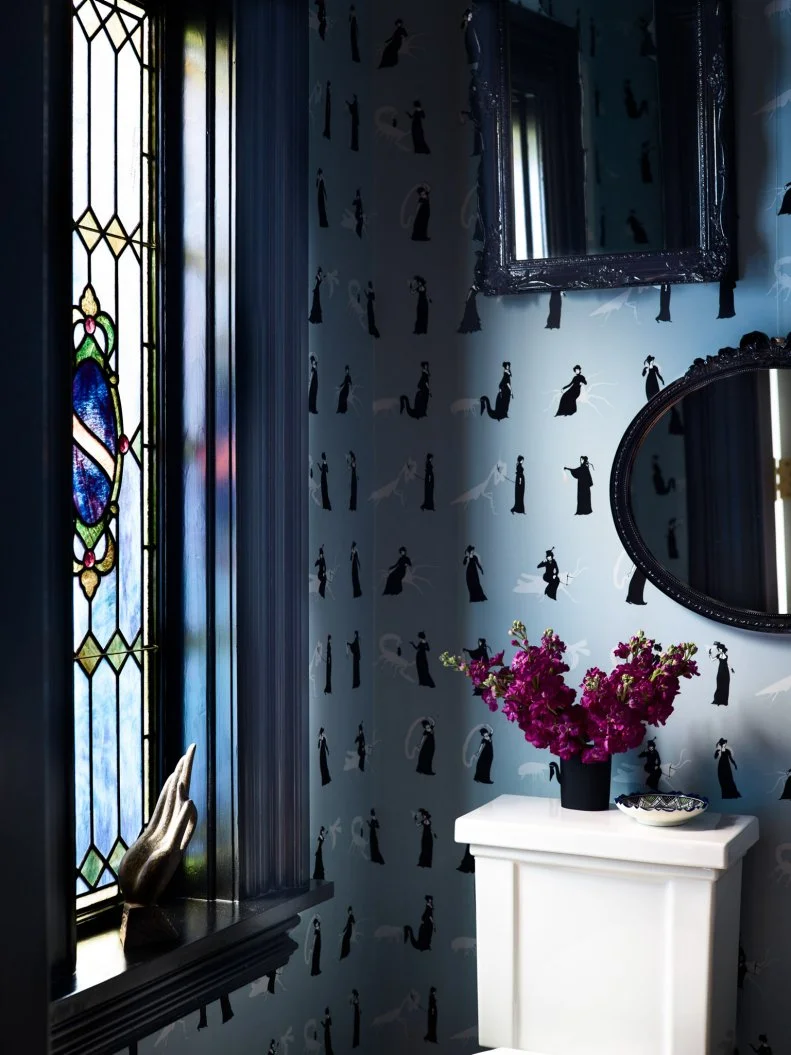
Contemporary designers’ fondness for boldly adorned powder rooms would have thrilled Victorian craftspeople. This wallpaper by Grow House Grow (inspired by 19th-century scientific illustrator and microscopy pioneer Mary Ward) is a designer favorite — and a fitting way to bring history home.

Tour a Victorian With Jewel Tones and Wild Wallpaper

More photos after this Ad

Photo: Christopher Stark, Architect: Sutro Architects, Contractor: The Tobani Group, Landscape Architect: Triple BK Landscape Gardening. From: Loczi Design
21 / 26

Antique Woodwork, Contemporary Palette

The Victorian architecture in this dining room is interesting rather than fussy because it’s balanced with 21st-century decor. Rich, stained wainscoting meets abstract wallpaper, and the crown molding highlights the saturated teal ceiling. The pedestal table and magenta chairs update the traditional buffet, chandelier and hearth. The takeaway: Don’t be shy about deploying the showiest elements of 19th-century style. Paired with equally-bold contemporary moves, they're even greater than the sum of their parts.

Elegant, Victorian-Style Dining Rooms

More photos after this Ad

Photo: Alise O'Brien Photography
22 / 26

Test-Drive Tassels

Victorian decorators adored passementerie, or elaborate ornamental trim for textiles and furniture featuring flourishes of fringe, braids, tassels, cord and piping (typically fashioned from luxurious materials like silk and metallic thread). Paying homage to the Victorians’ love of detail is as easy as hanging tassels on drawer pulls. Keep your eyes peeled for handmade versions at flea markets and estate sales.

More photos after this Ad

Photo: David Tsay. From: HGTV Magazine
23 / 26

Embellish With Fringe

When it’s time to move past a few tassels and embrace upholstery embellishments, note the impact of a Victorian-inspired finishing touch, like the fringe at the base of this contemporary bed. You can work with an upholsterer to add trim to a favorite piece that needs a little zhuzh, or let DIY inspiration guide your glue gun.

Tour This House

More photos after this Ad

Photo: Michael Weinstein Photography. From: Brown Harris Stevens - NYC
24 / 26

Subtle Divisions in an Open-Plan Home

Victorian decorators broke grand homes' cavernous spaces into functional sitting areas by creating massive suites of furniture upholstered in a single fabric that could be redistributed to accommodate gatherings of different sizes. The Victorian fondness for subdividing grand rooms comes in handy for contemporary living in open-concept homes. This expansive loft could easily feel overwhelming, but the use of area rugs and cleverly arranged furniture creates scaled-down sections. The key difference between Victorian arrangements and this one? A casually complementary style versus a matchy-matchy scheme.

Tour a Grand New York City Loft

More photos after this Ad

Photo: Katie Charlotte. From: Isabel Ladd Interiors
25 / 26

Crowd Countertops (Thoughtfully)

Victorians believed that bare spaces were vulgar, since they neglected opportunities to display one’s wealth and taste. Aim for a balance between their maximalism and today's appreciation for simplicity and you might land somewhere in clustercore, a decorative trend that celebrates thoughtful arrangements that don’t quite tip over into clutter.

What Is Clustercore?

More photos after this Ad

Photo: Harry Norman, REALTORS, a member of Luxury Portfolio International. From: Harry Norman, REALTORS and Luxury Portfolio International®
26 / 26

Bold Buildings

Victorian-era structures riffed on Gothic architecture with elements borrowed from French, Italian, Tudor and Egyptian traditions — and details that were fanciful rather than practical. Industrial-revolution innovations made it possible to mass-produce decorative architectural trim, which meant almost anyone could add flourishes to their homes. To add a touch Victorian flair to your exterior, try installing decorative corbels or a fanciful gable pediment.