Next Up

How to Layer Rugs Like a Pro

Follow Kathleen on:

These genius tips are sure to add interest and texture to any space. Here are our best tips for how to pull off a designer look by layering your area rugs.

Price and stock could change after publish date, and we may make money off these affiliate links. Learn more.
Photo: Amy Bartlam. From: Natalie Myers
Scroll For More Photos
1 / 15

Expert Tips for Layering Rugs

Just like searching for the perfect accessory to complete an outfit, finding the right rug for your space can be a daunting task. With Moroccans, hides, high and low piles, indoor/outdoor rugs and a plethora of others to choose from, why limit yourself to just one? Layering two on top of each other can be a great way to create the perfect look in your living room space. Whether you want to make a too-small rug bigger, cozy-up a room with texture, or test the waters with a bright color, here are 14 tips to help you layer rugs like a pro.
See the Best Rugs for Every Room

More photos after this Ad

Photo: ©2022 DAVID TSAY davidtsay.com . From: HGTV Magazine
2 / 15

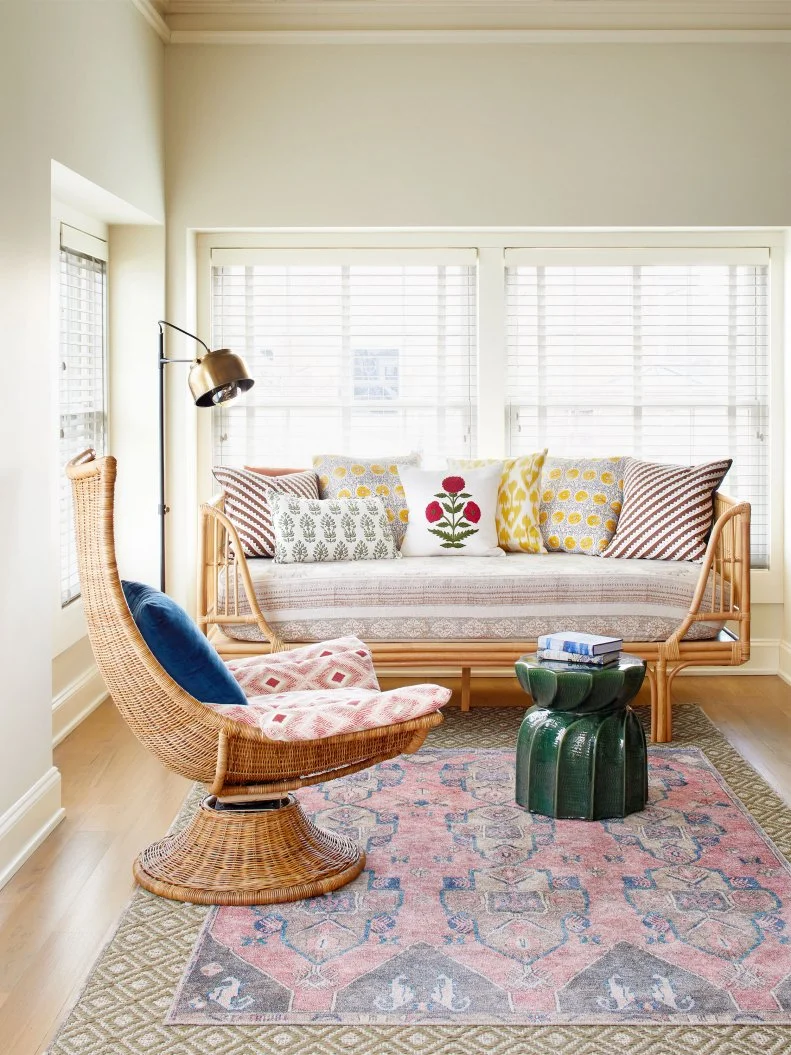
1. Pair Patterns — the Right Way

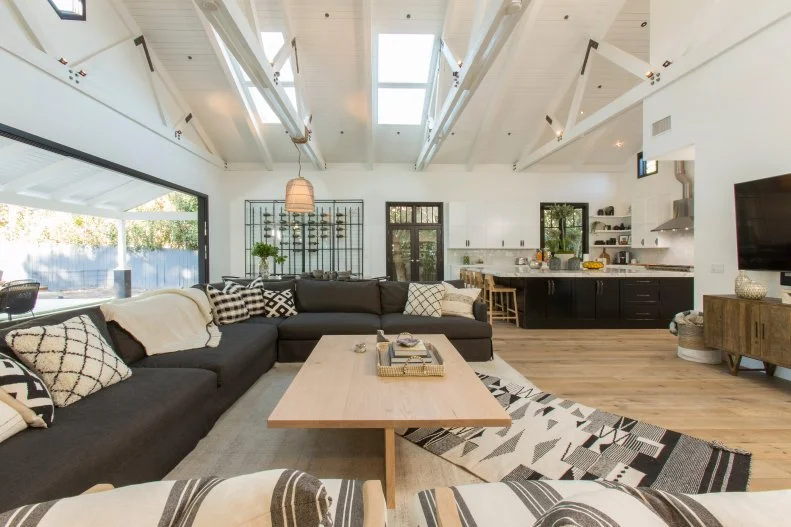
To get that perfect maximalist look, choose a neutral base pattern with a simple repeat, like diamonds, circles or checks, then add the more colorful and complex pattern on top, like in this boho style space. The colors and patterns won't compete with each other but are still a treat for the eyes.

Tour the Full House

More photos after this Ad

Photo: Kelly Christine
3 / 15

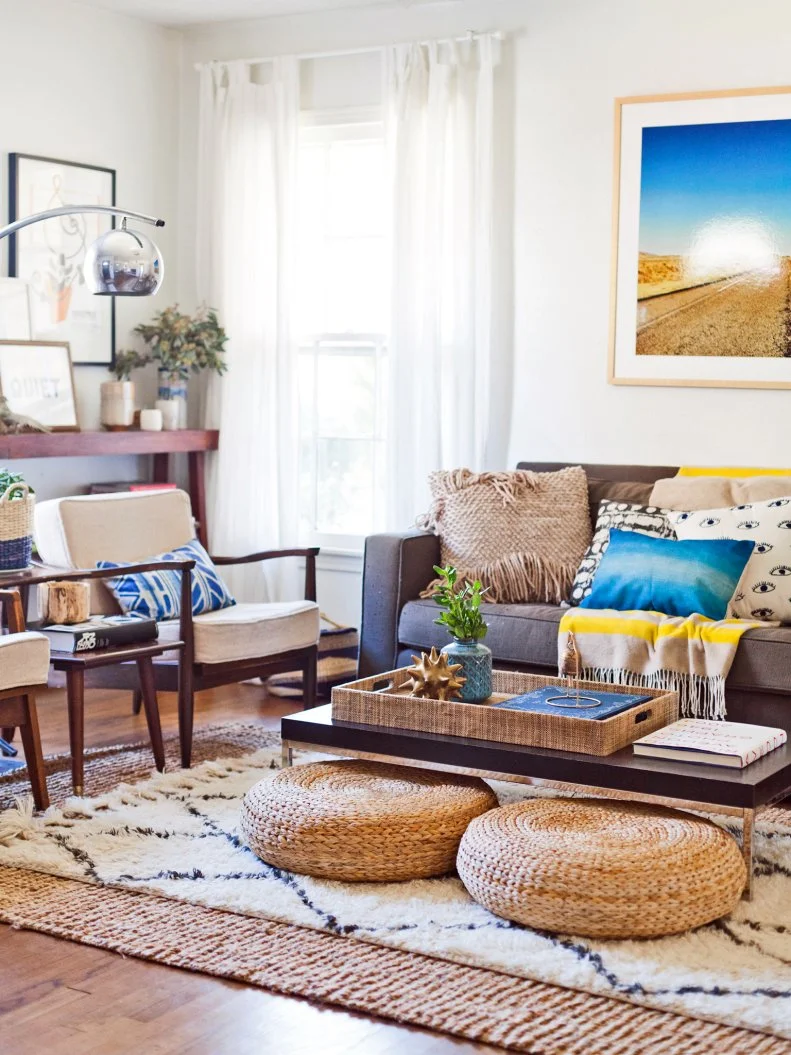
2. Mix Textures

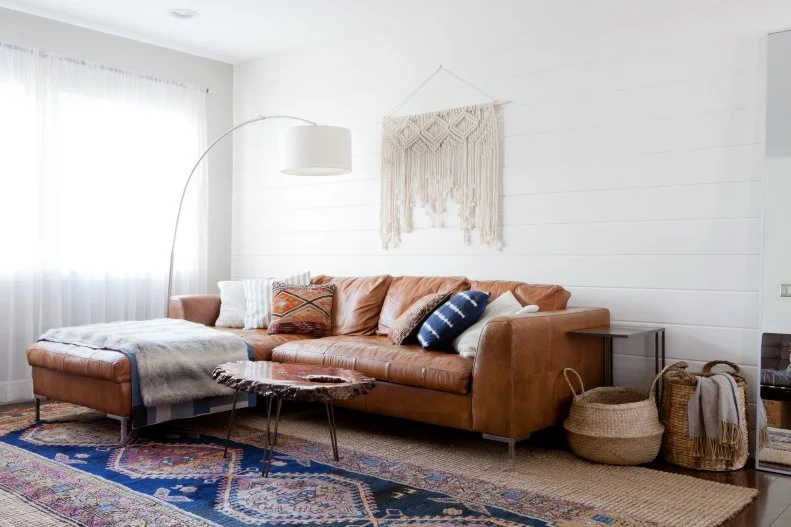
Layering rugs is a great way to bring in texture and give a room bohemian flair. If you have a soft and fuzzy rug, choose a rug made of natural materials to place underneath. The mixture of soft and coarse textures will provide perfect contrast to one another. Be sure to keep in mind the thicknesses of your textures. A too poufy rug stacked on top of an already thick base can become a tripping hazard or cause furniture to be off-kilter.

See These Tips For Living Large in a Small Space

More photos after this Ad

Photo: Hugo Landa Garcia. From: Stephanie DeBrincat
4 / 15

3. Be Practical

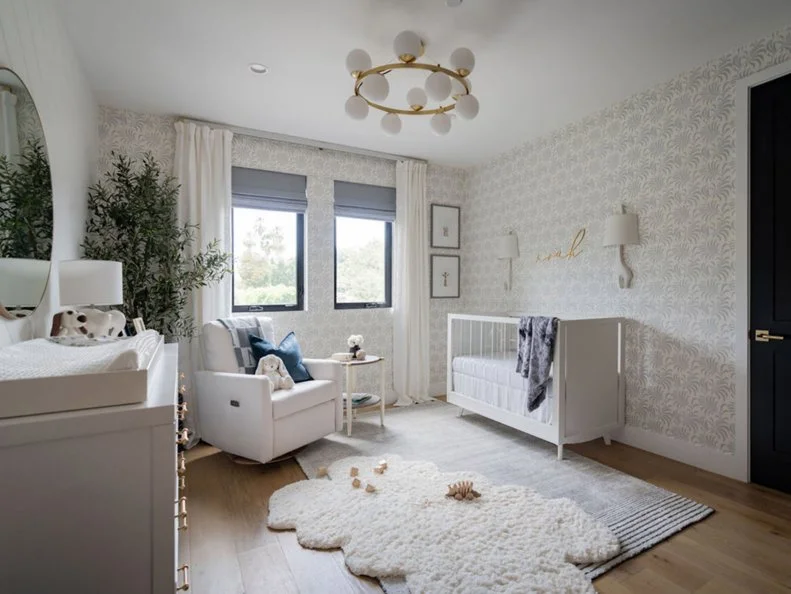
Consider the practical needs of a space and pick your rugs based on foot traffic, level of comfort and usage. In this sweet nursery, a soft faux sheepskin positioned over a washed gray area rug is the perfect cushy spot for tummy time. But an easy-to-clean indoor/outdoor rug layered over a durable jute is better for areas with lots of activity and spillage risks, like a dining room or playroom.

See the Full Space

More photos after this Ad

Photo: Chad Mellon Photography. From: Lindye Galloway
5 / 15

4. Save an Antique

Have you ever found the most beautiful vintage rug at your local flea market, but it's not the right size for your space? Not to worry! Simply layer it over a neutral area rug to incorporate that one-of-a-kind find into your home. The general rule is for the top layer to be about 2/3 the size of the base layer, but smaller rugs can work too. Just be strategic about your placement, so that it highlights the shape of the room and your furniture.

More photos after this Ad

Photo: Lisa Romerein. From: HGTV Magazine
6 / 15

5. Add a Splash of Color

If you're not ready to commit to a big, colorful rug, try buying a smaller size and placing it on top of a neutral area rug. The colors will have just the right amount of impact, and the small rug can easily be swapped out later if you change your mind.

See More of This Atlanta Home

More photos after this Ad

Photo: Adam Albright; Styled by Catherine Dash. From: HGTV Magazine
7 / 15

6. Layer on Top of Carpet

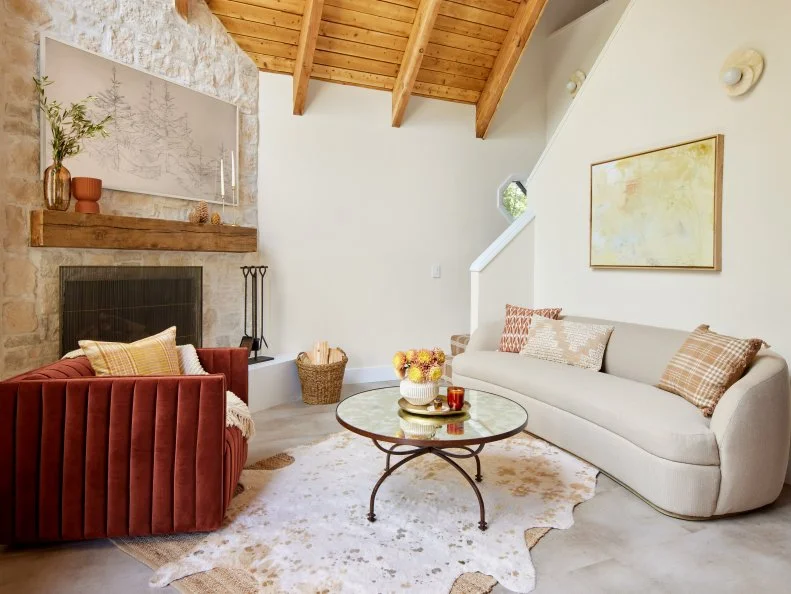
Wall-to-wall carpet provides an ideal base to layer accent rugs on top, like Jasmine Roth did in her California cabin. If your carpet is neutral, use patterned rugs that coordinate with the room's color palette. If your carpet has a pattern, like in this loft space, layer neutral rugs with a different texture on top to up the coziness.

Check Out Jasmine Roth's Cabin

More photos after this Ad

Photo: Tessa Neustadt. From: Interior Archaeology
8 / 15

7. Cozy Up a Big Space

Furnishing a big living room can be a daunting (and costly) task. But an easy trick to make an oversized room feel cozier, is to layer a standard size area rug (like an 8' x 10') on top of an extra-large sisal or jute rug. The neutral base layer allows the top rug to shine while also helping to define the room.

See The Best Sites for Affordable Rugs

More photos after this Ad

Photo: Gilles Mingasson/Getty Images. From: Christina On The Coast
9 / 15

8. Try New Angles

To make a basic rug feel more special, try placing a small, patterned runner on top, at an angle. It's an immediate eye-catcher and a low-risk way to test whether you want to spring for a larger patterned rug. Plus, the runner can be used later in a hallway or kitchen.

See These Tips on How to Work With Neutrals

More photos after this Ad

Photo: Wynne H Earle Photography . From: Holly Bero Interiors
10 / 15

9. Define Separate Areas

When a room is big enough for multiple seating spaces, use rugs to define different areas. In this midcentury modern living room, the designer placed a large color-blocked rug in the sofa area and a hide under the Eames chair in the reading nook. If you opt not to use a pad, attach carpet tape along the edges of your rug to secure it in place.

Get Tips on How to Secure a Rug

More photos after this Ad

Photo: Adam Albright; Styled by Catherine Dash. From: HGTV Magazine
11 / 15

10. Anchor Different Shapes

Use a basic rug in a neutral or a coordinating color to anchor rugs with funky shapes. A woven rectangular jute rug has been placed underneath this white hide, highlighting its interesting outline and keeping it from getting lost in the room. This trick works with oval, circular and oblong rugs, too.

See The Guide on How to Pick the Perfect Area Rug

More photos after this Ad

Photo: Marisa Vitale. From: Natalie Myers
12 / 15

11. Adapt to the Season

Just like with pillows and bedding, layering rugs allows you to easily change them out with the season. Choose a versatile base rug that can work with multiple colors and textures, then keep smaller accent rugs on hand that coordinate with the season, like this sheepskin that provides a cozy spot to warm your feet in the winter. Swap it out with a boho woven mat when the weather warms up.

See These Almost Free Bedroom Updates

More photos after this Ad

Photo: Sesha Smith, Convey Studios. From: Urbanology Designs
13 / 15

12. Play With How You Layer

Rugs don't have to be layered directly on top of each other, especially when they are different shapes. Positioning just the top part of a circular accent rug over the bottom corner of a larger rectangular area rug allows both to shine, while still connecting them. Be sure to pick rugs that are different textures, so they can stand apart from one another.

See These Teen Bedroom Ideas

More photos after this Ad

Photo: Bethany Nauert; Styled By: Paige Geffen. From: Erica Reitman
14 / 15

13. Combine Similar Sizes

Two rugs the same size can be overlapped to create the feel of one larger rug, like in this eclectic outdoor space. It's important to coordinate colors when working with rugs of equal size, since they'll both share the spotlight. Blue and orange are complementary and tie into the hues of the pillows and terra-cotta pots.

More photos after this Ad

Photo: Tiffany Ringwald. From: HGTV Magazine
15 / 15

14. Create a Base for Decor

Layering rugs can be done on a smaller scale, too, like in this bold entryway. Pick a fun, yet neutral pattern for your bottom layer, like black-and-white stripes or checkers, then layer your doormat on top. A good base size for most doormats is 2' x 3'. Keep the base all year and swap out the mats with the season.