How to Plant and Grow a Catalpa Tree
Learn all about unique catalpa trees, plus get expert tips and information for choosing, planting, growing and caring for catalpas in your home landscape.

Catalpa definitely makes a statement in the landscape. Big, bold leaves, masses of fragrant bell-shaped flowers, and a grandiose habit qualify catalpa as an excellent choice for tropical themed gardens, pollinator plantings, and natural looking landscapes. There are many species and relatives, including some members that are native to North America. Look out for varieties bred for their colorful foliage and compact habit.
Shutterstock/mykhailo pavlenko
Botanical Name: Catalpa spp.
Common Name: Catalpa, Cigartree
Bloom Time: Late spring
Light Needs: Full sun to part shade
Hardiness Zones: 5 to 8, varies by species
Height & Width: Up to 60 feet tall and 40 feet wide, although smaller varieties are available
Growth Rate: Medium to fast
When people in the gardening world say “Catalpa,” they’re usually talking about two species that are naturally found throughout the eastern part of the country. Although southern catalpa (C. bignonioides) and hardy catalpa (C. speciosa) have a lot in common, there are some differences between these species.
Southern Catalpa
Southern catalpa (C. bignonioides) is native to the Gulf Coast region from northern Florida across the Mississippi. Today this species has naturalized throughout the low woodlands of the southeast. Although southern catalpa is usually found growing in moist areas with rich earth, such as in wetlands and along streambanks, it will grow well in just about any soil conditions.
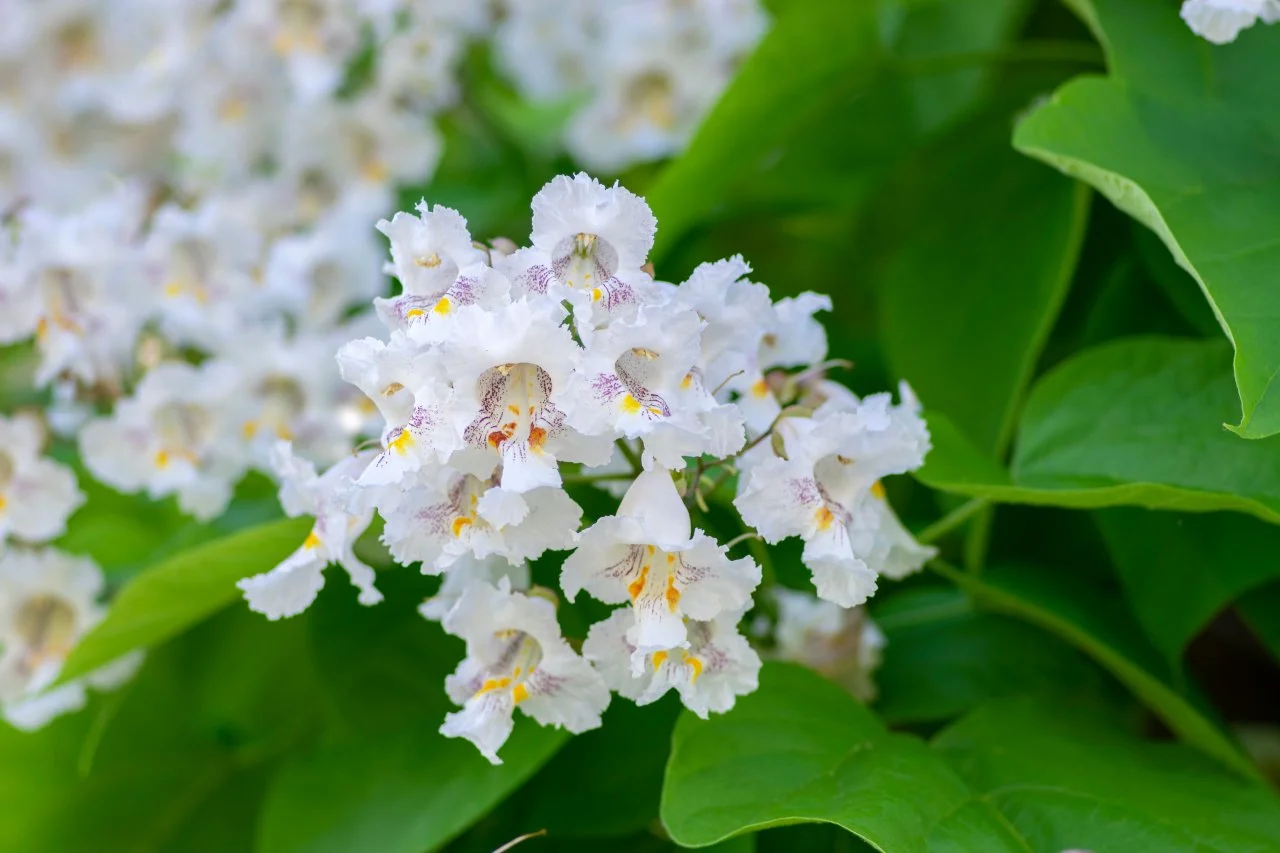
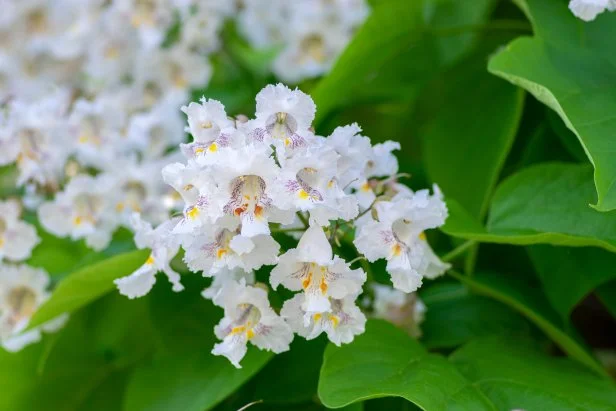
In late spring, the white bell-shaped blooms with purple and yellow speckles are easily spotted by drivers on the interstate. These tubular blossoms are beloved by a host of pollinators including many species of bees. It’s hard to appreciate from the speed and distance of the road just how imposing these trees can be. Southern catalpa matures to an impressive 40 feet in height and slightly more in width, although larger specimens are certainly out there.
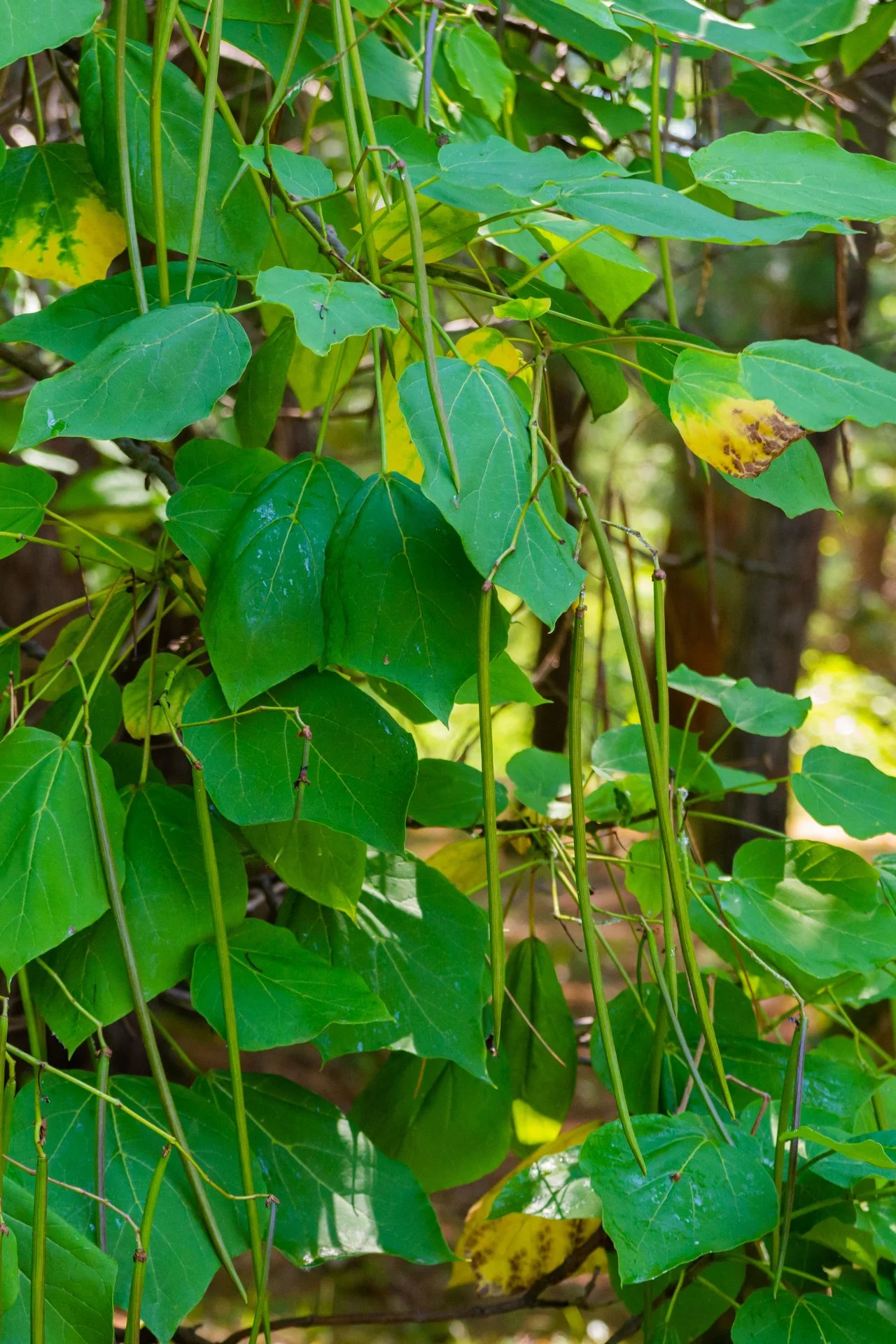
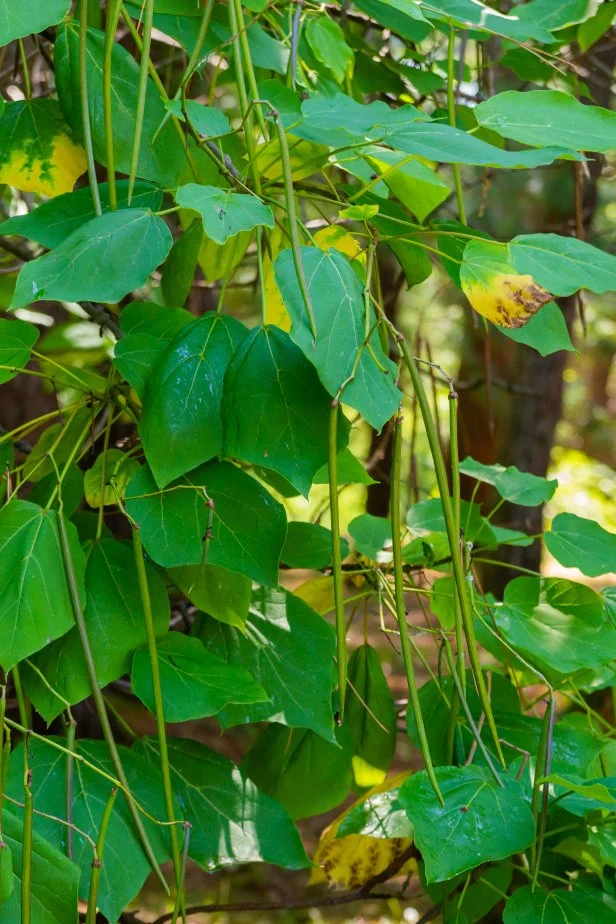
The heart-shaped foliage grows up to 10 inches long and 8 inches wide, although it may grow even larger if trees are coppiced. The 8- to 12-inch-long dark, cigar-like bean pods remain on the tree throughout the winter. Southern catalpa is hardy in zones 5 to 9.
Shutterstock/Mikhail Gnatkovskiy
The distinctive shape of catalpa fruits earned the tree its commonly used name of Cigartree.
Hardy Catalpa
Hardy catalpa (C. speciosa), also known as Northern catalpa, has a slightly more northern native range from southern Illinois and Indiana down to western Tennessee and northern Arkansas. Today, this more widely adaptable species has naturalized throughout the eastern United States, as far north as Maine and North Dakota, west to Kansas, and south to Texas and Alabama.
Hardy catalpa prefers moist, fertile soils, but it will tolerate most soil environments. Hardy catalpa grows even larger than southern catalpa, reaching 60 feet or more in height. This species is reliably hardy in zones 4 to 8, although sometimes it will do well in zone 9 too.
While these two catalpas are certainly the most popular species grown throughout much of the country, there are more catalpas out there. A few other species that are native to the West Indies and eastern Asia are grown ornamentally in many other parts of the world. These catalpas aren’t commercially available for much of the United States, but some stunning hybrids between Chinese and North American catalpas are on the market.
Willowleaf Catalpa
Willowleaf catalpa (Chilopsis linearis) is a close relative of catalpa that is native to the American Southwest. Like true catalpas, Chilopsis has absolutely stunning bell-shaped blooms. There is a wider selection of flower colors, including purple, burgundy, lavender, rose-pink and white with some semi-double blooms and blossoms with ruffled edges. However, having showy, trumpet blooms is where the similarities end.
Willowleaf catalpa grows as a small tree or a large shrub up to 25 feet tall and 15 feet wide. Although the fine, willowy leaves don’t usually have any fall color, their absence reveals the attractive, twisting trunk within the canopy. Willowleaf catalpa needs hot, dry, sunny weather with light, well-drained soil to thrive, making this a great selection for dry rock gardens. Chilopsis is hardy in zones 7 to 9.
Chitalpa
Chitalpa (xChitalpa tashkentensis) is a hybrid between southern catalpa and willowleaf catalpa. Like the willowleaf catalpa, chitalpa has frilly, tubular flowers that come in a variety of colors as well as narrow, feathery foliage. Although it may grow up to 35 feet tall and 30 feet wide, it typically stays much smaller. Chitalpa is adaptable to a variety of soil types and will grow in full sun to part shade. This hybrid is hardy in zones 6 to 9.
How to Use in Your Landscape
Catalpas are impressive trees. They develop a beautiful, symmetrical and rounded habit when they are given plenty of space to grow their best. These large trees make especially attractive shade trees in open areas where there is plenty of room for them to grow.
With warm spring weather comes large panicles of foxglove-like speckled blooms. Catalpas will be covered up with gorgeous speckled bell-shaped blossoms. These flowers are a magnet to bees, butterflies and even hummingbirds, making native catalpa an excellent addition to pollinator gardens.
Shutterstock/Iva Vagnerova
If you are going for an exotic look, catalpa’s bold foliage adds to the aesthetic as a backdrop in tropical gardens. Many folks bring their tropical houseplants out to the garden to enjoy warm summer weather. The shade from catalpa’s big, impressive leaves will help protect these understory plants from sunscorch. Or, if you’re looking to add a dramatic impact while keeping a sunny situation for sun-loving tropicals, consider coppicing your catalpa. Cut the catalpa back hard to encourage even larger foliage with a shrubby rather than tree-like habit.
How to Plant Catalpa
Catalpa are easy-going trees that will thrive in full sun to part shade and just about any soil conditions. Although they grow very well when planted from nursery-grown containers, those can be hard to find in many areas. Check with your local specialty nursery to see if they have any catalpa in stock or if they’d be willing to order these plants.
Fortunately, catalpa trees grow very quickly from seed and may even bloom in the first year. To propagate catalpas with unique flowers, foliage or habit, it’s best to start from rooted cuttings to be sure the new plants will share those desired features.
Regardless of whether the catalpa is grown from seed, rooted cutting or container, it’s best to wait until cool fall or spring weather before planting out to reduce the risk of transplant stress. Remember to water every two or three days during the first growing season to help roots get established in the soil.
Catalpa Care
Catalpas are generally carefree trees that require almost no maintenance. The most time-consuming chores tend to involve cleaning up the mess of brittle, broken branches, fallen leaves, and old seed pods that collect on the ground below the tree.
Health Problems
Catalpa trees are susceptible to a host of pest and disease issues, including catalpa sphinx caterpillars, catalpa midge, cornstock mealybug, leaf spots, powdery mildew, Verticillium wilt, twig blight and root rot. Although these problems can cause trees to lose their leaves prematurely during the growing season, they don’t usually have serious long-term health impacts on the plant.
Catalpa Worms
The caterpillars that becomes the catalpa sphinx moth are sometimes known as catalpa worms. The worms can defoliate catalpa trees, though they're also valued as fish bait. Predators of catalpa worms include braconid wasps, which are known beneficial insects throughout the home garden. Promote braconid wasps by growing an abundance of flowers and herbs nearby catalpas, including herbs in the carrot family like dill, fennel, and cilantro.
Popular Catalpas (and Relatives)
Compact Catalpa
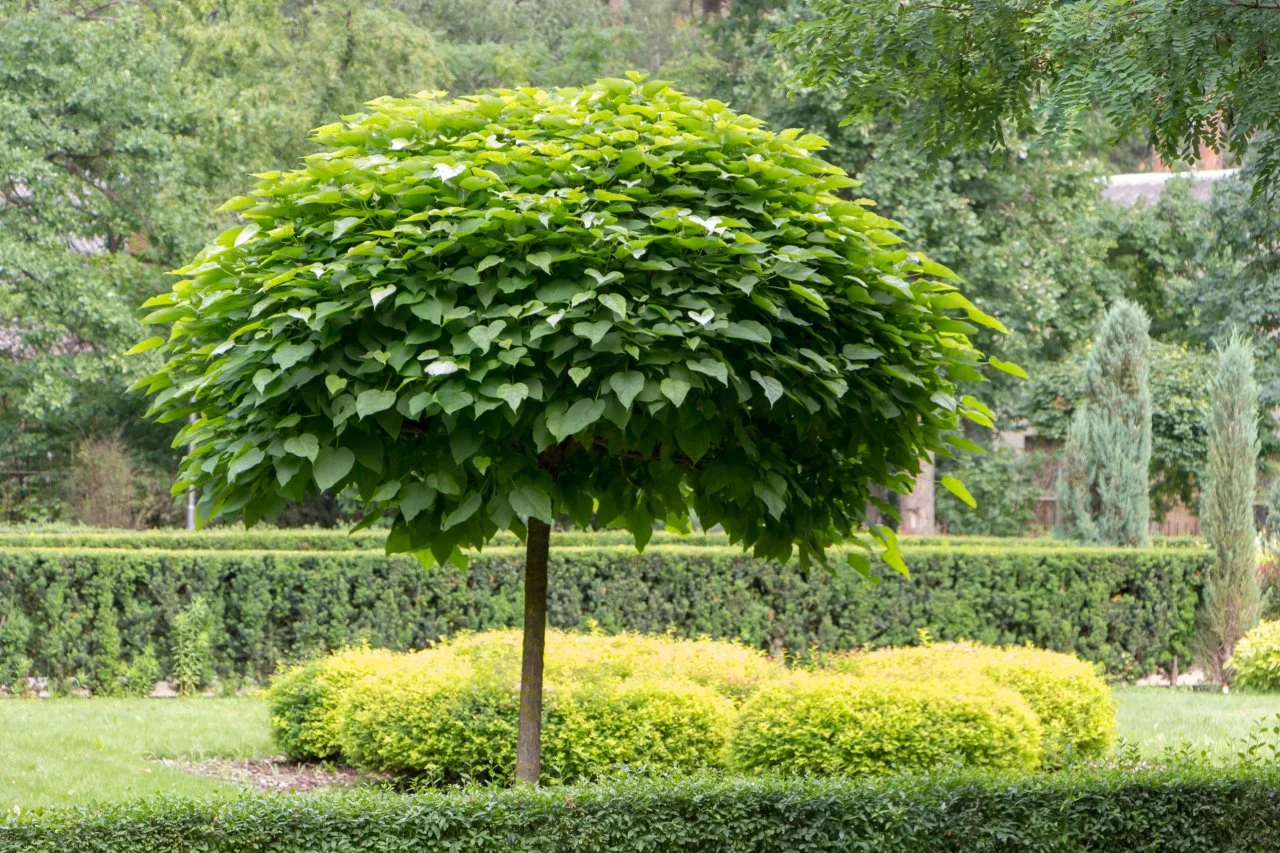
- Catalpa bignonioides ‘Nana’ – dwarf variety with a unique shape; grows somewhere between 10 and 20 feet in height and width, depending on how the tree was grafted by the nursery; attractive mushroom or umbrella growth habit with smaller foliage than the straight species; this variety rarely blooms
For Foliage
- Catalpa bignonioides ‘Aurea’ – bronze new growth matures to bright yellow that eventually fades to light green; all three colors are visible at the same time on actively growing branches
- Catalpa speciosa ‘Pulverulenta’ – green leaves with cream-yellow speckles; slower growing and slightly smaller than the species, usually growing to around 25 feet in height and width
- Catalpa x erubescens ‘Purpurea’ – hybrid between C. bignonioides and C. ovata; obsidian new growth matures to a deep green; white, speckled blooms held on large 12” x 8” flower stalks; grows up to 50 feet in height and width; this hybrid is hardy in zones 5 to 8, with some reports of success south to zone 10
For Flowers
- Chilopsis linearis ‘Burgundy’
- Chilopsis linearis ‘Lois Adams’
- Chilopsis linearis Timeless Beauty
- xChitalpa tashkentensis ‘Morning Cloud’
- xChitalpa tashkentensis ‘Pink Dawn’