

How to Make a Moss Pole for Climbing Plants
Learn how to make a DIY sphagnum moss pole for climbing indoor plants such as pothos, philodendrons, hoyas and monsteras. Plus, find out the benefits of using a moss pole and how to care for it.
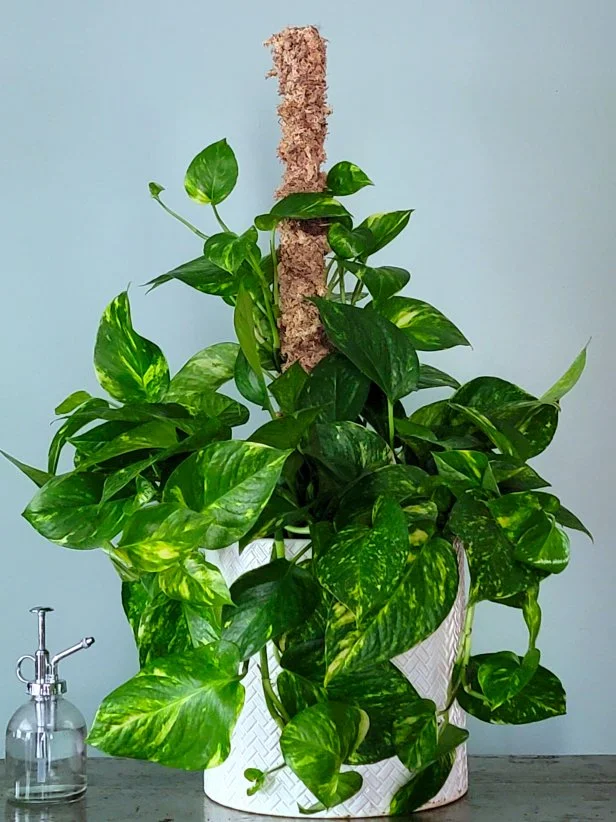
If you want to add some vertical interest to your houseplant collection, try crafting a DIY moss pole. These simple structures provide crucial support for climbing plants, mimicking their natural growing habits while enhancing your home’s aesthetics.
Benefits of Using a Moss Pole
Moss poles offer several advantages for climbing indoor plants.
- Poles provide a sturdy structure for vining and climbing plants to attach to as they grow. Plants have more of an opportunity to reach their full potential in height and the pole encourages a fuller, healthier appearance.
- Lifting the plant's foliage off the ground will help it get better air circulation, thus reducing the risk of fungal diseases and pest infestations.
- The moist moss on the pole helps to create a humid microclimate around the plant. This is particularly beneficial for tropical plants that thrive in higher humidity.
- Moss poles create a visually appealing display, adding a touch of nature and texture to your indoor space.
The Best Materials to Use
Sphagnum moss is the best choice as it holds moisture well and is resistant to decay. For the support pole, choose a sturdy material that won't easily rot or break down such as a plastic or bamboo garden stake or PVC pipe. The length should be a foot or two taller than your plant and long enough to stake most of the way into the pot. The twine or fishing line should be close to the same color as the moss. If using twine, use one long roll to make it easier to wrap around the moss.
Here's the full list of what you'll need:
- moss
- garden stake (ours is 36”)
- water
- bowl
- rubber gloves
- paper to protect work surface
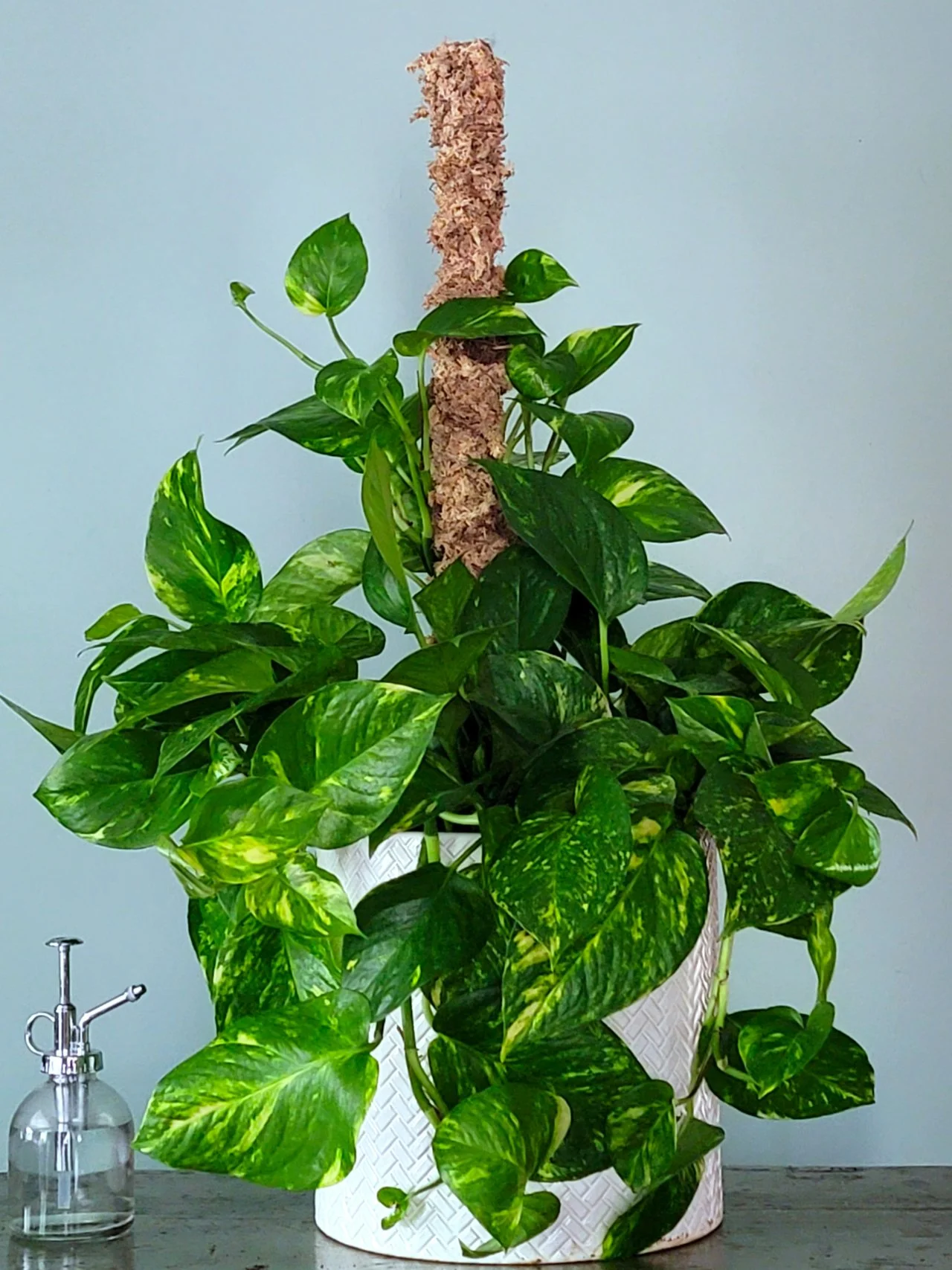
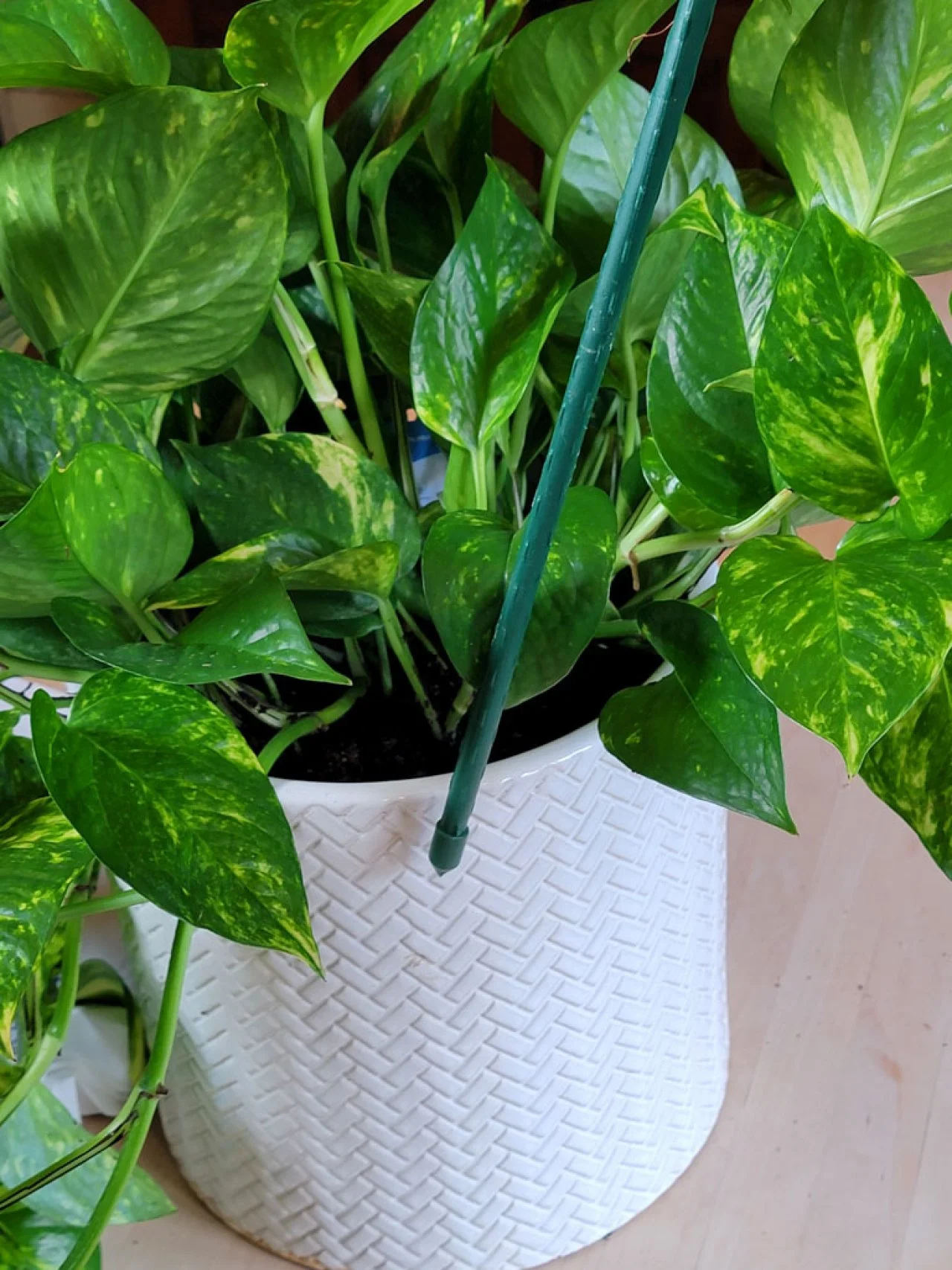
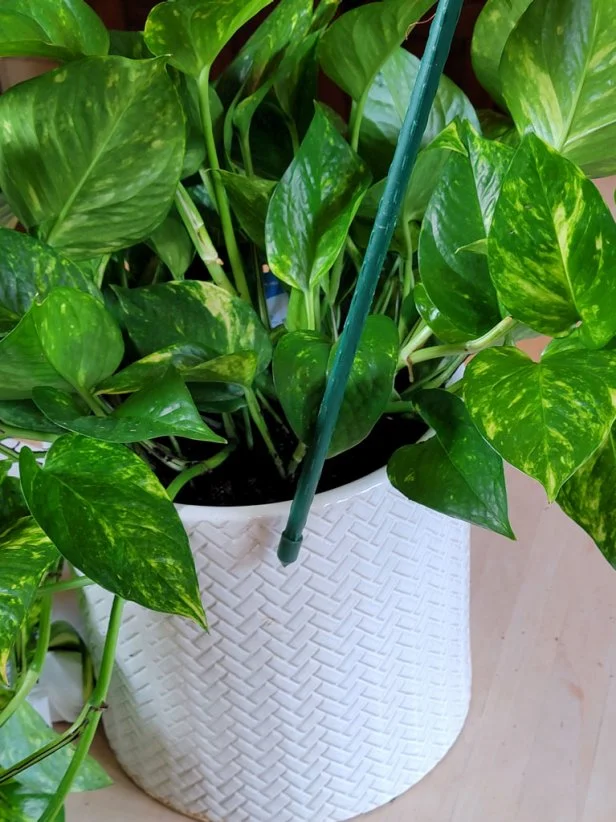
- climbing plant and pot (we are using a golden pothos)
Step-by-Step Instructions
Step 1. Prep Materials
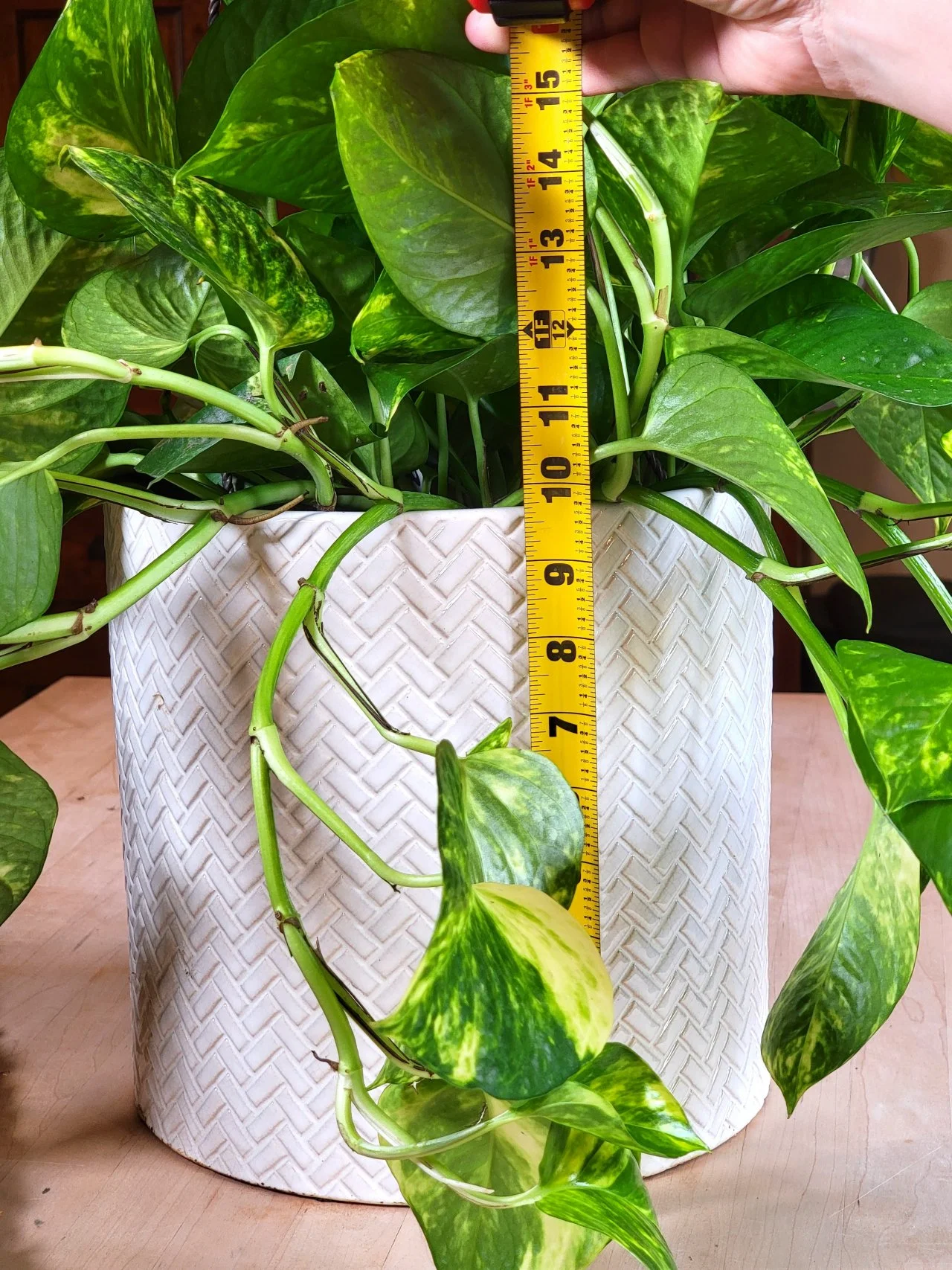
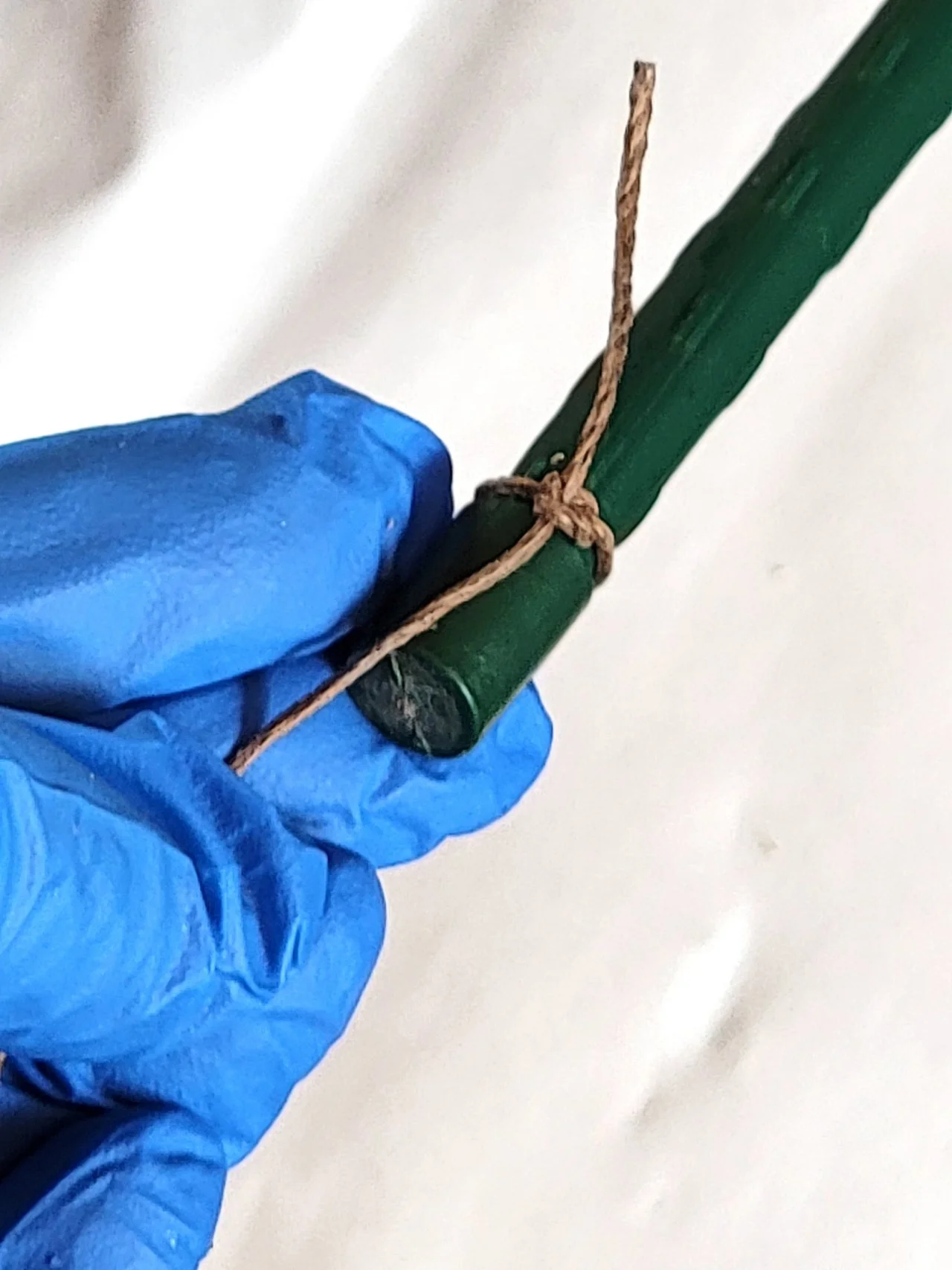
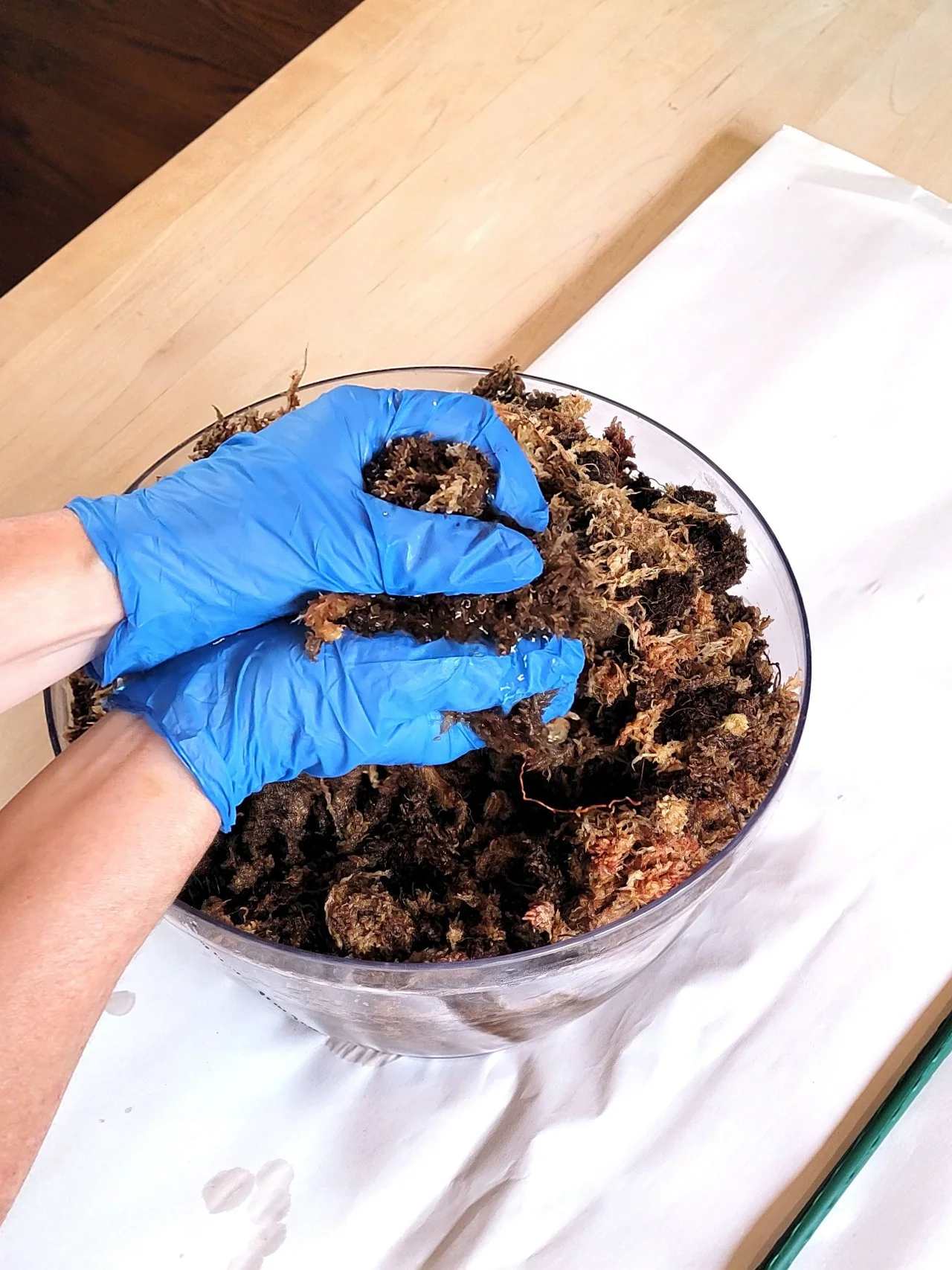
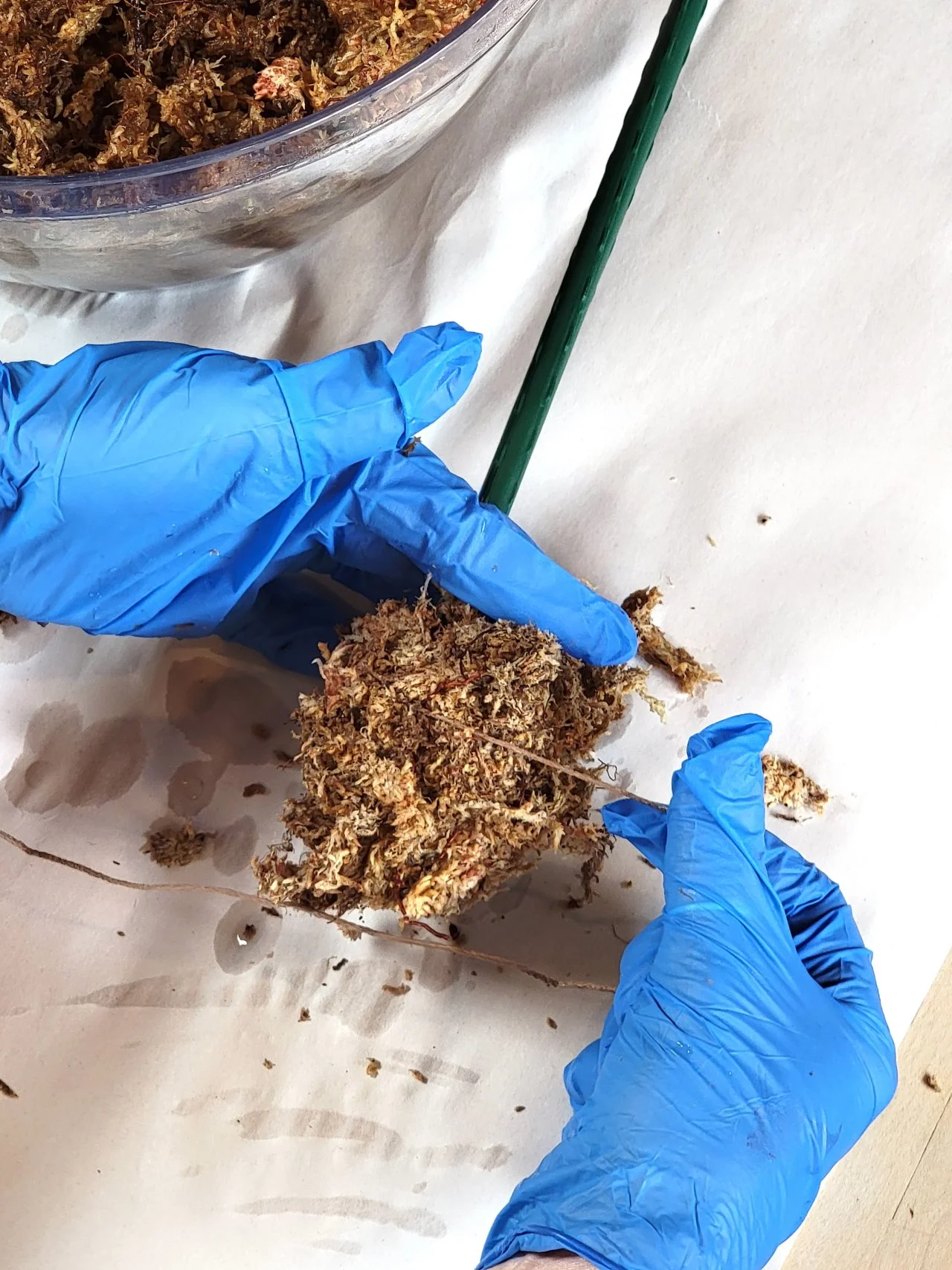
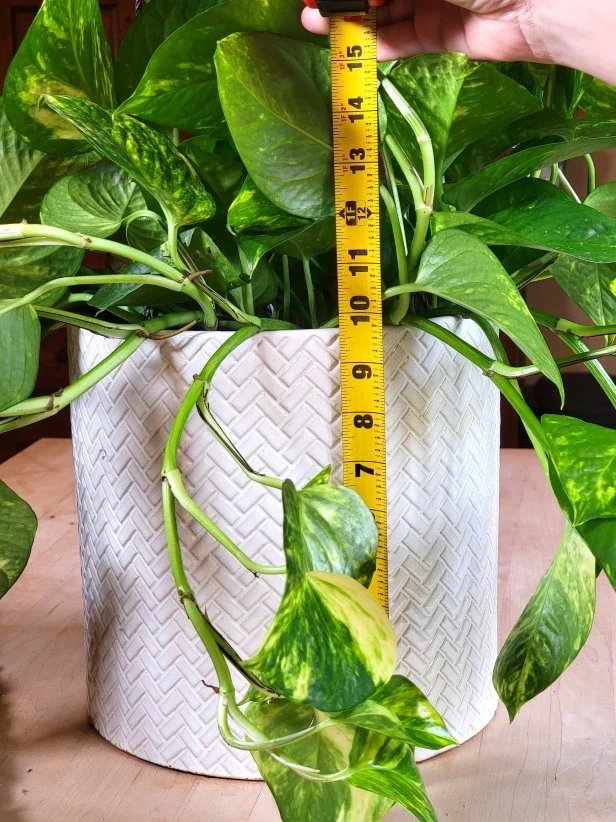
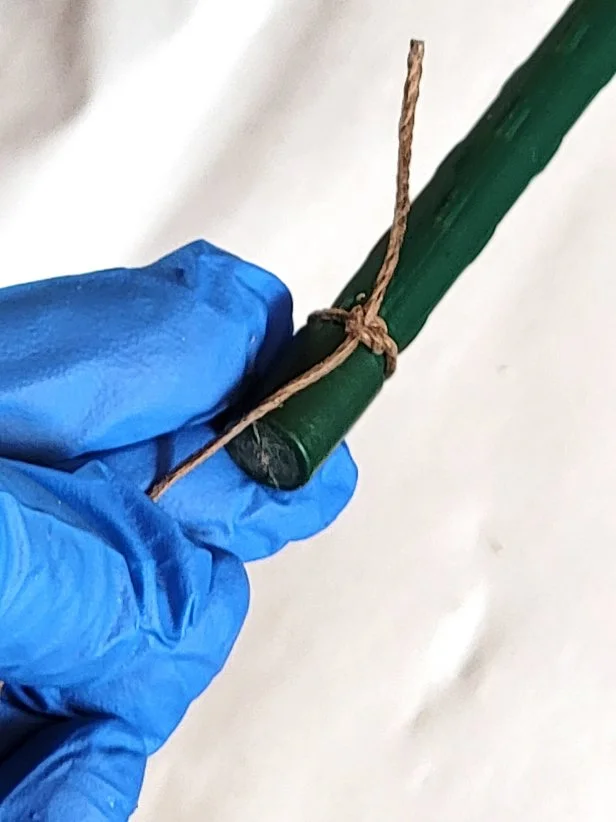
Submerge the sphagnum moss in water for 15-20 minutes or until it's completely saturated. Measure the pot to see how much of the pole to leave uncovered. Our pot is 10 inches high so our pole will extend just over two feet above the soil line. Protect your work surface with paper. Lay the stake onto the paper and tie a knot at the top with the twine.

Step 2. Attach the Moss
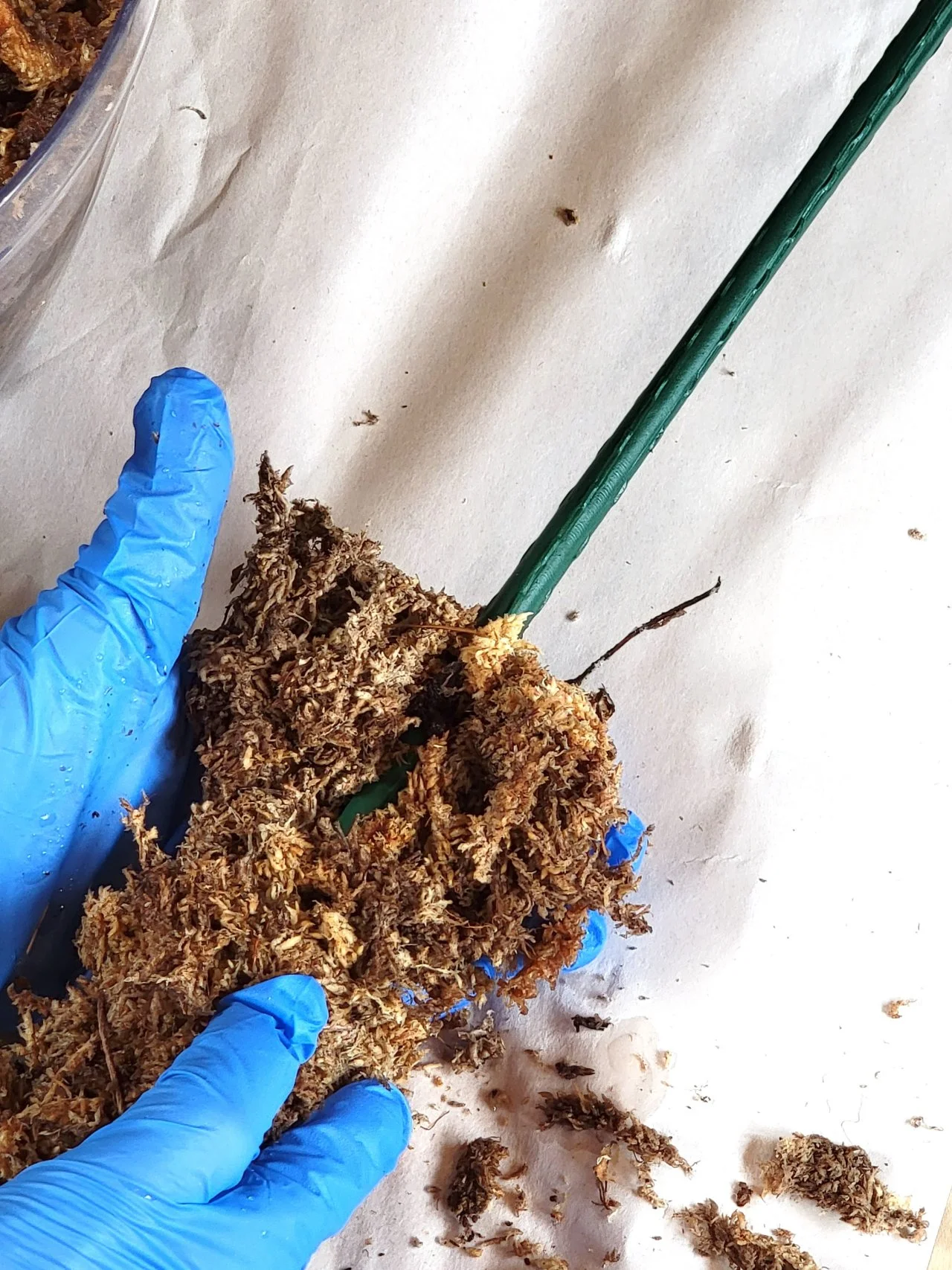
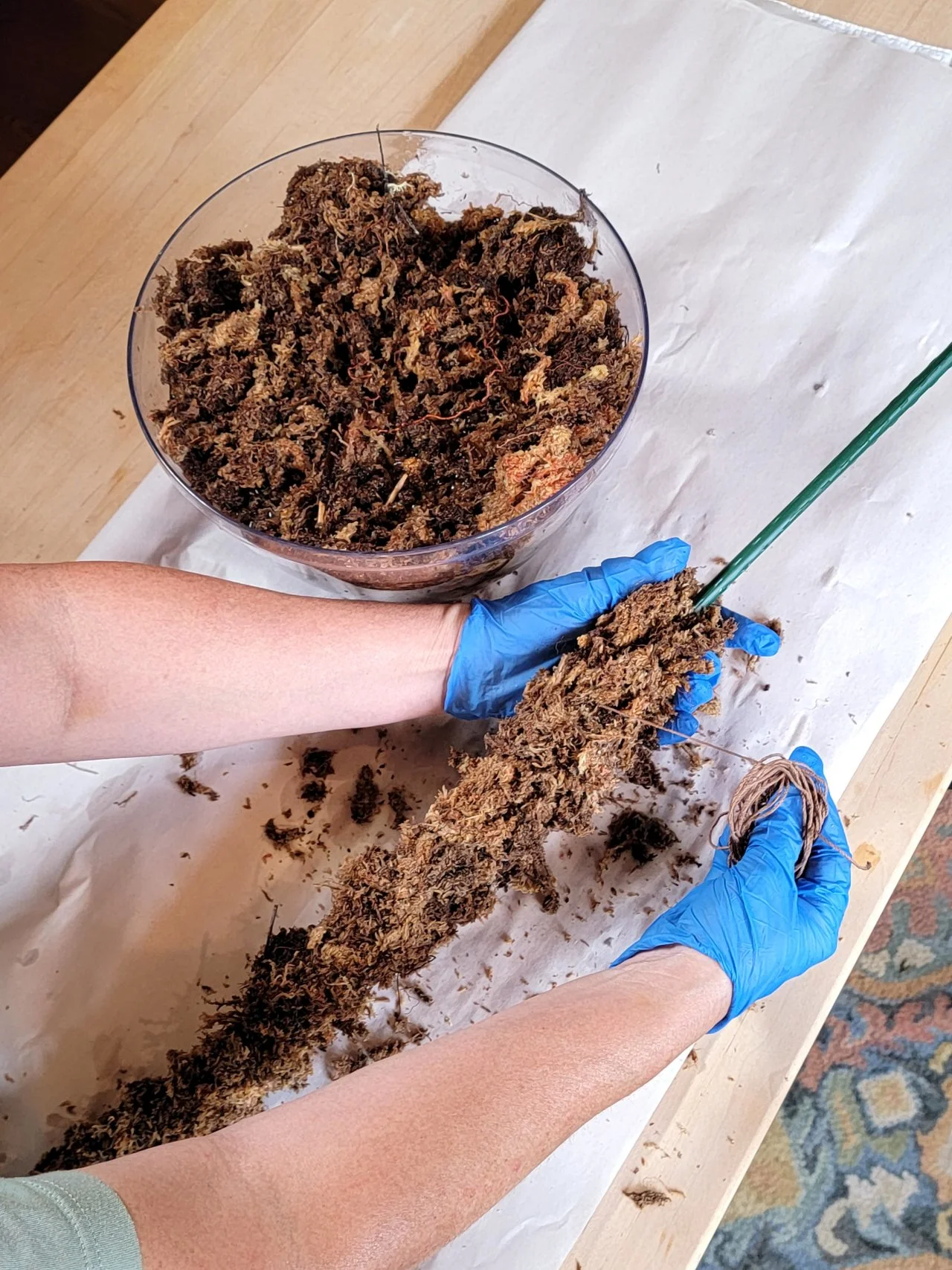
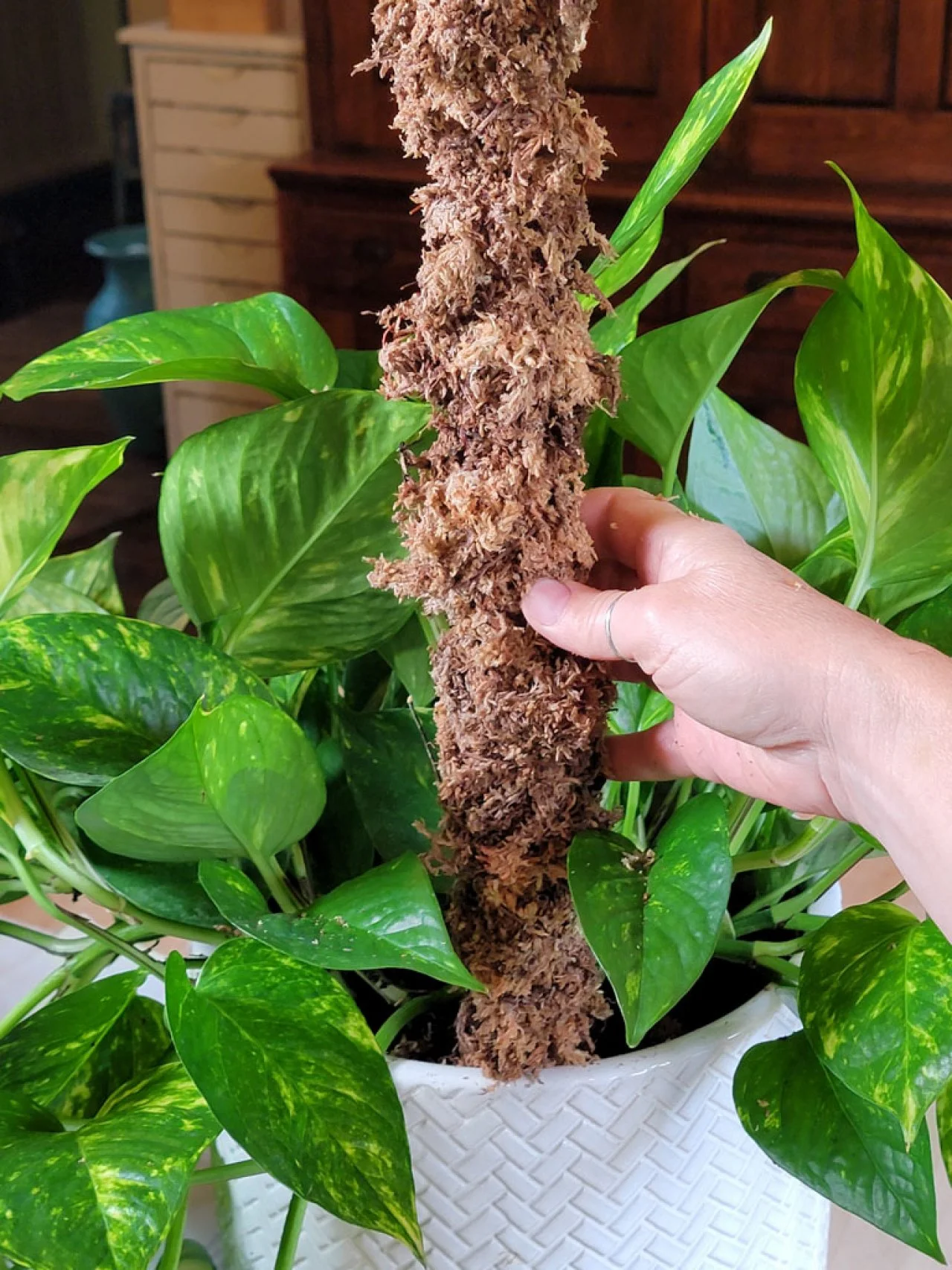
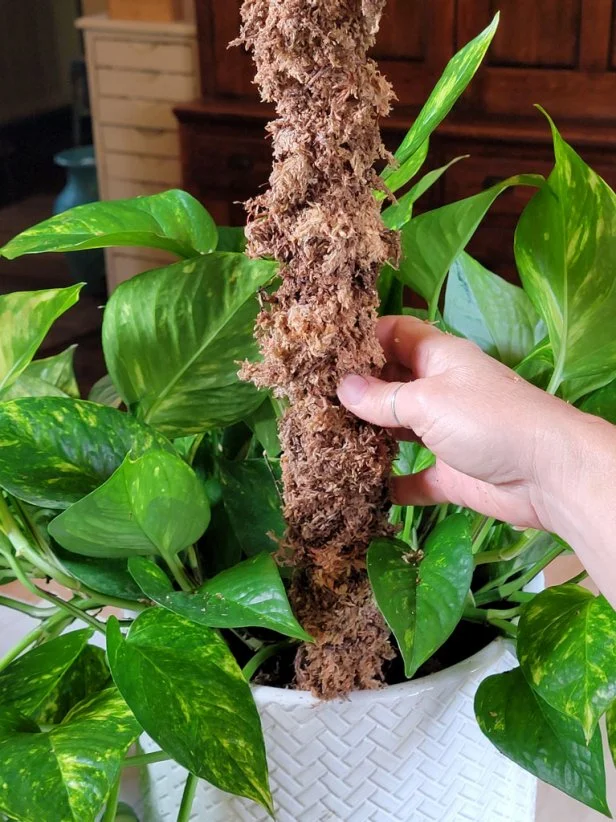
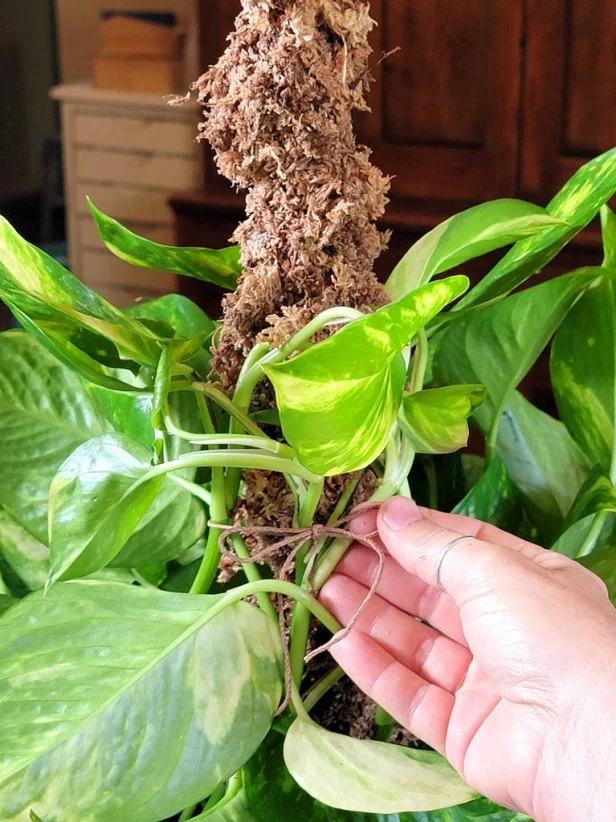
Squeeze out any excess water from the moss. Wrap the moss around the pole holding it in place while simultaneously wrapping twine tightly around it. Continue this process, moving down the pole. The bottom of the pole — what will be under the soil line — should be left bare for insertion into the pot based on previous measurements. Once the moss is attached, wrap the twine back up the pole for extra snugness, tying it off to secure it in place.
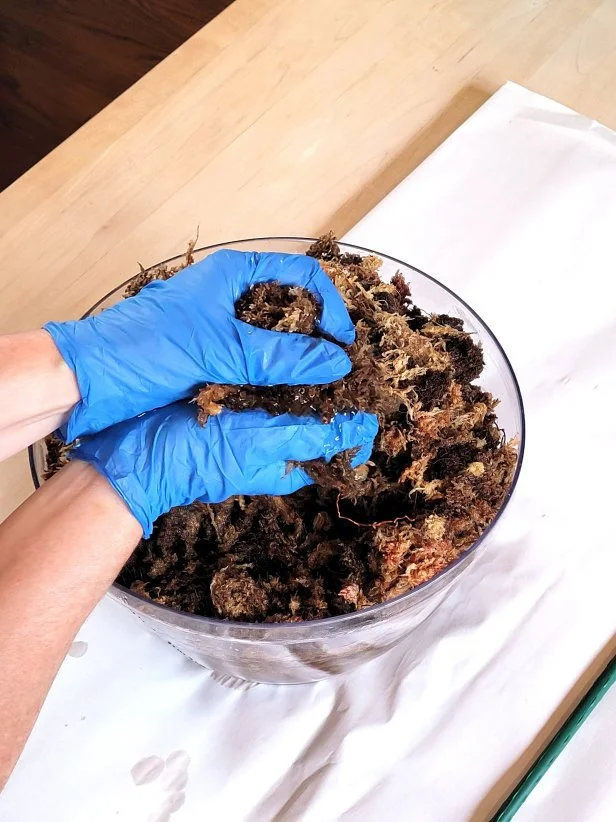
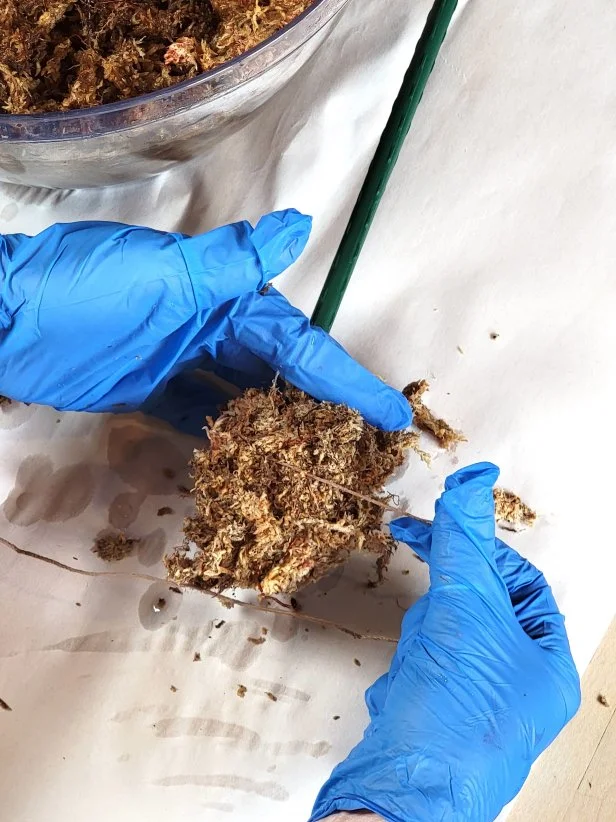
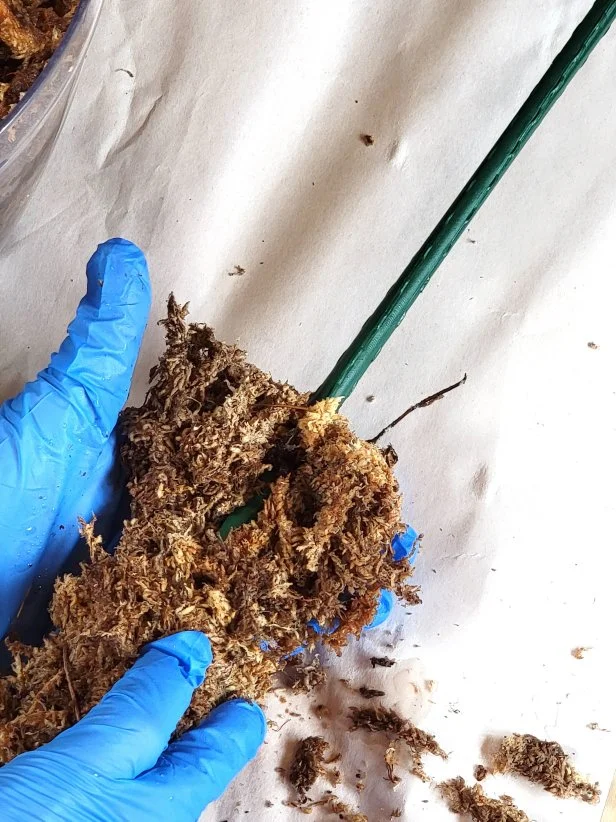
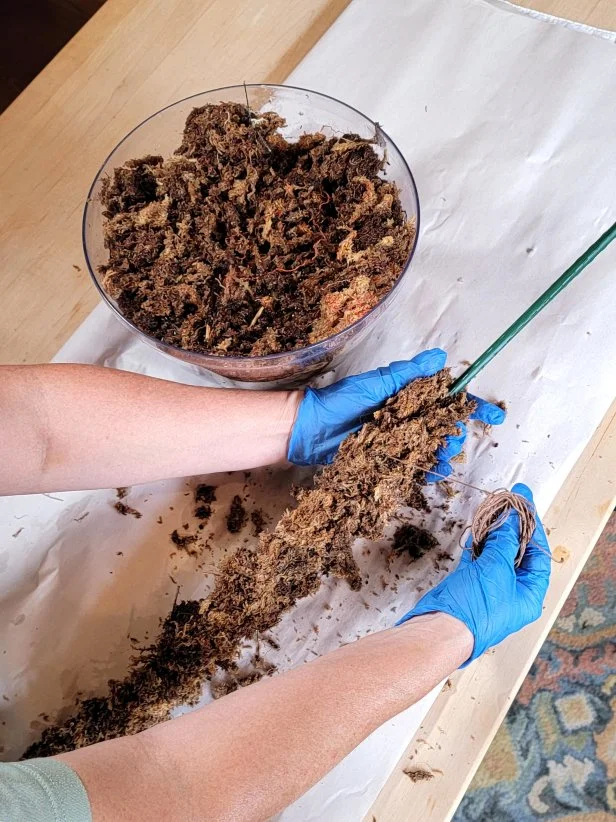
Step 3. Secure the Pole
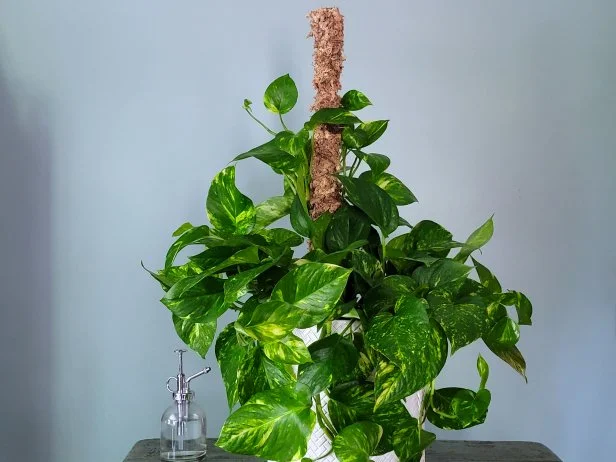
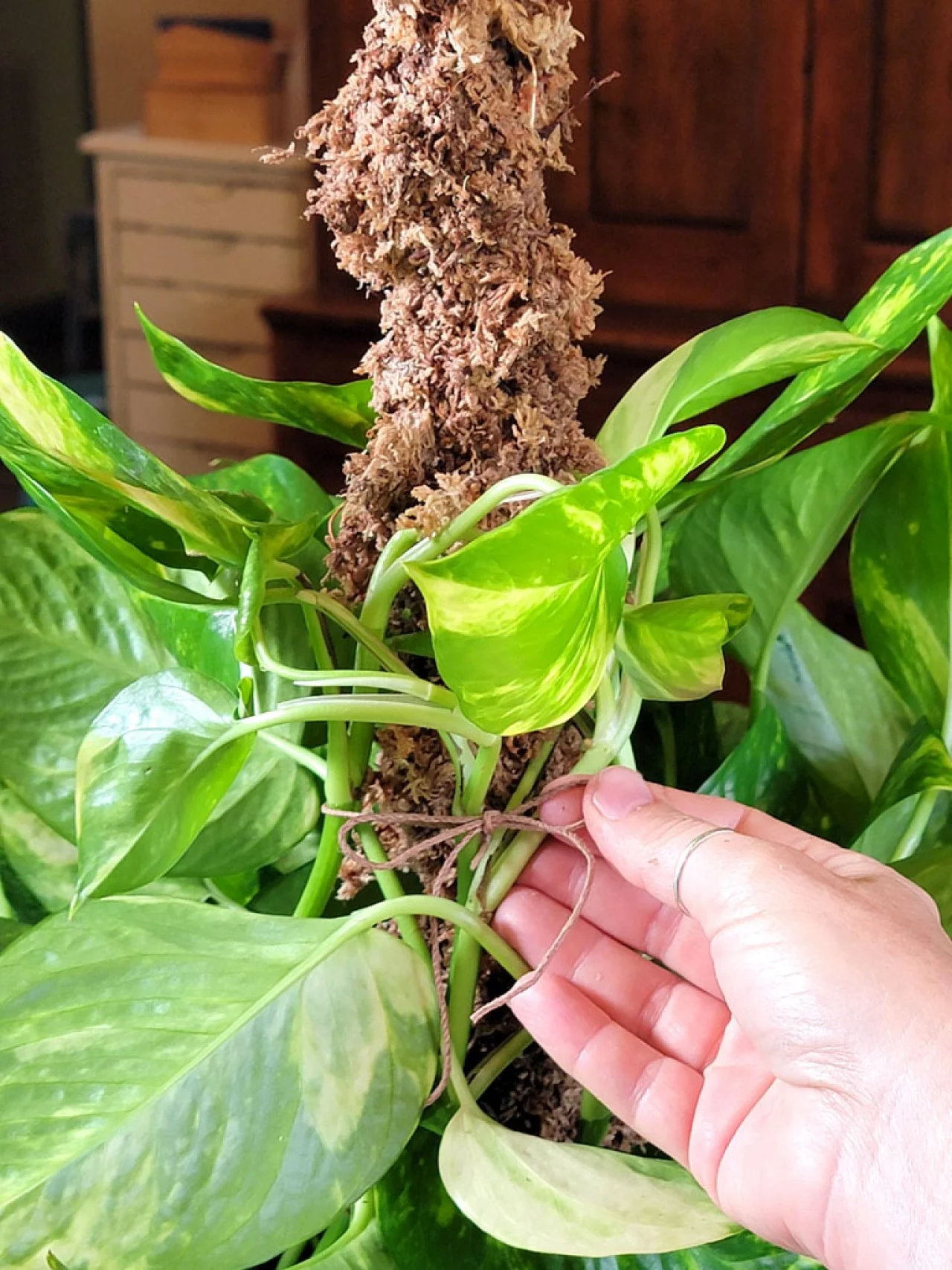
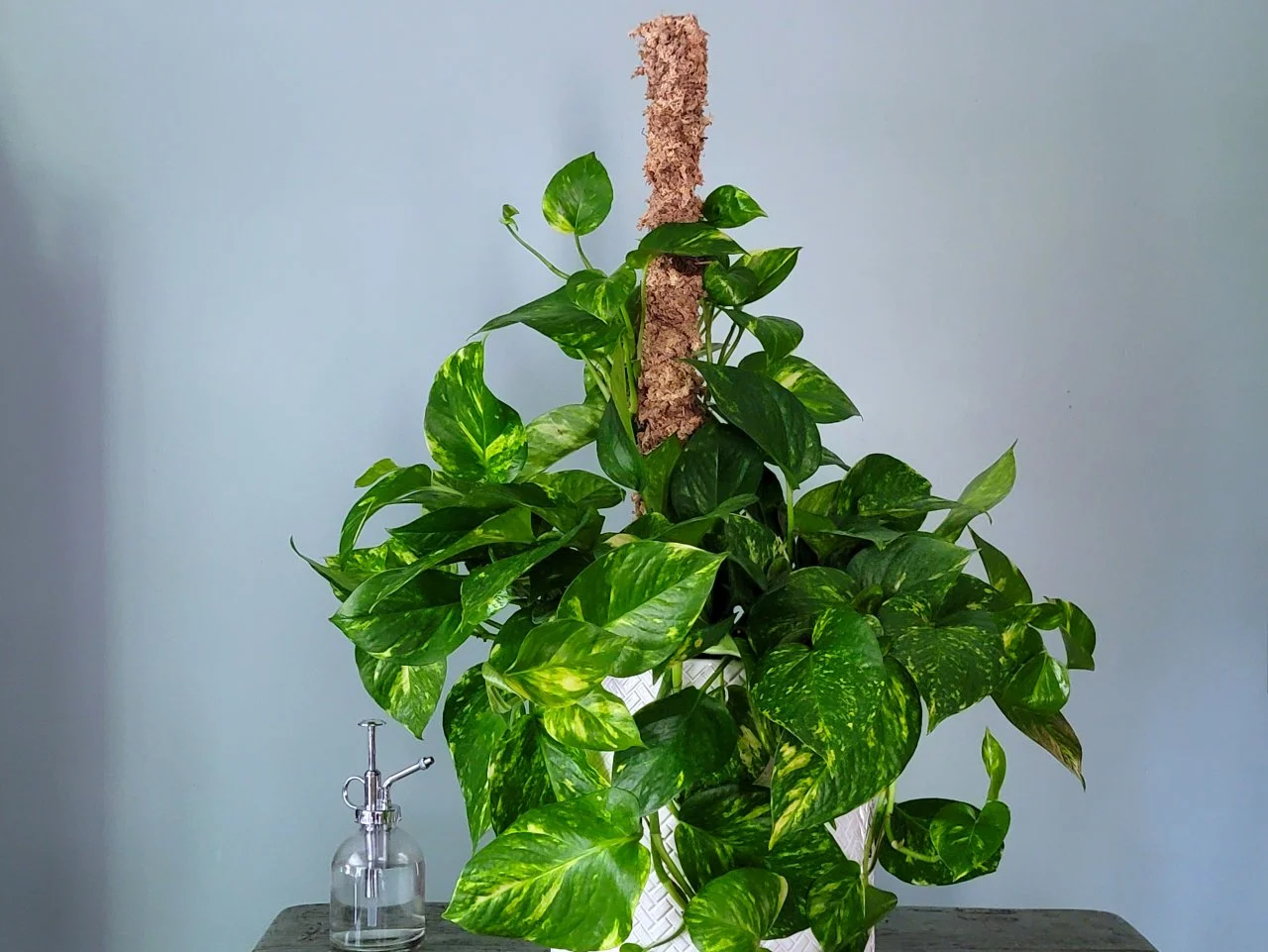
Carefully press the moss pole into the soil of your pot until it stands firmly upright. Loosely tie the climbing plant to the pole, allowing it to grow upwards along the support structure. Mist the pole regularly to maintain optimal moisture and freshness. Be patient! It may take some time for your plant to fully embrace the moss pole. With consistent guidance and care, it will eventually start climbing on its own.
Plants That Benefit From a Moss Pole
Many climbing plants thrive with the support of a moss pole. Some popular options include:
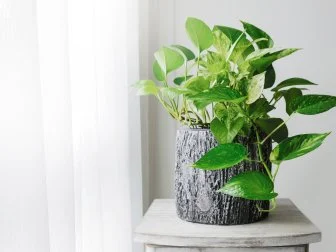
- Epipremnum aureum (Pothos)
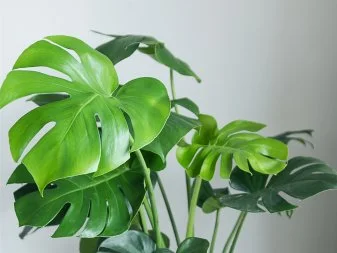
- Monstera deliciosa (Swiss cheese plant)
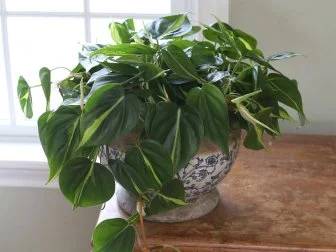
- Philodendron scandens (Heartleaf Philodendron)
- Scindapsus pictus (Satin Pothos)
- Rhaphidophora tetrasperma (Mini Monstera)
- Syngonium podophyllum (Arrowhead Vine)
- Hoya
More Climbing Houseplants
Check out our grow guides for popular vining houseplants.
Training Your Plant to Climb
As your plant grows, gently guide its vines or stems toward the moss pole. You can use soft plant ties to loosely secure them in place. Some plants, like Monstera, have aerial roots. Encourage these roots to attach to the moss pole by misting them regularly.
Caring for a Moss Pole
To keep your moss pole in optimal condition, mist it regularly to keep it moist but not soggy. You can also water from the top, allowing the water to trickle down. Check the moss for signs of pests or fungal growth. If you notice any issues, treat them promptly. Over time, the moss may start to decompose. If this happens, simply replace it with fresh moss.