

Maintaining a Perennial Garden
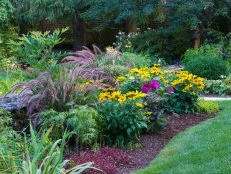
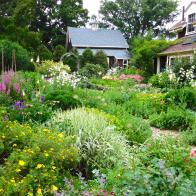
Perennial gardens require less maintenance than lawns, but they do need regular care to look their best and stay healthy.

Mary Palmer Dargan, Gibbs Smith, Lifelong Landscape Design, Mary Palmer Dargan
Tools and Materials
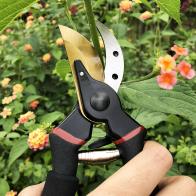
- Scissors or hand pruners
- Trowel
- Water source, soaker hose or sprinkler
- Hoe with small, sharp blade
- Half-moon edger or garden spade
- Lawn rake
- Steel rake
- Perennial plant fertilizer
- Organic mulch
Step 1: Remove spent flowers.
Using scissors or hand pruners, snip off flower stems just above a leaf or bud when they finish blooming to prevent them from forming seeds. Pick off damaged leaves.
Step 2: Inspect for pests and problems.
Look for leaves with holes or ragged edges; sticky, discolored or spotted leaves; chewed or abnormally growing flowers or buds; or damaged stems. If you discover a problem, take samples of the damaged plant to a garden center with experienced staff or contact cooperative extension service Master Gardeners in your area for identification and advice.
Step 3: Water.
Dig into the top 2 to 3 inches of soil with a trowel. If the soil is dry, water until the soil is moist to a depth of 6 to 8 inches. Soaker hoses and drip irrigation pipes apply water more efficiently than overhead sprinklers. Avoid wetting plant leaves late in the day to prevent the spread of some plant diseases.
Step 4: Pull weeds.
Remove weeds as you see them on your daily or weekly inspection. Use a hoe with a small, sharp blade to slice them off just under the soil surface, or pull them by hand.
Step 5: Edge the beds.
Keep the edges between your garden and lawn well defined and tidy with a half-moon edger or garden spade. Facing the garden, push the tool blade straight down into the edge of the turf about 3 to 4 inches. Pull the handle toward you to remove a wedge of soil. Repeat around the perimeter of the garden. Compost the turf scraps.
Step 6: Fertilize and mulch.
Early in the spring, fertilize with a granular, slow-release fertilizer formulated for perennial gardens. Follow package recommendations for the correct amount to apply. Replace or renew organic mulch, such as shredded bark or leaves.
Step 7: Seasonal clean-up.
In cold-winter climates, protect tender plants after the ground freezes with a 4- to 6-inch layer of loose mulch. Cut back perennials to within 8 to 10 inches of the ground after the tops die back or leave them uncut for protection against the cold. In spring, cut back all dead stems to the ground and rake out the debris.
Tips
Keep asters and chrysanthemums more compact by pinching a couple of inches off their growing tips when they reach 12 inches tall in spring and again in mid-summer.
If weeds get away from you, concentrate first on weeds with flowers or seeds, and then tackle one square foot at a time.