Nail the Look You Love
Deciphering design terms can feel a bit like trying to translate mysterious dress codes on wedding invitations (what’s “beach formal,” again?). It should be as easy as knowing what you like and knowing how to make it work for you. But it's usually not so simple.
Consider this your one-and-done field guide for the most popular interior design styles: We’ll walk you through each one and explain the moves that make it work. Come on in!
More photos after this Ad
Photo: Carlos Domenech
2 / 45
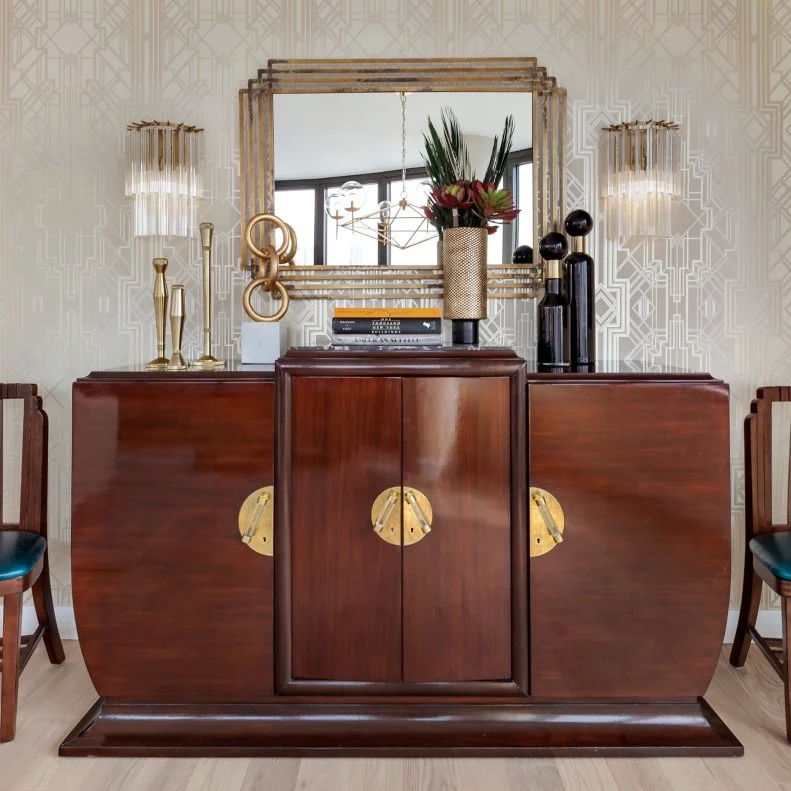
Interior Design Style: Art Deco
Le Corbusier gave Art Deco its name after the International Exhibition of Modern Decorative and Industrial Arts in 1925, when more than 16 million visitors thronged to Paris to feast their eyes on delicate, streamlined and geometric designs that celebrated all things urban and modern. The oh-so-sleek style’s characteristic look-at-me finishes and city-chic takes on classical and exotic themes were a worldwide phenomenon in the Jazz Age.
See More Art Deco Looks
More photos after this Ad
Art Deco: How to Bring It Home
Kick things off by reaching for architectural, gleaming accents like candlesticks, sculptures or decanters. (Don’t fret over whether or not they’re actually precious metals — the gleam’s the thing.) If you’re feeling ambitious, frame a tabletop arrangement with a geometric mirror or chandelier-adjacent sconces. For truly advanced geometry, reach for a sneakily intricate wallpaper that features matte and reflective versions of the same color.
More photos after this Ad
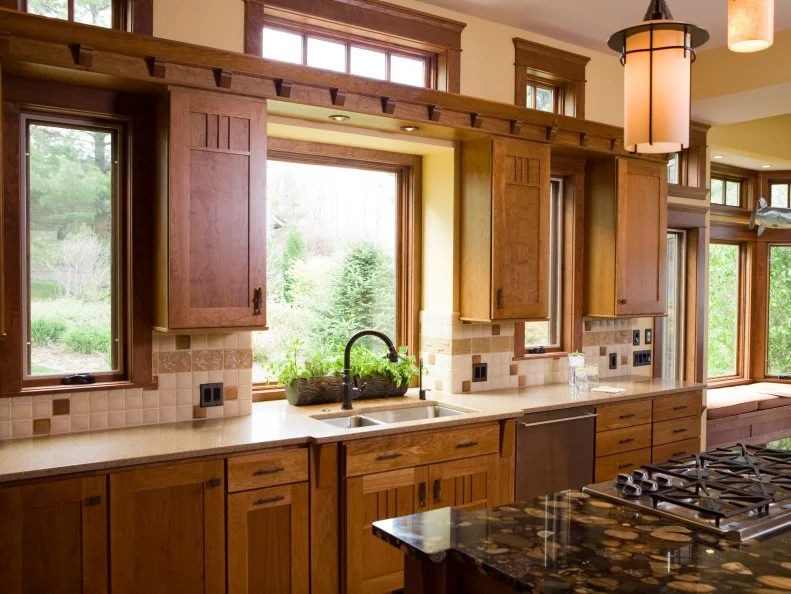
Interior Design Style: Arts and Crafts
The Arts and Crafts movement (which enjoyed its first round of popularity here in America between 1910 and 1925) focused on the simplicity of form — no extraneous decoration to distract from the workmanship, thank you very much. “Truth in Materials" was all-important to Arts and Crafts designers, who often made use of local sources. (Architecturally speaking, “Arts and Crafts” can refer to Craftsman style, work by Frank Lloyd Wright and the bungalow style popularized in the early 20th century by Greene and Greene.)
See More of This Home
More photos after this Ad
Photo: Casey Durkin
5 / 45
Arts and Crafts: How to Bring It Home
Original Arts and Crafts architecture often includes both handsome trim and built-in elements like these shelves. If you don’t happen to live in a first-generation bungalow, custom kitchen cabinetry and living-room storage (with century-old flair) and stained-glass window insets are both excellent ways to add that old-school artistry to your place.
More photos after this Ad
Interior Design Style: Asian
Asian (or Asian Zen) interiors are inspired by design elements from Japan, China, Vietnam and Thailand; it’s a comparatively minimalistic look that fuses natural fiber elements, bamboo and colors taken from nature to create a serene, calm environment. Furnishings may feature lacquered or hand-painted ornamental designs. Expect cameos from eye-popping accessories, like a bright benchor animals and mythical creatures rendered in sculpture. (Your loss, Arts and Crafts.)
See More of This Style
More photos after this Ad
Asian: How to Bring It Home
As one would imagine, Asian Zen is a natural fit for spaces that prioritize balance and its restoration (like spa bathrooms and bedroom retreats). Those ornamental elements can be as simple as weathered branches or coral, as on this stately shelf, or as all-in as a massive school of handcrafted, gilded koi swimming around your space.
More photos after this Ad
Interior Design Style: Bohemian
As embodied by influencer/ Jungalow blogger / boho-chic expert Justina Blakeney, bohemian style revels in bold (and plentiful) layers of color, pattern and texture. It’s a gradual, free-spirited accumulation that builds up to an exclamation point (or 12) through rattan furniture, woven wall hangings, lush plants and vintage-inspired throws and pillows. Accordingly, it boasts a collected look, with furniture and decor acquired over time from thrift stores, antique shops and world travels.
See More of This Style
More photos after this Ad
Photo: Gerardine and Jude Vargas.
From:
BOXHILL
9 / 45
Bohemian: How to Bring It Home
Accumulating punchy tchotchkes and woven furniture is well and good, but the former takes time and the latter are really tricky to pack on the homeward leg of a trip. The first step to going boho is to let your fingers do the globetrotting and amass a vibrant Pillows From Everywhere collection, as on this sectional. Once that’s in order, you can take your time with things like decorative skulls and live-edge tables.
More About Boho Design Style
More photos after this Ad
Interior Design Style: California Chic
California chic is boho’s younger cousin who moved from Los Angeles to Joshua Tree and has gone (almost) all out on the aesthetics of the high desert. There’s an element of more traditional southwestern style (and of eclectic So Cal beach cities) in this newest form of Golden State casual living, but its palette is primarily pale blushes, weathered leather and organic neutrals.
See More of This Cottage
More photos after this Ad
California Chic: How to Bring It Home
Add a bit of polish to this trendy take on California casual by accenting pale blushes and neutral textiles with darker elements like the exterior doors, velvet bench and nightstand here. The vintage sellers and artisans on Etsy, in turn, are excellent sources for the pale pottery (for succulents, of course) and patterned pieces that will function as your character actors.
More photos after this Ad
Interior Design Style: Coastal
Inspired by the ocean (naturally), coastal style evokes a light and breezy feel by way of airy fabrics for window treatments and emphasis on nautical or beach-themed accessories like lighthouses and seashells. Think of the classic Ralph Lauren-inspired palette of navy and white with gold accents as the most buttoned-up version of this look, and rough-and-tumble, slipcovered beach cottages as the version in comfy flip-flops, if you will.
Get More Coastal Decorating Tips
More photos after this Ad
Coastal: How to Bring It Home
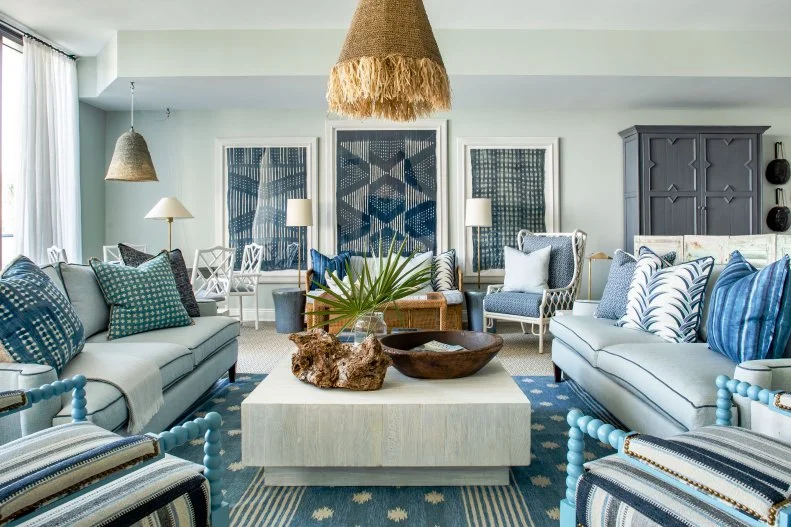
Infuse a landlocked living room with the spirit of the sea by incorporating indigo-dyed textiles like graphic shibori wall art and toss pillows; bring a cultivated version of sun-bleached driftwood, in turn, with whitewashed case goods like this coffee table. Layer in warmer, organic pieces like woven pendants and rattan to evoke the natural contrast of windswept grass — and skip flower arrangements in favor of spiky greenery like sago palm fronds.
Learn More About This Style
More photos after this Ad
Interior Design Style: Contemporary
Contemporary (which is not synonymous with modern, but we’ll get to that later) design frequently features clean, sleek lines and swaths of solid colors — predominantly muted neutrals or bold punches of brightness. Furniture in contemporary interiors tends to keep a low profile, and its often-metal frames and straight legs emphasize basic shapes and forms. Graphic elements in artwork or as accents are its crowning glories.
Learn More About This Style
More photos after this Ad
Contemporary: How to Bring It Home
First question: How low can you go? The dimensions of the sectional and coffee table in this room leave decidedly 21st-century breathing room for the sculpture and six-piece panel functioning as statement art here (which fussier high-backed pieces would struggle to do). Draw connections among textiles by reaching for a few anchoring solids — here, the goldenrod and teal — and echoing them in abstract patterns.
More photos after this Ad
Photo: WEICHERT, REALTORS, a member of Luxury Portfolio International.
From:
WEICHERT, REALTORS
16 / 45
Interior Design Style: Country
What we think of as classic, Americana-inflected country is all about white wood paneling and soft floral patterns, muted hues and pops of red, black or pure white via accents. Floral, checked and striped vintage fabric patterns are regular visitors, and elements have a handmade, almost folk-art quality (think handmade pottery, baskets and hand-forged metal). Antique-shop and flea-market finds are country style’s bread and butter.
Discover Country Kitchen Designs
More photos after this Ad
Country: How to Bring It Home
You can’t go wrong with a classic farmhouse sink — especially if you can restore a salvaged find — paired with a tea towel and a hand-glazed mug in a powder room. In lieu of a traditional vanity, keep your eyes peeled for a simple slab table with a hefty iron base; accent crisp shiplap walls with pastoral scenes and woodblock prints.
More photos after this Ad
Interior Design Style: Eclectic
This catch-all style borrows liberally from all over the place (literally and figuratively), and its imaginative appeal lies in unexpected contrasts and the element of surprise (“who knew those pieces would make each other look even better?”) Don’t conflate eclectic style with throwing anything and everything together, mind you: the key here is to use building blocks of design (color, pattern, texture, composition) to make spaces look cohesive.
Tour This Eclectic Living Room
More photos after this Ad
Eclectic: How to Bring It Home
Consider the motifs that run through a space like this one: the feature wall displays a quartet of stylized busts, hints of gleaming gold that run between the pendant lamps (and carry down to the coffee table) and diamond-shaped figures that echo both the tufts on the sofa and the graphic pillow on the armchair. Think of yourself as the ultimate party host as you assemble an eclectic room: your job is to turn strangers into friends by emphasizing what they have in common.
More photos after this Ad
Interior Design Style: French Country
Inspired by the effortless elegance of the homes of rural Provence (do those folks ever get tired of making style look easy?), French country design often incorporates distressed woods, aged metals and mixed patterns such as toile, stripes and florals. Blue and yellow is a common color combo; cream, brick red, sage green and lavender are regulars as well.
See More French Country Decor
More photos after this Ad
French Country: How to Bring It Home
Instead of reaching for the more primitive antiques one might employ in a country home on this side of the Atlantic, cultivate an air of “oh, this old thing? My great-grandmother must have forgotten about it in the attic.” In other words, focuses on pieces with Old World craftsmanship that have a je ne sais quoi of weathering and oxidation. A white matelassé coverlet like this one, in turn, is an ideal base for four seasons’ worth of insouciant patterned toss pillows (summer stripes, fall toile…you get the idea).
More photos after this Ad
Photo: Courtney Apple
22 / 45
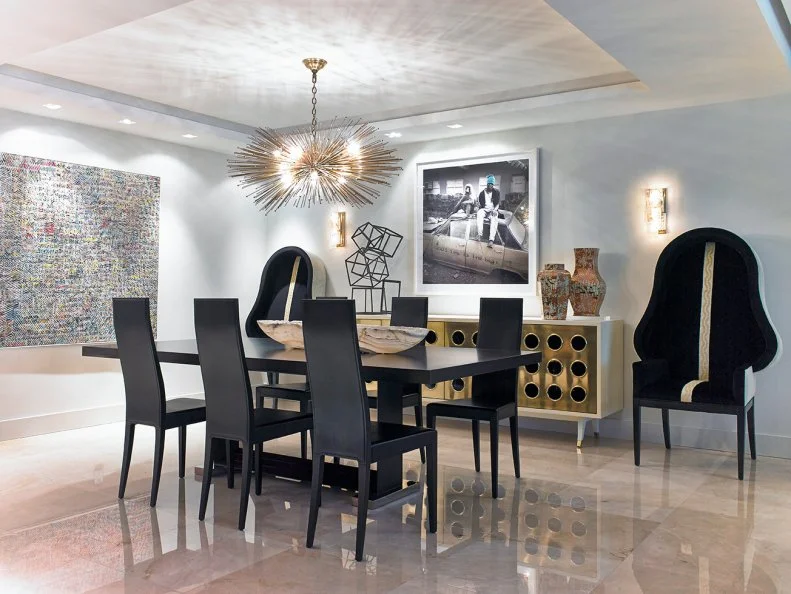
Interior Design Style: Hollywood Regency
In the first golden age of cinema, the glamorous stars whose faces drew crowds to movie palaces beckoned friends back home to their own palaces — and those interiors were equally larger-than-life. Every surface gleamed, every edge had its own mirror, tassel or dangling crystal and every design choice oozed glamour. In Hollywood Regency’s current incarnation, antiques from a century ago are staging comebacks — but designers like Kelly Wearstler are popularizing a new breed of over-the-top, A-list-inspired cocktail-party spaces. This style has a big personality.
More photos after this Ad
Hollywood Regency: How to Bring It Home
Turn up the glitz in your space by embellishing everything — and then embellishing it again. Start with textured walls, then add molding; place mirrors atop mirrors atop Lucite tables; choose a few highly saturated colors, then layer the room with textiles and high-contrast furniture to make it feel even richer.
More photos after this Ad
Interior Design Style: Industrial
Much-beloved in rehabbed loft apartments and restaurants (since the former have preexisting structural details that are labor-intensive to conceal and the latter value surfaces that can handle a lot of wear and tear), industrial design is known for exposing building elements like pipes, duct work and brick walls. Industrial-style spaces typically feature open floor plans, large windows, neutral color palettes and furniture made from rustic wood, metal and leather. If an ostensibly industrial room makes you feel like you should be wearing a monocle or an old-timey diving bell, it’s actually steampunk, which is usually more of a party theme than a long-term design choice.
See More of This Style
More photos after this Ad
Industrial: How to Bring It Home
Metallic, multi-lobed pendants like this one are the simplest way to add industrial edge to a kitchen or dining area — especially ones with once-trendy, bare Edison bulbs. Look for fixtures with structural details that function as design elements: here, short lengths of oxidized hardware meet one another at gleaming gold sockets and joints. Echo exposed ceiling beams, in turn, by installing open shelving in a similar tone.
More photos after this Ad
Interior Design Style: Mediterranean
Mediterranean interiors draw inspiration from coastal regions of Spain, Greece and Italy; they owe their palettes and spirit to the sea itself, the rustic villages you might find on its shores and the estates and palazzos that overlook them. Traditional Mediterranean furniture features ornately turned legs and feet; its hardware, in turn, is heavy and often burnished. Rough-hewn surfaces like raw stone walls and exposed beams rub shoulders with velvets, linens and florid patterns.
See More of This Style
More photos after this Ad
Mediterranean: How to Bring It Home
Pair humble materials like these ceiling timbers and knotty floors with deep-hued wood furniture that delights in detail. Dark-stained pieces like these are especially dramatic against pale walls and bed linens, and art is altogether unnecessary; choose intricate area rugs in sand and clay tones and turn in for the night.
More photos after this Ad
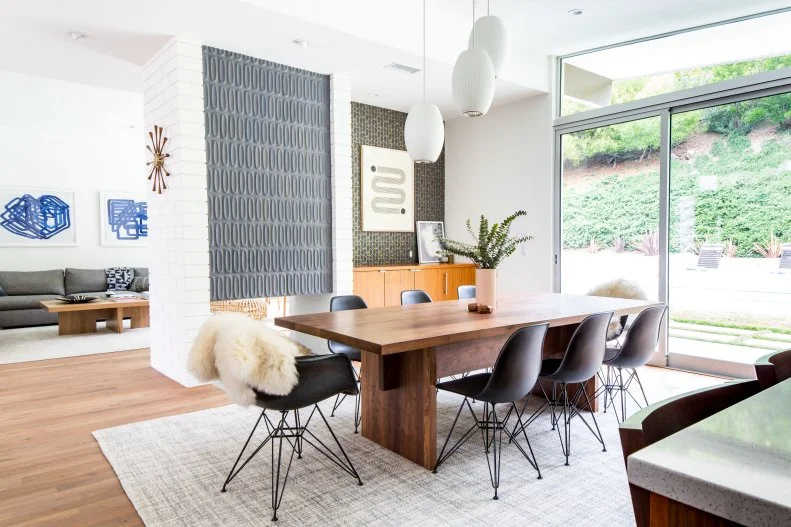
Interior Design Style: Midcentury Modern
Midcentury modern style made its first splash in the ‘50s and ‘60s, when Palm Springs was the weekend-home destination of choice for Los Angeles entertainment pros and Scandinavian designers and architects were spreading the gospel of simplicity, functionality and natural shapes in popular culture. Autumnal oranges, yellows, olive greens and chocolate browns make frequent appearances, as do barely-there glass walls. In 2020, you can find the latest generation of the look from designers like Jonathan Adler.
See More of This Style
More photos after this Ad
Midcentury Modern: How to Bring It Home
Iconic pieces like this marble-topped Tulip table cost a pretty penny (though it’s every bit as gorgeous now as it was when Eero Saarinen introduced the line in 1957). The most beginner-friendly way to dip your toe in midcentury furniture is through dining chairs; that straightforward functionality the Scandinavians popularized plays beautifully in mixed sets with other pieces. As for floor and window coverings, those are also budget-friendly midcentury moves: go ahead and skip them entirely.
More photos after this Ad
Interior Design Style: Modern
A clean, streamlined furniture and architecture style that dates back to the ‘30s, modern decor is rooted in the minimal, true use of materials and absence of decoration. It's characterized by a neutral color palette, polished surfaces, strong geometric shapes and asymmetry.
Tour Modern Kitchens
More photos after this Ad
Modern: How to Bring It Home
Historically modern décor can be a tough landing to stick; extreme simplicity in all things is an admirable philosophy, but it’s tricky to apply to, say, a family room. Its most natural application is in a slightly-softened kitchen like this one, where pared-down barstools meet a stark black-and-white peninsula and utilitarian grey subway tile pairs with stainless-steel appliances. The beauty of such monochromatic minimalism and all those right angles, of course, is that it is marvelously easy to clean.
More photos after this Ad
Interior Design Style: Moroccan
At the other end of the spectrum, Moroccan interiors are known for heavily layered looks consisting of intricately patterned fabrics, colorful mosaics, metal lanterns, textured walls, bold, jewel-toned colors, layers of rugs and pillows in luxurious fabrics and ornately carved wooden accents. Mathematically-based Moroccan patterns owe their spectacular geometry to the fact that Islamic art tends to avoid the depiction of sentient beings; instead, it’s ornamentation for its own sake.
See More of This Style
More photos after this Ad
Moroccan: How to Bring It Home
The hand-painted Moroccan tiles in this backsplash are a softening counterpoint to the kitchen’s sleek marble-topped island and cabinetry; the freehand, one-of-a-kind look of each piece gives the otherwise-crisp space an artisanal feel. (Psst: The trendy handmade zellige tiles that have been taking kitchens and baths by storm over the past year are also Moroccan.)
More photos after this Ad
Interior Design Style: Scandinavian
Inspired by the aesthetic of northern European countries like Norway, Sweden and Denmark, Scandinavian design prizes simplicity and functionality over decoration. Hallmarks of this style include neutral colors and clean-lined furniture — and natural light gets a warm welcome wherever it’s available (which makes sense, given how precious little natural light northern Europe gets for several months of the year).
See More of This Style
More photos after this Ad
Scandinavian: How to Bring It Home
True story: Hygge is a modern Danish word that evolved from an old Norwegian term meaning “to comfort.” Norway, then, might take credit for the ongoing cozy trend — which squares with this beautiful space, where mountains of textural white bedding pile atop a pale bedstead. Create a similar feel by resisting the urge to overtreat flooring, furniture and accessories; while shots of color can be energizing, serenity like this is simply perfect, as it were.
More photos after this Ad
Photo: DustyLu Interiors
36 / 45
Interior Design Style: Shabby Chic
Coined in the early ‘80s (and championed) by World of Interiors founding editor Min Hogg and popularized by Rachel Ashwell, this cottage-inspired look includes weathered white-painted furniture, painted motifs, floral prints in muted colors, white slipcovered sofas and vintage accessories.
See More of This Style
More photos after this Ad
Shabby Chic: How to Bring It Home
Though the now precious-seeming patterns once associated with shabby chic have migrated out of most interiors, its magnificent bedding has evolved into a more abstract cottage style: rumpled “flowers” bloom across a barely-blush duvet cover, and a canopy feels casual and airy. Cultivate a mood like this one by keeping antiques and accessories to a minimum, then dialing up the pastel-parachute factor.
More photos after this Ad
Interior Design Style: Southwestern
A blend of Native American and Spanish influences, southwestern design is generally characterized by warm, sun-washed colors, tile, exposed ceiling beams, handcrafted items and bright woven fabrics.
See More of This Style
More photos after this Ad
Southwestern: How to Bring It Home
Creamy sofas and drapes, a caramel leather ottoman and warm woodwork set the stage for an array of warm textiles in this Santa Fe guest cottage. Wall treatments and tabletop accessories would be too much here; with distractions kept to a minimum, the natural materials and handicrafts are the stars here.
More photos after this Ad
Interior Design Style: Traditional
Eighteenth-century English, 19th-century neoclassic, French country and British Colonial revival furnishings come together in traditional interiors, where classic styling and symmetry reign supreme. A restrained traditional palette typically features mid-tone colors; fabric patterns and wall treatments can range from simple solids, stripes and plaids to florals and chinoiserie.
See More of This Style
More photos after this Ad
Traditional: How to Bring It Home
Put a fresh spin on tradition by keeping patterns in the same color family and expanding their scale ever so slightly; in this bathroom suite, a damask window treatment harmonizes with floral wallpaper that foregrounds its background hue in a slightly paler shade. An ornate chandelier above the soaking tub balances the gold-toned mirror above the mantel.
More photos after this Ad
Interior Design Style: Transitional
Per its name, the transitional look — which dates back to the 1950s — bridges traditional and contemporary design. It strikes a balance between historic pieces and furnishings with updated silhouettes and materials (Rome to chrome, as it were.) Past meets present without conflict in color schemes that are often neutral; luxury and comfort are the orders of the day.
See More of This Style
More photos after this Ad
Photo: Dennys Ilic
43 / 45
Transitional: How to Bring It Home
Smooth metallic accessories accentuate but don’t overwhelm this pale master bedroom, where pleats in the cloud-gray drapes echo both the geometry of the molding (which frames the oil painting just so) and the tone of the area rug… which also complements the painting. The textured ottoman, in turn, references the drum shades on the tableside lamps. Sneaky, no?
More photos after this Ad
Interior Design Style: Tropical
Heavy prints of palm leaves and sunset-bright flowers find their way onto upholstery in tropical spaces, while muted rugs or sisal and seagrass carpets add texture to the floor. Grasscloth wall coverings share space with wicker and architectural greenery, and pale ceramics counterbalance rich wood tones.
See More of This Style
More photos after this Ad
Photo: Tomas Espinoza/Flynnsideout Productions ©.
From:
Tiffany Brooks
45 / 45
Tropical: How to Bring It Home
This screened porch is a fitting example of how to test tropical waters: its lacquered table and bistro chairs would be equally appropriate indoors, as would the living wall framing the abstract painting. (If the upkeep sounds daunting, a feature wall papered with Polynesian foliage would be lovely as well.) While you’re thinking about bringing the outdoors in, consider the time-honored designer trick of covering interior upholstery with print fabrics designed to weather the elements: sun-resistant colors are perfect for this look, and they're a (tropical) breeze to clean.