








Bring the Garden Indoors by Forcing Tree Branches

Winter is a time for rest and rejuvenation in the garden, so why not bring the garden inside? When brought indoors, cut branches burst into bloom.

A contorted filbert tree makes a great candidate for forcing because of its winter silhouette of twisted branches and its springtime catkins, says garden author Marianne Binetti. "In the spring the little catkins get long, green and pendulous, so you want to bring some branches indoors and enjoy them early."
When collecting branches to force, Marianne prunes to improve the tree's symmetry.

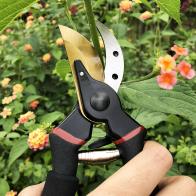
"I'm going to enhance the shape of this tree by showing off the twisted branching down low." The first branch has buds forming, perfect for forcing; she cuts it exactly where it meets the main branch.
Forcing, Step By Step
- Almost any branch that blooms can be forced. The best time to prune is when the weather is mild -- midday to midafternoon -- preferably when the temperature is above freezing.
- Experiment with shrubs throughout the yard. Marianne planted a flowering quince and a forsythia just for winter forcing. Neither shrub looks like much in the winter, but in just a week or two, branches from either will be beautiful. Wherever a cut is made, the branch will sprout, providing potential new cuttings for next year.
- The branches can be long or short, depending on your vase or design.
- Bring the cut branches inside, fill your cases and put the cut ends immediately in water. Have on hand, a cutting board, a small hammer, pruners, a mister and newspaper or plastic bags. Then one by one, taking each branch from the vase, and recut them. "After you cut them outside, they began forming a new scab. You want a fresh cut so it can absorb lots of water."
- Pound the end of the stems with the hammer. This helps to create more surface area for the stems to take in water. Little branches can be cut and pounded together. After pounding the stems, place branches in a vase filled with water.
- Provide extra humidity, at least for the first few days. Depending on where you live, indoor humidity in the wintertime is usually much lower than that outside. Marianne wraps a newspaper around the branches and then mists it. Plastic wrap will serve the same function.
- Set the plants in a cool place for a few days, and then remove the newspaper or plastic wrap and wait for the show to begin. "After just a couple of weeks, depending on how warm your house is, the buds are going to swell and you're going to have all this color."
- Add water every few days. Forced branches will last several weeks inside and when they're done, just throw them on the compost pile.

Plants That Can't Be Forced
Some plants, such as lavender, can't be forced. "Don't cut lavender in the winter," Marianne says. "It's a Mediterranean plant. If I were to prune this plant now, it would send out new growth, and winter cold would kill it to the ground." To be sure, don't try to force any plant that comes from a climate that's warmer than yours.


