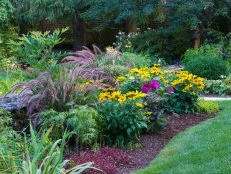
The Most Searched-For Native Plants in Each Region, According to Google
Interest in native plants is surging, thanks to gardeners who've discovered they need little care, support pollinators and benefit the environment.

Some of the best plants for your garden or landscape may already be thriving in your yard. We're talking about natives: plants that grow naturally in certain areas after having evolved and adapted to those soils and climates. They seldom need much water, fertilizer or other care, which probably explains why data from Google shows that interest in native plants is increasing. Browse our list to find beautiful, beneficial natives for your space.

Shutterstock/billysfam
Oakleaf hydrangeas get their name from their leaves, which resemble the lobed foliage on oak leaf trees.
Switchgrass (or Switch Grass)
Trending in IA, IL, KS, ME, MI, MN, NE, NH, OK, UT, VT, WI, WV
Also known as wand panic grass, switchgrass is native to the Great Plains and states east of the Rocky Mountains. This warm-season, bunch-type grass also thrives in parts of the Northeast and Utah. It provides hay and forage for livestock (note: it’s toxic to horses), and many small animals and birds eat the seeds or young shoots.
Highly adaptable switchgrass has also made its way into our gardens and landscapes, where its ornamental cultivars are both attractive and useful. The roots can reach more than 10 feet deep, so it can help hold slopes in place, control erosion and break up hard ground. With their dense growth habit, the plants also offer shelter and nesting areas for wildlife, especially where native habitat has been lost.
Hardy in USDA Gardening Zones 3 to 9, switchgrass doesn’t need much fertilizer or water and rarely suffers from pests or diseases. Plant it in spring, when the soil temperature stays consistently above 60 degrees F. Pinkish flower plumes appear in mid-summer on plants that mature at 2 ½ to 5 feet tall. Switchgrass prefers full sun and moist soil until it’s established; then it can tolerate drought. ‘Shenandoah,' which resists deer, is a cultivar with red foliage that takes on purple and burgundy hues in fall.
Oakleaf Hydrangea

Shutterstock/Jakob Berg
Trending in AK, AL, CA, GA, IN, KY, LA, MS, MT, NC, NV, OH, SC, TN, TX, VA, WA, WY
Stunning oakleaf hydrangeas (Hydrangea quercifolia) are deciduous shrubs native to the Southeastern U.S. While they can grow in partial shade, they do best in morning sun and afternoon shade, especially in areas with where the summer sun is hot and intense.
These easy-to-grow natives grow 4 to 8 feet tall and provide year-round interest. Starting in late spring to early summer, they open clusters of pure white flowers that age to pink, mauve and purplish. In autumn, the green leaves turn shades of bronze, purple, mahogany and burgundy and eventually drop to reveal cinnamon-brown, peeling bark.
Plant oakleaf hydrangeas in slightly acidic, moist soil that drains easily. Water regularly and deeply, but don't let the soil get soggy. They’re more tolerant of drought than many other hydrangeas, and they’re pest-free. Feed with a granular fertilizer each year in early spring, and add mulch to retain moisture and suppress weeds.
These shrubs, which are hardy in USDA Gardening Zones 5 to 9, have spreading roots that help control erosion, nectar-bearing flowers that support pollinators and dense branches that offer cover for wildlife. They require little or no maintenance. They're sold by native plant suppliers and many varieties, like dwarf 'Ruby Slipper,' are available online and in nurseries, garden centers and home improvement stores.
Summersweet
Shutterstock/billysfam
Native oakleaf hydrangeas bloom on “old wood,” which means flower buds form in late summer and open the following year. Prune or trim, if needed, as soon as the flowers fade.
Trending in SD, DC, RI, MD
You can call it sweet pepperbush, summer shrub or summersweet (Clethra alnifolia). Gardeners flock to this deciduous native with a spicy-sweet fragrance, much like the pollinators that crave its nectar and pollen and the birds that eat its seeds. Summersweet shrubs take full sun to shade and average, acidic soil that shouldn’t be allowed to dry out; in the wild, they grow in marshes, on streambanks and in other wet areas, so they're fine for rain gardens and around ponds.
These natives are so versatile that they tolerate sandy soil, heavy clay amended with organic matter and salt in coastal areas. Gardeners appreciate them for the bottlebrush-shaped, white blooms that appear in mid- to late summer, when few other shrubs are blooming. Their glossy, green leaves change to yellow or golden-brown in fall, and the flowers are followed by brown seed capsules that resemble peppercorns (which explains their nickname) and persist through the winter.
Summersweet’s benefits go beyond providing interest for the garden and food and shelter for wildlife. The plant's wide root systems quickly absorb rainfall, which helps reduce erosion and stabilize soils. They don't need much care, which helps the environment by decreasing our use of chemicals and pesticides. Aside from occasional spider mites, they're relatively free of pests and diseases, and deer usually leave them alone. Most summersweets grow 3 to 8 feet tall, but they can reach 8 to 12 feet tall in the wild. Some wild shrubs have blush-pink flowers, but most summersweet flowers are white or creamy-white. ‘Ruby Spice’ is a popular cultivar with deep rose-pink blooms.
Joe Pye Weed

Summersweet is among the few shrubs that bloom in the shade in late summer.
Trending in OR
Grow pollinator-pleasing Joe Pye Weed (Eutrochium spp.) to support butterflies, moths and hummingbirds. It's especially valuable as a food source for bees in late summer, when other flowers are fading, and it's a host plant for many moth and butterfly caterpillars. Small songbirds visit the plants after the dome-shaped blooms fade and form seeds. Even the dead, dried stems and stalks help local environments when they're left to provide shelter for beneficial insects. Most growers wait until spring and then cut them to within a few inches of the ground.
According to Google, searches for Joe Pye Weed are tending in Oregon, where its optimal growing conditions match the state’s wet winters and damp springs. Joe Pye Weeds also grow wild in damp meadows, thickets, boggy spots and along the edges of woodlands.
Of the five key species, Joe Pye Weed (E. maculatum) and Sweet Joe Pye Weed (E. purpureum) are common. Both can grow 4 to 7 feet tall but may reach 10 feet. They have mauve or pinkish-purple blooms that may smell like vanilla, although the scent can vary, depending on where they're grown.
Joe Pye Weed thrives in full sun and tolerates shade, although too little light can make it floppy, and it needs moist, fertile soil that drains easily. Thanks to its height, ability to grow in damp places and eye-catching flowers, it’s a good choice for naturalized areas, rain gardens, the back of perennial borders and as a native alternative where butterfly bushes can be invasive. Deer avoid its rough or prickly leaves.
Sow the tiny seeds thickly in fall; they have a low germination rate. Press them down gently to contact the soil, but don’t cover them, or grow Joe Pye Weed from root divisions or starts. The plants can spread aggressively through their underground rhizomes or when they drop seeds; deadheading the flowers before they produce seeds helps keep them in check. You may find Joe Pye Weed plants or seeds online or at native plant nurseries.
Butterfly Weed

PrairieNursery.com
This Joe Pye Weed species is E. fistulosum, also called Hollow or Tall Joe Pye Weed.
Trending in AR, AZ, CO, CT, FL, HI, ID, MA, MO, ND,NJ, NM, NY, PA
Monarch butterfly larvae — also known as caterpillars — use Butterfly weed (Asclepias tuberosa) as host plants, and the vibrant orange blooms lure bees, hummingbirds and other pollinators. This native thrives in poor soils in many different states, like the rocky, dry or sandy soils in coastal Connecticut and in Arizona and Florida. It's extremely adaptable, hardy in Zones 3 to 9 and able to flourish from Hawaii's warm, tropical climate to the cold winter conditions in the Northeast. Butterfly weed grows naturally in full sun in open grasslands, prairies and meadows where the soil drains easily.
Flowers appear from late spring to early fall, and newer cultivars have expanded the color palette to red and yellow. Low-maintenance butterfly weed is highly drought-tolerant, with long taproots that reach deep into the ground to help the plants survive in arid environments and during seasonal droughts, but the roots are fragile, and transplanting butterfly weeds can stunt or kill them. Although they're a type of milkweed, these natives don't leak thick, white sap when the stems are broken. Instead, their sap is watery. The plants grow up to 3 feet tall in clumps and lack underground runners, so they aren't prone to spread.

Burpee
Despite its name, butterfly weed isn't a nuisance plant. This native wildflower grows along roadsides but belongs in gardens and landscapes, too.