Next Up

30 Low-Maintenance Plants for Easy Landscaping

February 11, 2025

These nearly carefree plants work hard in your landscape so you don't have to.

Price and stock could change after publish date, and we may make money off these affiliate links. Learn more.
Photo: Sunset Plant Collection/Kathleen Schmucker
Scroll For More Photos
1 / 30

Why Choose Low Maintenance Plants?

When it comes to landscaping, I want plants that are easy to grow and maintain, so I don't spend a lot of time dragging out the garden hose, hauling bags of fertilizer around, pruning branches and then raking up the debris for the compost pile. And there's mowing the lawn every weekend during the growing season because all that water and fertilizer I use to make the grass lush and green also makes it grow like crazy.

We plant trees, shrubs and flowers to make our homes beautiful, of course, and according to the National Association of Realtors, a well-maintained landscape can increase your property value. But some plants take more work than others, and I'm ready for a break. The solution: low-maintenance plants that make landscaping easier.

Fortunately, there are plenty of great, low maintenance outdoor plants. You can find something for every part of your yard: flowers for sun-drenched beds and borders, no-mow groundcovers to replace the grass and berry-bearing plants that attract beautiful songbirds. Many bushes can work as privacy screens or hedges, and trees add shade or work as focal points when they're accented with uplights.

Read on for our list of the best low maintenance outdoor plants. Choose varieties that will grow and flourish in your hardiness zone, so you spend less time landscaping and more time enjoying what you're growing.

Abelia 'Kaleidoscope’ (Abelia x grandiflora 'Kaleidoscope') shown here, lives up to its name, with small white flowers and leaves that change colors with the season. The evergreen foliage emerges yellow-gold on red stems and becomes orange-red in fall. This compact shrub matures at 2 to 3 feet high and 3 to 4 feet wide, so it makes a great low hedge, border or accent plant. It even works as a groundcover and in containers. Hardy in Zones 6 to 10, ‘Kaleidoscope’ takes full sun to part shade, tolerates drought and resists deer. It needs well-drained, slightly acidic soil and regular watering. Prune it in late winter or early spring, or remove any long, thin shoots whenever they appear.
See More Flowering Shrubs

More photos after this Ad

Photo: Proven Winners.com
2 / 30

Barberry, Shrub

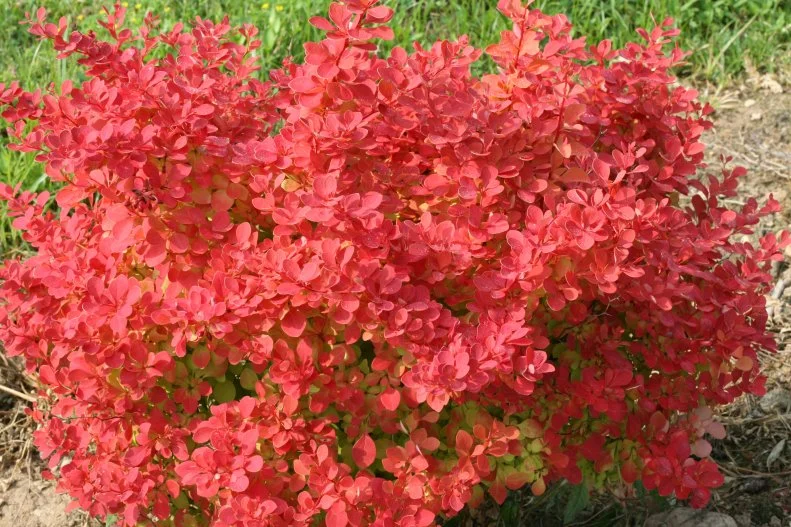
Barberry (Berberis thunbergii) is deer resistant and deciduous, with thorny stems that make it a good foundation plant if you're concerned about home security. Once established, this nearly carefree, compact shrub is drought tolerant. We like these Sunjoy Tangelo landscaping plants for their bright orange leaves that turn chartreuse around the edges later in the season.

Some barberries are invasive, so they're banned in some areas. Check with your extension service office before you plant. Otherwise, plant barberry in the spring in part to full sun for the best foliage color, and give it moist, well-drained soil. Sunjoy Tangelo grows 3 to 4 feet high and wide and is hardy in USDA Zones 4 to 8. Prune to shape it up in the summer, if you want, and fertilize it in the spring after the last frost or when you see new growth. Mulch around the roots in fall, no matter what hardiness zone you're in, but in Zones 4 and 5, mulch it heavily after the first frost and pull back the mulch in spring.

More Low-Maintenance Shrubs

More photos after this Ad

Photo: First Editions Shrubs & Trees
3 / 30

Lorolpetalum, Shrub

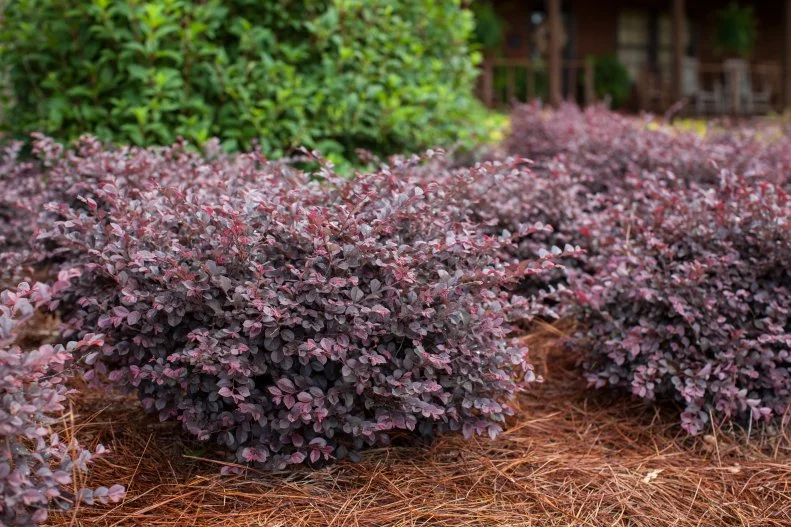
Plant Crimson Fire fringe flower, a dwarf lorolpetalum, and you can practically forget about it. This dwarf shrub holds its ruby-red leaves year-round and opens clusters of strappy, electric-pink flowers in spring. It stays compact, at 4 feet high and 4 to 5 feet wide. These low-maintenance outdoor plants are ideal to grow in masses, in borders, around foundations or in containers. Want a different color? You can also find lorolpetalums with magenta, cream or reddish-purple flowers.

Lorolpetalums need at least four hours of direct sun each day but prefer cool morning sun and afternoon shade in areas with hot summers. Grow them in loose, rich, slightly acidic soil that drains easily. If you soil is dense or clay-like, work in some bagged topsoil, or add compost or peat moss to sandy soil. Lorolpetalums tolerate drought once they're established but, like many plants, need regular water for the first year. Apply an all-purpose slow-release fertilizer in late spring and midsummer. If temperatures drop below 0 degrees, mulch them or protect them with shrub wraps or burlap. Let the flowers fade before you prune.

See Plants for Curb Appeal

More photos after this Ad

Photo: Proven Winners.com/Timothy D. Wood
4 / 30

Buddleia, Shrub

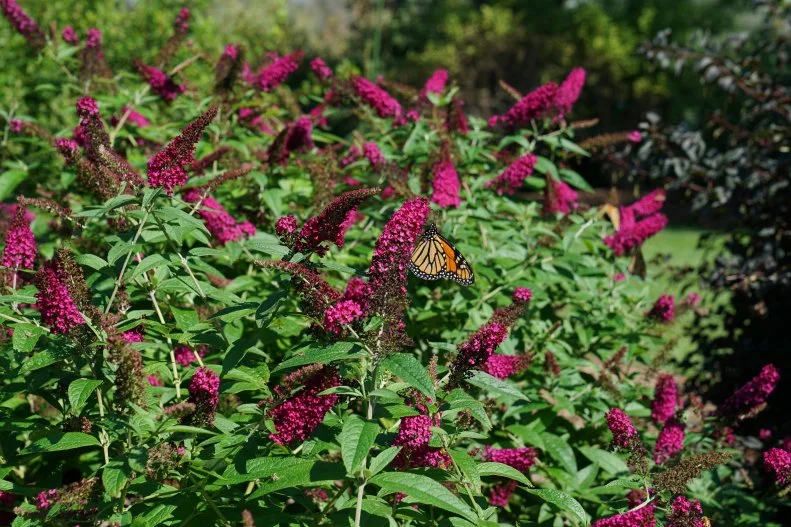
Bring monarchs, swallowtails and other bright butterflies to your landscape with butterfly bushes (Buddleia). Some gardeners dislike these shrubs for their sprawling growth habit and invasive tendencies; they spread easily by dropping seeds. But newer, mostly sterile cultivars are available with flower colors like pink, violet, red, white, purple and orange. We like ‘Miss Molly,’ pictured here, a noninvasive butterfly bush that tops out at 4 to 5 feet tall. It has a more refined growth habit than other Buddleias, so it's great for a low-maintenance landscape.

Butterfly bushes are hardy in Zones 5 to 9 and need fertile, well-drained soil. Give them full sun and use them in perennial borders, island beds or wherever their loose, arching stems won’t detract from your landscape design. Prune them for size at anytime, or cut them to the ground in late winter and they'll put out vigorous new growth in spring.

How to Care for Butterfly Bushes

More photos after this Ad

Photo: First Editions Shrubs & Trees
5 / 30

Kalm’s St. John’s Wort, Shrub

For gorgeous fall color, grow Cobalt-n-Gold (Kalm’s St. John’s wort, or Hypericum kalmianum), an undemanding shrub that reaches 2 to 3 feet tall and 4 to 5 feet wide. Its cup-shaped, yellow flowers attract pollinators from late spring to early summer and its silvery-green foliage turns yellow, orange and red in fall. Hardy in Zones 4 to 7, it doesn’t need pruning, thanks to its mounded growth habit, and its exfoliating bark adds winter interest to the landscape. It likes full sun and rich, well-drained soil.

There are hundreds of varieties of Hypericum species commonly called St. John’s wort, some with stems of colorful berries. Most need full to part sun and well-drained soil amended with organic matter. Pruning isn’t usually necessary, but you can cut the stems for floral arrangements. (Just don't cut the plants to the ground.) Some Hypericums are listed as noxious in some states, and all the plants in this genus are poisonous, so check with your extension service if you’re unsure about the kind you want to grow.

More photos after this Ad

Photo: Southern Living Plant Collection/Mark Sandlin
6 / 30

Mahonia, Shrub

Mahonias (Mahonia spp.) are wonderful evergreen shrubs for shaded areas. They’re well-suited to low-maintenance, minimalist landscaping, thanks to their simple, bamboo-like foliage. While some mahonias have prickly foliage, Soft Caress (Mahonia eurybracteata) has slender, blue-green foliage. Bright yellow blooms open from late fall to early winter and attract birds and butterflies. This low maintenance outdoor plant prefers part shade to shade, grows 3 to 3-1/2 feet tall and wide and is hardy in Zones 7 to 9.

Grow mahonias as accent plants, in containers or in masses in the landscape. They’re ideal for year-round interest and need fertilizing only once a year, in spring. Plant them in early spring or fall in moist, well-drained soil, and prune in spring.

More photos after this Ad

Photo: All-Americans Selections
7 / 30

Pepper, Annual

Annual peppers as landscaping plants? Yes. With its near-black foliage and fruits that start out purple-black and become shiny red, 'Onyx Red' (Capsicum annuum) is a stunning addition to borders, beds, containers and mass plantings. This ornamental eye-catcher stays neat and compact, maturing at 8 to 10 inches high and blooming from late spring into frost. This low-maintenance outdoor plant is also a 2018 All-American Selections Winner — but just enjoy the peppers for their striking good looks and don't eat them.

Pepper plants need full sun and warm temperatures, so wait until nighttime temperatures are at least 55 degrees before setting them out. Hardy in Zones 9 to 11, they thrive in rich, well-drained soil and benefit from a slow-release fertilizer applied in spring. Let the soil dry slightly between waterings. You're off the hook when it comes to pruning; these well-branched plants don't need it.

More photos after this Ad

Photo: DoreenWynja.com photographer for Monrovia
8 / 30

Smoke Tree, Shrub or Small Tree

Smoke trees (Continus coggygria) can be grown as large, deciduous shrubs or small trees. Their reddish-purple leaves turn scarlet in the fall, and airy, smoky-purple seed clusters add to their beauty. One of our favorite varieties is 'Royal Purple' (shown here). Plant smoke trees in full sun. As long as your soil drains easily, you don't need to enrich it; they'll thrive in average garden soil. Hardy in USDA Zones 4 to 8, they can reach 12 to 15 feet high and 10 to 12 feet wide.

In Zones 4 to 5, plant these trees in the spring. In Zone 6, plant them in spring or early fall. In Zones 4 to 6, apply extra mulch around the roots after the first hard frost and pull it back in spring. In Zones 7 to 8, plant them in the fall and give them extra water during any dry spells.

Shade Trees for Small Landscapes

More photos after this Ad

Photo: W. Atlee Burpee Co.
9 / 30

Peony, Flowering Perennial

Known for their fragrant spring flowers, herbaceous peonies (Paeonia lactiflora) are deciduous and gorgeous. This double pink variety, 'Sarah Bernhardt', is a popular choice for mixed borders and makes a lovely specimen plant.

Plant peonies in the spring or fall, in full sun or give them morning sun and afternoon shade in very hot summer regions. Plant the eyes (the growing points), 2 inches deep in cold regions and 1 inch deep in warm ones. Peonies thrive in well-drained soil mixed with compost or other organic materials. Work in a little fertilizer at planting and then apply organic, all-purpose fertilizer and top-dress with compost yearly.

Hardy in Zones 3 to 8, peonies vary in size, depending on the variety. 'Sarah Bernhardt' grows to 3 feet high and wide. Herbaceous peonies die to the ground in the fall, when you can cut any remaining plant parts to the ground and compost them (if they show signs of disease or pests, discard them instead). Divide the plants in fall, if you'd like--but dividing isn't necessary.

How to Grow Peonies

More photos after this Ad

Photo: First Editions Shrubs & Trees
10 / 30

Sageleaf Willow, Tree

Cold-climate gardeners who want low-maintenance landscaping plants, we've got a plant for you. Iceberg Alley Sageleaf Willow (Salix candida) is hardy in Zones 2 to 6. Its silver catkins with red stamens brighten the landscape in spring, and they're followed by silvery, disease-resistant foliage. It’s one of our favorite deciduous shrubs because silver works with almost any other plant color and its slender leaves add texture to the garden.

Full sun is ideal for sageleaf willows, but they’ll tolerate partial sun. While the plants don’t mind moist soil or rain gardens, they can't tolerate standing water. At maturity, Ice Alley reaches 3 to 6 feet tall and wide. Apply a balanced fertilizer in spring and snip the catkins for cut flowers. Prune these shrubs as needed and grow these easy-care beauties in borders, masses or wildlife gardens, or use one plant as a specimen.

More photos after this Ad

Photo: Bailey Nurseries
11 / 30

Hawthorn, Tree

Hawthorns are small, showy trees with four-season interest. 'Snowbird' (Crataegus x mordenensis), pictured here, has a low canopy and fits nicely into small landscapes, growing about 20 feet tall and 12 feet wide. It's one of the hardiest ornamental hawthorns, too, suitable for Zones 3 to 7. Every spring, clouds of white flowers appear, followed in autumn by yellow foliage and sparse red berries. (Other varieties produce more berries, if you're planting them for hungry birds, but 'Snowbird' won't drop a lot if you're going to rake them up.)

'Snowbird' prefers full sun but tolerates partial shade and needs well-drained soil. It isn't picky about soil type or pH and is disease resistant. Its sharp thorns make it useful as a hedge or barrier and it's one of the best low-maintenance outdoor plants you can use for an accent tree.

Plant hawthorns in early spring or early fall and keep them watered for the first year after planting. After they're established, they're relatively drought tolerant. These trees don't need pruning but remove dead or diseased branches when you see them.

More photos after this Ad

Photo: First Editions Shrubs & Trees
12 / 30

Ninebark, Shrub

Moderate- and cool-climate gardeners, Ninebark shrubs (Physocarpus) are low-maintenance outdoor plants that will thrive in your landscape. White or pink flowers that resemble spirea blooms open in spring and the shrubs hold their dark-colored leaves into the fall. These shrubs are named for their attractive, exfoliating bark. With its deep purple to nearly black foliage, Fireside is a handsome variety to use as a backdrop for colorful annuals, perennials and other plants. It stays compact, at 5 to 7 feet tall and 4 to 6 feet wide and is hardy in Zones 3 to 7.

Ninebarks need full to partial sun and prefer clay or loamy soils. Other varieties range from 3 to 10 feet tall and 3 to 8 feet wide, and some are hardy to Zone 2. Plant in early spring along a foundation, on a slope, in a mixed border or as a hedge. Little pruning is needed and established ninebarks are drought tolerant. Fertilize once a year, in spring. These shrubs don't cope well with the heat and humidity in Zones 8 and above.

More photos after this Ad

Photo: First Editions Shrubs & Trees
13 / 30

Distylium, Shrub

Relatively new to home gardens, distyliums are wonderful evergreen shrubs that grow especially well in warm regions. Use these disease-resistant, low-maintenance landscaping plants instead of boxwoods if boxwood blight is a problem. They also resist insects, rabbits and deer, and stand up to heat and drought. While some varieties grow 8 to 10 feet tall and can be used as privacy screens, Cinnamon Girl (Distylium ‘PIIDIST-V’), shown here, stays compact at 2 to 3 feet tall and 3 to 4 feet wide. Its finely textured foliage starts out plum-purple and matures to blue-green. This easy-to-grow outdoor plant is cold-hardy and suitable for Zones 7 to 9.

Distyliums tolerate full sun to part shade. Give them medium water and lightly prune the tips in summer, before the flower buds set in late summer, to encourage dense, new growth. Little pruning is needed, although you can shape the plants in late winter after the tiny reddish-maroon flowers finish. Feed with a balanced fertilizer in spring.

More photos after this Ad

Photo: Walter's Gardens, Inc.
14 / 30

Liriope, Groundcover

Hardy in Zones 5-10, liriope (Liriope muscari) is a clumping groundcover with grass-like foliage and blue-violet summer flowers. We like this one, Big Blue. Also called lilyturf or monkey grass, liriope stays evergreen in mild winter climates and makes an excellent border or groundcover, especially on hard-to-mow lawns and slopes. Big Blue grows 12 to 24 inches high and wide.

Plant it in full sun to part shade and in average to fertile soil that drains well. Liriope is drought tolerant once established, and deer and rabbits don't usually bother it. Prune liriope in late winter or remove the brown tips with shears or a mower set on high. Divide the clumps every 2 or 3 years and replant them for more coverage.

In Zones 5 to 6, plant liriope in the spring. In Zone 7, plant in the spring or early fall. In Zones 8 to 10, plant in early fall. In all zones, mulch after the first frost and pull back the mulch in spring. Liriope may be deciduous in Zone 5.

How to Grow Liriope

More photos after this Ad

Photo: Walters Gardens, Inc.
15 / 30

Sedum, Perennial

Undemanding sedums (Sedum spp.) are succulents that need little water or fertilizer. 'Back in Black' provides late-summer color, when its cream-colored flowers with deep red centers unfold against its almost-black foliage. This perennial, hardy in Zones 3 to 9, can substitute for a low-growing shrub since it reaches 20 to 24 inches high and 26 to 30 inches wide. It's also great in the middle of the border, containers, rock gardens and mass plantings.

Sedums, sometimes called stonecrops, crave full sun but tolerate partial sun. Plant them in spring or summer in coarsely textured, well-draining soil and don't water until the top two inches are dry. Prune if the plants outgrow their space or deadhead as needed. Some varieties are hardy to Zone 10, and some have flowers in pink, purple, chartreuse and other colors.

More photos after this Ad

Photo: Shutterstock/Kathryn Roach
16 / 30

Feather Reed Grass, Ornamental Grass

Low-maintenance ornamental grasses add color and movement to the landscape. We like 'Karl Foerster' (Calamagrostis x acutiflora, shown here), an herbaceous grass with reddish-brown, feathery stalks that turn golden-brown to buff in fall. 'Karl Foerster' is hardy in Zones 4 to 9.

Plant this ornamental grass in full sun or in light shade in hot summer climates, in rich, moist soil. Once established, it tolerates some drought. It grows 18 to 24 inches high and wide with stalks that can reach 6 feet. Cut the foliage to the ground in late winter. In Zones 4 to 5, plant in spring. In Zones 6 to 9, plant in spring in full sun to light shade. In all zones, mulch after the first frost.

More photos after this Ad

Photo: First Editions Shrubs & Trees
17 / 30

Crape Myrtle, Shrub or Small Tree

Gorgeous crape myrtles (Lagerstroemia) are low-maintenance outdoor plants that can be grown as large shrubs or small trees. They need sun and adapt nicely to most well-draining soils. Prized for their showy panicles of summer flowers and thin, exfoliating bark, large varieties can range from 15 to 25 feet tall and 6 to 15 feet wide.

Smaller crape myrtles, sometimes spelled 'crapemyrtles', reach just 2 or 3 feet tall. ‘Purple Magic opens its rich purple flowers in summer and matures at 6 to 10 feet tall. Many of these low-maintenance outdoor plants are hardy in Zones 7 to 10, but 'Purple Magic' is recommended for Zones 7 to 9.

Since these deciduous plants bloom on new wood, prune in winter or early spring, or remove deadwood at any time. They make excellent specimen or foundation plants or screens or hedges. Feed lightly with a balanced, granular fertilizer in spring and summer, but avoid overfeeding. Once established, these nearly carefree outdoor plants are very drought tolerant.

Choosing a Crape Myrtle

More photos after this Ad

Photo: Bailey Nurseries, Inc.
18 / 30

Ribbon Grass, Ornamental Grass

Deer-resistant ribbon grass (Pharlaris arundinacea) is a perennial that can be grown as a groundcover or for erosion control on slopes. Ribbon grasses can spread aggressively, so check with your local extension service office to be sure the plants are not banned in your area.

'Strawberries & Cream', shown here, is one of our favorites. Plant ribbon grass in average soil in full sun to part shade. It adapts to most soils, although it prefers moist, fertile soil. This variety will grow in wet soil and in up to 4 inches of water, so try it in a pond or around another water feature. It's also fine for containers and mass plantings.

Hardy in USDA Zones 4 to 11, this variety grows to 18 to 36 inches tall and spreads 24 to 36 inches across. In Zones 4 to 6, plant in spring. In Zones 7 to 9, plant in spring or early fall. In all zones, mulch after planting and again before the first frost. Prune to the ground in late winter.

More photos after this Ad

Photo: ProvenWinners.com
19 / 30

Hosta, Perennial

Hostas are some of the most popular low-maintenance outdoor plants for landscaping. Although they're known as shade-loving perennials, some cultivars can tolerate a few hours of sun (although most prefer cool morning sun and afternoon shade). These leafy beauties are showy from spring into fall and hardy in Zones 3 to 9. Shadowland 'Etched Glass,' shown here, thrives in part shade to shade. Its leaves have wide, dark-green margins surrounded by bright yellow margins. It matures at 18 inches high and 36 inches wide.

Hostas come in many lovely shades of blue-green, cream, green and yellow. Check the plant tag to determine how much sun each variety needs. They grow best in moist, organically rich, well-drained soil. Some gardeners cut off the stalks of white or lavender flowers that appear in mid to late summer so the hostas focus more energy on growing foliage, but that's not necessary. Do be sure to prune the foliage at ground level when it turns yellow in early winter; this is a sign the plant is going dormant. Also, remove any foliage damaged by pests like slugs.

How to Grow Hostas

More photos after this Ad

Photo: Bailey Nurseries, Inc.
20 / 30

Fescue, Ornamental Grass

Like ribbon grass, this ornamental fescue is a perennial that's useful as a groundcover or for erosion control. 'Elijah Blue' (Festuca glauca) has a clumping growth habit with fine, bluish foliage and buff-colored flowers.

Plant fescue in full sun in moist, well-drained soil. The plants are drought tolerant when established but need watering during periods of extreme heat or if they're grown in containers.

This variety, which is hardy in USDA Zones 3 to 8, reaches 6 to 10 inches high and spreads 8 to 12 inches. In Zones 3 to 5, plant in spring in full sun and mulch after the first hard frost. Plants grown in containers may need extra protection in winter. In Zones 6 to 8, plant in spring in full sun and mulch in fall. In Zones 7 and 8, plant in spring or early fall in full sun and mulch in fall.

More photos after this Ad

Photo: ProvenWinners.com
21 / 30

Euonymus, Shrub, Vine or Groundcover

Sometimes called wintercreeper, euonymus (Euonymus spp.) is a tough, eye-catching beauty for landscapes. Gold Splash (E. fortunei) grows 18 inches to 2 feet tall and wide and doesn't mind heavy pruning, so try it as a groundcover, vining plant or shrub. This variety is great for year-round color in Zones 5 to 8 and adapts to most soils unless they stay very wet. Its variegated leaves of yellow and green and mounding growth habit are good for mass plantings, borders, containers, and even in tight spaces around sidewalks and garden paths.

Give euonymus part sun to sun. Fall is the best time to prune, but remove stray stems as needed. Feed in early spring with a slow-release fertilizer for trees and shrubs. Some wintercreeper euonymus crowd out native plants, so check with your extension service if you're not sure which variety to grow. 'Gold Splash' is restricted in some states.

How to Grow Euonymus

More photos after this Ad

Photo: Bailey Nurseries, Inc.
22 / 30

Thornless Honeylocust, Tree

The thornless honeylocust (Gleditsia triancanthos inermis 'Shademaster') is a fast-growing, low-maintenance tree that offers dappled shade. 'Shademaster' has deciduous green foliage that turns an attractive yellow-green in fall.

Hardy in USDA Zones 5 to 8, thornless honeylocust can be planted in full sun to partial shade and adapts to almost any well-drained soil. Once established, it tolerates drought. Prune suckers and deadwood as needed. Shademaster grows 50 to 75 feet tall and 25 to 40 feet wide. In Zones 4 to 5, plant in spring and mulch after the first frost. In Zones 6 to 9, plant in spring to fall and mulch after planting.

More photos after this Ad

Photo: First Editions Shrubs & Trees/Tracy Walsh
23 / 30

Spirea, Shrub

Once spirea shrubs are established in your landscape, they're almost carefree. We love Little Spark for its new leaves, which start out light orange and become chartreuse-yellow. Unlike other spireas, they don't turn green later in the season. Dark pink flowers open above the foliage in summer. In fall, the leaves take on multiple shades of pink. This shrub, which is hardy in Zones 3 to 8, grows 18 to 24 inches tall and 18 to 30 inches wide.

Spireas need full sun to develop bright colors but can tolerate some shade. Plant in fall in average, well-draining soil that stays moist, not soggy. Once established, they can tolerate some drought. Give them a light application of a balanced fertilizer in early spring. Some spireas flower in spring and some in summer, in pink, white or red. If yours blooms on old wood, prune immediately after flowering. Prune spireas that bloom on new wood in winter.

How to Grow Spirea

More photos after this Ad

Photo: First Editions Shrubs & Trees
24 / 30

Small Anise Tree, Shrub

BananAppeal Small Anise Tree (Illicium parviflorum) is a terrific, low-maintenance shrub. Unlike other anise tree varieties that put out long, lanky shoots, it stays compact and holds its mounded shape without a lot of pruning. It's one of our favorite low maintenance landscaping plants, thanks to its bright chartreuse to golden-yellow leaves. It's deer- and disease-resistant and matures at 3 to 4 feet high and wide. This evergreen is hardy in Zones 7 to 9 with yellow-green flowers that open in spring. Crush the leaves, and you'll catch the fragrance of anise.

Small anise trees prefer part shade to shade and grow in moist, well-drained clay, loam or sandy soil in the ground or in containers. Prune in early spring before new growth appears or shape them immediately after they flower. All parts of small anise trees, including the seeds, leaves and fruits, are toxic to humans and animals. It's not the same as star anise, a spice used in cooking, so do not confuse them.

More photos after this Ad

Photo: First Editions Shrubs & Trees
25 / 30

Chaste Tree

Gardeners in warm climates can add texture and flowers to their landscapes with easy-to-grow chaste trees, sometimes shown as "chastetrees" (Vitex). While they're especially good for salty soils near the ocean, they adapt easily to both acidic and alkaline soils. Pollinators are drawn to their fragrant, deep purple blooms, which grow to 8 inches long; deadheading encourages more blooms. Flip Side Chastetree (Vitex x 'Bailtexone'), shown here, is hardy in Zones 7 to 9 and grows to 6 to 8 feet tall and 8 to 10 feet wide. Watch its leaves when they flutter in the wind. They're olive-colored on top and dusky-purple underneath.

Chaste trees require full sun and well-drained soil. They actually grow better in soil that isn't rich in organic matter, which holds too much moisture around their roots. Once established, they rarely need water. Apply a general-purpose fertilizer every year or two. Prune as desired in late winter; some chaste trees die to the ground in harsh winters but grow back fast.

More photos after this Ad

Photo: ProvenWinners.com/ Timothy D. Wood
26 / 30

Juniper, Tree

Junipers are undemanding, beautiful evergreens. Gin Fizz (Juniperus chinensis) is a dense, pyramidal plant that forms a bigger crop of blue-green berries than most other junipers. Give it full sun and average, well-drained soil; it doesn't require pruning. Fertilize in early spring.

Hardy in Zones 4 to 8, Gin Fizz matures at 10 to 18 feet tall and 7 to 10 feet wide, but it can shoot up to 18 feet, making it one of the best landscaping plants to use as a screen, border or tall hedge. This variety tolerates heat, drought and salt and resists deer. In Zones 4 and 5, plant in spring and mulch heavily after the first hard frost. Pull the mulch back in spring. In Zone 6, plant in spring or early fall and mulch in fall. In Zones 7 to 9, plant in early fall and apply mulch.

How to Grow Junipers

More photos after this Ad

Photo: Costa Farms
27 / 30

Hardy Geranium, Flowering Perennial

Hardy geraniums, also called cranesbill geraniums, are spreading perennials grown as groundcovers and in rock gardens and borders. The flowers bloom from spring through summer and are available in white, blue, pink and other colors. We love 'Rozanne', an heirloom charmer that grows 12 to 18 inches high and 20 to 24 inches wide.

Most perennial geraniums are hardy in USDA Zones 4 to 8. Plant in spring, in moist, organically rich, well-drained soil, in part shade to sun. If flowering slows down, cut it back lightly to encourage more blooms. Remove wet or moldy leaves at the end of the growing season, but let healthy foliage remain for winter insulation. Mulch after the first fall frost. In Zones 4 to 7, plant in the sun. In Zone 8, plant in dappled sun to part shade.

How to Grow Hardy Geraniums

More photos after this Ad

Photo: ProvenWinners.com
28 / 30

Dianthus, Flowering Perennial

Pretty dianthus have fragrant flowers that resemble small carnations. Available in a variety of colors, they can be grown as groundcovers and in borders. Shown here: Dianthus 'Paint the Town Fuchsia' (Dianthus hybrid). Dianthus can be found as short-lived perennials, biennials and annuals. Plant these low-maintenance outdoor plants in average, loose, well-drained soil in part sun to sun. Dianthus tolerate heat and drought for short periods. Shear them back after flowering to promote re-blooming. This variety reaches 6 to 8 inches tall and 12 to 14 inches wide.

Most dianthus, also called pinks, are hardy in Zones 4 to 8. In Zones 4 to 7, plant in spring in full sun, apply extra mulch after the first hard frost and pull the mulch back in spring. In Zone 8, plant in spring or early fall in part sun to full sun.

How to Grow Dianthus

More photos after this Ad

Photo: Tracy Walsh/Bailey Nurseries, Inc.
29 / 30

Hydrangea, Flowering Shrub

Hydrangeas are flowering shrubs available in various sizes and colors. Some bloom on new growth, and some on old growth. Read about your variety to know when to prune; unless you're trying to control its size, most hydrangeas don't need pruning. Hydrangeas that bloom on old growth, like bigleaf, oakleaf, mountain climbing hydrangeas should be pruned, if desired, immediately after flowering, or you'll remove the buds for the coming year.

Deer love hydrangeas so you plant them where deer can't get to them, such as in containers or on an elevated deck. One of our favorites, shown here, is Endless Summer (Hydrangea macrophylla). Grow it in well-drained, moist soil that's rich in organic material. Plant in sun to part shade; a spot with morning sun and afternoon shade is best in hot summer regions. Fertilize in spring or early summer with a slow-release, granular fertilizer.

Endless Summer is hardy in Zones 4 to 9 and grows 3 to 4 high and 4 to 5 feet wide. Keep hydrangeas watered in dry spells during the growing season. In Zones 4 to 7, plant in spring in full sun to light shade and apply additional mulch after the first hard frost. In Zones 8 to 9, plant in early fall in full sun to light shade and apply additional mulch in fall.

How to Grow Hydrangeas

More photos after this Ad

Photo: ProvenWinners.com
30 / 30

Gold Sedge

Sedges can be grown as groundcovers, in borders, and in water gardens and woodland gardens. They can also help control erosion. We like brightly colored 'Bowles Golden' (Carex elata), the clumping, semi-evergreen perennial shown here. Plant this gold sedge in loamy, slightly acidic soil in part to full sun; its colors are brighter in more sun. Keep the soil moist but well drained. Prune back in spring, before new growth appears. 'Bowles Golden' can grow in shallow water 2 to 3 inches deep or in a bog.

Hardy in Zones 5 to 8, 'Bowles Golden' grows 2 to 3 feet tall and wide. In Zones 5 and 6, plant in spring or early fall in sun. In Zones 7 and 8, plant in spring or early fall in partial to full sun. In all Zones, mulch in fall.