
Next Up

How to Mix Metals in Your Home: 20 Designer Spaces That Get It Right

Not sure how to mix brass, chrome, nickel and other finishes without making a room feel mismatched? Take a cue from these designer spaces that make mixed metals look effortless.

Photo: Brody Ryan Photography
Scroll For More Photos
1 / 21

How to Mix Metals Like a Pro

There was a time when choosing a metal finish for a room meant exactly that: choosing one. But some of today’s most layered spaces prove that brass, bronze, nickel, chrome, copper and even stainless steel don’t need to match to work beautifully together. In fact, a thoughtful mix can keep a room from feeling overly coordinated while adding warmth, contrast and visual depth.

The key is making the combination feel intentional. That might mean letting one finish take the lead, repeating a metal in a few strategic spots or using a fixture that already combines two finishes as your jumping-off point. And mixed metals aren’t limited to kitchens and bathrooms. Lighting, furniture and accessories can all get in on the mix.

Ready to loosen up your metal palette? These stylish spaces show how designers are mixing metallic finishes in ways that feel fresh, balanced and anything but matchy-matchy.

More photos after this Ad

Photo: Margaret Rajic. From: Kate Marker Interiors
2 / 21

Let One Piece Set the Tone

Sometimes the easiest way to build a mixed-metal palette is to start with a piece that does the mixing for you. Here, the range pairs black metal with warm brass details, establishing a combination that carries onto the black cabinetry, faucet hardware and sconces. A dual-finish appliance, fixture or piece of furniture can provide a ready-made roadmap for the rest of the room.

More photos after this Ad

Photo: Laurey Glenn
3 / 21

Repeat, Don't Match

Matching isn’t necessary, but repetition still matters. Once you introduce a second finish, echoing it in a few thoughtfully chosen places can make the entire palette feel connected. You don’t need equal amounts of every metal or a rigid formula. A little repetition is often all it takes to turn “mismatched” into unmistakably intentional.

Tour the HGTV Smart Home 2026 Main Suite

More photos after this Ad

Photo: Julie Soefer, Architecture: Charles Travis, Renovation: Classic Contractors, Photo Styling: Jessica Holtam. From: Marie Flanigan Interiors
4 / 21

Keep It Quiet

Mixed metals don’t have to command attention. In this restrained sitting area, subtle metallic finishes add warmth and dimension without disrupting the soft, neutral palette. Muted and aged finishes are especially effective when you want the variation in metal to register quietly rather than become a focal point.

More photos after this Ad

Photo: Marisa Vitale. From: Natalie Myers
5 / 21

Look Beyond the Fixtures

Think beyond faucets and cabinet pulls when building your metal palette. In this living room by Natalie Myers, a gold-and-silver Art Deco console mixes finishes within a single piece, while brass sconces add another warm metallic note. Furniture, lighting and decorative objects offer plenty of opportunities to carry mixed metals into living rooms, bedrooms and other spaces without a faucet in sight.

Tour the Rest of This Home

More photos after this Ad

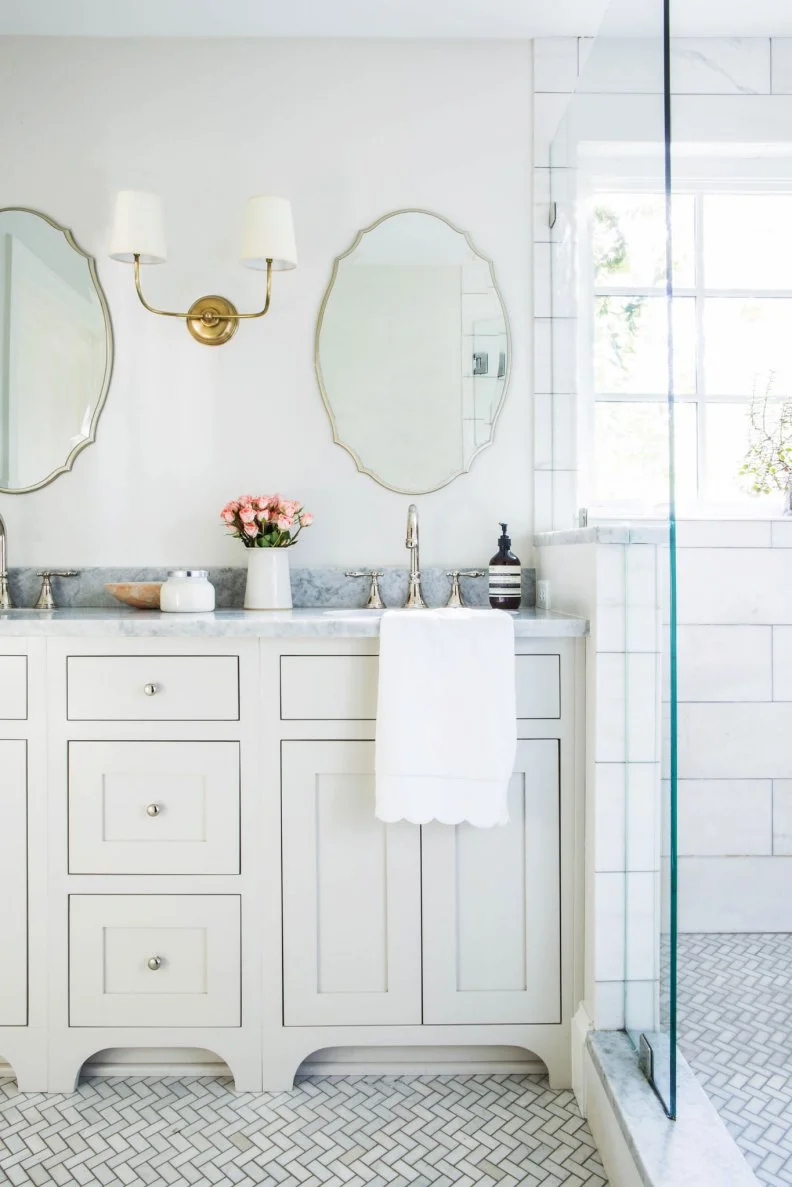
Photo: Adam and Amber Ford. From: Caroline Levenson Design
6 / 21

Play With Temperature

Warm and cool metals make natural partners, especially when the rest of the room keeps things classic. In this bathroom by Caroline Levenson, brass lighting warms up the crisp white vanity, while silver-toned cabinet hardware and plumbing fixtures add a cooler counterpoint. The contrast gives the traditional space dimension without pulling it away from its timeless look.

Tips for Decorating an Older House

More photos after this Ad

Photo: Mike Van Tassell. From: Lindye Galloway
7 / 21

Stay in the Same Family

Mixing metals doesn’t always mean pairing silver with gold. In this French country bathroom by Lindye Galloway, warm bronze plumbing fixtures mingle with much darker bronze on the lighting, creating variation without dramatic color contrast. Staying within one metal family lets you introduce tonal depth while maintaining a cohesive palette.

More French-Inspired Designs

More photos after this Ad

Photo: Patrick Biller/Tiffany Leigh Design
8 / 21

Go Beyond Two

Two metals aren’t a limit. Designer Tiffany Leigh Piotrowski combines brass, polished nickel and black metal to create what she calls a “layered, pieced-together look.” With three finishes in play, repetition and the room’s larger color palette provide enough continuity without requiring a perfectly coordinated set.

More photos after this Ad

Photo: Erika Bierman Photography. From: Stephanie Hatten
9 / 21

Think Collected, Not Coordinated

A little mismatch can be an asset in a room designed to feel as though it evolved over time. In this traditional kitchen, a vintage-inspired sink and bridge faucet set a nostalgic tone that makes variation among the surrounding metals feel natural. Especially in farmhouse and traditional spaces, think collected over time rather than purchased as a matching suite.

More photos after this Ad

10 / 21

Keep the Contrast Low

Contrast is a dial, not an on-off switch. Here, gold hardware and sconces mingle with an oil-rubbed bronze faucet and pot filler. They’re distinctly different finishes, but their shared warmth softens the transition between them. Pair metals with similar undertones when you want variation without a dramatic warm-versus-cool effect.

More photos after this Ad

Photo: Nate Sheets. From: McCroskey Interiors
11 / 21

Anchor With a Dark Finish

When several metals share a room, a dark finish can ground the look. In this traditional bathroom, the graphic blackened-steel shower enclosure anchors softer bronze plumbing fixtures and a smaller hit of nickel. The nearly black framework gives the eye somewhere to land, allowing the lighter finishes to play supporting roles.

More Ways to Decorate With Metal

More photos after this Ad

From: @properties
12 / 21

Consider the Architecture

Before shopping for a single fixture, take inventory of the metal that’s already part of the architecture. In this Chicago loft, black metal window frames join a brass-accented coffee table as part of the room’s finish palette. Windows, railings, doors and other permanent elements can all help determine which metals you introduce next.

Tour This Loft

More photos after this Ad

Photo: Tomas Espinoza
13 / 21

Let the Style Set the Rules

Let the character of the room guide how polished or coordinated your metal mix becomes. In this historic Savannah guest bath, varied finishes feel right at home among the Old World details. A vintage-inspired space can often handle more irregularity than a sleek contemporary room, where the same mix might call for cleaner repetition.

Tour the Rest of This House

More photos after this Ad

Photo: Halstead Real Estate, a member of Luxury Portfolio International. From: Halstead Real Estate and Luxury Portfolio International®
14 / 21

Give Each Metal a Job

Each finish has a reason for being in this NYC penthouse kitchen. Stainless steel suits the hardworking range and pot filler, while warm brass decor and cabinet hardware plays up the room's luxurious feel. Rather than alternating finishes arbitrarily, consider the function, location and character of each element when deciding where each metal belongs.

More photos after this Ad

Photo: Greg Zabilski Photography. From: Michelle Workman
15 / 21

Bring In Metal With Accessories

Want to experiment without changing a fixture? Start with something movable. Copper cookware, metallic trays, lamps and decorative objects can introduce another finish with virtually no commitment. Accessories are also an easy place to bring in aged, hammered or otherwise textured metals that add character to a more polished palette.

Tour the Modern-Traditional Home

More photos after this Ad

Photo: Tomas Espinoza
16 / 21

Treat Metal Like Jewelry

In a compact bar area, metallic details can have an outsized impact. Here, reflective surfaces and gleaming accents turn a hardworking drinks station into a glamorous focal point. When you’re working with a smaller zone, a few well-placed metallic moments can deliver plenty of polish.

More photos after this Ad

Photo: Laurey Glenn
17 / 21

Create Contrast With Purpose

The mirror, faucet and cabinet pulls don’t share a finish, but each has a clear presence in this room. Warm gold-tone hardware stands out against the blue vanity, while the cooler faucet and dark mirror frame add their own points of contrast. Giving each element a distinct finish can make the combination feel deliberate rather than disconnected.

More Faucets and Fixtures From HGTV Dream Home 2025

More photos after this Ad

Photo: Erika Bierman
18 / 21

Work With What You Have

Existing stainless appliances don’t have to dictate every finish you add next. In this kitchen, brass brings warmth alongside the cool-toned metals that were already there. Treat the elements you can’t or don’t want to replace as part of your starting palette, then layer new finishes around them.

Tour the Full Kitchen

More photos after this Ad

Photo: Emily Gilbert. From: Darci Hether
19 / 21

Look at the Bigger Palette

Consider the colors surrounding your metal finishes, too. In this Tribeca kitchen, warm hardware and tubular pendants are balanced by a cool steel gooseneck faucet that feels at home against the apartment’s gray palette. A finish doesn’t have to match another metal if it connects naturally to the colors and materials around it.

More photos after this Ad

Photo: Stacy Zarin Goldberg. From: Zoe Feldman Design
20 / 21

Use Finishes to Define Zones

In a larger kitchen, different finishes can help visually define separate cabinetry or work zones. Here, polished nickel accompanies one treatment while oil-rubbed bronze appears with another. Assigning finishes by zone can give each area its own identity while still allowing the kitchen to read as a whole.

See More Kitchen Hardware Ideas

More photos after this Ad

Photo: Smith & Associates Real Estate, a member of Luxury Portfolio International. From: Smith & Associates Real Estate and Luxury Portfolio International®
21 / 21

Vary the Scale

Not every finish needs equal billing. In this contemporary kitchen, larger expanses of metal establish the dominant finish while smaller fixtures and details introduce contrast. Varying the scale and frequency of each metal creates hierarchy, so the room doesn’t feel as though every finish is competing for attention.

Tour This Kitchen