





Growing Pussy Willows
Learn how to grow and prune these unique shrubs and their fuzzy catkins that signal spring.


As you’d guess from the name, pussy willows (Salix discolor) are members of the willow family. Grown as deciduous shrubs or small trees, they’re valued for the soft, furry catkins they bear in late winter, often while other plants are still dormant. Flowers and leaves emerge after the catkins.
Easy-to-grow pussy willows are happy in average to wet soils. Salix discolor can thrive in full sun to part shade, although less light means the plants won’t produce as many fuzzy catkins. Because pussy willows like moisture, they’re a good choice for planting near a pond, lake or stream; in a rain garden; or to help control soil erosion. Because the catkins appear so early, they’re considered one of the first signs of spring.
Pussy willow plants can be male or female. Male plants produce the most ornamental catkins, which may be white, silvery-gray or yellowish. Female pussy willows have smaller, less showy catkins.
Many gardeners don’t bother to buy pussy willows since they’re so easy to root from cuttings. Start by making a cutting 12 inches long, about the diameter of a pencil, in early spring. Make the cut on an angle.
Root the cutting in water or directly in moist soil. To root in water, simply drop the cut end into a glass of clean water. Roots should form in a few weeks. Refill the glass with more water as it evaporates.
When the cutting has plenty of roots, dig a hole in a sunny spot and amend the soil with compost or peat. Put the cutting in the hole and gently firm the soil around it. Water thoroughly.
If rainfall is scarce, keep the cutting watered until it becomes established and puts out new growth.
If you prefer, plant your cutting directly in the garden or landscape. First, use a rod to make a hole in the ground. Then insert the angled end of the cutting. If you need to pound the cutting deeper into the ground, put a flat piece of wood on top of it to keep the stem from splitting.
Even if you don’t want to add more plants to your garden, it's fun to bring pussy willow stems indoors and put them in water to force for flowers. Add the stems to the compost heap when the flowers are finished.
An annual pruning will encourage these plants to keep producing nice, straight stems to harvest for indoor arrangements. Pruning also helps control for height, since Salix discolor can top out at 20 to 30 feet tall, becoming a multi-branched tree.
The best time to prune is in late winter after the flowers have faded. Don't wait too long after flowering or you'll remove the shoots that will bear the next year's catkins.
Unless your plant is unhealthy it should recover nicely after being pruned, with lots of new shoots coming up from the roots. Your goal is to keep the size and shape you want without shearing your shrub and making it look unnatural.
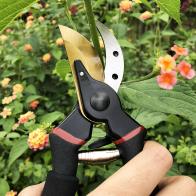
Use clean, sharp anvil pruners to cut above outward-facing nodes. As new shoots appear, they’ll grow away from the center of the shrub, so they won’t cross over and rub against each other. Also remove dead or broken wood. If you cut into diseased wood, use rubbing alcohol to clean your blades between cuts.
Now cut back one-third of the oldest, thickest stems to the ground. Old stems are usually gray-colored.
Next, cut the other branches—the ones that have already flowered—to make them the same height as new growth coming from the lower, main stems.
Repeat these pruning steps each year to keep your plant compact and in shape. Most gardeners prefer to grow pussy willows as gently rounded shrubs.
If your plant is very tall or misshapen, you can rejuvenate it with a severe pruning by cutting it to just above the ground every 2 to 3 years.
Pussy willows can be grown as specimen plants, hedges or privacy screens. They’re also great for attracting wildlife to your yard. Many birds, including goldfinches and yellow warblers, make their homes in pussy willow thickets, while ruby-throated hummingbirds will visit to pluck the fuzz for their nests. Mallards and wood ducks dine on the catkins and grouse nibble young twigs and buds.


