




What Is Mulch and Which Mulch Should You Use?
Find out from the gardening experts at HGTV about the types of mulch to use and where to use them in the garden along with other helpful tips about mulch colors and how to save money while buying.


One of gardening’s secret weapons is mulch. It’s not a glamorous starlet that steals the spotlight, but its performance can make or break a landscape design. Whether you’re grooming a fabulous front yard or raising your family’s favorite veggies in the backyard, mulch can make each planting area healthy, earth-friendly and beautiful.
What Is Mulch?
Mulch is a protective layer of organic or inorganic material that’s applied to soil to conserve moisture, suppress weeds and enhance soil fertility. It also maintains consistent soil temperature and reduces erosion, serving as a barrier against environmental stressors.
Why Use Mulch
How does mulch benefit the landscape?
- It suppresses weeds and makes weeds that do sprout easier to pull.
- It slows water evaporation from soil, so you don’t have to water as often.
- It insulates soil against temperature extremes. This protects shallow-rooted plants in cold regions and coddles crops as summer sizzles.
- It prevents soil compaction during downpours. Loose, uncompacted soil yields happy, healthy plant roots.
- It slows storm water runoff and helps reduce soil erosion. Less runoff means planting beds are absorbing more rain.
- It prevents disease organisms from splashing from soil to plant leaves, which reduces disease outbreaks.
- It gives planting beds a polished look, enhancing even the most basic landscape design.

Morton Arboretum
The Two Types of Mulch and What Is Mulch Made Of?
Mulch falls into two general categories: organic and inorganic.
Organic Mulch
Organic mulch include things like shredded bark, pine straw, compost or grass clippings. These materials break down over time, adding organic matter to soil and improving it. Organic materials include:
- Shredded bark (hardwood or pine bark) is a popular choice. Buy by the bag at home stores or nurseries, or buy in bulk from local suppliers. Bark nuggets are larger and don’t decompose as quickly.
- Pine straw or wheat straw are easy solutions in many situations. Wheat straw – not hay, which contains seeds that will sprout in your well-tended soil – is especially good in vegetable beds. Place it over a layer of newspapers for extra weed suppression.
- Shredded leaves and grass clippings, if your landscape has trees and lawn areas, are handy, easy to use and free!
Inorganic Mulch
Inorganic mulches are more permanent and don’t readily degrade. Stone, weed fabric, rubber or geotextile mats are types of inorganic mulches. These are less environmentally-friendly and not as useful as organic mulches which are beneficial in a number of ways to the garden.
Mulch Products to (Mostly) Avoid
Stones, Gravel or Volcanic Rock: These mulches will not have to be replenished each year, but since they don’t break down, they don’t enrich the soil. Remember, too, that stones can hold heat, which could turn up the soil’s temperature more than the plants’ roots can stand. They may be a good choice for cactus gardens.
Rubber Mulch: Made from ground-up tires, rubber mulch is a good way to recycle old tires, but it won’t do anything to enrich the soil in your garden beds. On the other hand, it may be a good choice to use under a children’s play area.
Landscape Plastic and Fabric: It makes sense in certain conditions – under gravel paths, for example, to keep gravel from quickly working its way into the soil. But these ground covers can prevent water from reaching the roots of plants. And while they will suppress weeds, they may also be detrimental to the plants you favor.
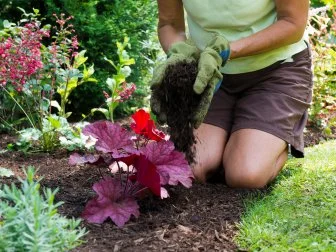
How to Mulch for the Healthiest Yard and Garden
How to lay mulch in 5 easy steps, plus a complete guide to commonly asked questions like how to determine how much mulch you need.
How to Shop for Mulch and Save Money
The cheapest way to buy mulch is in bulk. This is the way to go when you have multiple planting beds to cover. A local mulch company can help calculate how much mulch you need or search online for easy mulch calculators (you’ll have to measure planting areas). Visit your local mulch supplier to see what kinds of mulch they offer.
Keep in mind you’ll need a pickup truck. Bagged mulches can be easier to transport and may be the best deal for small front yard beds or modest backyard planting areas. Most stores give discounts for broken bags; ask at the register.
Good organic mulch should have an earthy, damp odor. If you smell ammonia, vinegar, alcohol or sulfur, don’t buy that mulch. It could actually harm plants.
What to Know about Mulch Colors
Bark mulch, one of the most commonly used varieties, comes in three main colors. They're all equally effective at their job, so whichever one you chooose comes down to aesthetics.
Brown Mulch: Brown mulch ranges from light tan to dark brown. This is a versatile, safe and always-gorgeous option that can be used anywhere. Brown is a color that can be find in many native tree trunks and throughout gardens, and thus blends well.
Black Mulch: This variety looks beautiful paired with a modern, minimalist house. It also works well in very shady areas, to enhance the perception of depth.
Red Mulch: Red mulch can make white flowers pop and also pairs well with desert climate landscaping or natural environments that already pull in red tones--such as areas rich in red clay.

12 Clever Ways to Landscape with Stone and Mulch 12 Photos
Consider using stone and mulch to create definition and interest in your next landscaping project.
Find the Right Mulch for Your Needs
The perfect mulch:
- doesn't compact
- decomposes relatively slowly
- is water- and air-permeable
- is fire-resistant
Every mulch type offers distinct advantages. How can you choose the one that’s right for your gardening situation?
Shredded Hardwood Bark: For Flower Beds, Trees and Shrubs

Preen.com
Mulch adds a finishing touch to any planting bed, but that’s not all it does. A good mulch helps the soil to hold moisture — so you don’t have to water as often. Put mulch down thick enough, and it helps keep weeds from growing. Shredded hardwood bark is one of the most common mulch choices and works well for flower beds and around trees and shrubs. It usually lasts from one to three years and adds organic matter to the soil as it decomposes. Look for double or triple ground mulch (experienced gardeners prefer triple ground).
Fresh Wood Chips: For Garden Paths and Permaculture Gardens

Julie Martens Forney
Wood chips offer a long-lasting mulch option, taking up to four years or more to completely break down. As the wood decomposes, it robs nitrogen from soil. If you use wood chip mulch, apply fertilizer to soil to keep plants nourished. Many gardeners tend to use wood chips for garden paths, although permaculture gardeners like a thick layer to help retain soil moisture. If you want to use wood chip mulch, do some research first to make sure you create the best growing conditions for your plantings.
Pine Straw: The Choice In the South

ProvenWinners.com
Pine straw is the mulch of choice in the South simply because it’s readily available and cheap — or even free. Choose pine straw for areas where you’re trying to deter slugs (they don’t seem to like crawling through it). It’s a natural pairing with azalea, camellia and rhododendron, which often grow in the high shade of tall pines. Expect pine straw to last one to two years.
Straw Mulch: For Vegetable Gardens

Julie Martens Forney
Straw is a more utilitarian mulch typically used in vegetable gardens or strawberry patches. Straw is simply the stalks of grain plants. Ask your local straw supplier if their product is clean (doesn’t contain grain heads) and weed-free. Prevent weed seed issues by spreading three sheets of damp newspaper under straw. Some gardeners let straw bales sit a few weeks so weed or grain seeds germinate. This leads to moldy straw — plan to wear a dust mask if you have allergies. Expect to get one to two growing seasons out of straw, depending on how thickly you spread it.
Shredded Leaves: For Informal Planting Beds, Veggie Gardens, Shade Gardens

Fiskars.com
An outstanding mulch that’s free for the taking, shredded fall leaves provide a great alternative for informal planting beds, vegetable gardens and shade gardens. As leaves decompose, they add fantastic organic matter to soil. Slugs tend to like shredded leaves, so use caution applying them around slug favorites like hosta or leaf lettuce. Expect leaves to last from one to two growing seasons. Always shred leaves with a mower or leaf vac before using them as mulch.
Decorative Stone: For Formal Plantings

Julie Martens Forney
Turn to decorative stone mulch when you want to give plantings a formal ambiance. Stone comes in a variety of colors and shapes. River rock usually has smooth, rounded edges, while quartz is more jagged. Stone mulch doesn’t degrade over time and doesn’t usually need to be replaced if it’s seated on landscape fabric. You might need to refresh the top layer of stones at times if it fades or discolors.
Living Mulch: Garden Beds or a Hill Where Erosion Is a Concern

ProvenWinners.com
A living mulch is a type of low-growing ground cover that blankets soil like a mulch. In this garden, golden creeping jenny (Lysimachia nummularia 'Aurea’) is the living mulch. Other plants that work well as living mulches include alpine strawberry, low juniper, vinca vine or short mints like Corsican mint. Be careful with living mulches that root along stems as they grow. These types of plants can easily become invasive and even try to overgrow lawns.
Colored Plastic Mulch: For Certain Vegetables

Julie Martens Forney
Colored plastic mulches are the result of university research, which has shown that certain vegetables have higher yields when grown on colored plastic mulch. The increased yields are most pronounced with plants growing under less-than-ideal conditions, such as less than six hours of sun daily. Red is the color for tomatoes. Other colors include green or blue for melons, silver for peppers and blue for summer squash (like zucchini or patty pan) and cucumbers.
Lava Rock: For Xeriscape Gardens or Around Shrubs

Julie Martens Forney
Consider lava rock as a mulch in xeriscape gardens or around shrubs, succulents or other plantings that won’t change much over time. This type of rock is lightweight compared to traditional stone mulch, which makes it easier to haul and handle without professional help. Individual rock edges tend to be sharp. Stone mulch doesn’t ever break down or disappear — it’s a permanent addition to the landscape. Place it on a layer of landscape fabric to prevent rocks from sinking into the soil.
Landscape Glass: For Xeriscape Garden Designs

ExoticPebbles.com
Landscape glass is a type of recycled glass that’s bright and colorful. It’s a permanent mulch that doesn’t break down. Install glass mulch over high quality (commercial grade) landscape fabric so it doesn’t sink into the soil. The glass is tumbled to remove sharp edges, but it does pose a threat to soft-bodied critters like slugs. Glass mulch is popular in xeriscape garden designs.
Corn Cobs: Used Regionally

Julie Martens Forney
Corn cobs are a popular mulch is some regions of the country. The cobs are coarsely ground and sometimes dyed to give them a more traditional dark mulch appearance. Ground corn cobs take several years to decompose, don’t easily compact and don’t blow or float away. Corn cob mulch is also fire-resistant, which is a plus in areas prone to wildfires. This type of locally available mulch material varies by region and is usually inexpensive. Types include things like ground sea or crab shells in coastal areas, fine forest mulch or cottonseed hulls. Check with your local extension office to learn what kinds of local mulches are available.
Landscape Fabric: Goes Underneath Other Mulch

ProvenWinners.com
Also called landscape fabric or weed cloth, this type of mulch is usually woven polypropylene fabric. It suppresses weeds while allowing water and air to pass. It’s often used under inorganic mulches, such as stone or landscape glass, but also under shredded hardwood bark to help extend its lifespan. Landscape fabric comes in different grades; the label should state how long it will last. This is a commercial grade fabric that’s woven and needle punched with a 20-year warranty. The colored lines are 12 inches apart, which helps with spacing plants, especially in vegetable gardens.


