


How to Winterize Roses
Check out these tips on how to winterize roses so they get through the cold unscathed.

Winterizing roses is important as a sudden cold snap could cause serious damage.

Some gardeners wait to winterize their rose bushes until they're completely dormant in late fall. But a sudden cold snap can cause serious damage. That's why winterizing roses is important. Start prepping them in late summer or early fall to help them survive winter's low temperatures, harsh winds and cycles of thawing and refreezing.
Some roses bloom once a year while others rebloom throughout the growing season. Prepare your rose bushes for winter by continuing to water them, but stop fertilizing six weeks before your first frost. Also, stop deadheading to let rose hips form; they'll signal the plants to go dormant.
Find your USDA Gardening Zone here to estimate your frost dates.

Everything You Need to Know About Roses
Learn more about the flower that has inspired poets, painters, gardeners and crafters alike.
After the first killing frost, prune your roses to 30 inches high and remove broken or dead canes. Cut long canes to 18 to 24 inches so winds won't whip them around and loosen them from the soil.
When winterizing roses, it's helpful to know whether your roses are grafted (also known as budded) or "own root."
"Own root roses are grown from a cutting with its own root system. If an own root rose has dieback to the ground due to harsh winter conditions, it will come back true to type," says Stephanie Waltz, rose trial coordinator at Star Roses and Plants.
Grafted roses are a slightly different story. "Grafted roses are a top variety grafted onto a bottom rootstock variety. The bottom rootstock is chosen to help with growth vigor, disease resistance and overall hardiness," Stephanie says. "Different rootstocks are used in different parts of the country."
How do you winterize grafted rose bushes?
Grafted roses, Stephanie adds, need extra care in colder climates so the bud union — the plant part above the roots and just above the graft, where the top variety grows — can survive. If it dies, the rootstock variety can take over. Its flowers are likely to be small and less desirable than you'd get from the grafted variety.

Pruning Roses During Winter
See why you should prune your roses when it's chilly outside.
"Burying the graft at the time of planting in colder zones will help survival rates," Stephanie says. Plant the bud union at least one to two inches below the soil line in colder climates.
The best advice, she says: "Start with a rose than has been trialed in and found to be hardy for the zone you live in. That gives you a clear advantage from the beginning."

8 Best Gardening Gloves of 2024, Tested and Reviewed
We put top-rated gloves to the test in order to find the best options for planting, weeding and daily garden chores.
Essential Tips for Winterizing Roses
"All roses can benefit from some extra winter protection," Stephanie says.
Below Zone 6, add 5 to 6 inches of additional mulch, leaves or straw around the base of your roses in the fall.
"If you live in a particularly windy area, wrapping in burlap can help prevent them from drying out too much. For very cold areas, mound extra soil around the base of your plant up to about 12 inches high and wide, for extra protection," says Stephanie.
"Rose cones are an option that should be added once soil is mounded and after the first few frosts to prevent the rose from overheating inside the cone," she says.
If needed, make slits or small holes in the cones for air circulation and anchor them so they won't blow away. Another option: Wrap pre-made rose collars around roses. They're open at the top to prevent overheating. You can also make cages from chicken wire or other flexible wires to surround your plants; fill them with insulating materials like dry leaves, straw or hay.
For Zones 7 and up, Stephanie says 2 to 3 inches of extra mulch around the base of your roses is usually sufficient. "In these warmer parts of the country, the bud union doesn't need to be below the soil line for grafted roses."
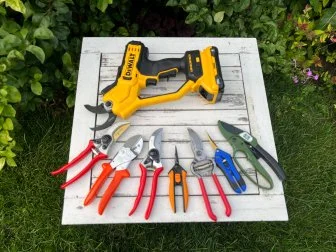
8 Best Pruning Shears of 2024, Tested and Reviewed
Make every garden clean-up a breeze with the right pair of pruners.
How Do I Winterize Climbing Roses?
- Take the climbing canes off their trellises and bury them in a trench.
- Cover them with 3 or 4 inches of soil and add 12 to 18 inches of dry leaves.
- Put some wire on top so the leaves won't blow away.
- Finally, mound soil around the base of the rose.
Another option: Remove the canes from their supports, insert a pole in the ground near the crown of the bush and tie the canes to it. Wrap burlap around the canes and stuff it with dry leaves or straw.
How Do I Winterize Rose Bushes in Containers?
- Before your first frost, prune roses in containers to 18 to 24 inches high.
- Remove dead or damaged canes and diseased leaves.
- Put the containers in an unheated shed or garage or a sheltered spot on the south side of your house.
- Water just enough to keep the soil from drying out.
If the pots are too big to bring in, wrap them in burlap and leave the tops open for rain or watering.
Protecting Roses in Extreme Climates
Rose gardeners in Minnesota and other cold-climate states sometimes winterize roses with the "Minnesota tip" method. Here are the steps recommended by the Minnesota Rose Society for winterizing roses during extremely cold winters:
- Water the roses well.
- A day or two before tipping, spray the rose bushes with a fungicide, following the product directions. Let them dry thoroughly before handling them.
- In early October, prune unwanted growth and tie the canes together with twine. Some gardeners seal the pruning cuts.
- In mid-October, dig a trench, starting away from the bush and working toward its base. Make it as long as the bush is tall. If desired, make it wide enough for more than one rose.
- Carefully loosen the soil around the roots with a spading fork. Pull the soil away from the rootstock.
- Gently push the loosened bush over and into the trench with the spading fork. Add 2 or 3 inches of soil.
- After the ground freezes, add 1 or 2 feet of loose leaves or hay. Water.
- Put chicken wire around the trenches or on top of the leaves to hold them down.
- Start removing the covering around April 1. In mid-April, if the soil has completely thawed, raise the plants upright and water. Start fertilizing when the buds form.
Tools For Winterizing Roses
- Wire snips
- Twine (synthetic twine resists rotting)
- Scissors or knife for cutting twine
- Thorn-resistant gloves
- Pruners
- Optional: sealant for pruning cuts
Buy Winterizing Tools


Materials to Insulate or Protect Rose Bushes
- Dry leaves, straw, weed-free hay or shredded newspaper
- Garden soil
- Flexible wire like chicken wire
- Burlap
More Tips for Growing Roses
You can plant roses in the fall, as long as it's at least six weeks before your first hard frost.
Some people think grafted roses are newer varieties and therefore not as hardy as own root roses, but Stephanie says that's not true. "Roses have been grafted for hundreds of years."
Star Roses and Plants, she adds, trials roses on their own roots. For multiple reasons, some are eventually sold as grafted varieties while many are sold as own root. If you're not sure what you're getting, ask at your garden center or nursery, or check with your local cooperative Extension service.
More Advice on Growing Roses

16 Perennial Partners for Roses 16 Photos
Discover perennials that pair beautifully with roses in the garden.

10 Easy-to-Grow Climbing Roses 10 Photos
Plus, tips on training these disease-resistant climbers to adorn a trellis or wall with color all season long.

How to Grow Patio Roses in Containers
Plant roses in containers so you can stop and smell the roses on your patio, deck or balcony.