Design a Raised Vegetable Garden
Landscape designer Lisa Van Cleef shows how to create these easy raised beds -- perfect for enjoying the taste of home-grown vegetables.
- A
- A
- A
Print Options
CloseE-mail This Page to Your Friends
xSuccess!
A link to %this page% was e-mailed
Nothing beats the taste of home-grown vegetables. Host Ken Bastida shows how to get a vegetable garden off the ground — literally — with raised beds. He also shows how to build a rustic fence and arbor to separate the garden from the rest of the yard. Plus, enjoy a bountiful harvest with smart tips for planting the beds.
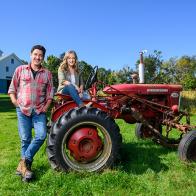
Homeowner Bill Flitter grew up on a farm and has always wanted a vegetable garden that also incorporates flowers and herbs. He wants to keep the garden separate from the entertaining area of his yard. His backyard is large enough to accommodate a garden, and there's an existing shed, which looks like a barn, in a sunny area.
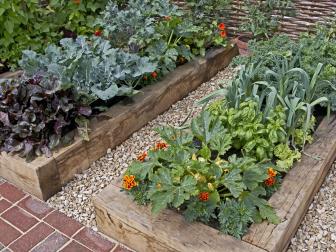
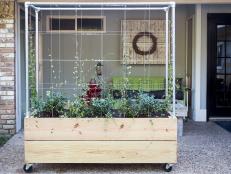
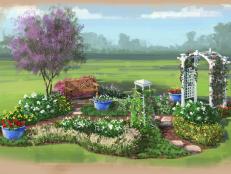
Landscape designer Lisa Van Cleef designs several raised beds instead of one large one because smaller beds allow access to all the plants and enable you to group similar plants together. Her design includes three raised beds in the front and two in the back. Simple paths between them provide easy access. A split rail fence defines the space and is highlighted by a charming arbor entry; together they blend in with the country style of the yard and shed.
Lisa estimates that a professional would charge $2,500 to design and build the beds, fence and arbor, but do-it-yourselfers can cut that cost to $850, of which $250 is for the fence and arbor. She gives the project a 2 on a scale of 1 (easy) to 5 (difficult) and says that it can be completed in two weekends.
Step One: Building the Beds
Choose a location that gets plenty of sun and isn't surrounded by too many trees that would compete with the vegetables for nutrients and water. Rake out a level spot and mark the layout of the beds with landscapers' spray paint.
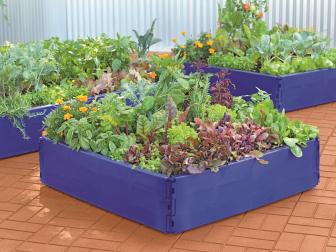
This project includes five beds: 5 feet long by 4 feet wide and 2 feet apart. Lisa chose redwood, but you can save some money by buying cedar or Douglas fir. Don't use pressure-treated lumber, though, because the chemicals used to treat the lumber will leach into the soil. The boxes are built with 2x12s anchored with one-foot posts at each corner.
Cut a 2x12 to length. Position a one-foot post at the end and predrill holes through the post and plank. From the bottom, anchor them together with 6-inch carriage bolts. Fasten a post to the other end and attach the other three sides to form a box, with a post in each corner. Once they're secured together, tighten the bolts. Build the other boxes in the same manner.
Step Two: Placing the Boxes
Place the boxes and drive 18-inch foundation stakes (about $2 each) into the ground at the inside corners of the boxes. Hammer them about one foot into the ground and attach them to the posts with 3-inch galvanized screws.
Fill the boxes with a loose, organic-rich soil. To cap the rims of the boxes, use smooth 2x6s, which will double as a ledge for sitting or holding tools. Cut the ends at 45-degree angles so that they fit together at the corners.
Make simple paths between the boxes by laying a layer of weed block fabric. Cover it with a couple of inches of gravel (such as Lodi pebbles, available for $50/cubic yard) and rake it level for a comfortable walking surface.
Step Three: Building the Fence
A split-rail fence is easy to build and allows you to see the vegetable garden, while setting it apart from the rest of the yard. Pre-cut, 8-foot rails are available at home supply stores for about $10, and 5-foot posts cost about $13. Van Cleef's arbor design is 7-1/2 feet tall and 4 feet wide, with a roofline that mimics the roof of the shed.
Mark the layout of the fence and arbor, and dig the post holes two feet deep or below the frost line in cold climates. Sink the posts into the holes with the notches facing inward. Insert the railings into the holes. Have a friend check that the posts are plumb, while you attach temporary braces. Fill in the holes with Redi-mix concrete and let it dry overnight. Set the other fence sections in the same manner.
The arbor roof has a two-tiered gable design. Cut 4x4 redwood posts to length. For the angled roof, nail a spacer in between two posts for a one-foot depth.
Attach 2x4s to each side of the ridge beam, creating a peaked effect. Build another longer peak in the same manner. Link the two tiers with angled studs and attach with galvanized screws.
To install the arbor, sink the posts into holes and attach temporary spacers to keep them plumb and 4 feet apart, with temporary braces at the base.
With the help of a friend, set the roof on top of the posts. Tack it in place and then secure it with 2-inch screws. Fill up the post holes with concrete and let set overnight.
Planting: A Vegetable Garden
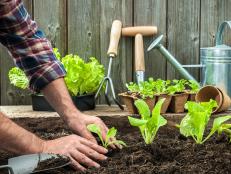
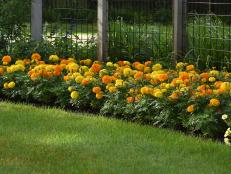
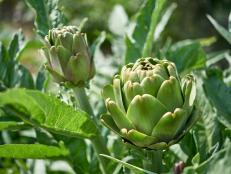
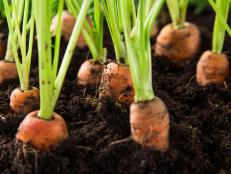
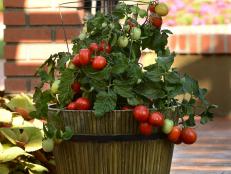
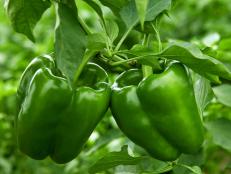
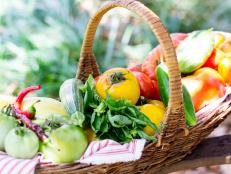
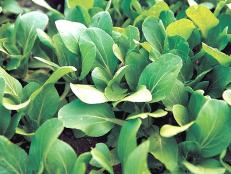
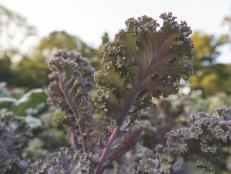
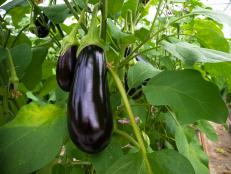
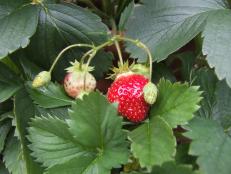
Lisa selected an assortment of flowers and vegetables for the beds, including tomatoes, artichokes, lettuces, and strawberries. She planted basil next to the tomatoes because it improves the taste of tomatoes. Marigolds attract beneficial pollinaters to the beds and may deter snails.
Plant the boxes in rows that run north to south to take full advantage of the sun. Plant taller varieties towards the north end so that they won't shade the lower ones. Or plant in other patterns to make the beds more visually interesting. Just remember to follow the planting guidelines for each plant.
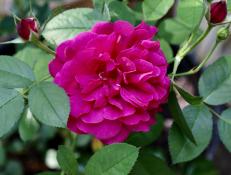
To continue with the old-fashioned country feel of the project, Lisa chose brightly colored, fragrant flowers to attract pollinaters such as bumblebees. She also planted climbing roses at the fence posts to soften the rustic lines, climbing vines along the back fence, and lavender to provide fragrance. Her selections include:
- Rosa 'Altissimo', Zones 5-9, which blooms spring through fall and climbs up arbors or fences
- Lavender (Lavendula angustifolia), Zones 5-8, which features long stalks of scented flowers that are great for drying for potpourri and sachets
- Common foxglove (Digitalis purpurea), Zones 4-8, which attracts hummingbirds with its abundant clusters of tubular flowers and purple spotted petals.
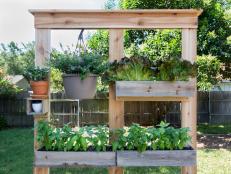
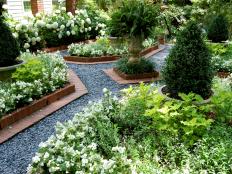
The completed redwood raised beds offer plenty of gardening space for a tasty harvest of vegetables, herbs and fruits, plus blooms for color. Tending the garden is convenient thanks to the comfortable cap seat, and the gravel paths provide access to the beds from all sides. The rustic split-rail fence encloses the garden, while keeping it visible from the house and yard. The redwood arbor enhances the yard's country charm. And the fragrant assortment of blooms and vines makes the area come alive with color.
Resources
-
Guests
- Lisa Van Cleef
Landscape Designer
333 Precita Ave.
San Francisco, CA 94110
Phone: 415-821-2259
- Lisa Van Cleef