Building A Grape Arbor
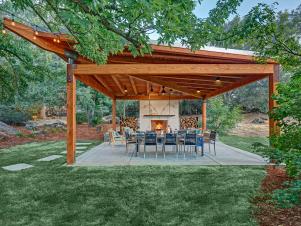
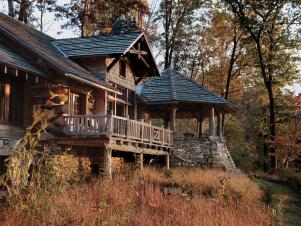
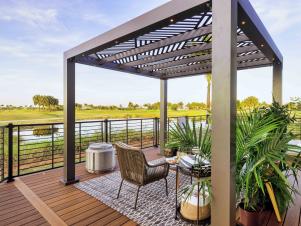
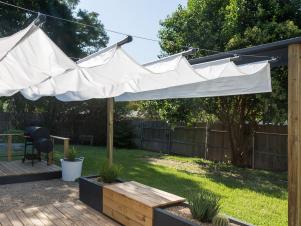
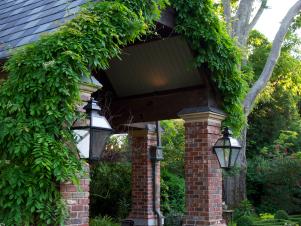
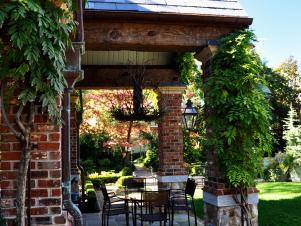
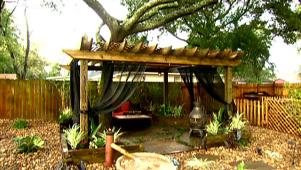
An arbor will help support these vines and cut down on pruning.
- A
- A
- A
Print Options
CloseE-mail This Page to Your Friends
xSuccess!
A link to %this page% was e-mailed
Figure GAll About
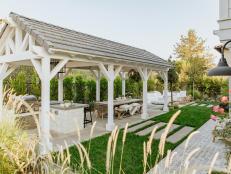
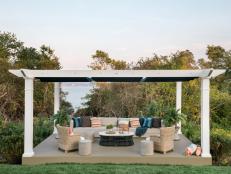
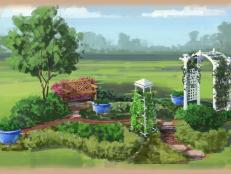
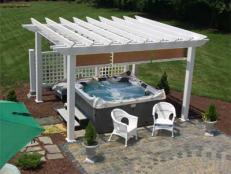
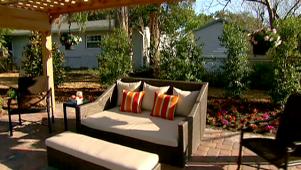
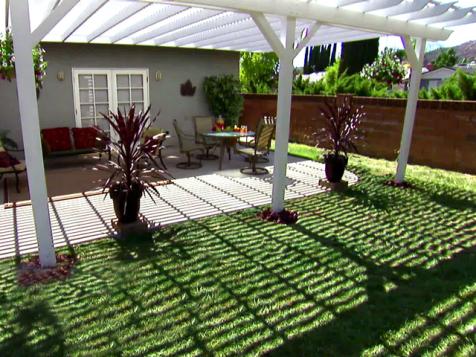
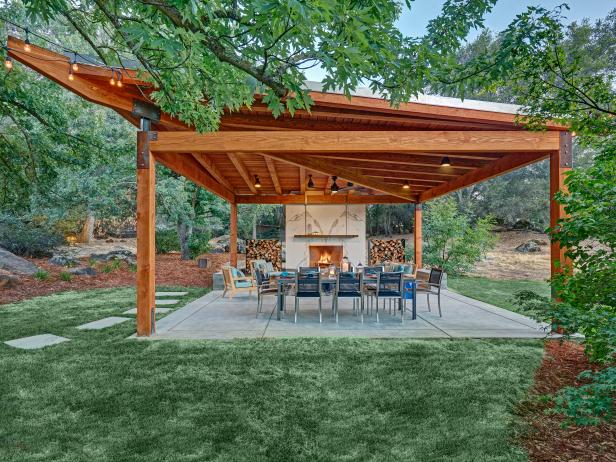
A grape arbor is a great structure for training unruly vines and creating shade for an intimate sitting area.
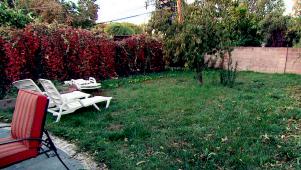
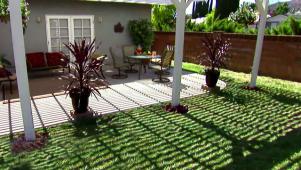
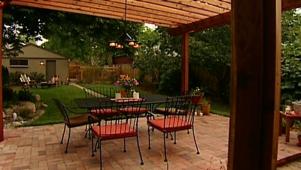
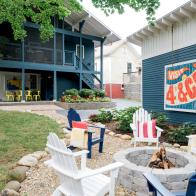
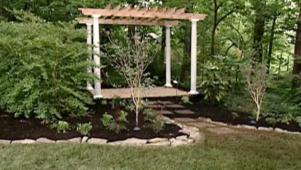
Homeowners Tony and Jennifer Lewandowski had a small, sunny side yard with a 14- by 14-foot flagstone patio and two mature grape vines (figure A). They wanted an arbor to support the vines.
Landscape designer Susan Ballinger designed a sturdy arbor with a painted-on patina finish to give it an aged, Mediterranean look. You can build a more open structure if you want to let sun through in the winter when vine leaves are gone, or construct the arbor with a tighter cross-piece design to provide better shade.
Ballinger says that a professional would charge about $4,000 for labor and materials to construct an arbor, but a do-it-yourselfer can build it for only $800, including the cost of two grapevines. This project is rated a 3 on a difficulty scale of 1 (easy) to 5 (difficult), but requires basic carpentry skills and precise measurements. It takes about three weekends to complete, so it won't be long before you're enjoying the fruits of your labor.
Step One: Setting the Posts
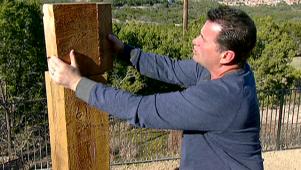
Landscape contractor Jesse Grajeda chose Douglas fir beams for the arbor because they're easy to paint and readily available. He uses standard 4x8 beams for the headers, 4x6s for the posts and rafters, and 4x4s for the cross pieces. He also says to be sure to check your local building codes.
If you plan to paint the arbor, prime it with one coat of a light beige acrylic paint. Measure and stake the locations for the arbor's post holes. (The arbor for this project has an irregular shape, so some of the posts are set as close as four feet apart, and some are as far as 10 feet apart.) Run a string line to outline the perimeter.
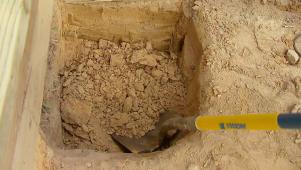
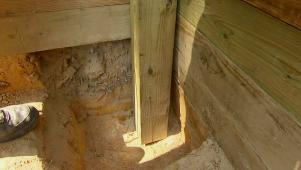
Dig the post holes about two feet deep and one foot in diameter. Local codes require that the holes be filled six inches above grade, so the crew built some simple square forms using 2x6s to hold the concrete while it sets. Fill the holes with ready-mix concrete to the top of the forms. Sink a 4- by 6-inch galvanized post bracket into each form, and make sure it is level. Let the concrete set for 24 hours before placing the posts into the brackets. Check that they are plumb and secure them with lag bolts.
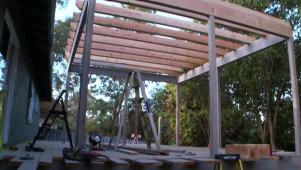
After all posts are up, mark them at a consistent height (about seven feet up), and cut off the tops with a circular saw. Figure B shows the erected posts.
Step Two: Placing the Beams
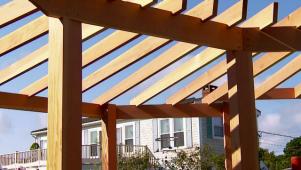
Cut the 4x8 headers and 4x6 rafters to a length that spans the distance between posts, plus 18 inches of overhang on each side. Use a jigsaw to cut a decorative design into the ends for added interest (figure C).
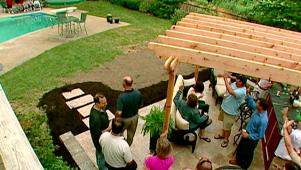
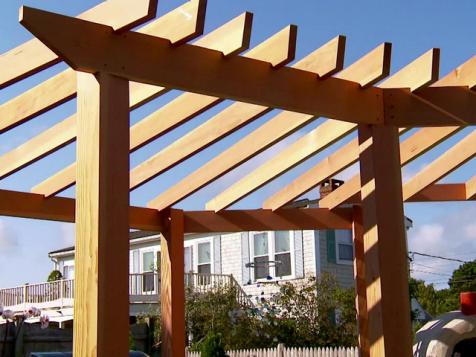
Because the design calls for two of the headers to meet in one corner of the arbor, those boards are cut at a 22.5-degree angle for a snug fit. With the help of a couple of friends, hoist a header on top of two posts, and secure it with a nail gun. Do the same for the other headers around the perimeter of the arbor. Next, nail the rafters across the headers, spaced about 3 feet apart. Figure D shows the completed headers and rafters.
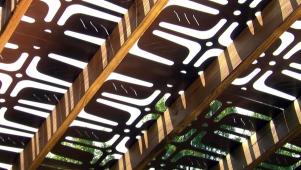
Cut 4x4 cross pieces to 3 feet long, and set them into the gaps perpendicular to the rafters, spaced out evenly across the ceiling of the arbor. Make sure they are flush with the tops of the rafters.
Step Three: Applying a Patina Finish
Artist Melissa Wilson of Wilson Stuart Design gave the arbor a Mediterranean look. She used charcoal and teal paints for a verdigris patina finish, applied with a roller and sea sponge (figure E) to look like aged copper. The materials for the decorative finish cost about $100.
Apply a base coat of brown paint to the arbor and let dry. Combine teal paint with a glaze to make the color more translucent. Dip the roller in the paint and roll off any excess paint so that it won't apply heavily, allowing the base color to show through. After the teal coat dries, apply a coat of charcoal paint in the same manner, creating a mottled look that suggests a copper patina.
Next, apply a thin coat of gold paint to a grapevine leaf and press the leaf against the posts in a random pattern to leave an imprint. Also cut out a small round section of sponge, dab it in the gold paint, and stamp grape clusters onto the posts (figure F). Add a few vines and tendrils using a small-tipped paint brush, and let the paint dry overnight.
Planting: A Fragrant Garden
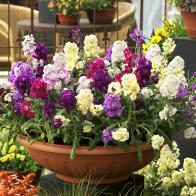
In addition to the grapevines, Ballinger brightened up the patio area with colorful containers of herbs and edible flowers and fragrant groundcover between the flagstones in the patio. Her color scheme included cheery yellows, purples, and whites, and her planting plan included:
Hall's honeysuckle (Lonicera japonica) 'Halliana', Zones 4-10
Star jasmine (Trachelospermum jasminoides), Zones 9-10
Bluestar creeper (Isotoma fluviatilis), Zones 5-7
Tips: Choosing the Right Vines
Grapes will grow anywhere in the U.S., as long as you choose the right variety for your climate. There are two basic types of grapes:
- European variety, which require high heat and tolerate cold to about 0 degrees; a common variety is Thompson seedless (figure H)
- Concord variety for colder regions and shorter growing seasons.
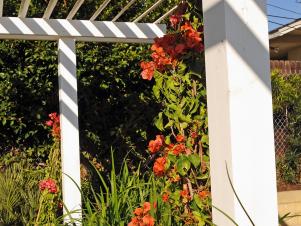
To train vines, hammer large staples halfway into the posts, and slip coated wire through them for tying the branches. If you want a leafy canopy, you should prune the vines only once a year. However, if you want the fruit, too, you'll have to prune more carefully to ensure a good crop. Other vines that train well on arbors include wisteria, jasmine, and roses.
Resources
-
Guests
- Susan Ballinger
Landscape Designer
Susan Ballinger Garden Designs
We apologize no further information is available. - Jesse Grajeda
Landscape Contractor, Jesse Grajeda Company
PO Box 1095
Pleasanton, CA 94566
Phone: 925-570-7372
Email: Jesse7866@aol.com
- Melissa Wilson
Wilson Stuart
San Mateo, CA
E-mail: m@wilsonstuart.com
Website: www.wilsonstuart.com
- Susan Ballinger