





How to Build a Sunken English Fountain
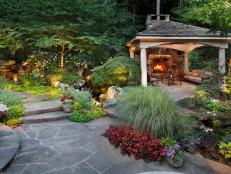
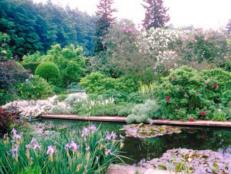
This English garden needs a water feature for added interest and dimension.
- A
- A
- A
Print Options
CloseE-mail This Page to Your Friends
xSuccess!
A link to %this page% was e-mailed
This empty spot will become a focal point with the addition of a gorgeous sunken fountain.All About
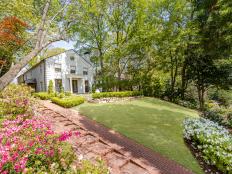
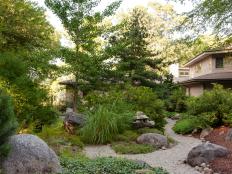
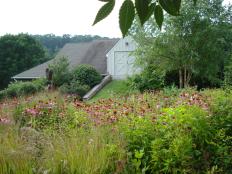
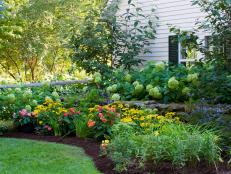
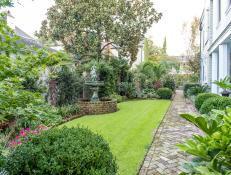
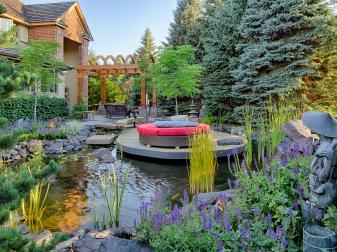
Landscape architect Greg Randall and his wife, Bonnie, love the beautiful English garden in the backyard of their Northern California home, but they want to add a bit more interest and dimension to its existing elegance. The couple's extensive travels through England combined with Bonnie Randall's knowledge of English gardens (gained through research for books she has written on the subject) inspired them to add a fountain to the setting, which will be visible from the house as well as many areas of the yard.
Since Greg Randall is a landscape architect, the couple will do most of the project work themselves. Randall estimates that a professional installation of the project would cost around $5,000-$6,000, while a do-it-yourselfer can expect to spend about $1,500 and three weekends to complete the work. On a difficulty scale of 1 to 5, with 5 being the most difficult, he rates the project a 5, and explains that the labor-intensive job of digging the hole is probably the most difficult aspect, requiring two days of work by two people.
Step One: Preparing for the Pond
The first consideration in designing a water feature is location. To achieve a dramatic effect in the garden, the water feature should be placed where it is visible from several locations in the yard as well as from inside the house.) Randall points out that placing the water feature near a wall or paved area is an easy way to amplify the sound of the flowing water.)
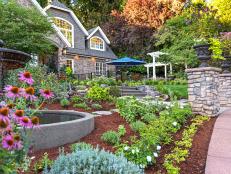
To complement the existing landscape, the couple has designed a fountain that features classical English elements, with a round shape that mirrors the round garden walls. The plants behind the sunken English fountain will accent the center of their round garden.
The first step is to dig the hole, the most challenging part of the project. Here, the cavity is dug 20 inches deep, with a diameter of eight-and-a-half feet (figure A). Once the inner walls and fountain are installed, the inside diameter of the fountain pool will only measure about six feet.
When the digging is complete, the hole is lined with two PVC liners that have a thickness of 30 millimeters each (figure B).
Randall locates the exact center or mid-point of the hole by tying strings to stakes placed around the perimeter of the opening and crossing them in the middle. Once the exact center is determined, Randall uses a piece of wood attached to a piece PVC pipe to mark the center of the fountain where the strings cross (figure C).
Step Two: Creating the Bottom
To create the bottom surface of the fountain, Randall recommends using broken pieces of concrete, which cuts down on cost since the fragments can be obtained for free. (Randall explains that paving contractors often have to pay to have someone to haul these away, and are usually happy to deliver them to someone at no cost.) The pieces, which hide and protect the PVC liner, are also easy to work with.
Randall and the crew begin laying the broken pieces near the PVC pipe in the center of the pond, working their way out. A one-inch layer of mortar is laid down first, and the pieces are simply pressed into place, situated close together (figure D). Randall says that the pieces of concrete should be laid with the rough side down to ensure a smooth, level surface on the bottom of the fountain.
As the fountain floor is pieced together, the half-inch conduit that will house the electrical wires for the pump and pond light is also laid in place (figure E). Randall simply presses the conduit into the mortar and covers it with the concrete pieces; the upward-curved end of the piece remains above the surface. Although many stone masons work without them, Randall recommends wearing gloves to prevent hand irritation from the lye contained in the mortar mixture. To keep the process neat, Randall scrapes the excess mortar off the concrete with a trowel as he works. After the mortar begins to set (usually about an hour), compact it with the trowel, then brush the stones with a stiff broom to further smooth the surface.
Step Three: Installing the Irrigation
Before installing the concrete pieces that will form the walls of the fountain, Randall cuts a special wooden tool out of plywood to achieve an exactly circular shape. The flat, wedge-shaped piece has a hole in one end that fits over the PVC pipe marking the center point of the circle; the wider, curved edge of the opposite end extends out close to the edge of the cavity (figure F).
As the crew lays the pieces of concrete in place along the walls, the flat piece of wood is rotated to mark the inside edge where the concrete pieces should reach (figure G).
The pieces of broken concrete are placed on top of one another, with the rough side up to ensure maximum adhesion, and the layer of mortar is placed along the back of the concrete pieces so the front will have a clean, mortar-free look. The crew uses gravel and extra mortar to fill in behind the concrete pieces where necessary. With all concrete pieces in place, Randall checks the evenness of the top edge with a level that spans the diameter of the hole. Then he uses mortar to adjust the height of the wall slightly in several areas until its level.

Along the top edge of the round sunken wall, decorative brick is used to create a border that is flush with the ground; the chosen bricks match those in existing areas of the garden. As the bricks are pressed into place, they are positioned to create a slight overhang that adds polish to the fountain's overall appearance.
With the floor and walls of the fountain pool complete, it's time to add the plants. First, a cluster of potted plant material is added to the center of the pool inside a cast concrete structure. This structure is fashioned from poured concrete using a custom-made mold that Randall built from a large cardboard tube and several pieces of masonite. The design of the centerpiece base allows plants in twelve-inch pots to be fitted into place around the bottom of a two-piece urn, which will be placed on top of the structure (figure H).
(Note: Although the centerpiece base in this project features a complex design, Randall points out that the concept can also be applied to a simpler shape, such as a square.)
To plant the 12-inch pots, Randall uses a heavy soil with clay to ensure that the dirt will stay in place (the lightweight texture of regular potting soil would allow it to float out of the container and cloud the water). Once the pots are planted, Randall begins planting the area around the outside of the fountain, using varieties that bring color to the setting and suit its English style.
Featured plants include:
- Papyrus (Cyperus albostriatus), Zones 9-10
- Iris ensata 'Temple Bells', Zones 5-8
- Water cannas (hybrids) (Thalia dealbata), Zones (all)
- Taro (Colocasia indica), Zones 12
- Narrow-leaved cattail (Typha angustifolia), Zones (all)
- Fiber optic grass (Scirpus fluviatrus), Zones (all)
To complete the fountain, Randall mounts a submersible pump on a cast-concrete base that's only slightly larger than the pump itself (figure I). (This particular pump processes about 500 gallons of water per hour.) Then, he slides the pump on its platform into a niche in the concrete base.
Through the hole in the top of the base, he screws on an extension of copper pipe that connects with the copper pipe already attached to the pump; a coupling holds the two pieces together (figure J).
Finally, the two-piece urn--which has a hole in the bottom to allow the water be propelled up through its center--is set in place on top of the base and leveled with thin wedges of wood (figure K). (Randall will amend the surface of the base slightly with extra mortar before sealing it to create a perfectly flat foundation for the urn. He will also weight with the urn with heavy rocks in the bottom to keep it upright in the water.)
Resources
-
Guests
- Gregg and Bonnie Randall
Homeowner / Landscape Architect
Phone: 925-934-7761
- Gregg and Bonnie Randall