


O My Blooming Back
Melissa Caughey
I'm happy this time of year. I begin hauling compost and topsoil, shoveling, stooping, planting. But before long I am leaning at a 45-degree angle like a tree bracing against the wind. My back will not forgive an idle season as graciously as my flowerbeds do. It spasms and pinches until I know my afternoon's pleasure is done for: only an ice pack and propped feet will revive me.
I'm not alone. According to a Gallup poll of 2,000 adults, nearly half suffer from back pain — and half of those do so as a result of gardening. The pain is not surprising. In the spring rush of enthusiasm, we stay at our tasks for hours bent over like the letter "N." We try to lift loads that would daunt Samson. We twist, kneel, stand, and overreach.
"All that puts pressure on the discs in our back and stresses our back muscles," says Sharon J. Gibbs, M.D., who specializes in physical medicine and rehabilitation at the Texas Back Institute in Plano, Texas. The result inevitably is fatigue, pain and even injury.
So what are avid gardeners to do? Well, the wise warm up like athletes preseason. And shift from task to task, accepting--as athletes do--that they can't do the same drill all afternoon. And finally, they treat themselves to the right equipment. Sure, at first, it feels pricey. But so is a chiropractor.
Getting Primed
Like soil, bodies have to warm up to work. "Don't start the season off cold," says horticulturist Bob Nuss, PhD, professor emeritus at Pennsylvania State University in University Park. "A month before resuming your gardening, start walking or doing calisthenics. Ease in so you're not straining your muscles." Adding stomach crunches or Pilates exercises at least three times a week is a great idea as well, says yoga instructor Sudha Carolyn Lundeen, CYT, RN, who teaches a better back program at Kripalu Center for Yoga and Health in Lenox, Massachusetts. Stronger stomach muscles can lessen the stress on your back.
A warm-up before every gardening session also makes sense. Landscape designer Jon Feldman, owner of G.biloba Garden Environments in Nyack, New York, learned this while working on a job with several Japanese tile makers. Every morning before they got started, the tile makers spent 15 minutes doing tai chi, a Chinese practice of slow gentle movements and stretches. "I never joined them," says Feldman. "But I turned what they did into my stretching before I garden. I stretch the long muscles in my legs and back and warm up my shoulders. I want to waken my body and let it know I'm about to put it to the test."
John Byrd, president of John Byrd Garden Design in Charlotte, North Carolina, agrees: "Before I get out in the garden I walk briskly around the block to get my heart pumping. And then I stand on one foot and stretch the other behind me like runners do before running."
Working Smart
Of course, a good warm-up is just the beginning of working wisely when it comes to your back. The biggest faux pas gardeners make is staying in one position too long, says Miriam Levenson, creator of The Effortless Gardening Program (www.effortlessgardening.com) and a practitioner of Feldenkreis, a form of movement education. "It's okay to weed for several hours at a tune but not in the same position," she says. "You can bend over, kneel down, sit in a chair, pull with one hand, then the other hand. You can kneel on one knee and then the other. Each position will change the shape of your back and the muscles you use."
Of course, shifting tasks accomplishes the same thing. Weed for a while, then plant a few bulbs, then shift to a bit of pruning.
It's also wise to pause every 20 minutes or so. Lundeen suggests repeating some warm-up exercises, doing hip circles, a few waist twists, and finally bending backwards a bit. Levenson suggests lying down on the ground to look at the sky. "What adult ever does this?" she says. "A bit of sky and a bit of wiggling around to loosen up the joints is a great revitalizer." And drink lots of water. Tight muscles build up toxins, and water helps clear those out, which in turn lessens tightness.
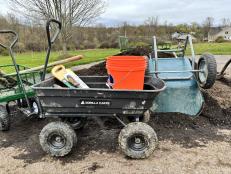
The other waterloo for gardeners with aching backs is lifting. We lift mulch, topsoil, trees, stones, great forkfuls of dirt, pots, planters, and would probably lift our driveways and house foundations if we could. Probably the smartest way past this is to hire a burly high-school kid to haul the heavy stuff, says Robert Berghage, PhD, associate professor of horticulture at Penn State University. Although many landscape gardeners also suggest wearing a back belt, studies to date don't report added protection. In fact, belts may persuade some gardening zealots like me to lift more than we should. Belts also shift the work to smaller, weaker muscles, upping the risk of injury.
Without a burly youth, we're left to our own devices. If you must lift, says Levenson, ask yourself first, "Am I about to do this in a way that will feel good or bad after I'm done?" You want your core muscles — your strong stomach muscles — underneath the object you're lifting and smack up against it. That may mean squatting and then lifting with your strong leg muscles instead of your back — advice from Byrd's great grandmother, an avid gardener who tilled and mowed her into her late 80s.
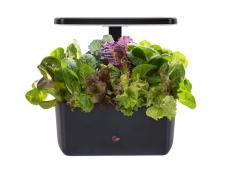
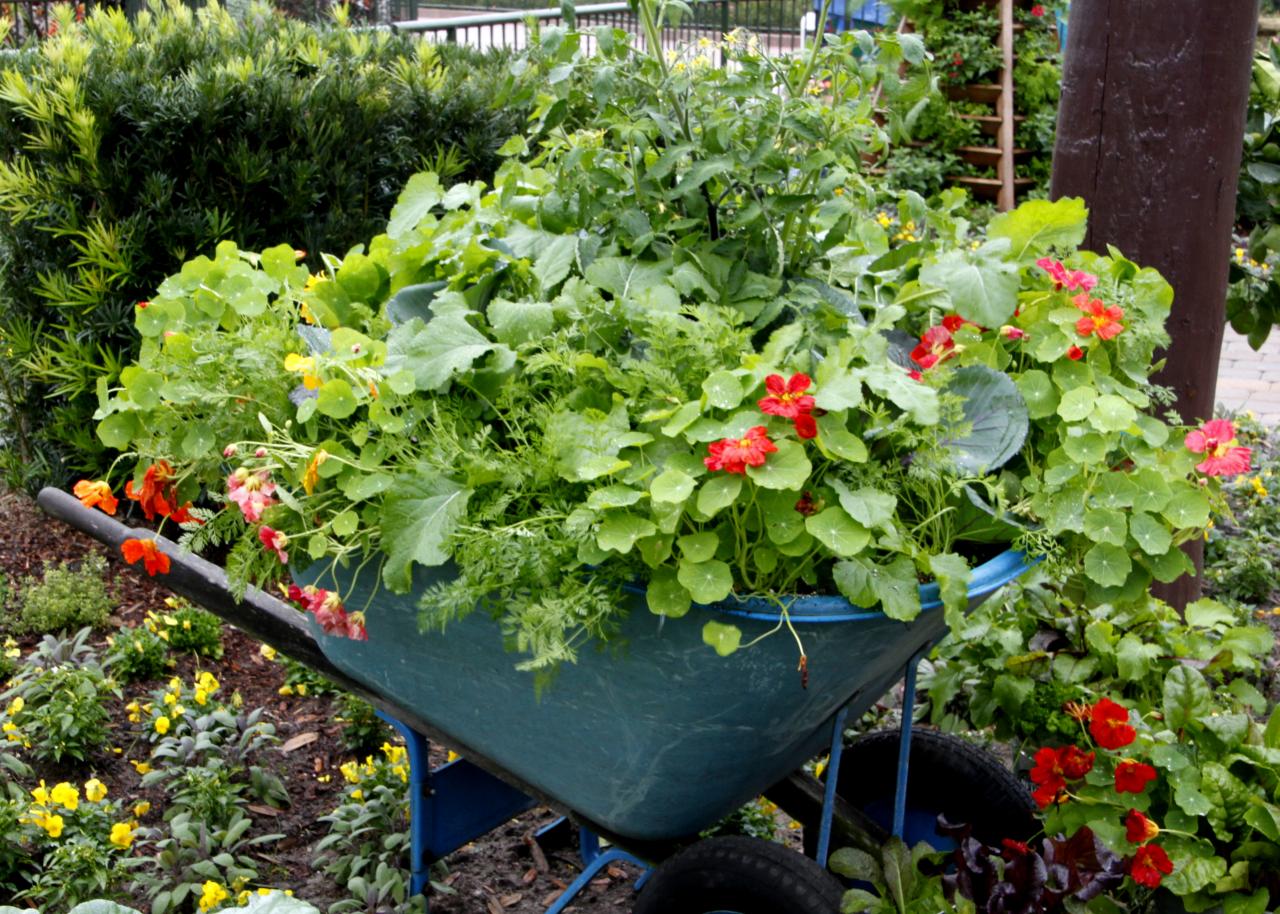
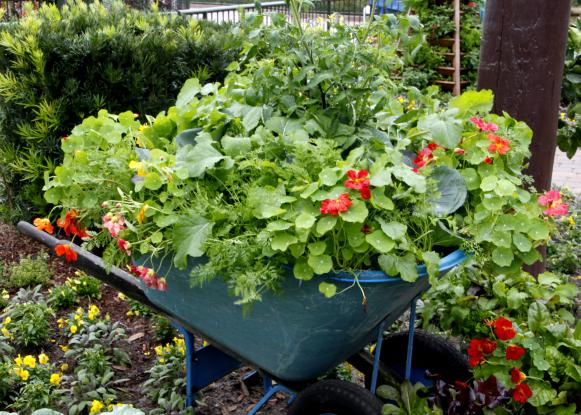
You can also plan a garden friendlier to your back. Consider converting some beds into raised ones about 18 to 24 inches high (essentially a wooden box on the surface filled in with soil). And plant flowers or even vegetables like tomatoes and peppers in large containers (that some iron-backed person lugs into place for you). "You don't have to bend over as far, "says Berghage. "And it's easier to manage weeds." If you do dig a new bed, never make it wider than you can reach without straining -- about four to six feet.
Buying the Right Tools
The way we warm up, move, and plan can protect our back but so can good tools. Quality tools are better balanced. And the stronger they are, the more work they do for you. Here are some suggestions to keep in mind as you shop.
- Match the tool to the job. Most people use tools that are too big for them, thinking it will ease the work, says Nuss. But it doesn't. Whenever you can, use a small shovel, rake, spade or pitch fork. That way you're lifting less weight.
- Look for back-friendly features. Tools an extra three to five feet long--rakes, spades, hoes, pruners, even trowels — extend your reach, relieving strain on your back. Most garden stores sell extenders to customize tools. Some tools are also designed with bends in the handles to maximize leverage (see suggested tools below.).
- Try it on for size. Before you buy something, imitate the motions you'll use in the garden. Make sure it's not too heavy or short for you to use comfortably.
- Borrow power. Small garden tillers can be a blessing for the back-pain afflicted, says Nuss, although they're not useful for breaking new ground. Look for a light-weight one that you can manage easily.
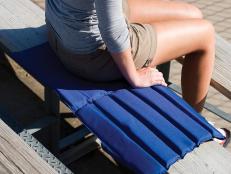
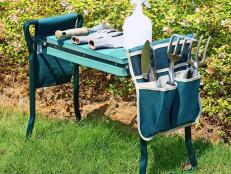
- Pad profusely. Kneeling pads and garden benches can pamper your back and joints. Padded hand tools also reduce the strain on your hands and arms.
Limber Landscaping
Gardening uses your whole body — as most of us wincingly realize after a bulb-planting afternoon. So it's helpful to loosen our muscles before getting started — and every so often as we work. Yoga instructor Sudha Carolyn Lundeen lays out some warm-up exercises:
Pelvis tilts. In a chair, standing, or lying down, gently rock your pelvis back and forth, tailbone under, then bellybutton forward. Repeat five to 10 times.
Cat and dog. Get on the floor on all fours, round your back like a cat, then release, lengthening your spine with your tailbone up like a dog, repeating the movements five to 10 times.
Shoulder openers. Put your right hand on your right shoulder and then circle your elbow behind, to the side, and in front of you, winding like the hand of a clock. Repeat on the other side — again five to 10 times.
Skyrise. Put your hands over your head, interlace your fingers, invert your palms up to the sky. Then push your palms and arms backward, dropping your chin to your chest. Pull your stomach in for support. Do five to 10 times.
Shoulder squeeze. Put your hands behind your back, lace your fingers, push your arms outward, squeezing your shoulders toward each other. Pull in your abs, again for support. Repeat five to 10 times.
— Dorothy Foltz-Gray is a contributing editor for Health, Alternative Medicine and Arthritis Today magazines. She is writing With and Without Her, a memoir about being and losing a twin.