




Landscaping Solutions
Master gardener Paul James takes on two challenging landscaping issues.
- A
- A
- A
Print Options
CloseE-mail This Page to Your Friends
xSuccess!
A link to %this page% was e-mailed
"I'm often asked whether I actually do all the gardening at my place," says master gardener Paul James. "And the answer is absolutely." James hires people to help with rockwork and heavy lifting, but when it comes to routine gardening tasks like digging, planting and mulching, he does it all.
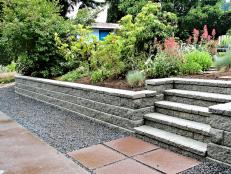
One project James personally takes on is a boring brick wall. "I've racked my brain trying to figure out what to do in this spot," he says, "and I've come up with a number of different solutions, but none of them have made me want to jump up and down and scream in delight."
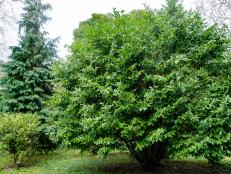
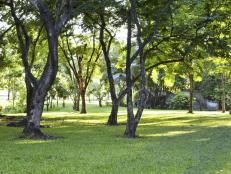
The area is a challenge because the soil is less than ideal, due to the giant hackberry trees nearby whose roots suck moisture and valuable nutrients out of the ground. The trees also cast a lot of shade, which limits the possible plant options, and the area sees a lot of foot traffic.
"But just the other day, while staring at this spot, I had an epiphany," says James. "What I realized is that I had been trying too hard to solve this problem, and that what I needed was a simple solution, namely a shrub border." By creating an easy foundation planting that would require nearly no maintenance, James finds a way to include one of his favorite shrubs that would be perfect for the less-than-ideal growing conditions along the wall.
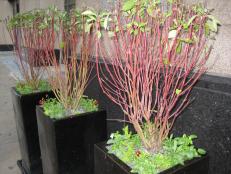
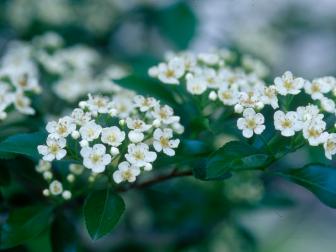
'Little Henry's' sweetspire, which is native to the U.S., is a gorgeous member of the genus Itea and hardy to Zone 5. "I absolutely love this plant," says James. In spring there are long racemes of beautiful white flowers. The gorgeous lime-green leaves in spring turn a darker color in the summer, then transform into a marvelous magenta in the fall. But its beauty doesn't stop after the leaves drop, because that's when the red stems are revealed. 'Henry Garnet's' sweetspire, the standard form, can grow up to nine feet tall, but 'Little Henry's' sweetspire tops out at about three feet tall.
The sweetspire grows best in moist soils and prefers a little bit of protection from the afternoon sun. Note that it sends out suckers and slowly spreads, although it rarely spreads to the point of being invasive. "It also does fine in drier soils where it is a bit more behaved," adds James, "and since the area where I'll be planting mine is fully irrigated, I can control the amount of moisture it receives."
James plants 11 shrubs along the wall, spacing them three feet apart in a gentle arch that follows the contour of the wall. The most important thing to keep in mind when planting shrubs up against a wall or foundation of a house is that there needs to be enough room between the wall and the plant to allow for good air circulation. Otherwise, the plant may be prone to all sorts of fungal diseases, and it may even end up growing in a lopsided fashion, creating fullness in the front and sparse in the back. So James places his plants roughly two feet out from the wall. Because he's using three-gallon plants, the planting holes don't have to be all that large; he digs them saucer-shaped and not too deep. James plants the shrubs so that one-third of the root ball is above grade and then covers the exposed root ball with mulch before watering well.
What a difference a few shrubs can make. The plants soften the brick wall without hiding it completely so that the texture of the wall still adds interest. And because sweetspire requires no maintenance and is virtually pest and disease free, James can just sit back and enjoy his new creation.
Another landscape project that James tackles is a clump of bamboo that needs to be dug up and moved 400 feet. It's (Fargesia nitida), a non-invasive bamboo, is hardy to Zone 5 and prefers a lot of afternoon shade. To dig it up for relocation, James uses a sharp-edged, shooter shovel to cut cleanly through the roots, working all the way around the base of the plant. "Thankfully, this clump has only been in the ground a year so the root mass isn't really all that massive," says James. Because the new planting hole was prepared beforehand, James places the plant in the hole, covers the root ball with soil and mulches the surface.
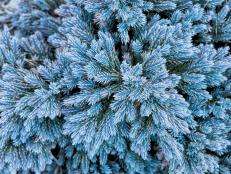
The last chore of the day is to plant a Picea pungens, better known as the Colorado blue spruce, and in this case it's a dwarf variety that's been trained as a standard. "Rather than stick it in the ground, I've decided to put it in a pot," says James. He partially fills the pot with some excellent potting mix, removes the burlap from around the root ball, places the plant in the pot, packs some more potting mix around the root ball and waters well.
We Recommend...
Landscaping: Creating Courtyard Storybook Charm
This Spanish-revival home is in need of a courtyard makeover to turn it into a family-friendly space that complements the style...
A Welcoming Garden for Wildlife
Make your garden a friendly and welcoming garden for wildlife.
Working With Weepers
The impact that weeping plants can create a graceful, dramatic effect in the landscape.
Shop Home Decor Products
Shop home decor products from rugs to mirrors, lamps and more