



How to Build a Butterfly Garden
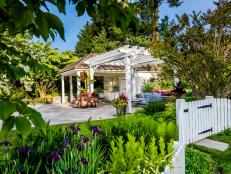
This butterfly garden appeals to both butterflies and people. Follow these instructions to create your own butterfly garden.
- A
- A
- A
Print Options
CloseE-mail This Page to Your Friends
xSuccess!
A link to %this page% was e-mailed
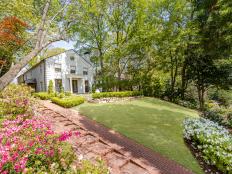
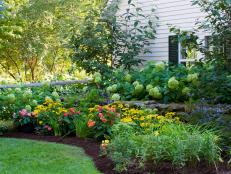
One way to create landscaping that is attractive not only to people, but also to wildlife, is with a butterfly garden. Landscape Smart traveled to the home of John Dado, a butterfly enthusiast, to create a retreat for the fluttery creatures.
Landscape architect Louise Leff has designed a plan for building a stone wall patio in the shape of a monarch butterfly (figure A), complemented by two planting areas also shaped like butterflies and filled with flowering plants to attract actual butterflies. For a natural look, it's best to allow for a little wildness in the design. Formal, manicured lawns don't reflect butterflies' natural habitats, but butterflies will feel right at home in a natural area with a variety of colors and textures.
Leff estimates that a professional would charge about $6,500 to install her design (not including plants), but do-it-yourselfers can cut their costs to about $2,000, plus the cost of plants. The project can be completed in about four weekends, with the help of a friend to pour and level the concrete. Leff rates this project a "4" on a difficulty scale of 1 (easy) to 5 (difficult), primarily because of the stone wall.
Step One: Shaping the Patio
- Start by marking the patio shape using landscapers' marking paint. (This patio is approximately 8' x 10'.) Next, dig out an 8-inch-deep, 2-foot-wide ditch to outline the patio.
- Fill the ditch with 6 inches of concrete, premixed from the supplier, to create a stable footing. Get a friend to help because you'll need one person to pour the concrete and one to spread it level.
Step Two: Building the Walls
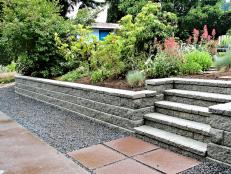
Landscape Contractor Steve Rodin has chosen Sonoma fieldstone, a local natural rock, for the patio walls.
Set the first tier of stones on the concrete footing to form a wall 18 inches wide. Fill in spaces with mortar to hold the stones securely (figure C). Continue stacking stones and filling in gaps with mortar.
You may need to use a masonry bag for hard-to-reach spots. Then cap the wall with flatter stones for a level seating surface (figure D).
Step Three: Building the Body
- Dig out a shallow (6" to 8") ditch for the shape of the body and head.
- Mark the location of two scent sacs, one on each wing.
- To prepare for the body's concrete pad, drill into the patio footing and hammer 1/4" rebar stubs into the holes.
- Connect 1/2" rebar to the stubs with tie wire and lay the rebar along the length of the body to keep the concrete pad from cracking.
- Dig out the holes for the scent sacs about 6" to 8" deep and fill them with concrete.
- Sink two small pieces of rebar into the concrete for extra support and smooth the surface with a trowel.
Rodin has chosen a China black slate to resemble the body and scent sacs of a monarch butterfly. He recommends ordering the slates precut into needed shapes.
- Lay out the pieces of slate on the footing to check placement and then chisel the concrete to conform to the shape of the slate.
- Set the slate by placing it on a thick bed of mortar. Work with one piece of slate at a time to adjust spacing as needed and check the level as you proceed.
Step Four: Filling in the Wings
Rodin recommends decomposed granite to achieve the correct color for the monarch butterfly and for the pathways, but you can use any available material. Start by laying weed cloth inside the wings to keep soil from mixing with the granite and to prevent weeds. Cut it to shape and remove excess material.
Next, pour decomposed granite inside the patio walls until it's 3 inches thick or about level with the slate body, and compact by hand using a tamper. Now the patio is complete (figure G).
Planting a Butterfly Garden
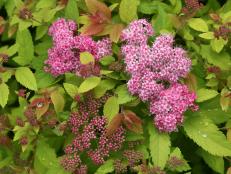
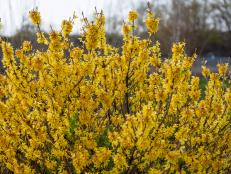
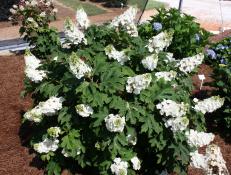
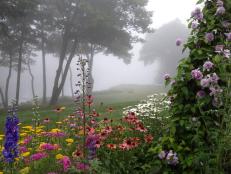
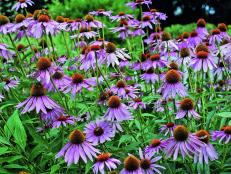
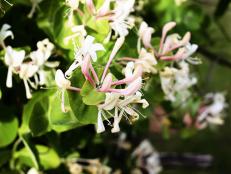
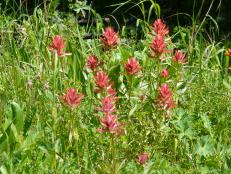
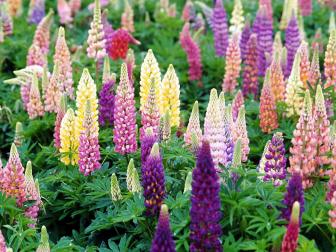
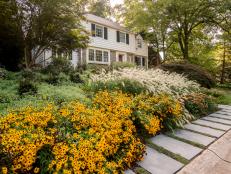
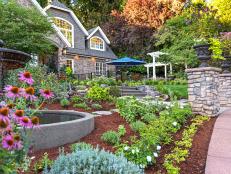
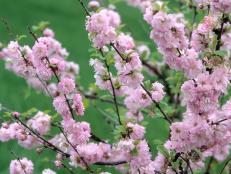
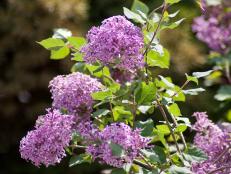
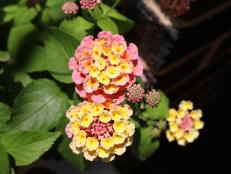
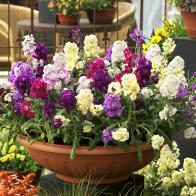
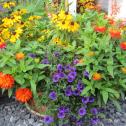
When choosing plants, keep in mind that butterflies are attracted to fragrance and color. Look for plant species that are native to your area to attract native butterflies. Choose a sunny area because butterflies are most active between 11 a .m. and 3 p.m. They prefer flat-topped flowers to land on or tubular flowers (figure H), whose nectar is easier to reach for some butterflies. Use colorful shrubs in butterfly-shaped planting beds to complement the patio and attract butterflies, and plant behind the patio walls to bring color to the seating area.
Leff recommends four butterfly-friendly plants:
- Common lilac (Syringa vulgaris), Zones 4-8
- Delphinium, 'Blue Fountains', Zones 3-8
- Coreopsis (Coreopsis auriculata 'Nana'), Zones 6-9
- Butterfly bush (Buddleia davidii), Zones 6-9
Step Five: Shaping the Planting Beds
You can use Mexican pebbles (or comparable material) as a butterfly body for a water trough to serve as a wet butterfly retreat. Clean out a spot about 8' x 15" and dig out a shallow ditch about 8 inches deep in the shape of a butterfly body. Lay a piece of standard pond liner, tucking it into shape. Then fill the ditch with the pebbles (figure I). Add a few inches of water and spread the pebbles to create a stream-like effect.
Use flags to lay out the shape of the wings and to mark where plants will go. Stake them about 2 feet apart to allow room for growth. Then start planting, keeping to the butterfly shape.
Resources
-
Guests
- Louise Leff
Owner, Louise Leff Landscape Architecture
504 Webster St.
Petaluma, CA
Phone: 707-789-0150
E-mail: design@LeffLandscape.com
- Steve Rodin
Landscape Contractor
65 McBrown Rd.
Petaluma, CA 94952
Phone: 707-762-1336
- Louise Leff