.-Battle-on-the-Beach-courtesy-of-HGTV.-.jpg.rend.hgtvcom.196.196.suffix/1714761529029.jpeg)


How to Grow Tropical Plants Indoors

No amount of water, fertilizer, love and nature's willingness to adapt makes up for the conditions that a particular plant needs. Take gardenias. They want bright light, including some direct sun, moderate to high humidity, and, to induce early budding, nighttime temperatures of no more than 65 degrees. On these points, they don’t equivocate.
But not all tropicals need the same high-intensity light and humidity, and they aren’t all difficult. Even if you have a dry home in winter (or summer), no sunroom or bay window, and days are often cloudy, you can grow some tropicals in your home -- without pain for you or the plant. The trick is to know what conditions you can provide and what your particular type of plant needs.
To estimate the amount of natural light you can offer a tropical, hold your hand about six inches above a sheet of white paper. If there’s a sharp, clearly defined shadow, you have bright light. If the shadow is quite distinct but fuzzy around the edges, you have medium light. If there’s only faint shadow or none at all, there’s not enough light for flowering.
Find out if there’s a society in your area that specializes in the plants you’d like to grow. You’ll get plenty of helpful advice on which varieties work best for your light and climate, which types might be best to start with, and specific culture techniques. And members usually enjoy sharing extras and propagations.
Here are growing tips for some common tropical plants:
Orchid
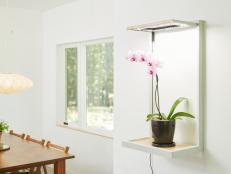
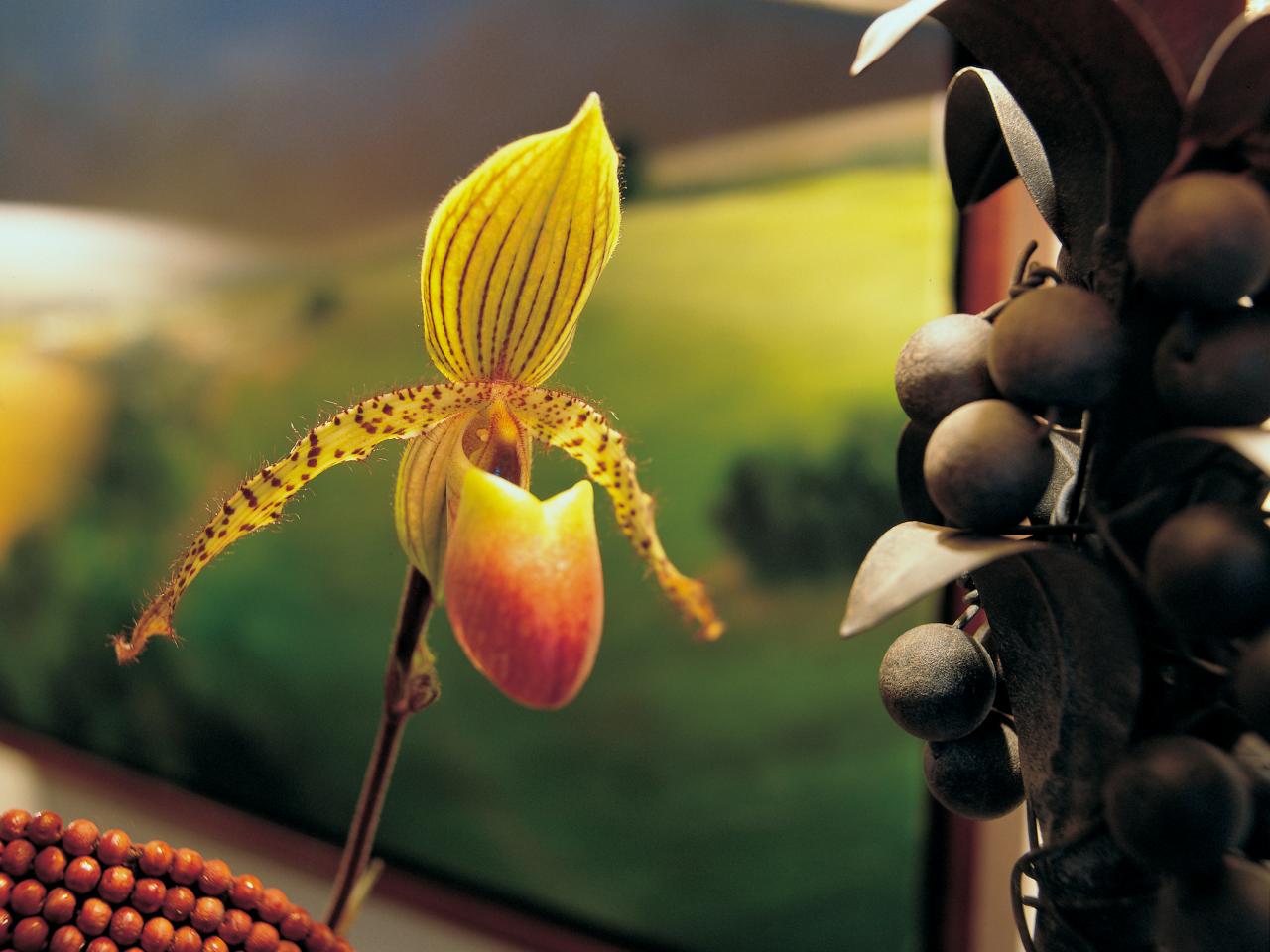
Orchids are not only for the expert gardener with grow lights or a greenhouse. Among the 20,000-plus species and 700-plus genera, there are some varieties that will perform well on a windowsill for the first-time orchid grower.

Paphiopedilum, the so-called lady’s slipper orchids, and Phalaenopsis, the moth orchids, require a lot less light than many other orchids and actually burn under direct midday and afternoon sun. Give them an east-facing window where they’ll receive a few hours of early sun and reasonably bright indirect light the rest of the day.
All orchids -- especially epiphytes, which derive moisture from the air -- need high humidity. In a dry environment, misting won’t help for very long. Pebble trays and concentrated plant groupings are musts unless you already live in the subtropics.
Slipper orchids are mostly terrestrial and are usually grown in very well drained but moisture-retentive medium, often sphagnum moss. The moth orchids -- so named because their wide blooms resemble moths perched on a branch -- are mostly epiphytes and are usually grown in extremely coarse mixtures, often fir bark. For both types, drainage has to be excellent. Water well regularly, usually every five days or so.
One of the biggest mistakes that gardeners make is overpotting. Don’t repot an orchid as soon as you see exposed roots, and when you do, give it a pot only slightly bigger than the current one. Exposed roots are healthy, normal and desirable.

Anthurium (Anthurium scherzerianum)
The name is derived from Greek words meaning “flower” and “tail,” and the plant -- with its usually brilliant, heart-shaped spathe and taillike spadix -- holds its bloom for weeks in relatively low light. A cousin of the peace lily, this is an easy plant to grow. Make sure the potting medium is well drained, and water regularly. Fertilize lightly once a month.
Pineapple (Ananas comosus)
Some people buy pineapple plants as conversation pieces for parties. Without very bright light, however, the plant gradually begins to deteriorate. If you’re serious about growing a pineapple, give it a lot of light -- an atrium is ideal, of course, but a large skylight or a south-facing bay window might work. Be ready to supply a grow light if natural lighting isn’t sufficient. When very warm weather arrives (with minimum nighttime temperatures of 65 degrees), move it outside. Ornamental pineapples don’t bear edible fruit, but they do have beautiful pointed reddish-green leaves and the grand fruiting stalk. It needs bright light.

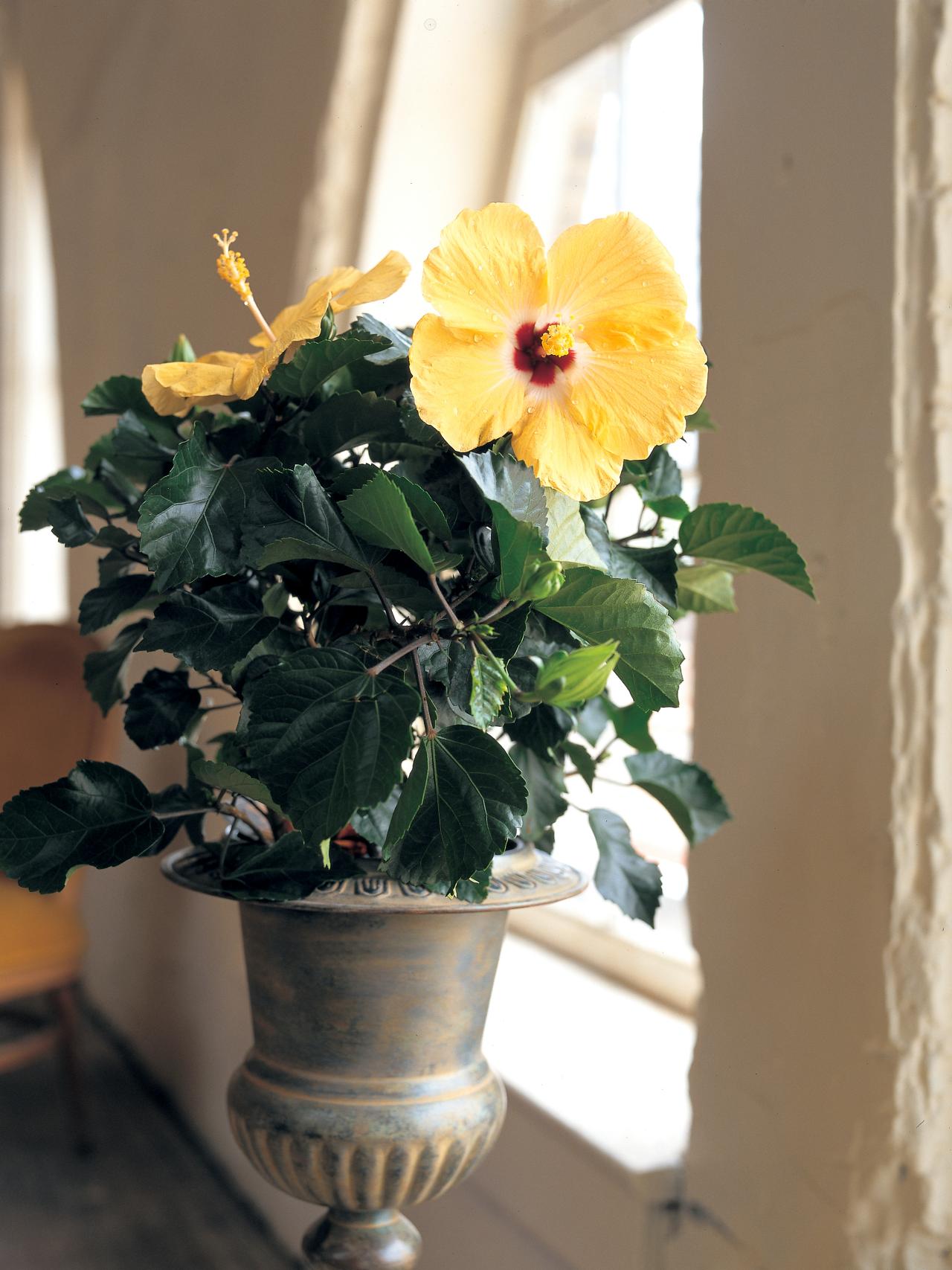
Hibiscus (Hibiscus)
This woody plant produces usually gigantic velvety blooms with prominent reproductive parts. Each flower lasts only a day, but a vigorous plant starts blooming as days get longer and stays in bloom all summer.
Hibiscus blooms only in bright light and thrives in full sun. In winter, it tolerates lower light levels, staying reasonably healthy but at rest. Even if some leaf drop occurs, the plant perks up quickly when taken outside as a patio plant in summer and begins blooming again. Buds form on new growth. Although it requires frequent watering, it tolerates lower humidity levels.

Ginger
Gingers make up a diverse family of about 1,300 species that includes a wide range of flower forms, colors and culture requirements. Yellow spiral ginger (Monocostus uniflorus) does well in a bright window or sunroom, producing deliciously fragrant yellow spiral blossoms all summer. The epiphytic Hedychium horsfieldii has spidery petals and smells like gardenia. In these gingers, the lighter the color, the stronger the scent.
Shield from direct sun with sheer curtains. All gingers require heavy fertilization.
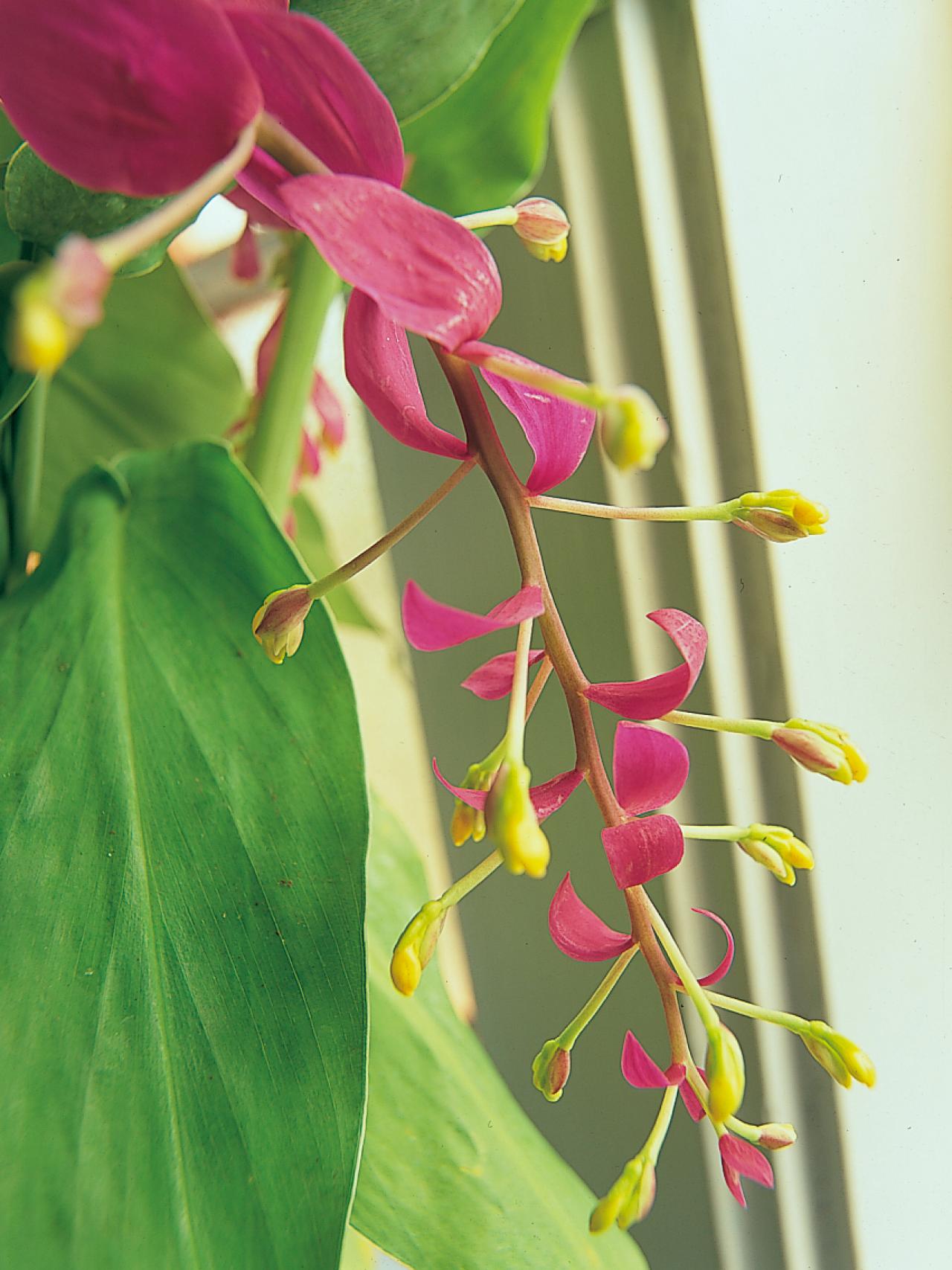
Mandevilla (Mandevilla splendens)
Silky, 2 ½- to 3-inch trumpet pink (or sometimes white) flowers blooming en masse on a tendril-climbing woody vine are sure to make you think of balmier climes. The mandevilla looks stunning climbing a trellis or trailing from a basket.
For best bloom, the light has to be very bright, with no direct sun. A large south-to-southwest window or a sunroom is best. Use sheer curtains in the afternoon. Water thoroughly, allowing soil to dry slightly between waterings. Fertilize every two weeks. In the summer, you may want to move it outdoors.
Citrus (Citrus)
Imagine reaching to a plant, and not to the refrigerator, for some lime or lemon to drop into a guest's drink. Citrus aurantifolia (lime) and Citrus limon (lemon) include dwarf plants that are ideal for bright windowsills. Don't worry about humidity or temperature with this plant, but make sure spring and summer light is optimum for best flowering and fruit production. Better yet, put them on the patio or deck for at least partial sun. In the winter, let them go dormant, cutting back on water and fertilizer. In the summer, you'll enjoy a fruit crop that develops a few at a time throughout the season.
Gardenia (Gardenia jasminoides)
The intoxicating scent of the flowers on this glossy-leaved evergreen makes this plant a great specimen for the home. If you simply must have one -- and there’s no denying its allure -- give it plenty of light. A sunroom or large bay window is best. And if possible, keep it where winter temperatures drop to about 50 degrees but not below the mid-40s. Summer temperatures should be 70 to 85 degrees, although gardenias tolerate hotter days. Humidity should be high year-round. Put the plant on a tray full of pebbles and fill it with water to just beneath the bottom of the pot, group plants together, and consider adding a humidifier to the room.
Feed your gardenia with a fertilizer formulated for acid-loving plants; an azalea-rhododendron fertilizer will work fine. Prune to help stimulate formation of new buds. Whitefly can be a serious pest.
Photos by Charles Brooks
Photos 'Apricot Brandy' hibiscus and yellow spiral ginger, courtesy of Stokes Tropicals.