


Building A Tile-Accented Pergola

This pergola not only blocks an unsavory view, it's also beautiful to look at.

Tools
Font
  • A
  • A
  • A

E-mail This Page to Your Friends

x

All fields are required.

Separate multiple e-mail addresses with a comma

Sending E-mail

Sending E-mail

Or Do Not E-mail

Success!

A link to %this page% was e-mailed

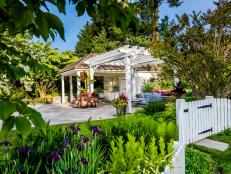
The finished pergola. Climbing vines will add even more privacy when they start growing in.

Homeowner Tiffanie Stone would like a privacy screen for her backyard but doesn't feel that trees or a stand-alone fence would do the trick. She lives next door to an apartment building and wants to block her view of the building. Landscape designer Deborah Kuchar comes up with a design for a pergola, something she defines as an arbor-like structure.

Stone also wants a new redwood fence, so Kuchar will incorporate that into the project. She stresses that not everyone will need the new fence; in fact, if you already have a fence, you can follow this design.

The pergola will become a focal point in an otherwise uninteresting scape.

The cost of doing this project yourself is about $450 (minus the cost of the plantings) if you don't need a new fence: you can expect to pay a professional about $1800 to install the pergola (the professional estimate doesn't include the cost of the fence or plantings).

Kuchar rates the project a 3 on a difficulty scale of 1 to 5, with 1 being the easiest. She says that you really don't need to be an expert carpenter to build this pergola. The design is simple and straightforward, and you only need to make sure your measurements are accurate and everything's plumb. With a few friends to help you lift the larger pieces of lumber, you can finish this in just three weekends.

Step One: Preparing for the Pergola

Since the homeowner wants a natural redwood fence, the crew starts by tearing down the old one. But like Kuchar said, you don't need to have a new fence for this project — an existing one will work just as well. All you need to do is choose one of the following options:

  1. Try building extensions on the fence posts. Place them directly on top of, and attach them to, the fence. Run some planks parallel to the posts down the front of the fence and attach them to the posts to add strength. Now you can build the pergola directly on that structure.
  2. Build the pergola on the ground in front of the existing fence.


Once the old fence is completely removed, set the location of the new one by pulling a string line from one end to the other. Then, you can mark where the postholes will go. You're using eight posts across this 53-foot space — six for the pergola and two for the fence. The crew marks the holes about every eight feet.

Figure A

Tip: With so many holes to dig, consider renting a two-man auger — it costs about $60 a day — to drill those 3-foot-deep holes quickly and easily (figure A).

The crew removes most of the existing landscaping, since it will be in the way once they start to build. If you're saving plants to re-plant again later, as we are, be careful not to damage the roots.

Step Two: Building the Pergola

Since the pergola is going to be a large structure — about 9 feet high and 40 feet long — thick posts are needed for strength. Carpenter Ahmad Hassan uses 4x6 hemlock fir with a cedartone tint to match the redwood fence. These posts will be sturdy enough to hold up all the weight of the pergola and the fence. The pergola posts run about $21 each, so it's a little pricier than other wood. You could save money by going with a lower-quality lumber. To begin building the pergola, take the following steps:

  • Place those posts into the holes, and then check that they're plumb.

  • Figure B

  • Next, dry-set the posts by pouring dry ready-mix concrete around them (figure B). Hassan says that this may sound unconventional, but it allows you to make adjustments to the posts as you build; you can add water to set them permanently later on.

    While it's not essential for the pergola itself, it's important to get the fence built and finished so you can permanently set those posts. Set them in dry concrete, and once the fence is finished, you can wet the concrete down to permanently secure those posts in place.

  • Figure C

    The style of the fence is a board-on-board fence, which means that the first layer of fenceboards are attached and a second layer of boards is staggered over them. This gives the fence an interesting texture that will look really nice with the pergola, and it will look good from both sides (figure C).

    Figure D

    Setting the Posts:

  • Saturate the concrete around the posts, so that the water gets all the way down into the holes (figure D).

  • Figure E

  • Top that off with a little more pre-mixed concrete. Use a trowel to round it out so that water won't settle around the base and cause dry rot (figure E).

  • Figure F

  • Let the concrete set overnight and then move on to the tops of the posts. Use a string line (figure F) to set a consistent height — nine feet for this project — and then cut off those tops so that everything lines up.

  • Figure G

  • Finally, add a decorative touch by beveling the posts (figure G) with a circular saw — a technique also known as chamfering.

    Step Three: Setting the Beams

    Hassan is topping the posts with beams and crosspieces made from 8-foot-long, 2' x 8' redwood planks--they cost about $9 apiece at lumberyards. First he sets the beams and uses those to sandwich the posts — they run the length of the pergola.

    Since those 2x6 beams will go on either side of the 4x6 posts, you have some thick layers of wood there and will need solid hardware to compensate. Attach the beams to the posts using 7-inch carriage bolts. They cost around 60 cents at hardware stores. Just hammer them through the beams and the posts and tighten them with washers for a really secure fit. See below for instructions:

  • Figure H

  • Use a string line with a level on it to determine where to set those beams. Mark that point (for this project, the line is about 4 1/2 inches down from the top).

  • Next, get a friend to help you hoist a 2x8 plank (figure H), and then tack it in place.

  • Figure I

  • Set the next beam flush against it, with the seams lining up right in the middle of the posts (figure I).

  • Attach all five beams along the front of the pergola before removing a few fence boards so that you can access the back of the structure.

  • Continue setting up 2x8s on that side to sandwich those posts.

  • Once you're finished, pre-drill through each beam and post, all the way to the other side.

  • Hammer in the carriage bolts: be sure to make sure the washers are on good and tight to hold those beams in place.

    Planting Plan

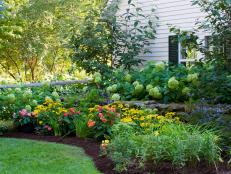
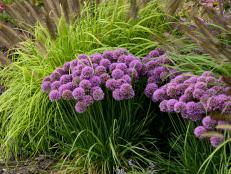
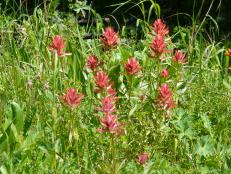
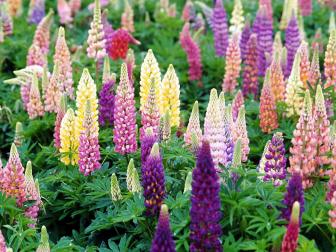
    Kuchar is bringing lots of color to this backyard by using a variety of flowering shrubs in hues of yellow, red and purple in the planting beds. Climbing vines on the pergola's posts will add even more color and provide privacy when they grow in.

    • Black-Eyed Susan (Rudbeckia hirta), Zones 3-7
    • Yarrow (Achillea millefolium) 'Paprika', Zones 3-9
    • (Heuchera micrantha) 'Palace Purple', Zones 4-8

    Step Four: Finishing the Project

    It's time to put the crosspieces on top of those beams. Hassan and crew are using redwood 18-inch 2x2s. They space them out evenly across the beams, running back to front, to create a very classic-looking top to the pergola.

  • Figure J

  • Begin by laying out the crosspieces on top of the beams to get an idea of how many you'll need (figure J).

  • Use a scrap piece of wood as a spacer, to help you evenly space out the 2x2s.

  • Set up a string line to make sure all the ends line up.

  • Attach the crosspieces to the beams with 16-penny galvanized nails.

    Step Five: Inlaying the Tiles

    Kuchar wants to add a nice touch to the pergola by decorating it with some inlaid tile. She's going with a multi-colored palette of 2x2 tiles to pick up all the different colors in the plantings, but you can use any color or style of tile that you like. It's a great way to accent the pergola and it will help tie the structure in with the rest of the yard.

  • Figure K

  • To set the tiles, notch out the face of the post (figure K).

  • After marking where the tiles will go, use a circular saw to score the post.

  • Chisel out those pieces of wood to make a smooth surface.

  • Next, coat the tiles with a thin layer of ceramic tile adhesive.

  • Set them by pressing each one firmly in place — use a piece of masking tape to hold them there as they dry.

    For this project, we're making a basic rectangle. But Kuchan says this is your chance to be creative, so make your design as simple or as elaborate as you want.

    Once you're finished, remove the tape and clean off the tiles. Next, use a sponge to fill the joints with tile grout and wipe away any excess. Let the grout dry overnight.

    The pergola is a beautiful structure and a focal point in the yard. It's also functional and creates privacy — the homeowner is thrilled with the colorful tiles and plantings, and if you do this project, you will be, too!

  • Resources

      • Ahmad Hassan
        Landscape Contracter, Hassan Gardening
        We apologize no further information is available.
      • Deborah Kuchar
        Landscape Designer, Green Alchemy
        Website: www.greenalchemy.com

    Comparison Shop for Home Decor and Garden Tools at Shopzilla and BizRate.

    Get cheap gas and electricity, business electricity, car insurance quotes at uSwitch and Yoahorro. (UK and Spain residents only)